Treatments for Dental Implant Infection in Pittsburgh?
You chose a dental implant to replace a missing tooth. You expected a permanent, trouble-free solution. But now, you notice something is wrong. Maybe your gum around the implant looks red and swollen. Perhaps you feel a dull ache when you bite down. Or you see bleeding when you brush.
If this sounds familiar, you are not alone. Dental implant infections are more common than most people realize. The good news? You can treat them effectively, especially here in Pittsburgh, where dental technology and expertise are top-notch.
This guide walks you through every step of identifying and treating an infected dental implant. We will explore non-surgical methods, surgical solutions, and how to find the right specialist in the Steel City. Let us ease your worry and get you back on track to a healthy smile.
Understanding the Problem: What Is a Dental Implant Infection?
Before we talk about treatments, we need to understand what we are fighting. A dental implant infection is not a cavity. Implants are made of titanium, so they cannot decay. Instead, the infection attacks the gum and bone surrounding the implant.
Professionals call this condition peri-implantitis. Think of it like a more aggressive version of gum disease (periodontitis). It starts quietly, often without pain, and slowly destroys the support structures holding your implant in place.
How an Implant Infection Begins
Your implant works because of a process called osseointegration. Your jawbone grows tightly around the titanium post, locking it in place. But this seal is not invincible.
Bacteria naturally live in your mouth. If you miss cleaning around the implant, these bacteria form a sticky film called plaque. If you do not remove plaque, it hardens into tartar (calculus). This tartar irritates your gums, causing inflammation. At this early stage, we call it mucositis. It affects only the soft gum tissue.
If you ignore mucositis, the inflammation travels down the implant surface into the bone. Your body’s immune system tries to fight the bacteria, but it also accidentally destroys your jawbone. The implant begins to lose its support. This destructive phase is peri-implantitis.
Signs You Might Have an Implant Infection
Your body sends clear signals when something is wrong. Watch for these common symptoms:
- Red, puffy, or shiny gums around the implant
- Bleeding when you brush or floss near the area
- A bad taste in your mouth or persistent bad breath
- Pus oozing from the gum pocket
- The gum feels tender or painful when touched
- Your implant feels loose or makes a clicking sound
- Food gets stuck around the implant more than usual
Important Note: Peri-implantitis can exist without pain. Many patients only discover the infection during a routine dental check-up with X-rays. Do not wait for pain to seek help.
Why Pittsburgh Residents Face Unique Risks
Living in Pittsburgh comes with specific considerations for dental implants. Our water, while safe, contains different mineral levels than other regions. More importantly, our healthcare landscape offers unique advantages and challenges.
Pittsburgh has an aging population with higher rates of gum disease history. We also have excellent medical facilities like UPMC and world-class dental schools. This means you have access to cutting-edge treatments. However, it also means you need to be careful when choosing a provider. Not every general dentist has advanced training in implant infections.
Another local factor is our love for hearty foods. A diet higher in sugars and starches can feed harmful oral bacteria. Combined with the common habit of teeth grinding (bruxism) from daily stress, Pittsburgh residents must be extra vigilant about implant maintenance.
Diagnosis: How Pittsburgh Dentists Identify the Infection
You cannot treat what you do not measure. A proper diagnosis involves several steps. Your dentist will not just look at your gum. They will use specific tools and tests to determine the severity of your infection.
The Clinical Examination
Your dentist will start with a visual inspection. They look for the redness, swelling, and bleeding we mentioned earlier. Then, they use a small periodontal probe. This instrument measures the pocket depth around your implant.
- Healthy implant: Pocket depths of 3mm or less with no bleeding.
- Mucositis: Pocket depths of 4-5mm with bleeding on probing.
- Peri-implantitis: Pocket depths of 6mm or more, bleeding, and pus.
The probe also checks for mobility. If your implant moves even slightly, the bone loss is significant.
X-Rays and 3D Imaging
X-rays are essential. A standard periapical X-ray shows the bone level around your implant. Your dentist compares new X-rays to the ones taken right after your implant placement. If the bone has receded, the infection is active.
Sometimes, your dentist will recommend a CBCT scan (Cone Beam Computed Tomography). This 3D image shows exactly how much bone remains. It also reveals the shape of the bone defect. This information guides the surgeon on which surgical technique will work best.
The Microbiological Test
For persistent or severe infections, a dentist might take a sample of the bacteria from your gum pocket. A lab analyzes this sample to identify the specific bacterial strains. This test is not always necessary, but it helps when standard antibiotics do not work. It allows for targeted, personalized treatment.
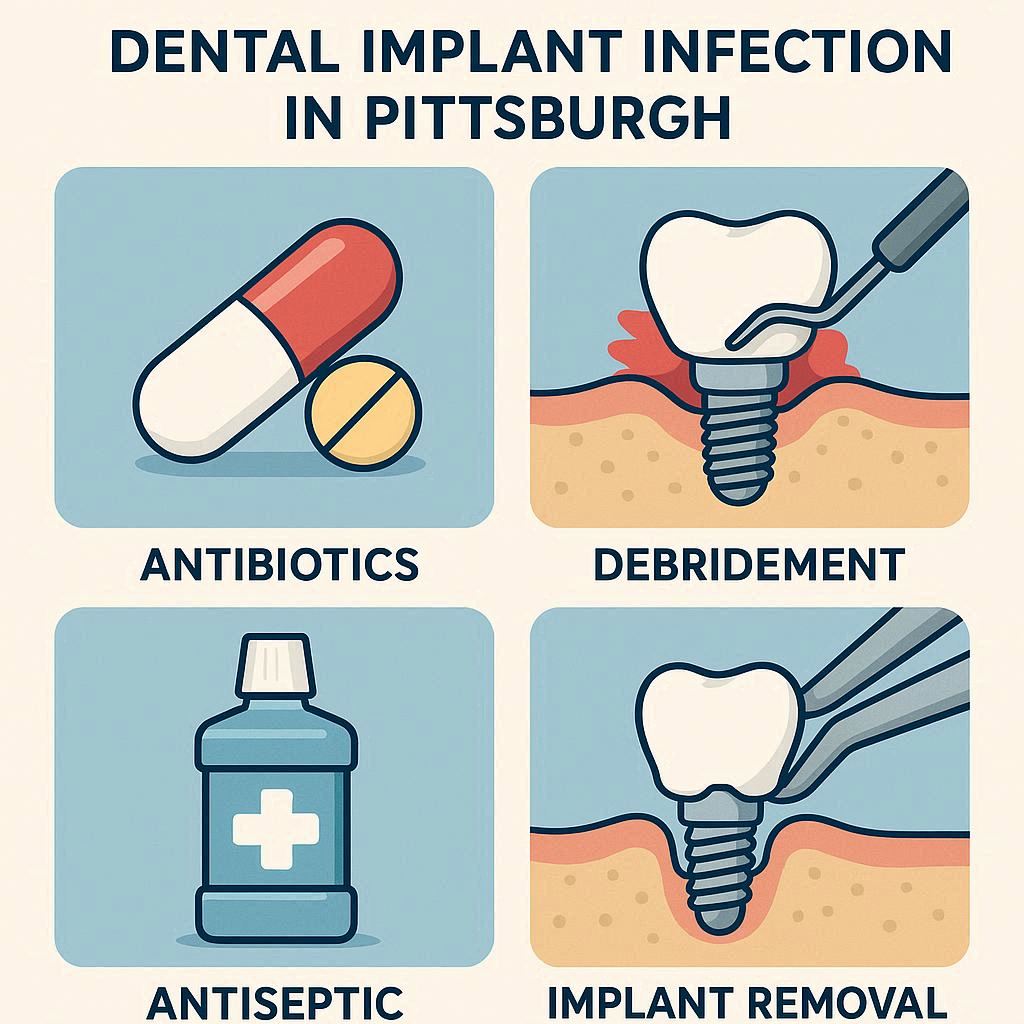
Non-Surgical Treatments for Early Implant Infection
If your infection is caught early (mucositis or mild peri-implantitis), you may avoid surgery. Non-surgical treatments focus on cleaning the implant surface without cutting your gum. These methods work best when the bone loss is minimal.
Professional Mechanical Debridement
This is the deep cleaning of your implant. Your dentist uses special instruments made of plastic, carbon fiber, or titanium. Why? Metal scalers can scratch the surface of your implant. Bacteria love to hide in those tiny scratches.
The dentist carefully scrapes above and below the gum line. They remove all plaque, tartar, and bacterial toxins from the implant threads. This procedure is similar to a deep cleaning for natural teeth, but it requires more precision.
Ultrasonic Scalers with Special Tips
Many Pittsburgh dentists use ultrasonic devices. These tools vibrate at high speeds and spray a cooling water mist. The vibrations break up bacterial colonies, and the water flushes them away.
For implants, the dentist uses a special plastic-coated or titanium tip. These tips are gentle on the implant surface but tough on bacteria. Ultrasonic cleaning reaches deeper into pockets than hand instruments alone.
Laser Therapy
Lasers are becoming a popular option for treating implant infections in Pittsburgh. A diode laser or Er:YAG laser can vaporize bacteria in the gum pocket. The laser energy also removes diseased tissue lining the pocket.
Benefits of laser treatment include:
- Less bleeding during the procedure
- Reduced post-operative pain
- Faster healing time
- The laser sterilizes the area as it works
However, lasers are not a standalone cure. Dentists usually combine lasers with mechanical cleaning for the best results.
Antibiotic Therapy
Antibiotics play a supporting role. They rarely cure an implant infection by themselves because the bacteria hide in a sticky film (biofilm) that antibiotics cannot fully penetrate.
Your dentist might prescribe:
- Topical antibiotics: A gel or dissolving chip placed directly into the gum pocket. Examples include Minocycline (Arestin) or Doxycycline (Atridox).
- Oral antibiotics: Pills like Amoxicillin with Metronidazole or Clindamycin. These work for widespread infections or before surgery.
Important Note: Never take leftover antibiotics or someone else’s prescription. Incorrect use leads to antibiotic-resistant bacteria, making future infections harder to treat.
The Critical Next Step: Reevaluation
Non-surgical treatment is not a one-and-done event. Your dentist will ask you to return in 4 to 6 weeks. They will re-measure your pocket depths and check for bleeding. If the pockets have reduced and your gums look healthy, you continue with maintenance. If not, it is time to discuss surgery.
Surgical Treatments for Advanced Implant Infection
When non-surgical methods fail or the bone loss is severe, surgery becomes necessary. Do not panic. Modern surgical techniques are highly effective. The goal is to stop the infection, clean the implant, and ideally regrow some of the lost bone.
Open Flap Debridement
This is the most common surgical treatment. Your surgeon makes a small incision in your gum to lift it away from the bone. This “open flap” gives the doctor direct access to the infected implant threads and the bone defect.
The surgeon then:
- Removes all granulation tissue (infected, inflamed tissue)
- Cleans the implant surface thoroughly with special solutions (like citric acid or saline)
- Smooths any rough areas on the implant that trap bacteria
- Irrigates the area with antibacterial rinses
After cleaning, the surgeon stitches the gum back into place. This procedure alone can reduce pocket depths significantly, but it does not regrow lost bone.
Resective Surgery (Implantoplasty)
Sometimes, the implant itself is part of the problem. The top part of the implant (the abutment or the implant collar) may have a rough surface. This roughness is great for bone attachment initially, but it is terrible for cleaning once exposed to bacteria.
In implantoplasty, the surgeon uses small burs to smooth and polish the exposed rough surface of the implant. A smooth surface repels bacteria. This surgery works well for moderate bone loss. However, the surgeon only smooths the part of the implant that has lost bone. You cannot smooth the whole implant.
Bone Grafting for Implant Infection
This is the most advanced and exciting treatment. If you have lost bone around your implant, a bone graft can fill the defect. The goal is to regenerate new bone to support your implant.
The surgeon first performs the open flap debridement to clean the implant. Then, they place bone graft material into the hole left by the infection. This graft can come from several sources:
| Graft Type | Source | Pros | Cons |
|---|---|---|---|
| Autograft | Your own bone (often from the chin or hip) | Best healing potential, contains living cells | Requires a second surgical site, more pain |
| Allograft | Donated human bone (sterilized) | No second surgery, safe and effective | Slower integration than autograft |
| Xenograft | Cow or pig bone | Readily available, predictable results | No living cells, purely a scaffold |
| Alloplast | Synthetic materials (calcium phosphates) | No disease risk, unlimited supply | Not as “biologically active” as natural bone |
After placing the graft, the surgeon covers it with a barrier membrane. This membrane keeps soft gum tissue from growing into the bone space. It allows bone cells to repopulate the area. This entire procedure is called Guided Bone Regeneration (GBR).
When Removal Is the Only Option
We must be honest. Sometimes, saving the implant is not possible. Removal becomes necessary when:
- More than 50% of the bone around the implant is lost
- The implant is clinically mobile (wiggly)
- The patient has uncontrolled medical conditions (like severe diabetes)
- The infection has destroyed bone in a “saucer-shaped” defect that cannot be grafted
- The patient refuses or cannot undergo surgery
Removing a failed implant is a straightforward procedure. The dentist uses a small drill or a special instrument called a “trephine bur” to unscrew the implant. Once removed, the socket fills with a bone graft. After 4 to 6 months of healing, you may be able to place a new implant. Alternatively, you can choose a bridge or partial denture.
Home Care Adjuncts: What You Can Do Right Now
While professional treatment is non-negotiable, what you do at home dramatically affects your success. These tools and techniques are especially important after treatment to prevent reinfection.
The Water Flosser
A water flosser (like Waterpik) is your best friend. It shoots a pressurized stream of water to flush out food and bacteria from around the implant. Use it on a low to medium setting. Aim the tip at a 90-degree angle to the implant. Do this once daily, preferably at night.
Interdental Brushes
These tiny, cone-shaped brushes fit perfectly between your implants and adjacent teeth. Standard floss often fails to clean the concave surfaces of implants. Interdental brushes scrub the sides of the implant effectively. Choose a size that fits snugly but does not force its way through. You should feel gentle resistance.
The Implant-Specific Floss
If you prefer floss, buy implant floss. It looks like a regular floss but has a stiff plastic needle on one end and a spongy, textured section in the middle. The stiff needle threads under the implant bridge, then you use the spongy section to clean the wide implant surfaces.
Antimicrobial Rinses
Your dentist may recommend a chlorhexidine gluconate (CHX) rinse for short-term use (2-4 weeks). CHX kills bacteria effectively, but it stains teeth and can alter your taste with long-term use. For daily, long-term care, a non-alcoholic essential oil rinse (like a diluted Listerine Zero) or a saline rinse (salt water) works safely.
Finding the Right Pittsburgh Specialist for Implant Infections
Not every dentist handles implant infections. You need a provider with advanced training. In Pittsburgh, you have several excellent options. Do you know how to choose?
Who Treats These Infections?
- Periodontist: A gum specialist. Periodontists receive three extra years of training in gum diseases, bone grafting, and implant placement. They are the first choice for peri-implantitis.
- Oral Surgeon: These doctors handle complex bone surgeries and implant removals. They work closely with periodontists.
- Prosthodontist: A restoration specialist. They focus on the crown or bridge part of the implant. They are excellent for managing the long-term health of complex implant cases.
- General Dentist with Advanced Training: Some general dentists take many continuing education courses in implantology. They can treat mild to moderate cases.
Questions to Ask Before Your Appointment
You have the right to interview your dentist. Call their office and ask these specific questions:
- “How many peri-implantitis cases do you treat each year?”
- “Do you have a laser for non-surgical implant cleaning?”
- “Do you perform guided bone regeneration to save failing implants?”
- “Can you show me before-and-after photos of your implant infection cases?”
- “What is your success rate for treating moderate peri-implantitis?”
Local Pittsburgh Resources to Consider
- University of Pittsburgh School of Dental Medicine: The graduate periodontics clinic handles complex implant infections. You receive care from experienced faculty and residents at a lower cost than private practice.
- Allegheny County Dental Society: Their website offers a “Find a Dentist” tool. Filter by specialty (Periodontics) and look for keywords like “surgical” or “implant salvage.”
- UPMC Dental Services: For patients with complex medical histories, UPMC offers coordinated care between hospital physicians and dental specialists.
Note on Insurance: Dental implant infection treatments may be partially covered by your dental insurance, especially if coded as “treatment of peri-implantitis” (a disease) rather than “implant maintenance.” Call your insurer before scheduling. Medical insurance may cover the bone grafting portion if the infection is severe.
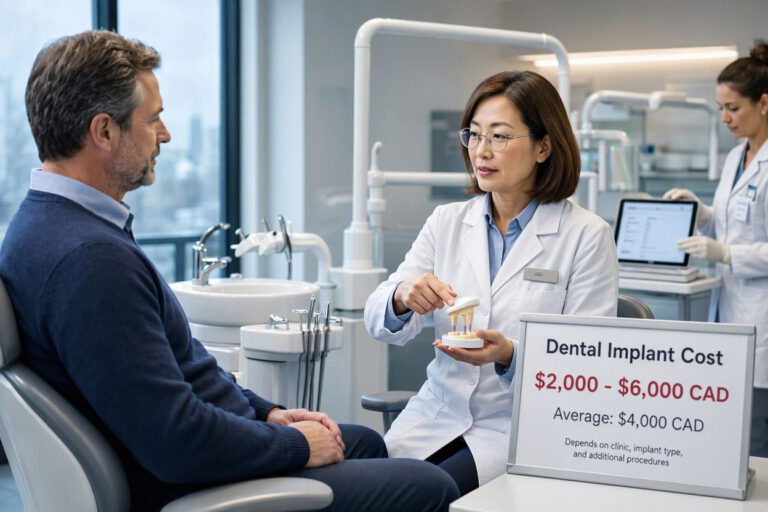
The Cost of Treating Implant Infections in Pittsburgh
Let us talk honestly about money. Treatment costs vary widely based on severity and the provider you choose. These are typical Pittsburgh ranges as of 2025.
| Treatment | Typical Cost Range | What It Includes |
|---|---|---|
| Non-surgical debridement (per implant) | 200–500 | Cleaning, local anesthesia, re-evaluation |
| Laser therapy (add-on) | 150–300 per session | Laser disinfection of pocket |
| Open flap debridement | 900–1,500 | Surgery, local anesthesia, sutures |
| Open flap + Bone graft (one site) | 1,800–3,500 | Graft material, membrane, surgery |
| Implant removal | 400–800 | Simple explantation under local anesthesia |
| Full “Salvage” surgery with GBR | 3,000–6,000 | Complex case requiring extensive grafting |
Saving Money Without Sacrificing Quality
- The Dental School: The University of Pittsburgh offers the most affordable rates, often 40-60% less than private practice.
- CareCredit: Many Pittsburgh dentists accept this healthcare credit card. It offers 6-12 month interest-free financing.
- Payment Plans: Ask your dentist about in-house financing. Some periodontists offer monthly payment plans for surgical cases.
- HSAs and FSAs: Use your Health Savings Account or Flexible Spending Account dollars. These are pre-tax funds.
Prevention: How to Never Need These Treatments Again
The best treatment is prevention. After your infection is resolved, you must commit to a maintenance protocol. Your implant is not “set and forget.” It requires lifelong care.
Your Professional Maintenance Schedule
- Every 3 months: For patients with a history of peri-implantitis. This aggressive schedule catches reinfection early.
- Every 4 to 6 months: For patients with controlled mucositis or mild bone loss.
- Every 6 months: For patients with healthy implants and good home care.
At each maintenance visit, your hygienist will:
- Measure pocket depths around every implant
- Use plastic or titanium scalers to clean the implant
- Take annual X-rays to compare bone levels
- Polish the crown or bridge
Your At-Home Protocol
Create a daily routine that takes no more than 5 minutes.
Morning (2 minutes):
- Brush with a soft-bristle or electric toothbrush. Use a non-abrasive toothpaste (avoid “whitening” or “baking soda” types).
- Use your water flosser on low pressure around the implant.
Evening (3 minutes):
- Brush again thoroughly.
- Use an interdental brush for 30 seconds between the implant and adjacent teeth.
- Finish with a 1-minute rinse of saline or non-alcoholic antimicrobial rinse.
Lifestyle Changes That Protect Your Implant
- Quit smoking or vaping: Nicotine reduces blood flow to your gums. Smokers have a 300% higher failure rate for implant infection treatments. Pittsburgh has free quitline resources (1-800-QUIT-NOW).
- Manage your diabetes: High blood sugar fuels bacterial growth. Keep your HbA1c below 7% for optimal implant healing.
- Stop grinding your teeth: Bruxism damages the crown and creates micro-movements that worsen bone loss. Ask your dentist for a custom nightguard.
- Reduce sugary snacks: Every time you eat sugar, oral bacteria produce acid for 20-30 minutes. Fewer sugary snacks mean fewer bacterial attacks.
What the Research Says: Success Rates You Can Expect
You deserve realistic expectations. No treatment is 100% guaranteed. However, modern methods are highly successful when you follow the protocol.
- Non-surgical treatment alone (for mucositis): 85-95% success rate in resolving inflammation. However, without home care, 60% relapse within one year.
- Open flap debridement (for mild peri-implantitis): 70-80% success in stopping bone loss. Pocket depths reduce by an average of 2-3mm.
- Open flap + Bone grafting: 75-85% success in both stopping bone loss and regaining 2-4mm of bone height after one year.
- Implant removal + Re-implantation: After removal, bone grafting, and healing, a new implant has a 90-95% survival rate. The new implant is not more likely to fail than the first one.
The single biggest factor in long-term success is your commitment to maintenance. Patients who miss their 3-month cleanings have a 70% chance of reinfection within two years. Patients who attend all cleanings have only a 10-15% reinfection rate.
A Step-by-Step Action Plan for Pittsburgh Residents
If you suspect an implant infection today, follow this plan.
Step 1: Self-Assessment (Today)
Look in a mirror at your implant. Does the gum look redder than the gums around your natural teeth? Gently press on the gum near the implant. Does any liquid come out? If yes to either, call a dentist.
Step 2: Gather Your Records (Tomorrow)
Find your original implant records. Who placed the implant? What brand is it? When was it placed? This information helps the new dentist. If you do not have records, call your original dentist and ask them to email your X-rays.
Step 3: Schedule a Consultation (Within 1 Week)
Call a periodontist. Do not go to a general dentist for this initial consult unless they have advanced implant training. Tell the scheduler you suspect an infection. They will likely book a longer appointment.
Step 4: The Consultation Visit
The periodontist will examine you, take an X-ray, and give you a diagnosis (mucositis vs. peri-implantitis). They will present a treatment plan with costs. Ask for a written copy.
Step 5: Decision and Scheduling
Take the treatment plan home. Compare it with one other specialist if you wish. Then, schedule the treatment. Do not delay. Waiting allows the bone to dissolve further.
Step 6: Treatment and Healing
Follow all pre- and post-operative instructions. Take prescribed medications exactly as directed. Do not smoke or use straws after surgery.
Step 7: The New Normal
After your implant is healthy, enroll in a 3-month maintenance program. Mark your calendar. Set reminders on your phone. Your implant’s life depends on these visits.
Conclusion
Dental implant infections are treatable. In Pittsburgh, you have access to world-class periodontists, affordable care at the dental school, and advanced technologies like lasers and guided bone regeneration. The key is acting quickly. Non-surgical methods can reverse mucositis, while surgical grafting can save implants with significant bone loss. Your long-term success depends on a partnership with your dentist and a daily home care routine. Do not let fear stop you. Call a specialist today, and protect your investment in your smile.
Frequently Asked Questions (FAQ)
1. Can a dental implant infection spread to my body?
Yes, in rare cases. Severe, untreated peri-implantitis can lead to a localized abscess. In immunocompromised patients, bacteria can enter the bloodstream, causing systemic issues like endocarditis. This is why early treatment is critical.
2. Is a dental implant infection painful?
Not always. Early infections (mucositis) cause no pain. Moderate peri-implantitis may cause a dull ache or tenderness when you bite. Severe infections with abscesses can cause sharp, throbbing pain. Do not rely on pain as your only warning sign.
3. Can I treat an infected implant with just salt water rinses?
No. Salt water can soothe mild gum irritation, but it will not kill the biofilm bacteria deep around the implant. You need professional debridement. Salt water is an excellent supportive home care tool, but it is not a cure.
4. How long does it take to recover from implant infection surgery?
For open flap debridement, expect 1-2 weeks of minor soreness. You can return to work the next day. For bone grafting, avoid chewing on that side for 4-6 weeks. Complete bone healing takes 4-6 months before a new crown can be placed.
5. Will my dental insurance cover implant infection treatment?
It depends on your plan. Many plans cover “periodontal disease treatment.” If your dentist codes it as peri-implantitis treatment (D6081 for surgical debridement), it may be covered at 50-80%. Implant removal is usually covered. The crowns or new implants may not be. Always verify with your carrier.
6. What happens if I do nothing about my infected implant?
The bone loss will continue slowly, then rapidly. Eventually, the implant will become loose and fall out on its own. By then, you will have lost so much bone that placing a new implant becomes difficult, expensive, or impossible. You might then need a complex bone graft from your hip.
7. Can my implant get infected years after it was placed?
Absolutely. Peri-implantitis is a long-term complication. It can occur 5, 10, or even 15 years after placement. The risk increases if you develop gum disease on your natural teeth, start smoking, or neglect your maintenance cleanings.
8. Are there any natural remedies for implant infection?
No natural remedy will cure peri-implantitis. However, oil pulling (coconut oil) or using a turmeric rinse may slightly reduce surface bacteria. These should only be used alongside, not instead of, professional dental treatment.
Additional Resource
For a deeper understanding of how peri-implantitis differs from natural gum disease, and to see detailed clinical images of each treatment stage, visit the American Academy of Periodontology’s patient education page on implant maintenance.
🔗 Link: perio.org/consumer/peri-implantitis
Note: This external resource is provided for educational purposes. Always consult your Pittsburgh dentist for personal medical advice.
Disclaimer: This article is for informational purposes only and does not constitute medical advice. Dental conditions vary significantly between individuals. Treatments described may not be suitable for your specific situation. Always seek the advice of a licensed dentist or periodontist in Pittsburgh with any questions regarding a dental implant infection. Never disregard professional medical advice because of something you read in this article.