What Gets Gum Out Of Car Carpet?
Chewing gum and car carpets are a notoriously bad combination. The sticky, elastic nature of gum bonds aggressively to the woven fibers of automotive flooring, and summer heat can melt it into a gooey, deeply embedded mess. Removing it is a test of patience, but it is a battle you can win with the right technique and common household products. The goal is to break the gum’s adhesive bond to the carpet fibers without damaging the carpet backing or leaving a sticky residue that attracts more dirt. This guide provides a systematic approach to complete gum removal.
The Physics of Gum Adhesion to Carpet
Understanding why gum sticks so stubbornly helps you choose the right removal method. Chewing gum is a hydrophobic, non-polar polymer base that is soft and malleable at body temperature. When it cools and hardens, it does not form a chemical bond to the carpet. The bond is entirely mechanical. The soft gum penetrates into the microscopic spaces between the carpet fibers, and when it hardens, it mechanically locks itself around each individual strand.
This mechanical bond means your strategy must either reverse the gum’s phase from a sticky solid to a brittle, fracturing solid, or dissolve the gum base enough to weaken its structural grip. Heat, cold, and specific solvents are the three pathways. Your choice depends on the size and age of the gum wad, the type of carpet fiber, and the tools you have available.
The Freezing Method: Brittleness Breaks the Bond
The most universally recommended first-line approach is to freeze the gum. Cooling the gum below its glass transition temperature makes it hard, brittle, and non-sticky. At this point, it loses its mechanical grip on the carpet fibers and can be fractured and scraped away as a crumbling solid rather than a stretching, sticky mess.
Ice Cubes and Freezer Packs
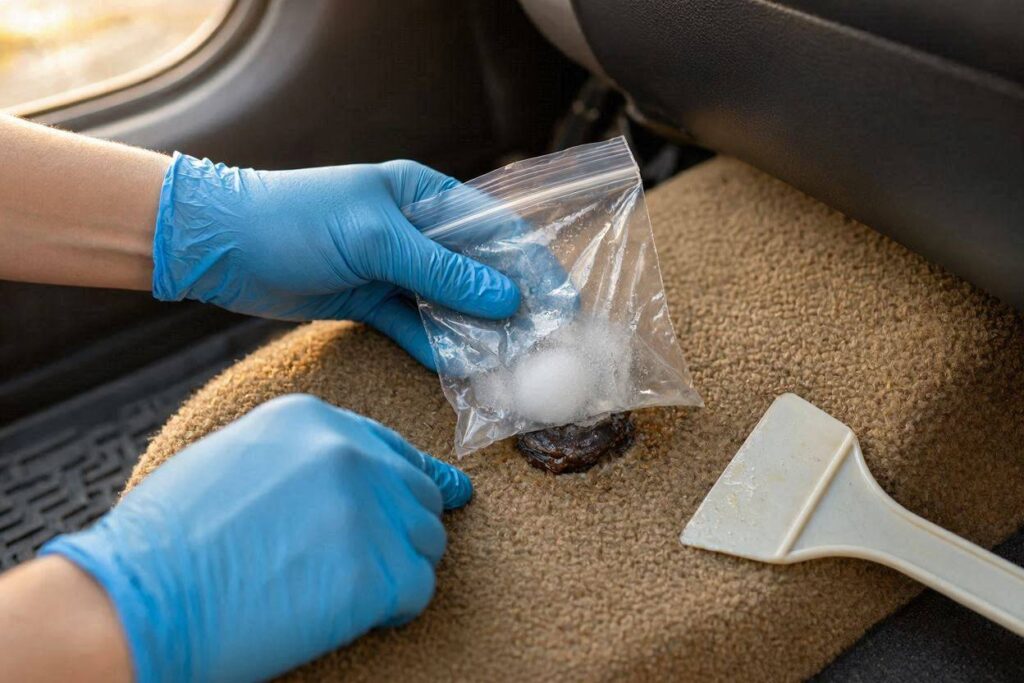
The application is simple but requires patience. Place a handful of ice cubes in a sealable plastic bag and press the bag directly against the gum wad. For a removable car floor mat, you can place the entire mat in a household freezer and leave it for several hours. The cold must penetrate completely through the gum. This may take ten to fifteen minutes with an ice pack. You will know it is ready when the gum feels rock-hard and does not yield to a probing fingernail.
Once frozen solid, the removal tool matters. A dull butter knife, a metal spoon, or a stiff plastic scraper works best. Do not use a sharp knife that can cut the carpet fibers. Gently strike the frozen gum with the flat edge of the scraper, and it should crack and shatter into pieces. Vacuum up the frozen fragments immediately before they warm up and re-stick. For any residual tiny particles, a second freeze and a stiff-bristled brush can flick them out of the fibers.
Compressed Air Dusters
An alternative to ice is a can of compressed air, the type used to clean computer keyboards. When you invert the can and spray, the propellant comes out as a freezing liquid. Direct a short, controlled burst onto the gum. The rapid evaporation cools the gum to a brittle state almost instantly. This method is more targeted and faster than ice, but it requires caution. The freezing spray can cause frostbite on skin, and you must ventilate the car interior, as the aerosol propellant is not safe to inhale in a confined space. This is a precision technique for small, fresh gum spots.
The Heat Method: Melting and Absorbing the Gum
When freezing is ineffective, or the gum is deeply smeared into the carpet, heat offers an alternative physical pathway. Heat reverses the gum to a soft, viscous liquid. The key to this method is not to spread the melted gum further but to wick it away into a sacrificial absorbent material.
The Iron and Brown Paper Bag Technique
This classic household remedy works by using heat to melt the gum and capillary action to draw it out of the carpet. Place a piece of a plain brown paper grocery bag, a clean piece of cardboard, or several layers of paper towel directly over the gum. Set a household clothes iron to a medium heat setting with no steam. Gently press the iron onto the paper covering the gum for a few seconds at a time.
The heat from the iron melts the gum beneath the paper. The molten gum preferentially adheres to the more absorbent paper surface. Lift the iron and peel back the paper. The gum will transfer from the carpet onto the paper. Repeat this process with a fresh, clean piece of paper each time until no more gum transfers. This method is highly effective for large, flat, smeared gum deposits. Do not overheat synthetic carpet fibers, as polyester or nylon can melt and fuse to the gum, creating a permanent, fused burn mark.
Hot Water Extraction
An alternative to the dry iron is a small, targeted hot water extraction machine, essentially a spot-cleaning carpet shampooer. The machine injects hot water and a mild carpet cleaning solution into the affected area and immediately vacuums it back out. This simultaneous flushing and suction can dislodge and remove gum that has softened in the hot water flow. This is a professional-level technique that cleans the entire area while removing the gum, making it ideal for final cleanup after the bulk removal.
Solvent-Based Removal for Stubborn Residue
After the bulk of the gum is removed by freezing or heat, a sticky, transparent residue often remains coating the carpet fibers. This residue is the gum base, and it requires a chemical solvent to dissolve it completely. The goal is to choose a solvent that cuts the gum base without damaging the carpet’s color, backing adhesive, or the synthetic fiber itself.
Common Household Solvents and Their Application
Several readily available products can dissolve chewing gum residue. Peanut butter is a famous folk remedy. Its success comes from the natural oils it contains. The oily lipids emulsify and lift the hydrophobic gum base. Rub a small amount of creamy peanut butter into the residue, let it sit for a minute, and then work the area with a soft brush. The oils from the peanut butter will release the gum’s grip. The challenge then becomes cleaning the oily peanut butter residue itself, which you must do with a dish soap and warm water solution.
WD-40 is another multi-purpose lubricant spray that works on gum. Its light petroleum distillates dissolve the sticky polymers. Spray a small amount onto a clean cloth, not directly onto the carpet, and dab it onto the gum residue. Let the solvent soak in for a minute, then blot and gently scrub with a clean cloth. The dissolved gum and the WD-40 itself must then be completely removed with a warm, soapy water extraction. Leaving WD-40 in the carpet will attract dirt and leave a lingering chemical odor.
Important Safety Precautions
Always test any solvent on a completely hidden area of the car carpet first, such as under the front seat. Apply a drop, let it sit, and blot it with a white cloth. Look for any color transfer from the carpet dye to the cloth. If the dye runs, do not use that solvent. Ensure the car is well-ventilated when using any volatile solvent. Never use acetone, nail polish remover, or strong paint thinners, as these will dissolve many synthetic carpet fibers and cause permanent, visible damage. The safest solvents to start with are the mildest: warm, soapy water, rubbing alcohol, or a commercially available gum remover specifically formulated for automotive upholstery.
Final Cleaning and Fiber Restoration
Once the gum and its sticky residue are completely gone, the final step is to restore the texture and appearance of the carpet fibers. The removal process can mat down and clump the carpet pile. Mix a few drops of a mild dish soap that is free of bleach and strong degreasers into a bowl of warm water. Dip a stiff-bristled scrub brush into the soapy water and scrub the treated area in multiple directions to lift and separate the matted fibers.
Blot the area with a clean, dry microfiber towel to absorb the dirty water. Rinse the brush in clean water, scrub again, and blot again. Continue this rinse-and-blot cycle until no more soap suds appear. Finally, vacuum the carpet thoroughly once it is completely dry. For persistent fiber matting, a quick pass with a clothing steamer can relax the fibers and help them stand back up.
Conclusion
Getting gum out of a car carpet relies on understanding its mechanical bond to the fibers and choosing a method to break that grip. Freezing with ice makes the gum brittle and shatters it away, while a warm iron and brown paper melts and wicks it out of the fabric. Stubborn sticky residue yields to mild oily solvents like peanut butter or WD-40, but the process is only complete after a thorough soapy water cleaning and a final vacuum to restore the carpet’s original texture.
Frequently Asked Questions
Q: Can I just use a commercial gum remover spray from the auto parts store?
A: Yes, these are specifically formulated to be safe on automotive carpets and upholstery. They combine a chilling agent or a solvent with a cleaning solution. Always follow the label instructions and test on an inconspicuous spot first.
Q: What if the gum has melted deep into the carpet under the summer sun?
A: The freezing method is essential here. The heat has driven the gum deep into the fiber base. Freeze it as hard as possible with ice or a frozen gel pack, then use a stiff brush to aggressively shatter and flick out the frozen particles from the depth of the pile.
Q: Is there a risk of mold or mildew after cleaning with water?
A: Yes, if the carpet backing and underlying sound-deadening foam get soaked and remain damp. Use water sparingly, blot aggressively to remove as much moisture as possible, and leave the car doors open on a dry, sunny day to air the carpet completely.
Additional Resource
For more detailed automotive interior care and the safe use of cleaning chemicals on modern car materials, the detailing community provides a wealth of professional knowledge.
- International Detailing Association: the-ida.com