What Helps Dental Implants Heal Faster?
You look in the mirror at the surgical site. The sutures are still there. The swelling has started. And you cannot stop thinking about how long this will take. Every day that passes with a restricted diet, with discomfort, with waiting, feels longer than it should. You want to heal faster. Not recklessly faster, but as fast as your body can safely manage.
The good news is that healing speed is not entirely out of your control. While you cannot rush osseointegration beyond its biological timeline, you can create conditions that allow your body to heal at its optimal pace. This guide walks you through every evidence-based strategy to help dental implants heal faster, from immediate post-operative care to long-term habits that support bone health.
Understanding What “Healing” Means for Dental Implants
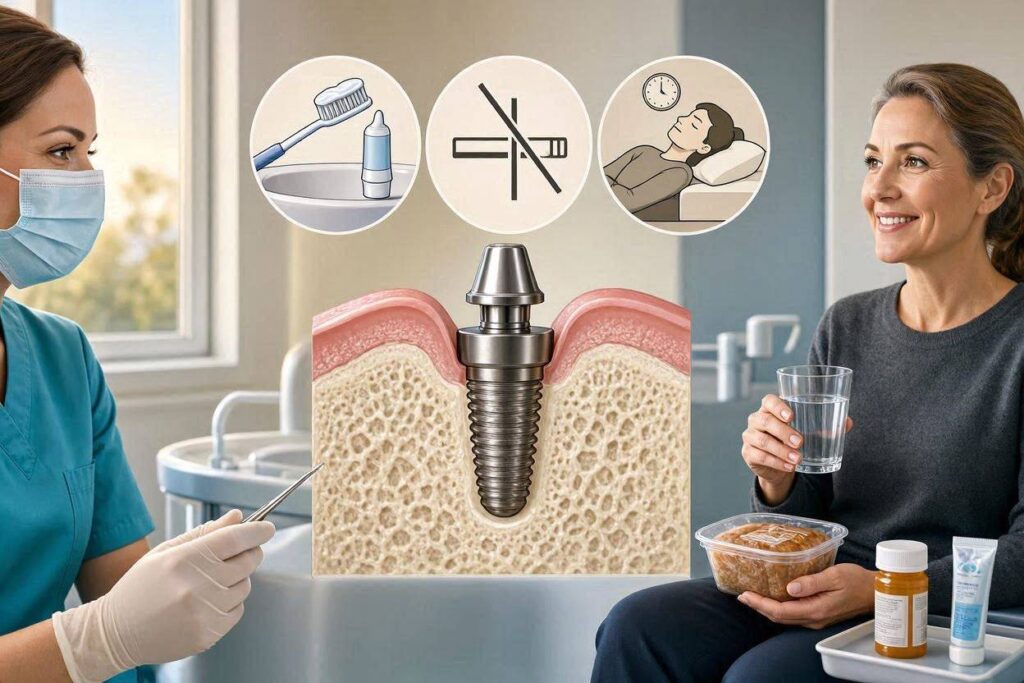
Before you can speed up healing, you need to understand what healing actually involves. Dental implant recovery is not a single process. It unfolds in overlapping phases, each with distinct biological requirements.
Phase One: Soft Tissue Healing (Days 1–14)
The first two weeks focus on closing the surgical wound. Your gum tissue must seal around the implant or the cover screw placed on top of it. During this phase:
- A blood clot forms in the surgical site
- Inflammatory cells clear debris and bacteria
- Fibroblasts produce collagen to close the wound
- Epithelial cells migrate across the surface to create a seal
Soft tissue healing determines whether the underlying bone work stays protected from oral bacteria. A well-sealed wound is the first requirement for everything that follows.
Phase Two: Early Bone Healing (Weeks 2–8)
Once the soft tissue closes, the bone takes center stage. Osteoblasts, the body’s bone-building cells, migrate to the implant surface. They begin depositing new bone matrix directly onto the titanium or zirconia surface.
This process, called osseointegration, is what makes dental implants unique. Unlike other medical implants that the body walls off with scar tissue, dental implants become biologically integrated with living bone. The bone cells physically attach to the implant surface at a microscopic level.
Phase Three: Bone Remodeling and Maturation (Weeks 8–26)
The initial bone deposited on the implant is woven bone, a relatively disorganized, weaker type of bone. Over months, this woven bone remodels into lamellar bone, which is stronger, more organized, and better suited to withstand chewing forces.
This remodeling continues for months and, to a lesser extent, throughout the life of the implant. The bone adapts to the forces placed on it, strengthening in areas of stress and resorbing where stress is minimal.
Why You Cannot Skip Phases
No supplement, medication, or technique can make osteoblasts move faster than their biological maximum. What you can do is remove obstacles that slow them down. Most strategies for faster healing actually work by preventing delays rather than accelerating the underlying biology.
Immediate Post-Operative Strategies (First 48 Hours)
The first two days set the stage for everything that follows. What you do during this window has a disproportionate impact on your overall healing timeline.
Cold Therapy: The Most Effective Early Intervention
Applying cold to the outside of your face over the surgical site is the single most effective thing you can do to reduce swelling and speed early healing.
How it works: Cold constricts blood vessels, reducing blood flow to the area. This limits the accumulation of inflammatory fluid (swelling) and reduces metabolic demand in tissues that have been traumatized. Less swelling means less pain, better blood flow once the cold is removed, and faster tissue recovery.
The correct protocol:
| Time After Surgery | Protocol |
|---|---|
| First 24 hours | Ice pack applied for 20 minutes on, 20 minutes off, continuously while awake |
| 24–48 hours | Ice pack applied for 20 minutes on, 20 minutes off, as swelling dictates |
| After 48 hours | Discontinue cold therapy; switch to moist heat only if recommended by surgeon |
Important: Always place a thin cloth between the ice pack and your skin. Direct ice contact can cause skin damage. Do not fall asleep with an ice pack in place.
Head Elevation
Keeping your head elevated above your heart reduces blood pressure in the surgical area, which decreases bleeding, swelling, and throbbing discomfort.
How to do it:
- Sleep with your head propped on two or three pillows
- If you rest during the day, recline rather than lying flat
- Maintain head elevation for the first 48–72 hours
- Do not use a completely flat pillow for at least three nights
Rest: The Most Underrated Healing Strategy
Your body does its best healing work when you are at rest. During sleep and quiet rest, your body directs energy toward tissue repair, immune function, and cellular regeneration.
Rest guidelines:
- Do not exercise, lift heavy objects, or engage in strenuous activity for at least 48–72 hours
- Avoid bending over or activities that increase head pressure
- Take time off work if your job involves physical labor
- Listen to your body; fatigue signals that healing is using your energy
Bleeding Management
A small amount of bleeding is normal in the first 24 hours. Proper management prevents clot disruption.
- Bite gently on gauze pads placed by your surgeon, changing them as directed
- Avoid spitting, rinsing forcefully, or sucking on the wound
- If bleeding persists, bite on a moistened tea bag for 30 minutes (the tannins in tea help promote clotting)
- Contact your surgeon if heavy bleeding continues despite these measures
Nutrition Strategies to Accelerate Healing
What you eat, and just as importantly, what you avoid, directly affects how quickly your body heals.
The Critical Role of Protein
Protein provides the amino acids your body needs to build new tissue. Collagen, the main structural protein in healing wounds, requires adequate protein intake for synthesis.
Protein-rich, implant-friendly foods for the first week:
| Food | Why It Works |
|---|---|
| Greek yogurt | High protein, soft, cool temperature |
| Scrambled eggs | Soft, easy to eat, complete protein |
| Protein shakes | Convenient, can be consumed without chewing |
| Cottage cheese | Soft, high in casein protein |
| Smooth nut butters (thinned) | Protein and healthy fats |
| Silken tofu | Soft, neutral flavor, protein-rich |
| Bone broth | Contains collagen precursors and minerals |
Aim for 1.2 to 1.5 grams of protein per kilogram of body weight daily during the first two weeks of healing. For a 150-pound person, that means approximately 80 to 100 grams of protein per day.
Vitamins and Minerals Essential for Healing
| Nutrient | Role in Healing | Food Sources (Soft Options) |
|---|---|---|
| Vitamin C | Collagen synthesis, immune function | Mashed sweet potato, pureed berries, smoothies with citrus |
| Vitamin D | Calcium absorption, bone metabolism | Fortified milk, yogurt, egg yolks |
| Vitamin A | Epithelial tissue formation | Pureed carrots, mashed squash, scrambled eggs |
| Vitamin K | Blood clotting, bone protein modification | Leafy greens (pureed into smoothies) |
| Calcium | Bone mineralization | Yogurt, milk, cottage cheese, fortified alternatives |
| Zinc | Cell division, protein synthesis, immune function | Ground meat, scrambled eggs, yogurt |
| Iron | Oxygen delivery to healing tissues | Pureed meats, fortified cereals |
Hydration
Water is essential for every cellular process involved in healing. Dehydration slows metabolism, impairs nutrient delivery, and reduces tissue pliability.
Hydration targets:
- Drink at least 8–10 cups of water daily
- Sip water frequently rather than drinking large amounts at once
- Room temperature or slightly cool water is best; avoid very cold or hot
- Monitor urine color; pale yellow indicates good hydration
Foods to Avoid During Healing
| Food/Beverage | Why to Avoid |
|---|---|
| Hot foods and beverages | Heat disrupts the blood clot and damages healing tissue |
| Spicy foods | Irritate the surgical site and may cause pain |
| Crunchy or hard foods | Mechanical disruption of the wound |
| Small, seedy foods | Seeds and particles can lodge in the surgical site |
| Alcohol | Interferes with healing, dehydrates, interacts with medications |
| Sugary foods and drinks | Promote bacterial growth and inflammation |
| Acidic foods and drinks | Irritate healing tissue |
Oral Hygiene During the Critical Healing Period
Keeping the surgical site clean without disrupting it is a delicate balance. Proper technique matters.
The First 24 Hours: No Rinsing
Do not rinse your mouth at all during the first 24 hours. Rinsing can dislodge the protective blood clot. Simply allow saliva to naturally cleanse your mouth.
Days 2–7: Gentle Salt Water Rinses
After 24 hours, begin gentle salt water rinses. Salt water creates an environment hostile to bacteria while being gentle on healing tissue.
How to prepare and use:
- Dissolve half a teaspoon of salt in a cup of warm (not hot) water
- Take a mouthful and gently tilt your head from side to side
- Do not swish vigorously or create suction
- Let the water fall from your mouth into the sink; do not spit forcefully
- Repeat 3–4 times daily, especially after eating
Brushing During Healing
| Area | Technique |
|---|---|
| Teeth away from surgical site | Brush normally but gently |
| Teeth adjacent to surgical site | Brush carefully, avoiding contact with the wound |
| Surgical site itself | Do not brush directly for the first week |
| Tongue | Brush gently to reduce bacterial load |
Use a soft-bristled toothbrush. If you use an electric toothbrush, switch to manual mode and gentle pressure near the surgical site.
Antimicrobial Mouthwash
Your surgeon may prescribe or recommend an antimicrobial mouth rinse, typically chlorhexidine. Use it exactly as directed:
- Usually started 24–48 hours after surgery
- Typically used twice daily
- Do not rinse with water after using; allow it to remain on the tissues
- Discontinue after the prescribed period (usually 7–10 days) to avoid staining
Lifestyle Modifications That Speed Healing
Your daily habits in the weeks surrounding surgery affect healing more than most patients realize.
Smoking Cessation
If you take one action to improve implant healing, make it quitting smoking. The evidence is overwhelming:
- Smokers have implant failure rates 2–3 times higher than non-smokers
- Nicotine constricts blood vessels, reducing oxygen delivery to healing tissues by up to 30%
- Carbon monoxide in cigarette smoke binds to hemoglobin, further reducing oxygen capacity
- Smoking impairs immune cell function, increasing infection risk
- The heating effect of smoke directly irritates oral tissues
What to do:
- Ideally, quit smoking at least 2 weeks before surgery
- Remain smoke-free for at least 8 weeks after surgery (the critical osseointegration period)
- Use nicotine replacement therapy only with surgeon approval (nicotine itself is vasoconstrictive)
- Consider this a permanent opportunity to quit
Alcohol Avoidance
Alcohol interferes with healing through multiple mechanisms:
- Dehydration impairs cellular function
- Alcohol interferes with protein synthesis needed for tissue repair
- It can interact with pain medications and antibiotics
- Alcohol consumption increases bleeding risk
- It impairs immune function
Avoid alcohol for at least 7 days after surgery, and preferably for the entire initial healing period of 2 weeks.
Physical Activity Modifications
| Time After Surgery | Activity Level |
|---|---|
| Days 1–3 | Complete rest; walking only for necessities |
| Days 4–7 | Gentle walking permitted; no exercise |
| Week 2 | Light activity; no heavy lifting or strenuous exercise |
| Weeks 3–4 | Gradual return to normal exercise |
| Weeks 4–8 | Normal activity; avoid contact sports that risk facial impact |
The concern with exercise is not just about bumping your face. Increased blood pressure during strenuous activity can cause bleeding at the surgical site. The body also needs energy for healing, and intense exercise diverts resources.
Stress Management
Chronic stress elevates cortisol levels, which suppresses immune function and slows wound healing. Studies show that stressed patients heal significantly slower than relaxed patients after surgery.
Stress reduction strategies during recovery:
- Practice deep breathing exercises
- Listen to calming music or podcasts
- Read books or engage in quiet hobbies
- Accept help from family and friends
- Meditate using guided apps
- Prioritize sleep over productivity
Supplements That May Support Implant Healing
While no supplement replaces proper nutrition, some show evidence of supporting bone and tissue healing.
Supplements with Supporting Evidence
| Supplement | Potential Benefit | Evidence Level |
|---|---|---|
| Vitamin D3 | Calcium absorption, bone metabolism | Strong for bone health generally |
| Calcium | Bone mineralization | Strong for bone health |
| Vitamin C | Collagen synthesis | Moderate for wound healing |
| Zinc | Cell division, immune function | Moderate for wound healing |
| Omega-3 fatty acids | Anti-inflammatory effects | Moderate for inflammation control |
| Probiotics | Oral microbiome support | Emerging evidence |
| Bromelain | Anti-inflammatory, reduces swelling | Some clinical evidence |
Supplements to Approach with Caution
| Supplement | Concern |
|---|---|
| Vitamin E (high dose) | May increase bleeding risk |
| Ginkgo biloba | Blood thinning effects |
| Garlic (high-dose supplements) | Antiplatelet activity |
| Ginseng | May affect bleeding and blood pressure |
| Fish oil (high dose) | Mild blood thinning at high doses |
The Critical Rule About Supplements
Always disclose every supplement you take to your implant surgeon before surgery. Many supplements interact with anesthesia, affect bleeding, or interfere with prescribed medications. Your surgeon needs a complete picture to keep you safe.
Do not start any new supplement regimen in the immediate post-operative period without discussing it with your surgeon first.
Medications and Their Impact on Healing
Both prescribed medications and over-the-counter drugs affect healing speed.
Take Prescribed Medications as Directed
Your surgeon may prescribe:
- Antibiotics: Take the full course as prescribed, even if you feel fine. Stopping early can allow infection to develop.
- Pain medications: Take as needed for comfort, but do not exceed recommended doses. Pain control reduces stress, which supports healing.
- Antimicrobial mouth rinse: Use exactly as directed for the prescribed duration.
- Steroids (if prescribed): These reduce swelling but can affect healing if misused. Follow instructions precisely.
Over-the-Counter Medications
| Medication | Use | Caution |
|---|---|---|
| Acetaminophen (Tylenol) | Pain relief | Safe when used as directed; do not exceed maximum dose |
| Ibuprofen (Advil, Motrin) | Pain and swelling | Generally safe; may have been prescribed by surgeon |
| Aspirin | Pain relief | Avoid; increases bleeding risk |
| Naproxen (Aleve) | Pain relief | Consult surgeon; NSAIDs may affect bone healing |
The debate about NSAIDs (ibuprofen, naproxen) and bone healing continues in the literature. Some studies suggest NSAIDs may slightly slow bone healing by inhibiting prostaglandin synthesis. Other studies find no clinically significant effect. Follow your surgeon’s specific recommendation, as they will weigh the anti-inflammatory benefits against theoretical risks.
Medications That May Impair Healing
Certain medications that patients take for other conditions can affect implant healing:
- Bisphosphonates and related drugs: Used for osteoporosis; can severely impair bone healing and cause medication-related osteonecrosis of the jaw
- Corticosteroids (chronic use): Suppress immune function and impair wound healing
- Immunosuppressants: Reduce the body’s ability to heal and fight infection
- Anticoagulants and antiplatelet drugs: Increase bleeding risk; your surgeon will coordinate with your prescribing physician about management
Never stop a prescribed medication without consulting both your implant surgeon and the prescribing physician.
The Role of Implant Design and Surgical Technique
Healing speed is partly determined by factors set in motion before you even leave the surgical chair.
Surgical Technique Factors
| Factor | Impact on Healing |
|---|---|
| Flapless vs. flapped surgery | Flapless techniques cause less soft tissue trauma and may heal faster |
| Atraumatic bone preparation | Careful drilling with adequate cooling preserves bone cells |
| Primary stability | Sufficient initial implant stability allows direct bone healing |
| Sterile technique | Prevents introduction of bacteria that cause infection |
| Tissue management | Preserving gum tissue thickness supports blood supply |
Implant Surface Technology
Modern implants have surface treatments that encourage faster osseointegration:
- Roughened surfaces: Microscopic roughness increases surface area for bone attachment
- Hydrophilic surfaces: Attract blood and proteins, accelerating early healing
- Bioactive coatings: Some implants have coatings that actively stimulate bone formation
While you cannot control these factors after surgery, choosing an experienced surgeon who uses modern implant systems contributes to faster, more predictable healing.
Hyperbaric Oxygen Therapy and Adjunctive Treatments
Some patients benefit from adjunctive treatments that support healing, though these are not routinely indicated for most implant patients.
Hyperbaric Oxygen Therapy
Hyperbaric oxygen (HBO) therapy involves breathing pure oxygen in a pressurized chamber. This increases oxygen levels in the blood and tissues, which can:
- Stimulate new blood vessel formation
- Enhance white blood cell function
- Support collagen synthesis
- Improve bone healing
HBO is typically reserved for patients with compromised healing capacity:
- Patients who have received radiation to the jaw area
- Patients with osteonecrosis risk
- Patients with severely compromised blood supply
- Certain diabetic patients with healing difficulties
For the typical healthy implant patient, HBO therapy is not necessary and is not recommended.
Platelet-Rich Fibrin and Growth Factors
Some surgeons use platelet concentrates derived from your own blood to enhance healing:
- Platelet-Rich Plasma (PRP): Concentrated platelets containing growth factors
- Platelet-Rich Fibrin (PRF): A fibrin matrix rich in platelets and white blood cells
These preparations are placed in the surgical site and release growth factors that:
- Attract stem cells to the area
- Stimulate blood vessel formation
- Promote faster soft tissue healing
- May enhance early bone formation
Evidence for these techniques is promising but not definitive. They may offer modest improvements in healing speed, particularly for soft tissue closure.
Signs of Normal Healing vs. Concerning Symptoms
Understanding what normal healing looks like helps you avoid unnecessary worry while recognizing genuine problems early.
The Normal Healing Trajectory
| Time | Normal Symptoms |
|---|---|
| Days 1–3 | Swelling (peaks at 48–72 hours), mild bleeding, discomfort managed with medication |
| Days 3–5 | Decreasing swelling, bruising may appear (yellowish or purple) |
| Days 5–7 | Significant reduction in swelling and discomfort, sutures may feel loose |
| Days 7–14 | Minimal swelling, transition to normal diet, increasing comfort |
| Weeks 2–4 | Soft tissue healed, no discomfort, waiting for osseointegration |
| Weeks 4–12 | Normal function, no symptoms, implant integrating |
Symptoms That Require Your Surgeon’s Attention
| Symptom | When to Call |
|---|---|
| Heavy bleeding that won’t stop | Immediately |
| Severe pain not controlled by prescribed medication | Same day |
| Fever over 101°F (38.3°C) | Same day |
| Pus or foul-smelling discharge | Same day |
| Swelling that increases after day 3 | Next business day |
| Allergic reaction (rash, difficulty breathing) | Immediately |
| Numbness that develops after initially normal sensation | Next business day |
| Implant feels loose | Next business day |
| Persistent bad taste | Next business day |
The Danger of “Pushing Through” Pain
Pain is a signal. While some discomfort is normal after surgery, severe or worsening pain is not something to endure stoically. Ignoring pain can mean ignoring an infection or complication that becomes harder to treat the longer it progresses.
Long-Term Strategies That Begin During Healing
Habits you establish during the healing period set the pattern for lifelong implant success.
Developing an Implant Hygiene Routine
As your surgical site heals, transition to a permanent implant care routine:
- Use a soft-bristled brush to clean implant crowns thoroughly
- Incorporate interdental brushes or implant-specific floss
- Consider a water flosser on a low setting for implant areas
- Use any recommended antimicrobial rinses
- Schedule professional cleanings at intervals recommended for implant patients
Dietary Habits for Implant Longevity
The dietary discipline you practice during healing can translate into habits that protect your implant for decades:
- Limit sugary foods and beverages
- Avoid using teeth as tools (opening packages, cracking nuts)
- Chew evenly on both sides when possible
- Wear a night guard if you grind or clench
What Does Not Help: Myths and Misconceptions
The internet is full of advice about speeding implant healing. Not all of it is helpful, and some of it is harmful.
Myths to Ignore
| Myth | Reality |
|---|---|
| “Rinse with hydrogen peroxide to heal faster” | Hydrogen peroxide damages healing cells and should not be used on surgical wounds |
| “Put aspirin directly on the wound for pain” | Aspirin is acidic and burns oral tissue; take it orally only as directed |
| “Drink alcohol to numb the pain” | Alcohol interferes with healing, dehydrates, and interacts dangerously with medications |
| “Smoking a little is fine” | Even occasional smoking significantly impairs healing |
| “The more supplements, the better” | Excessive supplementation can be harmful and may interact with medications |
| “If it doesn’t hurt, it’s healed” | Osseointegration continues for months without symptoms; the absence of pain does not mean full healing |
| “You can speed up osseointegration significantly” | Osseointegration follows a biological timeline; you can prevent delays but not dramatically accelerate it |
Personalized Healing Timeline Planner
Every patient heals differently, but a general framework helps you plan.
Typical Milestones
| Milestone | Typical Timeline | How to Know You Are on Track |
|---|---|---|
| Bleeding stops | 24–48 hours | Gauze comes away clean or nearly clean |
| Swelling peaks and begins to decrease | 48–72 hours | Face looks and feels less puffy |
| Pain transitions to mild discomfort | 3–5 days | Over-the-counter pain relief sufficient |
| Sutures dissolve or are removed | 7–14 days | Surgeon confirms at follow-up |
| Soft food diet ends | 1–2 weeks | Surgeon clears you for normal diet |
| Return to exercise | 1–4 weeks | Graduated based on surgeon guidance |
| Temporary crown placed (if applicable) | 2–4 months | Surgeon confirms adequate stability |
| Permanent crown placed | 3–6 months | Osseointegration confirmed |
| Full healing and loading | 4–6 months | Implant ready for normal function |
Conclusion
The most effective strategies for helping dental implants heal faster are those that prevent delays: protecting the blood clot, controlling swelling with cold therapy, maintaining excellent nutrition and hydration, avoiding smoking and alcohol, getting adequate rest, and following your surgeon’s instructions precisely. While you cannot dramatically accelerate the biological timeline of osseointegration, you can ensure your body operates at its optimal healing capacity by removing obstacles and providing the nutrients and conditions it needs. The discipline you practice during the first weeks after surgery not only speeds your current recovery but also establishes habits that protect your implant for decades.
Frequently Asked Questions
How can I speed up dental implant healing naturally?
The most effective natural strategies include applying cold therapy properly in the first 48 hours, eating a protein-rich soft diet, staying well-hydrated, getting adequate sleep, keeping your head elevated, and strictly avoiding smoking and alcohol. These measures allow your body to heal at its optimal pace.
Does vitamin D help dental implants heal faster?
Vitamin D plays an important role in calcium absorption and bone metabolism. Adequate vitamin D levels support healthy bone healing, but vitamin D supplementation does not dramatically accelerate osseointegration beyond its normal biological timeline. Ensure your levels are adequate before surgery.
Can I exercise after dental implant surgery?
You should avoid strenuous exercise for at least 48–72 hours after implant surgery. Gentle walking is fine. Wait one to two weeks before resuming moderate exercise, and avoid activities that risk facial impact for at least four weeks. Increased blood pressure during exercise can cause bleeding at the surgical site.
What is the best thing to eat after dental implant surgery to heal fast?
High-protein, nutrient-dense soft foods best support healing. Greek yogurt, scrambled eggs, protein shakes, cottage cheese, and pureed soups provide the amino acids and energy your body needs. Avoid hot, spicy, crunchy, or sugary foods that can irritate the surgical site or promote inflammation.
How long does it take for dental implants to fully heal?
Soft tissue healing takes approximately two weeks. Osseointegration, the process of bone fusing to the implant surface, takes three to six months. Full healing, allowing unrestricted function, typically requires four to six months for lower jaw implants and up to six months or longer for upper jaw implants.
Additional Resources
- American Academy of Implant Dentistry: www.aaid.com
- American Association of Oral and Maxillofacial Surgeons: www.aaoms.org
- National Institutes of Health Office of Dietary Supplements: ods.od.nih.gov