What Is Considered An Arch In Dental Implants
If you have started researching dental implants, you have likely come across the term “arch.” It sounds technical, but the concept is simpler than you might think. Understanding what an arch means can help you talk with your dentist more clearly. It can also help you make better choices about your oral health.
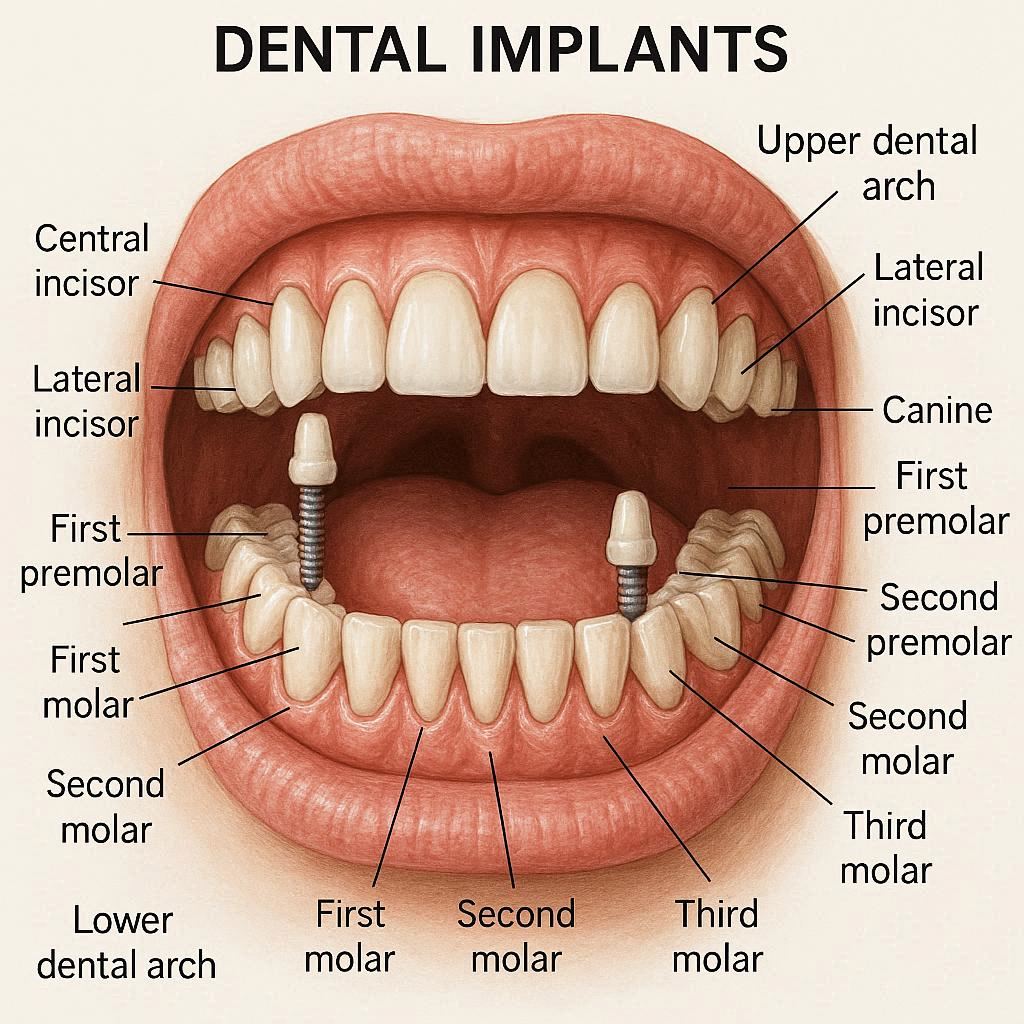
In simple terms, an arch refers to the entire curved row of teeth in your mouth. You have two arches: the upper maxillary arch (your top teeth) and the lower mandibular arch (your bottom teeth). When dental professionals talk about an “arch” in implant dentistry, they are usually discussing how to replace all or most of the teeth on one of these two rows.
But there is more to it than that. Not every implant case involves a full arch. Sometimes, you only need to replace a section. So, what is considered an arch in dental implants exactly? Let us break it down in a friendly, clear, and honest way.
Understanding the Basics: What Is a Dental Arch?
Before we dive into implants, let us look at natural anatomy. Your teeth do not grow in a straight line. They grow in a U-shaped or parabolic curve. That curve is your dental arch.
- The upper arch (maxilla): This is the curved row of teeth on the top. It is usually slightly wider than the lower arch.
- The lower arch (mandible): This is the curved row on the bottom. It fits inside the upper arch when you bite down.
A healthy arch contains incisors, canines, premolars, and molars. Each tooth has a job. When you lose multiple teeth in one arch, the shape of the bone can change. The gums may recede. This is where dental implants come in to restore both function and form.
Important note: Even if you have missing teeth, the “arch” still exists as a anatomical landmark. Your dentist will use the remaining bone and gum tissue to rebuild what is missing.
What Is Considered An Arch In Dental Implants?
Now, let us answer the core question directly.
In implant dentistry, an arch refers to a complete set of artificial teeth that replaces all the teeth on either your upper or lower jaw. However, the term is also used flexibly. Here is how professionals define it:
- Full arch: Replacing every tooth on the upper jaw or every tooth on the lower jaw with implant-supported prosthetics.
- Partial arch: Replacing a block of teeth (usually four or more) but not the entire row.
- Full mouth reconstruction: Replacing all teeth on both arches (upper and lower).
Many patients ask: “If I am missing six front teeth, is that an arch?” Usually, no. Most dentists reserve the word “arch” for cases where at least 80% of the teeth on that jaw are missing or need replacement. But in everyday language, you will hear terms like “full arch implants” or “arch replacement.”
Key takeaway:
An arch in dental implants = all or nearly all teeth on one jaw (upper or lower), supported by strategically placed implants.
Full Arch vs. Partial Arch: What Is the Difference?
This is where many people get confused. Let us compare them side by side.
| Feature | Full Arch Implants | Partial Arch Implants |
|---|---|---|
| Number of teeth replaced | All teeth on upper or lower jaw (12-14 teeth) | 3 to 8 consecutive teeth |
| Implants needed | 4 to 8 implants per arch | 2 to 4 implants |
| Prosthesis type | Fixed bridge or removable overdenture | Implant-supported bridge |
| Bone requirement | Moderate to good | Often less demanding |
| Cost range (USD) | $15,000 – $30,000 per arch | $5,000 – $12,000 |
| Surgery time | 2-4 hours per arch | 1-2 hours |
When do you need a full arch?
- Advanced gum disease has loosened most teeth.
- Multiple teeth are failing or missing.
- You wear a traditional denture and hate it.
- Severe decay or fractures on remaining teeth.
When is a partial arch enough?
- You have healthy teeth on both sides of the gap.
- Only the back molars are missing.
- You lost teeth due to injury, not disease.
Reader tip: Never let a dentist convince you to replace a full arch if you only need a partial. At the same time, do not try to save hopeless teeth just to avoid a full arch. A honest dentist will show you the long-term cost of both options.
Types of Full Arch Implant Solutions
If you need a full arch, you have several options. Each has pros and cons. Let us review them in plain English.
1. Fixed Detachable Bridge (Hybrid Prosthesis)
This is the most common full arch solution. A metal or titanium bar attaches to 4-6 implants. Then, a full set of acrylic or porcelain teeth screws onto that bar. You cannot remove it at home. Only a dentist can take it off for cleaning.
Pros:
- Very stable.
- Feels natural.
- You can eat almost anything.
Cons:
- More expensive.
- Requires good bone volume.
2. All-on-4 or All-on-6
These are brand names for a specific technique. Four or six implants are placed strategically. Two straight implants in the front. Two tilted implants in the back. A full fixed bridge attaches the same day.
Pros:
- Same-day teeth possible.
- Avoids bone grafting often.
- Lower cost than individual implants.
Cons:
- Tilting puts stress on implants.
- If one implant fails, the whole arch is at risk.
3. Implant-Supported Overdenture
This is a removable full arch. Two to four implants snap into a denture. You take it out at night to clean.
Pros:
- More affordable.
- Easier to clean.
- Good for low bone density.
Cons:
- Less stable than fixed.
- Feels bulkier in the mouth.
- Plastic teeth wear out faster.
4. Individual Crowns and Bridges
Technically, you could place 12 separate implants with 12 crowns. But this is rare. It is extremely expensive and invasive. Most surgeons will not do it unless cost is no object.
Honest advice: For most people, All-on-4 or a fixed hybrid bridge offers the best balance of cost, comfort, and durability.
The Surgical Process for a Full Arch
Understanding the process reduces fear. Here is a realistic step-by-step look.
Step 1: Consultation and Imaging
Your dentist takes a CBCT scan (3D X-ray). This shows bone height, width, and density. They will tell you if you need bone grafting. Most people need at least a little grafting.
Step 2: Extractions (If Needed)
If you have failing teeth, they are removed. This happens on the same day as implant placement in most cases.
Step 3: Implant Placement
The surgeon places 4 to 8 titanium posts into the bone. This takes about two hours per arch. You are asleep or very numb.
Step 4: Temporary Arch Placement
A temporary fixed bridge is attached. You leave with teeth that same day. But they are not your final teeth. You must eat soft foods for 4-6 months.
Step 5: Osseointegration (Healing)
The bone grows around the implants. This takes 3 to 6 months. During this time, you wear the temporary arch.
Step 6: Final Arch Placement
Once healed, the final prosthesis is screwed in. This is made of stronger materials like zirconia or high-impact acrylic.
Step 7: Follow-up Care
You return every 6 months. The dentist checks torque on the screws. Professional cleaning is essential.
Important reminder: Full arch implants are not a one-day miracle despite what some ads say. The temporary teeth are for looks and basic function. Do not bite into an apple with temporary teeth. You will break them.
How Many Implants Are Needed for a Full Arch?
This varies. There is no single answer. Here is what evidence supports:
| Number of implants per arch | Success rate (10 years) | Best for |
|---|---|---|
| 4 implants | 94-96% | Average bone, non-smokers |
| 5 implants | 95-97% | Uneven bone distribution |
| 6 implants | 97-98% | High bite force, bruxism (grinding) |
| 8 implants | 98%+ | Very large arches, heavy grinders |
Key fact: More implants do not always mean better. Four well-placed implants often outlast six poorly placed ones. The surgeon’s skill matters more than the number.
Bone Grafting and the Full Arch
Many patients worry about bone loss. If you have worn dentures for years, your jawbone has likely shrunk. This is called resorption. Without enough bone, implants cannot stay stable.
Do you always need bone grafting for a full arch?
No. But often, yes.
Cases that avoid grafting:
- You still have most of your natural teeth.
- You lost teeth recently (within 6-12 months).
- Your bone height is at least 10mm.
Cases that require grafting:
- Denture wearer for 5+ years.
- Severe gum disease history.
- Trauma that removed bone.
- Sinus cavities too close to upper arch.
Types of grafting for arches:
- Sinus lift (for upper arch only) – Lifts the sinus membrane to add bone.
- Ridge augmentation – Adds bone width to a thin ridge.
- Block graft – Takes bone from your chin or hip.
Grafting adds 4-9 months to your timeline. It also adds $2,000 to $5,000 per arch. But skipping needed grafting is the #1 reason full arch implants fail.
Real talk: A reputable surgeon will not place implants if you need grafting but refuse it. Do not trust anyone who promises “implants in one day” without checking your bone first.
Costs: What to Expect for a Full Arch
Let us be honest about money. Full arch implants are a major investment. But compared to replacing individual teeth over 20 years, they often save money.
Average cost breakdown per arch (USA, 2025-2026 estimates)
| Component | Cost range |
|---|---|
| Consultation and CBCT scan | $300 – $800 |
| Extractions (if needed) | $100 – $300 per tooth |
| Bone grafting (if needed) | $1,500 – $5,000 per arch |
| Implant placement (4-6 implants) | $6,000 – $12,000 |
| Temporary arch | $1,500 – $3,000 |
| Final fixed prosthesis (acrylic) | $4,000 – $7,000 |
| Final fixed prosthesis (zirconia) | $8,000 – $15,000 |
| Total per arch (acrylic final) | $13,000 – $28,000 |
| Total per arch (zirconia final) | $18,000 – $36,000 |
Ways to reduce cost:
- Dental schools (50-60% less, but longer treatment).
- Travel to lower-cost countries (Mexico, Costa Rica, Colombia). But be careful with follow-up care.
- Dental discount plans (not insurance, but negotiates prices).
- Financing through CareCredit or Alphaeon.
Warning: If a clinic offers a full arch for $7,000 total, run. That is below the cost of materials and surgeon time. You will get cheap dentures on poorly placed implants.
Who Is a Good Candidate for Full Arch Implants?
Not everyone qualifies. Let us be realistic.
Ideal candidate:
- Missing all or most teeth on one arch.
- Non-smoker (or willing to quit for 6 months).
- No uncontrolled diabetes or autoimmune disease.
- Good oral hygiene habits.
- Enough bone (or willing to graft).
- Realistic expectations about healing time.
Poor candidate (or needs extra care):
- Heavy smoker (failure rate doubles).
- Uncontrolled diabetes (poor healing).
- Active gum infection.
- Severe bruxism (grinding) without a nightguard.
- Bisphosphonate use (osteoporosis drugs) – risk of jaw necrosis.
Age considerations:
There is no upper age limit. People in their 80s and 90s get full arch implants successfully. Lower age limit is when jaw growth stops (around age 18 for females, 20 for males).
Important note: Being older is not a problem. Being unhealthy is. Your biological age matters more than your calendar age.
Living with Full Arch Implants: What Changes?
Life improves in many ways. But there are also new responsibilities. Let us be honest about both.
Benefits you will notice immediately:
- No more denture adhesive.
- No clicking or slipping when you talk.
- You can taste food better (no palate cover).
- You look younger (lips and cheeks have support).
- Confidence in smiling.
Adjustments you must make:
- Cleaning is different. You cannot floss between implants like natural teeth. You use superfloss, water flossers, and implant-specific brushes.
- Regular check-ups required. The screws can loosen over time. Your dentist must retorque them yearly.
- No chewing ice or hard candy. You can crack the acrylic teeth.
- Some foods remain tricky. Sticky caramels and very hard nuts are risks.
- You may feel food under the bridge. This is normal. A water flosser removes it.
What about sensation?
Implants have no nerves. You will not feel temperature or pain in the prosthetic teeth. But you will feel pressure through the jawbone. This is usually enough to know how hard you are biting.
Reader quote: “I had full arch implants five years ago. I forgot they are not real teeth until I bite into ice cream and feel nothing. That is still strange. But eating steak again was worth every penny.” – David, 62
Long-Term Success Rates Are Excellent
Evidence supports full arch implants as a reliable solution. But let us look at real numbers.
| Time frame | Success rate |
|---|---|
| 1 year | 97-99% |
| 5 years | 95-97% |
| 10 years | 90-95% |
| 15 years | 85-90% |
| 20 years | 75-85% |
Causes of failure over time:
- Peri-implantitis (infection around implant) – 40% of failures.
- Mechanical fracture of prosthesis – 25%.
- Screw loosening – 20%.
- Bone loss – 10%.
- Implant fracture – 5%.
Good news: Most failures are fixable. A loose screw can be tightened. A cracked prosthesis can be replaced. Even an infected implant can sometimes be saved with laser therapy.
Maintenance Schedule for Full Arch Implants
You cannot “set and forget” implants. Here is a realistic schedule.
Daily (at home):
- Water flosser between the arch and gum.
- Soft brush around each implant abutment.
- Floss under the bridge (use superfloss or threaders).
- Antibacterial mouthwash (no alcohol).
Every 6 months (professional):
- Remove prosthesis if it is detachable.
- Clean under the bridge.
- Check torque on all screws.
- X-rays to check bone levels.
- Polish the artificial teeth.
Every 3-5 years (as needed):
- Replace acrylic teeth if worn.
- Replace the prosthesis if fractures appear.
Every 10-15 years:
- Consider full prosthesis replacement. The materials age.
Note for smokers: Your maintenance needs will be higher. You should see your dentist every 4 months. Smoking dramatically increases plaque buildup around implants.
Common Questions People Ask About Arches in Implants
Let us answer real questions from patients.
Can I do just one arch?
Yes. Many people replace only the upper or only the lower arch. The other arch may have healthy natural teeth. That is perfectly fine.
Will my natural teeth on the opposite arch wear down?
No. Implant crowns are made of materials with similar hardness to enamel. But if you grind, you must wear a nightguard on both arches.
How long does the surgery take for one arch?
Typically 2 to 4 hours. This includes extractions, grafting (if needed), and implant placement.
Is it painful?
You are asleep or heavily numbed. Afterward, most patients describe discomfort as a 3-4 out of 10 for the first 3 days. Over-the-counter pain relievers work for most.
Can I get same-day teeth on both arches?
Yes. But eating is restricted to soft foods for 4-6 months. You cannot chew on both sides equally until final teeth are placed.
What if an implant fails in a full arch?
The surgeon will remove it. The prosthesis usually remains stable on the remaining implants. After healing, they may add a new implant.
Do full arch implants whistle?
No. That is a problem with traditional dentures. Implant arches are solid and do not move when you form sounds.
Risks and Complications: Being Honest
No surgery is risk-free. Here are real risks with approximate frequencies.
| Complication | Frequency | Solution |
|---|---|---|
| Post-op bleeding | 2-5% | Pressure, rarely needs transfusion |
| Infection (early) | 1-3% | Antibiotics |
| Nerve injury (numb lip) | 0.5-1% | Usually resolves in 6-12 months |
| Implant fails to integrate | 2-4% | Remove, add bone, replace |
| Sinus perforation (upper arch) | 3-8% | Repair with membrane |
| Prosthesis fracture | 5-10% over 10 years | Replace or repair |
| Peri-implantitis | 10-20% over 10 years | Laser, surgery, or removal |
Bottom line: Serious complications are rare. But they happen. Choose an experienced surgeon. Follow all aftercare instructions. Do not smoke.
How to Choose the Right Dentist for Full Arch Implants
This decision is more important than the implant brand. A great dentist with basic implants outperforms a poor dentist with the best implants.
Questions to ask before committing:
- “How many full arch cases have you done in the past year?” (Look for 20+)
- “Can I speak with a past patient?” (Yes should be the answer)
- “Do you have before and after photos of full arches?” (Ask for cases similar to yours)
- “What happens if an implant fails in the first year?” (They should replace at no cost)
- “Who makes the final prosthesis? In-house or outside lab?” (Outside lab is often better)
Red flags to avoid:
- Guarantees of “no bone grafting ever”
- Same-day steak dinner claims
- Price that seems too good (below $12k per arch)
- High pressure to sign today
- No written warranty
Credentials to look for:
- Diplomate, American Board of Oral Implantology (ABOI)
- Fellow or Master, International Congress of Oral Implantologists (ICOI)
- Prosthodontist (specialist in replacement teeth)
- Oral surgeon or periodontist (specialist in bone and gums)
Trust your gut: If something feels rushed or salesy, leave. Good implant dentistry is patient-paced, not pressured.
Alternatives to Full Arch Implants
Maybe full arch implants are not right for you. Here are honest alternatives.
1. Traditional Removable Dentures
- Cost: $1,000 – $3,000 per arch
- Pros: Cheap, non-surgical
- Cons: Poor stability, bone loss continues, denture adhesives needed
2. Implant-Supported Overdenture (2 implants)
- Cost: $6,000 – $10,000 per arch
- Pros: More stable than denture, removable for cleaning
- Cons: Still bulky, plastic teeth wear
3. Removable Partial Denture
- Cost: $1,500 – $4,000
- Pros: Fills gaps, cheaper
- Cons: Metal clasps show, damages adjacent teeth
4. Do nothing and live with gaps
- Cost: $0 short-term
- Pros: No surgery
- Cons: Teeth shift, bone loss, chewing difficulty, further tooth loss
Which is best?
If you can afford it and are healthy, full arch fixed implants offer the highest quality of life. If budget is tight, start with a two-implant overdenture. You can convert it to a fixed arch later.
Insurance and Financing for Full Arch Implants
Most dental insurance does not cover full arch implants well. But do not despair.
Typical coverage:
- Yearly max: $1,000 – $2,000 (covers very little of a $25k case)
- Extraction coverage: Often 50-80%
- Implant coverage: Rare. Some plans pay $500 per implant.
- Prosthesis coverage: Sometimes 50% of a denture ($500-$1,000)
Better options:
- Medicare Advantage (Part C) – Some plans have implant coverage. Read the fine print.
- Medicaid – Varies by state. Some cover implants for full arch only if you cannot wear dentures.
- VA benefits – Veterans with service-connected mouth injuries may get full coverage.
- Employer FSA/HSA – Use pre-tax dollars. Save 30-40% effectively.
Financing companies:
- CareCredit (medical credit card)
- Alphaeon Credit
- LendingClub (medical loans)
- LightStream (unsecured loans)
Smart strategy: Open an HSA if eligible. Contribute for 1-2 years before treatment. Pay with pre-tax money. That is a 30% discount immediately.
Regional Differences: USA vs. Other Countries
Many people travel for full arch implants. Here is a realistic cost comparison for the same All-on-4 procedure.
| Country | Average cost per arch | Quality | Follow-up ease |
|---|---|---|---|
| USA | $22,000 – $30,000 | Excellent | Very easy |
| Mexico (Los Algodones) | $9,000 – $15,000 | Good to excellent | Moderate |
| Costa Rica | $10,000 – $16,000 | Good | Difficult |
| Colombia | $8,000 – $14,000 | Good | Difficult |
| Turkey | $7,000 – $12,000 | Variable | Very difficult |
| Thailand | $10,000 – $18,000 | Good | Very difficult |
| Spain | $14,000 – $20,000 | Excellent | Difficult |
Risks of dental tourism:
- No legal recourse if something goes wrong.
- Flying soon after surgery increases clot risk.
- Different sterilization standards.
- Language barriers.
- Difficult to get warranty work.
Our honest take: If you live near the Mexico border and can drive, dental tourism can work. For most people, paying more in the USA for easy follow-up is worth it.
The Psychological Impact of Full Arch Implants
This is rarely discussed but very real. Losing all your teeth is traumatic. Getting them back is emotional.
What patients report after full arch implants:
- First week: Relief that surgery is over. Some regret due to soreness.
- First month: Frustration with soft food diet. Worry about breaking temporary teeth.
- Third month: Acceptance. Eating becomes easier. Starting to forget you have implants.
- Sixth month (final teeth): Joy. Many cry when they see their new smile.
- One year: Normal life. You stop thinking about your teeth most days.
Quote from a patient: “I did not realize how much I was hiding until I got my full arch implants. I stopped covering my mouth when I laughed. My marriage improved because I was not always angry about my teeth.”
If you feel depressed about tooth loss, you are not alone. Talk to your dentist about a referral to a counselor who specializes in medical trauma.
Future Innovations in Full Arch Implants
Dentistry is changing fast. Here is what is coming.
3D-printed custom arches
Instead of waiting weeks for a lab, your final prosthesis will be printed in-office in 2 hours. This is already available at high-tech clinics.
Zirconia full arches
Metal-free implants and prostheses are gaining popularity. They are hypoallergenic and look more natural. The cost is higher, but demand is growing.
Osseointegration drugs
New medications may speed bone healing from 6 months to 6 weeks. These are in clinical trials now.
Smart implants
Prototype implants with sensors can detect infection or loosening and alert your phone. Expect this by 2030.
Regenerative grafting
Stem cell and growth factor therapies may replace traditional bone grafting. Instead of taking bone from your hip, they grow it in place.
Bottom line: If you can wait 2-3 years for treatment, you may have better options. But if you are suffering with dentures now, do not wait. Current technology is already excellent.
Summary: Key Points to Remember
Let us bring everything together in a clear list.
- An arch in dental implants means all or most teeth on one jaw (upper or lower).
- Full arch implants use 4 to 8 implants to support a fixed bridge or overdenture.
- The All-on-4 technique is the most common and has excellent long-term data.
- Cost ranges from $13,000 to $36,000 per arch in the USA depending on materials and grafting.
- Healing takes 4 to 6 months before you receive your final teeth.
- Success rates are 90-95% at 10 years with proper maintenance.
- You cannot smoke and expect good results.
- Choose an experienced specialist – not a general dentist who does two implant cases per year.
- Cleaning is different, but manageable with water flossers and special brushes.
- Alternatives exist if full arch is not right for you or your budget.
Final Three-Line Conclusion
A full arch in dental implant terms means replacing all of your upper or lower teeth with implant-supported prosthetics. This solution offers exceptional stability, natural appearance, and long-term success for patients missing most or all of their teeth on one jaw. While costly and requiring a significant healing period, full arch implants remain the gold standard for restoring quality of life after extensive tooth loss.
Frequently Asked Questions (FAQ)
Q1: What exactly is considered an arch in dental implants?
An arch is the full curved row of teeth on either your upper or lower jaw. In implant dentistry, it refers to replacing all or nearly all teeth on that jaw with implant-supported prosthetics.
Q2: Can I replace just one arch and leave the other natural?
Yes. Many people have implants on the upper arch and natural teeth on the lower, or vice versa. This is completely acceptable.
Q3: How many implants make a full arch?
Typically 4 to 8 implants per arch. Four is most common for average bone. Six or eight are used for heavy grinders or those with poor bone quality.
Q4: Are full arch implants permanent?
The implants themselves are permanent (they fuse to bone). The prosthetic teeth last 10-20 years before needing replacement. Screws may need tightening over time.
Q5: Can I get a full arch on both jaws at once?
Yes, you can have upper and lower arches placed in the same surgery. The surgery takes 4 to 6 hours total.
Q6: Do full arch implants look natural?
Yes. A skilled prosthodontist can match color, shape, and translucency to look like real teeth. Most people cannot tell the difference.
Q7: Will my speech change with full arch implants?
For the better. Many patients with dentures find they slur or click. Implants eliminate that. You may need a few days to adjust, then speech is normal.
Q8: What is the failure rate for full arch implants?
About 2-4% of individual implants fail to integrate. But the overall arch succeeds 95%+ of the time because multiple implants share the load.
Q9: Can I eat steak and nuts with full arch implants?
Yes, once you have your final prosthesis. Avoid ice, hard candy, and bones. Cut steak into small pieces. Many patients eat almost everything they want.
Q10: How do I clean under a full arch bridge?
Use a water flosser (Waterpik) daily. Also use superfloss or implant floss threaders. Your dentist will show you the technique.
Additional Resource
For a deeper dive into scientific studies, patient testimonials, and a search tool for experienced implant specialists, visit:
🔗 American Academy of Implant Dentistry (AAID) – Patient Education Center
Link placeholder: www.aaid.com/patient-resources
This resource includes:
- Free PDF guide to full arch implants
- Search tool for accredited implant dentists by zip code
- Cost calculator for your region
- Video library showing real surgeries and patient recovery
Disclaimer
This article is for informational purposes only and does not constitute medical or dental advice. Every patient is unique. Always consult with a licensed dental professional before making decisions about dental implant treatment. The author and publisher are not liable for any outcomes resulting from the use of this information. Costs and success rates are estimates based on national averages as of 2025-2026 and may vary by location, provider, and individual health status.