What is Dental Implant Surgery?
Dental implant surgery is a procedure of controlled, precise, and meticulously planned biological engineering. It is the surgical act of placing an artificial tooth root into the human jawbone. The term “surgery” can evoke fear, but in the context of modern implantology, it refers to a calm, ambulatory, in-office procedure performed under profound local anesthesia. It is not an emergency. It is a scheduled, deliberate event that follows weeks of diagnostic preparation. The goal is not simply to drill a hole. The goal is to prepare a sterile, precisely shaped, and heat-controlled channel in living bone, into which a biocompatible titanium fixture is placed with such exactitude that the bone cells will recognize it as a part of the body’s own structure. This guide walks you through the full spectrum of dental implant surgery. It explains the pre-operative planning, the intra-operative sequence, the adjunctive procedures like bone grafting and sinus lifts, the anesthesia options, and the critical biological process that begins the moment the implant is seated.
The Definition and Scope of Implant Surgery
Dental implant surgery is a form of oral and maxillofacial surgery. It is classified as a sterile, invasive procedure because it breaches the oral mucosa and penetrates the bone. The surgery can be as minimal as placing a single implant into an ideal, abundant site, or as complex as a full-arch rehabilitation with multiple implants, simultaneous bone grafting, and sinus floor elevation. The procedure is performed by a dentist with advanced surgical training: an oral and maxillofacial surgeon, a periodontist, or a general dentist with extensive implantology credentials. The surgery is almost always performed in an outpatient clinic setting, not a hospital. The fundamental surgical principle is to create an osteotomy, a precisely sized socket in the bone, while inflicting the minimum possible thermal and mechanical trauma. The bone cells must survive the drilling.
The Pre-Surgical Phase: The Virtual Surgery
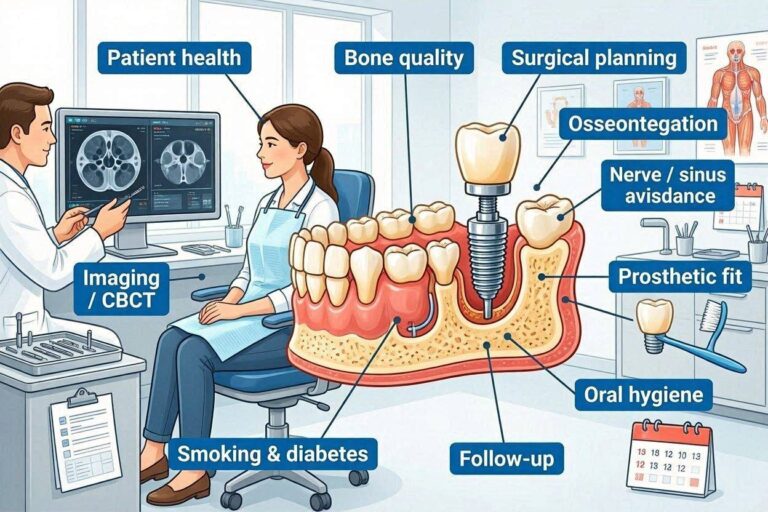
The surgery begins long before the day of the appointment. It begins with the three-dimensional visualization of the patient’s anatomy. The essential tool is the Cone Beam Computed Tomography (CBCT) scan. This low-radiation scan generates a 3D model of the jaw, revealing the bone’s height, width, density, and any anatomical hazards. The inferior alveolar nerve, a delicate canal running through the lower jaw, is mapped with bright clarity. The floor of the maxillary sinus is traced in the upper jaw. The roots of adjacent teeth are visualized. The surgeon measures the available bone in cubic millimeters.
In the modern digital workflow, this DICOM data is imported into implant planning software. The surgeon performs the entire surgery virtually. They select the implant from a digital library, position it in the bone at the ideal angle and depth, and verify a 2mm safety margin from the nerve or the sinus. This virtual surgery is then exported, and a physical surgical guide is 3D-printed. This guide fits onto the patient’s teeth or gum on the day of surgery, with metal sleeves that direct the drills to the exact pre-planned position, angle, and depth. This is guided implant surgery. It transforms the procedure from a freehand art into a digitally executed transfer.
Anesthesia and Comfort Control
The foundation of a calm surgery is absolute, profound local anesthesia. The surgeon uses a combination of topical gel to numb the surface, followed by a slow, controlled injection of a local anesthetic, typically articaine or lidocaine with epinephrine. The epinephrine is a vasoconstrictor, not a heart stimulant in this context. It chokes down the capillary blood flow, keeping the surgical field nearly bloodless and keeping the anesthetic agent localized for hours. The patient is awake and conscious, feeling pressure and vibration, but no sharp pain.
For patients with moderate to severe anxiety, conscious sedation is an option. Oral sedation involves taking a prescribed anxiolytic pill, such as triazolam, an hour before the procedure. The patient is deeply relaxed and drowsy but can respond to verbal commands. IV moderate sedation delivers the sedative directly into the bloodstream, titrated to the exact level of a twilight state. For extensive, complex surgeries, or for patients with severe phobia, general anesthesia may be administered by a certified dental anesthesiologist in the office or in a surgical suite. The patient is completely unconscious and monitored with full hospital-grade equipment.
The Surgical Sequence: A Detailed Account
The patient is seated, draped, and anesthetized. The mouth is rinsed with a chlorhexidine antiseptic. The face is swabbed with a surgical antiseptic. The sterile field is established.
Incision and Access
The surgeon uses a fine scalpel to make a crestal incision along the top of the edentulous ridge. The blade cuts cleanly to the bone. A periosteal elevator is used to gently lift the full-thickness mucoperiosteal flap, exposing the bone surface. The flap is retracted with a suture or a specialized retractor. The surgeon now inspects the bone directly, confirming the width and contour.
The Osteotomy Preparation
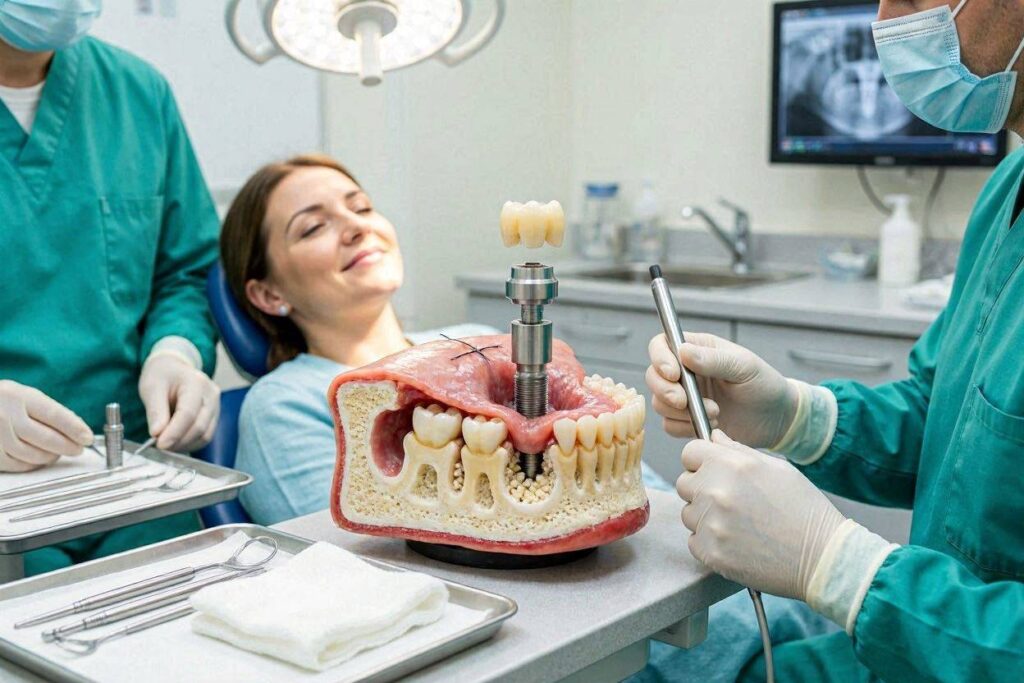
The implant motor, a digitally controlled surgical handpiece, delivers high torque at low speed with a constant stream of chilled sterile saline. The drilling sequence is strictly graduated. A small round bur creates a precise entry point dimple, preventing the drill from skating. Then, a sequence of twist drills, each 0.5 to 1.0mm larger in diameter, is used. The surgeon drills to the pre-planned depth using a pumping, in-and-out motion. The saline irrigation is the lifeblood of the procedure. It dissipates the frictional heat. A temperature rise above 47 degrees Celsius for more than one minute causes irreversible osteocyte death. The surgeon checks the depth and alignment with paralleling pins after each drill. If a surgical guide is used, each drill passes through the metal sleeve, mechanically locked to the plan.
The Final Implant Placement
The final osteotomy is a clean, cylindrical, slightly undersized channel. The surgeon removes the sterile implant from its vial. The implant is carried to the mouth on a driver attached to the surgical motor. It is engaged into the osteotomy and rotated in at a controlled torque. The bone compresses around the self-tapping threads. The surgeon watches the torque reading climb. A final insertion torque of 35-50 Ncm is the target, confirming excellent primary stability. The implant platform is seated flush with or just below the bone crest.
Closure
A cover screw is placed over the implant’s internal connection to protect it. The gum flap is repositioned and sutured with fine, non-resorbable or resorbable suture material. The goal is primary closure, a watertight seal. The implant is submerged. A final periapical X-ray confirms the position. The surgery is complete. The time for a single implant from incision to suture is typically 30-60 minutes.
Adjunctive Surgical Procedures
Often, the jawbone is insufficient to house an implant. The surgery must include a preparatory or simultaneous reconstructive step.
Bone Grafting
A bone graft is the placement of particulate bone material into a defect to create a stable scaffold for the patient’s own bone to grow into. The graft can be an autograft (harvested from the patient’s own chin or hip), an allograft (sterile human donor bone), a xenograft (bovine-derived mineral), or an alloplast (synthetic calcium phosphate). For a small socket, a graft is packed into the space and covered with a collagen membrane. For a large, atrophic ridge, a block graft, a solid piece of bone screwed to the jaw, may be required. The graft must heal for three to six months before implant placement.
Sinus Lift (Sinus Floor Elevation)
The maxillary sinus is an air-filled space above the upper back teeth. If the sinus floor is too low, there is insufficient bone height for an implant. A sinus lift is a procedure where the surgeon creates a small window in the lateral wall of the sinus, gently elevates the Schneiderian membrane, and packs bone graft material into the newly created space under the membrane. The implant may be placed simultaneously if there is enough residual bone for primary stability, or it is delayed for six months while the graft matures. This is a highly skilled, delicate procedure.
The Immediate Post-Operative Phase
The patient bites on a sterile gauze for 30-60 minutes. A post-operative kit with ice packs, prescription medications (analgesics, an antibiotic if indicated, and an antimicrobial mouthwash), and written instructions is provided. The ice pack protocol is 20 minutes on, 20 minutes off, for the first 24-48 hours to minimize swelling. The patient sleeps with their head elevated. They eat a soft, cool diet, avoid straws, and do not smoke. The sutures are removed in 7-14 days. The submerged implant now enters the silent, invisible phase of osseointegration.
Conclusion
Dental implant surgery is a pre-planned, sterile, in-office procedure that involves a full-thickness gum flap to expose the jawbone, a graduated sequence of cooled drills to create a precise osteotomy, and the controlled insertion of a titanium implant fixture to achieve primary mechanical stability. It can be performed under local anesthesia alone, with conscious sedation, or under general anesthesia, and may include adjunctive reconstructive procedures like bone grafting or a sinus lift to create the necessary bone volume. The surgery initiates the biological process of osseointegration, which silently fuses the implant to the bone over three to six months.
Frequently Asked Questions
Is dental implant surgery considered major surgery?
No, it is considered a minor, ambulatory oral surgical procedure. It is performed in a dental office, not a hospital. You walk in and walk out on the same day. The level of invasiveness is less than a wisdom tooth extraction. However, it is a sterile surgical procedure with all the associated protocols.
Will I be in pain during the surgery?
No. Profound local anesthesia completely blocks the nerve signals from the surgical site. You will feel intense pressure and vibration as the implant is seated, which is normal and not painful. The anesthesia is tested before any incision is made. Sedation can add an additional layer of psychological comfort.
Can the implant be placed immediately after a tooth extraction?
In many cases, yes. This is called an immediate implant placement. It is possible when the extracted tooth has no active infection, the bony walls of the socket are intact, and the surgeon can achieve primary stability of the implant in the native bone beyond the socket apex. This reduces the number of surgeries and the total treatment time.
How do I prepare for implant surgery?
You will receive specific instructions. Generally, you eat a light meal a few hours before if you are having only local anesthesia. If you are having IV sedation, you must fast for 6-8 hours. You should arrange for someone to drive you home. You should take any pre-operative medication, such as an antibiotic, as prescribed.
Additional Resource:
For detailed video animations of the implant surgical process, visit the patient education library of the Academy of Osseointegration at www.osseo.org.
Disclaimer: This article is a comprehensive educational overview of dental implant surgery. Individual treatment plans, surgical techniques, and medical decisions vary based on a patient’s unique anatomy and health status. A personal consultation and examination by a qualified dental implant surgeon is essential.