What Is The Average Cost Of A Dental Cleaning?
A dental cleaning is one of the most common healthcare appointments in the world. It is also one of the most misunderstood when it comes to cost. Many people assume it is free with insurance, and for some, it is. But for others, especially those without coverage, the price can be a surprise. You might be wondering: What is the average cost of a dental cleaning?
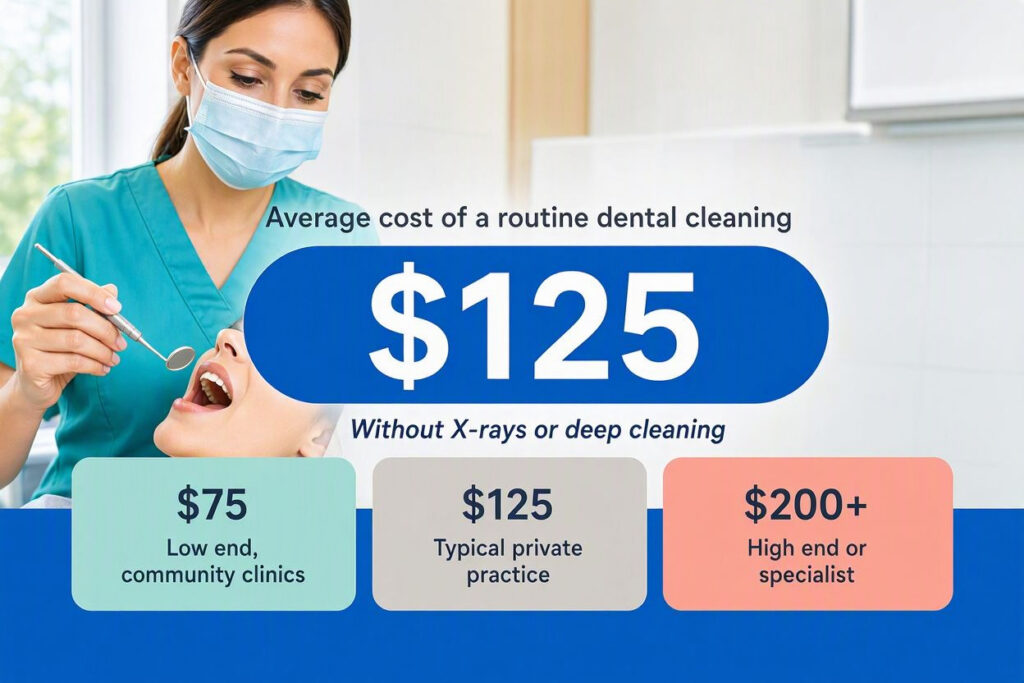
The answer depends on several factors. A routine cleaning at a family dentist is very different from a deep cleaning for gum disease. Your location, the type of practice, and whether you are a new or existing patient all play a role. Prices can range from $75 to over $400 for a single visit.
This guide will break down the real costs of dental cleanings. We will explain the different types of cleanings, what they involve, and why they cost what they do. We will look at how insurance works, what to do if you do not have it, and how to find affordable care. By the end, you will know exactly what to expect for your next visit.
What Is A Dental Cleaning?
A dental cleaning, also called prophylaxis, is a preventive procedure. A dental hygienist removes plaque and tartar from your teeth. Plaque is a soft, sticky film of bacteria. If you do not remove it by brushing and flossing, it hardens into tartar. Tartar cannot be removed with a toothbrush. It requires special dental tools.
The hygienist uses scalers and curettes to scrape tartar from above and below the gumline. Then they polish your teeth with a gritty paste and a rubber cup. Finally, they may apply fluoride or a desensitizing agent.
The goal is to prevent cavities and gum disease. Regular cleanings also allow the dentist to catch problems early when they are easier and cheaper to fix.
Types Of Dental Cleanings And Their Costs
Not all cleanings are the same. The cost depends on the type of cleaning you need. There are three main types.
1. Routine Cleaning (Prophylaxis)
This is the standard cleaning you get every six months. It is for people with healthy gums and no bone loss. The hygienist removes plaque and tartar from the crown of the tooth (the part above the gumline).
- Average Cost: $75 to $150
- Time: 30 to 60 minutes
- Frequency: Every 6 months
2. Deep Cleaning (Scaling And Root Planing)
If you have gum disease, a routine cleaning is not enough. You need a deep cleaning. This procedure goes below the gumline to remove tartar from the roots of your teeth. It also smooths the root surfaces to help your gums reattach.
Deep cleaning is usually done one or two quadrants of the mouth at a time. It may require local anesthesia.
- Average Cost: $150 to $400 per quadrant
- Full Mouth (4 quadrants): $600 to $1,600
- Time: 1 to 2 hours per visit
- Frequency: As needed, often followed by periodontal maintenance
3. Periodontal Maintenance
After a deep cleaning, you need ongoing care to keep gum disease under control. This is called periodontal maintenance. It is like a routine cleaning but more thorough. It includes checking gum pocket depths and removing bacteria from deeper pockets.
- Average Cost: $100 to $250
- Time: 45 to 60 minutes
- Frequency: Every 3 to 4 months
Table: Average Cost Of Dental Cleanings Without Insurance
| Type of Cleaning | Average Cost Range (USD) | Who Needs It |
|---|---|---|
| Routine Cleaning (Prophylaxis) | $75 – $150 | Healthy gums, no bone loss |
| Deep Cleaning (Per Quadrant) | $150 – $400 | Gum disease, bone loss |
| Deep Cleaning (Full Mouth) | $600 – $1,600 | Moderate to severe gum disease |
| Periodontal Maintenance | $100 – $250 | After deep cleaning, ongoing gum disease |
Important Note: These prices are for the cleaning alone. They do not include the exam or X-rays. A typical new patient visit bundles the exam, X-rays, and cleaning together. The total cost can be $200 to $500.
What Determines The Cost Of A Dental Cleaning?
Why does a cleaning cost $75 in one office and $200 in another? Several factors influence the price.
1. Geographical Location
The cost of living varies widely across the country. A cleaning in rural Alabama might cost $75. The same cleaning in San Francisco could cost $200. Rent, staff wages, and taxes are higher in cities, and those costs are passed on to patients.
2. The Type Of Practice
A solo practitioner with a small office usually charges less than a large group practice. A boutique dental spa with luxury amenities charges more. You are paying for the experience and the environment.
3. The Hygienist’s Experience
An experienced hygienist is faster and more efficient. They may also command a higher salary. This can affect the fee.
4. New Patient Vs. Existing Patient
New patients often pay more because the visit includes a comprehensive exam and X-rays. Existing patients who come for a routine cleaning pay less because they are only paying for the cleaning and a periodic exam.
5. Additional Services
Some offices include fluoride treatment or a desensitizing agent in the cleaning fee. Others charge extra. Fluoride costs $20 to $50. Desensitizers cost $15 to $40.
6. The Need For Anesthesia
If you need a deep cleaning, you may require local anesthesia. This adds $50 to $150 to the cost.
How Insurance Covers Dental Cleanings
Dental insurance is designed to encourage preventive care. Most plans cover routine cleanings at 100%. They do this because preventing gum disease and cavities saves the insurance company money in the long run.
Typical Coverage
- Routine Cleaning: Covered at 100%, usually twice per year.
- Deep Cleaning: Covered at 80%, often with a deductible. Some plans classify it as basic restorative and cover 70-80%.
- Periodontal Maintenance: Covered at 80%, usually every 3 to 4 months.
Deductibles And Maximums
Even if a cleaning is covered at 100%, you may still have to pay a deductible. The deductible is usually $50 to $100. Once met, insurance pays.
Also, your plan has an annual maximum benefit, usually $1,000 to $1,500. If you have used most of that on other treatments, you may have to pay for the cleaning out of pocket.
Table: Example Of Insurance Coverage For A Routine Cleaning
| Amount | |
|---|---|
| Dentist’s Fee | $120 |
| Annual Deductible (Unmet) | $50 |
| Amount Subject To Coverage | $70 |
| Insurance Pays (100%) | $70 |
| You Pay (Deductible) | $50 |
Important Note: Some plans have waiting periods. You may need to be enrolled for 6 to 12 months before preventive benefits kick in. Always read your plan documents carefully.
What If You Don’t Have Insurance?
If you are paying out of pocket, a dental cleaning can feel like a luxury. But it is a necessity. Here are several ways to reduce the cost.
1. Dental Schools
Dental schools need patients for students to practice on. The work is supervised by licensed dentists. A cleaning at a dental school might cost $30 to $60. The trade-off is time. Appointments are longer because students are learning.
2. Dental Hygiene Schools
Some schools offer cleanings performed by hygiene students. These are even cheaper, sometimes free. The students are supervised by instructors. The cleanings are thorough, but they take a long time.
3. Community Health Centers
Federally Qualified Health Centers (FQHCs) provide dental care on a sliding scale based on income. If you qualify, a cleaning could cost as little as $20.
4. Dental Membership Plans
Many private practices offer in-house membership plans. You pay an annual fee (e.g., $300 to $400). In exchange, you get two cleanings, two exams, X-rays, and a discount on other treatments. This is often cheaper than paying per visit if you do not have insurance.
5. Payment Plans
Some offices offer payment plans for larger treatments like deep cleanings. You can spread the cost over several months.
6. Negotiate
Do not be afraid to ask for a discount. Some offices offer a 5% to 10% discount for cash payment. It never hurts to ask.
The Cost Of Not Getting A Cleaning
Skipping cleanings to save money is a false economy. Here is why.
- Plaque Hardens Into Tartar: Once tartar forms, you cannot remove it at home. It requires professional tools.
- Gum Disease Develops: Tartar irritates your gums. They become red, swollen, and bleed easily. This is gingivitis. It is reversible with a cleaning.
- Gingivitis Becomes Periodontitis: If left untreated, gingivitis turns into periodontitis. This is a serious infection that destroys the bone supporting your teeth. It requires deep cleaning and ongoing maintenance.
- Tooth Loss: Advanced periodontitis leads to tooth loss. Replacing teeth with implants or bridges costs thousands of dollars.
The Math:
- Prevention: $120 for a cleaning.
- Treatment: $1,200 for a deep cleaning, plus $2,000 to $5,000 for implants if teeth are lost.
The Lesson: A cleaning is an investment in avoiding pain and expense.
What Do Patients Say?
We spoke to three people about their experiences with dental cleaning costs.
Sarah, 34, has insurance.
“I pay $0 for my cleanings because my insurance covers them 100%. I go every six months. It is the best deal in healthcare. I cannot understand why people skip it.”
Mark, 52, pays out of pocket.
“I do not have dental insurance. I pay $120 for a cleaning at my local dentist. It is a lot of money, but I had gum disease once, and the deep cleaning cost me $1,400. I never want to go through that again. The routine cleaning is worth it.”
Elena, 28, goes to a dental school.
“I am a student, so money is tight. I go to the dental school for my cleanings. It costs $40, but it takes about two hours. The students are very careful, and the instructor checks everything. I recommend it if you have more time than money.”
Frequently Asked Questions
Q: How often should I get a dental cleaning?
A: Most people need a cleaning every six months. If you have gum disease, you may need periodontal maintenance every three to four months. Your dentist will recommend a schedule based on your oral health.
Q: Does a dental cleaning hurt?
A: A routine cleaning is not painful. You will feel some scraping and pressure. If you have sensitive teeth or gum disease, it may be uncomfortable. You can ask for a numbing gel or local anesthesia.
Q: What is the difference between a cleaning and a deep cleaning?
A: A routine cleaning removes plaque and tartar from above the gumline. A deep cleaning goes below the gumline to remove tartar from the roots. It is for people with gum disease.
Q: Can I get a cleaning if I have braces?
A: Yes. You need cleanings more often because braces trap food and plaque. Your dentist or orthodontist will recommend a schedule.
Q: Is a dental cleaning covered by Medicare?
A: Original Medicare (Part A and Part B) does not cover routine dental cleanings. Some Medicare Advantage plans offer dental coverage as an extra benefit. Check your plan.
Q: What happens if I don’t get my teeth cleaned for years?
A: Plaque and tartar will build up. Your gums will become inflamed. You will likely develop gum disease. You may also develop cavities. When you finally go, you may need a deep cleaning instead of a routine one, which costs much more.
Q: Can I use my HSA or FSA for a dental cleaning?
A: Yes. Dental cleanings are qualified medical expenses. You can use pre-tax dollars from your Health Savings Account (HSA) or Flexible Spending Account (FSA) to pay for them.
Conclusion
The average cost of a dental cleaning ranges from $75 to $150 for a routine visit. Deep cleanings cost more, from $600 to $1,600 for the full mouth. Insurance usually covers routine cleanings at 100%, making them essentially free for many people. If you do not have insurance, options like dental schools, community health centers, and membership plans can make cleanings affordable. The most important thing is to get regular cleanings. They prevent painful and expensive problems like gum disease and tooth loss. Your smile and your wallet will thank you.
Additional Resources
For more information on dental cleanings and gum disease prevention, visit the American Dental Association (ADA) at ada.org. They provide patient resources on oral hygiene and preventive care.