What Is The Best Dental Implant System?
The question seems simple. A patient facing implant surgery wants the best. They want the implant that will last the longest, heal the fastest, and cause the fewest problems. They search for a ranking, a winner, a definitive answer. The reality is more nuanced. There is no single best dental implant system for every patient and every clinical situation. What exists is a landscape of high-quality implant systems, each with strengths, a documented track record, and specific clinical applications where it excels. This article provides an honest exploration of what makes an implant system excellent, profiles the leading manufacturers, and explains why the skill of the clinician and the specifics of your case matter far more than the brand name on the package.
What Defines a Quality Implant System
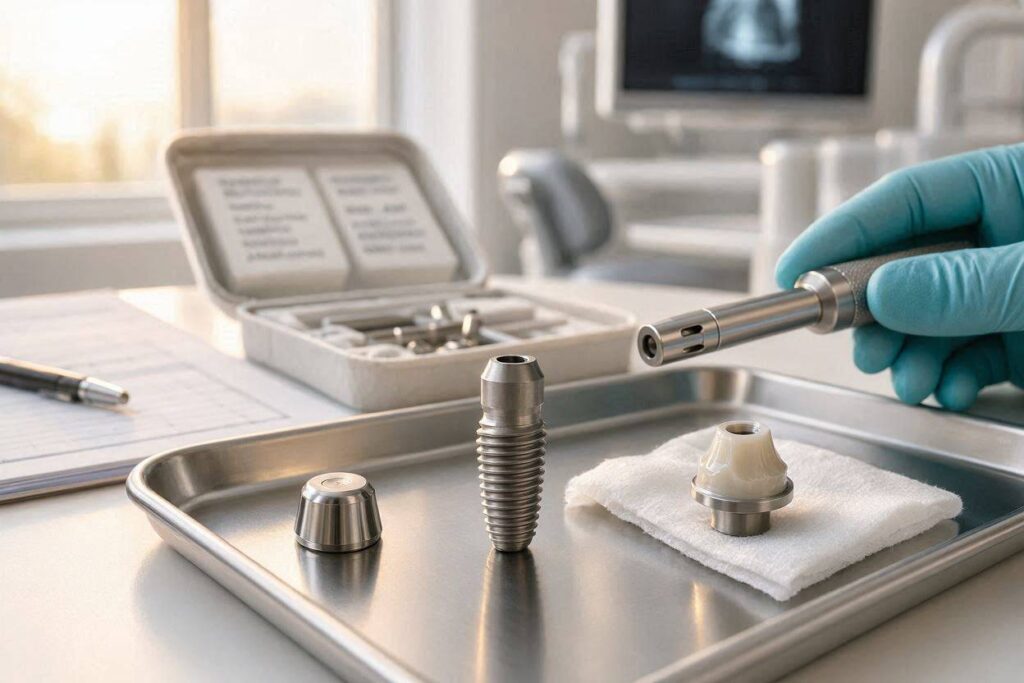
Before naming names, it is essential to understand the criteria by which implant systems are judged. A quality implant system is not merely a precisely machined piece of titanium. It is a comprehensive solution backed by science, supported by a company that stands behind its product, and designed for long-term clinical success.
Scientific Documentation and Long-Term Data
The most important attribute of any implant system is the body of peer-reviewed scientific evidence supporting its use. This means published studies, not marketing brochures. A quality system has prospective clinical trials with five-year, ten-year, and longer follow-up data demonstrating high survival and success rates. It has studies examining its performance in challenging situations: in soft bone, in smokers, in immediately loaded protocols, in patients with a history of periodontitis. The company invests in independent research, not just internal testing. The clinician who selects a well-documented system is practicing evidence-based dentistry. The patient benefits from decades of accumulated data confirming that the implant works.
Surface Technology
The surface of the implant is where the biological action happens. The titanium oxide layer is not just a passive coating. Modern implant surfaces are engineered at the microscopic and nanoscopic level to enhance osseointegration. Surface modifications include sandblasting with titanium oxide or alumina particles to create macro-roughness. Acid etching creates micro-roughness and a complex topography. Anodization thickens the oxide layer and can incorporate bioactive elements like calcium and phosphorus. Hydrophilic surfaces are chemically modified to attract water and blood, accelerating the early healing cascade.
A quality implant system has a well-characterized surface with documentation of the surface chemistry and topography, and clinical data demonstrating enhanced osseointegration, particularly in the critical early healing phase. The surface is produced under strict quality control to ensure consistency from implant to implant.
Connection Design
The interface between the implant fixture and the abutment is a critical engineering feature. Early implant systems used an external hex connection. The abutment sat on top of the implant and was secured with a screw. This design had limitations, including a higher incidence of screw loosening and micromovement at the interface.
Modern implant systems predominantly use an internal connection. The abutment extends down into the implant body. The most advanced form is the conical connection, also called a Morse taper. The abutment wedges into the implant with such precision that the two components essentially cold-weld together. This creates a bacterial seal and eliminates micromovement. A quality implant system has a connection design with documented mechanical stability, a low incidence of screw loosening, and a bacterial seal that protects the peri-implant bone.
Prosthetic Flexibility
The best implant system offers a comprehensive range of prosthetic components. It provides stock abutments in multiple sizes, angles, and materials. It provides custom abutment options through CAD/CAM workflows. It provides solutions for single teeth, bridges, removable overdentures, and full-arch fixed restorations. It provides both cement-retained and screw-retained options. The clinician should not be limited by the prosthetic inventory when planning the ideal restoration for the patient.
Company Stability and Support
Dental implant companies come and go. A patient who receives an implant from a company that goes out of business may find it difficult or impossible to obtain replacement components years later. The implant fixture may be fine, but the abutment screw loosens and needs replacement, or the crown needs to be remade. If the proprietary driver or the specific abutment is no longer manufactured, a straightforward fix becomes a complicated problem.
A quality implant system is manufactured by a company with a long track record of stability, a commitment to the dental implant market, and a warranty program that covers implant replacement in the event of fixture failure. The company maintains backward compatibility so that components for older implant designs remain available. The company provides technical support to the clinician.
The Major Players: A Profile of Leading Implant Systems
Several implant systems have earned their place at the top through decades of research, clinical success, and continuous innovation. This is not an exhaustive list, but it represents the brands most widely regarded as leaders.
Straumann
Straumann, headquartered in Switzerland, is widely considered one of the premier implant systems in the world. The company has its roots in the original Brånemark osseointegration research and has been a dominant force in implant dentistry for decades.
The Straumann implant surface, known as SLActive, is a hydrophilic chemically modified surface designed to accelerate osseointegration. Clinical studies have demonstrated enhanced bone healing, particularly in the critical early weeks after placement. The implant-abutment connection is a conical Morse taper design called CrossFit, which provides a bacterial seal and mechanical stability.
Straumann offers an exceptionally broad prosthetic portfolio and has invested heavily in digital dentistry integration. Their system supports fully digital workflows from intraoral scanning to guided surgery to CAD/CAM restoration. The company is stable, well-capitalized, and deeply committed to the dental implant market. Straumann implants are priced at the premium end of the spectrum. The cost reflects the research investment, the manufacturing precision, and the brand’s market position.
Nobel Biocare
Nobel Biocare is the direct descendant of the Brånemark system, the original dental implant. Per-Ingvar Brånemark placed his first titanium dental implant in a human patient in 1965, and that patient lived with functioning implants for over forty years. Nobel Biocare carries this legacy.
The modern Nobel Biocare implant features the TiUnite surface, a moderately rough anodized surface with a long track record. The connection design varies across product lines, with internal conical connections available. Nobel Biocare is a pioneer in the All-on-Four treatment concept, and their implant designs and prosthetic components are optimized for full-arch immediate loading.
Nobel Biocare provides comprehensive digital solutions and guided surgery protocols. The company is a division of Danaher Corporation, a large and stable medical technology company. Nobel Biocare implants are also premium-priced, reflecting their heritage and research investment.
BioHorizons
BioHorizons, based in the United States, has established itself as a major player with a strong research focus. Their Laser-Lok surface technology incorporates precisely machined micro-channels on the implant collar designed to attract and organize connective tissue and bone cells.
The rationale is that a connective tissue attachment around the implant collar can serve as a biological seal, reducing the apical migration of epithelium and potentially reducing the risk of peri-implantitis. The clinical evidence for this tissue attachment is promising, though long-term comparative data on peri-implantitis prevention is an active area of study.
BioHorizons offers a conical internal connection and a broad prosthetic range. Their implants are positioned in the premium category and are well-regarded for cases where soft tissue integration is a high priority.
Zimmer Biomet Dental
Zimmer Biomet is a major medical device company with a significant dental implant division. Their implants feature a range of surface technologies and connection designs. The TSV implant line uses a tapered body with an internal connection. Zimmer Biomet offers solutions across the full spectrum of implant indications.
The company benefits from the resources and stability of its parent corporation. Their implant portfolio is comprehensive, and their digital workflow integration is competitive. Zimmer Biomet implants are generally positioned at a slight discount to Straumann and Nobel Biocare, though still in the premium category.
MegaGen
MegaGen, based in South Korea, represents a value-oriented brand that has gained significant global market share. Their AnyRidge implant system features a conical connection and a knife-thread design intended to enhance primary stability in soft bone. The surface is a sandblasted, acid-etched, and heat-treated surface called Xpeed.
MegaGen has invested in clinical research, though the volume and duration of independent studies are less than the European and American premium brands. The company is stable and growing. MegaGen implants are priced lower than the premium brands, making them attractive for cost-conscious patients and practices. Many clinicians who use MegaGen report excellent clinical results. The key question for a patient is whether the dentist has specific training and experience with the system and confidence in its long-term performance.
The Clinician Factor: Why Experience Trumps Brand
The best implant system in the hands of an inexperienced or poorly trained clinician will produce worse outcomes than a mid-range system in the hands of a master clinician. Implant dentistry is a surgical and restorative discipline. The skill, judgment, and experience of the practitioner are the dominant variables.
A clinician who has placed thousands of implants from a specific system knows its handling characteristics. They know the precise drilling sequence. They understand the tactile feedback of achieving primary stability. They have experienced complications and know how to manage them. They have developed a relationship with the company’s technical support team. They know the prosthetic workflow intimately.
When this clinician recommends an implant system, they are not necessarily saying it is the best implant in the world. They are saying it is the system they know best, trust most, and can use most predictably. A patient is almost always better served by their clinician’s familiar, trusted system than by demanding a specific brand the clinician does not routinely use.
The Clinical Situation Factor
Different implant designs excel in different clinical scenarios.
In soft, low-density bone, a tapered implant with an aggressive thread design can achieve better primary stability. In narrow ridges, a narrow-diameter implant with a high-strength alloy is essential. In aesthetic zones, an implant designed with a platform-switching connection and a scalloped collar may preserve soft tissue height better. In full-arch immediate loading cases, implants with documented high primary stability and specific abutment designs are preferred.
The “best” implant system is the one with the specific design features that match the demands of the case. A clinician who uses multiple implant systems can select the optimal implant for each situation. A clinician loyal to a single system selects the best implant within that system for each situation. Both approaches are valid when executed skillfully.
The Patient’s Role in the Decision
A patient does not need to become an implant expert. But a patient should feel empowered to ask informed questions.
“What implant system do you use, and why did you choose it?” A good clinician has a coherent answer. “How long have you been using this system?” Experience matters. “What is the warranty on this implant?” A manufacturer warranty covers replacement of a failed fixture. “What is the long-term success data for this implant?” The clinician should be able to cite studies or personal experience. “Are there different implant options for my specific case?” This opens a conversation about the clinical factors driving the choice.
A clinician who is defensive, dismissive, or unable to answer these questions is a red flag. A clinician who answers thoughtfully and transparently builds trust.
The Warranty Consideration
Most premium implant manufacturers offer a warranty that covers replacement of the implant fixture if it fails to osseointegrate or fractures. The terms vary. Some warranties are lifetime. Some are limited to a number of years. Some cover the implant only; some provide a credit toward the restorative components.
A warranty is a signal of the manufacturer’s confidence in their product. It also provides practical financial protection. If an implant fails, the patient may still be responsible for the surgical and restorative fees to place a new one, but at least the hardware cost is covered. A patient should ask about warranty coverage before treatment.
The Counterfeit Problem
The existence of a gray market for counterfeit and non-original implant components is a disturbing reality. Unscrupulous suppliers sell imitation implants, abutments, and instruments that look like the genuine article but are manufactured without quality control, without regulatory oversight, and without biocompatibility testing. These components may be made from inferior materials. They may have dimensional inaccuracies that prevent proper fit. They may not osseointegrate predictably.
A patient can protect themselves by seeking care from a reputable clinician who sources implants directly from the manufacturer or authorized distributors. The lowest price is not always the best value if the source of the implant is uncertain.
Conclusion
The question of the best dental implant system has no single answer. Several premium brands, notably Straumann, Nobel Biocare, BioHorizons, and Zimmer Biomet, stand out for their decades of independent research, proven surface technologies, precision engineering, and corporate stability. Value-oriented systems like MegaGen offer quality alternatives at lower cost. But the brand is far less important than the clinician’s training, experience, and familiarity with the system they use. The best implant for any patient is the one placed by a skilled, conscientious clinician who has selected a well-documented system appropriate for the specific clinical situation. Patients should ask informed questions, trust demonstrated expertise, and understand that long-term success depends more on the hands holding the drill than on the logo on the box.
Frequently Asked Questions
Which dental implant brand has the highest success rate?
Multiple premium brands have documented success rates above 95%. There is no credible evidence that any one major brand is clinically superior to the others. The clinician’s skill and patient factors are more significant variables.
Are cheaper implant systems safe?
Established value brands with regulatory approval and clinical documentation can be safe and effective. The danger lies in counterfeit or completely unstudied systems. The clinician should be transparent about the system used and its evidence base.
Does the implant brand affect how my crown looks?
The implant fixture is entirely under the gum and bone. The aesthetics of the final crown depend on the abutment material, the crown material, and the skill of the restorative dentist and laboratory technician, not the implant brand.
Can my dentist use a different abutment brand on my implant?
Original manufacturer components are strongly recommended. Mixing brands can result in poor fit, micromovement, and complications. Some aftermarket abutments are legitimate and FDA-cleared, but the original manufacturer’s components represent the safest standard.
What happens if my implant manufacturer goes out of business?
Replacement components may become difficult to source. This is a risk with smaller, newer companies. Choosing a major, established manufacturer mitigates this risk.
Should I travel abroad for a specific implant brand?
Dental tourism for a specific brand is generally not recommended. The quality of the surgical and restorative care is far more important than the implant brand. Choose the clinician, not the brand.
Additional Resource:
International Congress of Oral Implantologists – Patient Information
https://www.icoi.org/patient-info/