What Is The Cost Of A Dental Mouthguard?
A dental mouthguard is a simple piece of plastic that can save you thousands of dollars and a lot of pain. It protects your teeth from grinding, clenching, and sports injuries. It can also help with jaw problems like TMJ. But if you have ever shopped for a mouthguard, you know that prices vary wildly. You can buy a basic guard at a pharmacy for $10. You can also pay $500 or more for a custom-made guard from your dentist.
So, what is the real cost of a dental mouthguard? Is it worth paying for a custom one? And how do you know which type is right for you?
This guide will break down the costs of dental mouthguards. We will look at the different types, average prices, what affects the cost, and how to save money. By the end, you should have a clear picture of what to expect and how to choose the best mouthguard for your needs and your budget.
What Is A Dental Mouthguard?
A dental mouthguard is a protective device that fits over your teeth. It is usually made of plastic or laminate. Mouthguards are used for three main purposes:
- Sports protection: To protect teeth from impact during contact sports like football, hockey, boxing, and basketball.
- Night guards: To prevent tooth damage from grinding (bruxism) and clenching during sleep.
- TMJ/TMD therapy: To reduce jaw pain and tension caused by temporomandibular joint disorders.
Mouthguards cushion the teeth, absorb shock, and distribute force evenly. They can prevent chipped teeth, cracked teeth, knocked-out teeth, and jaw injuries. They can also reduce headaches, earaches, and jaw pain caused by grinding.
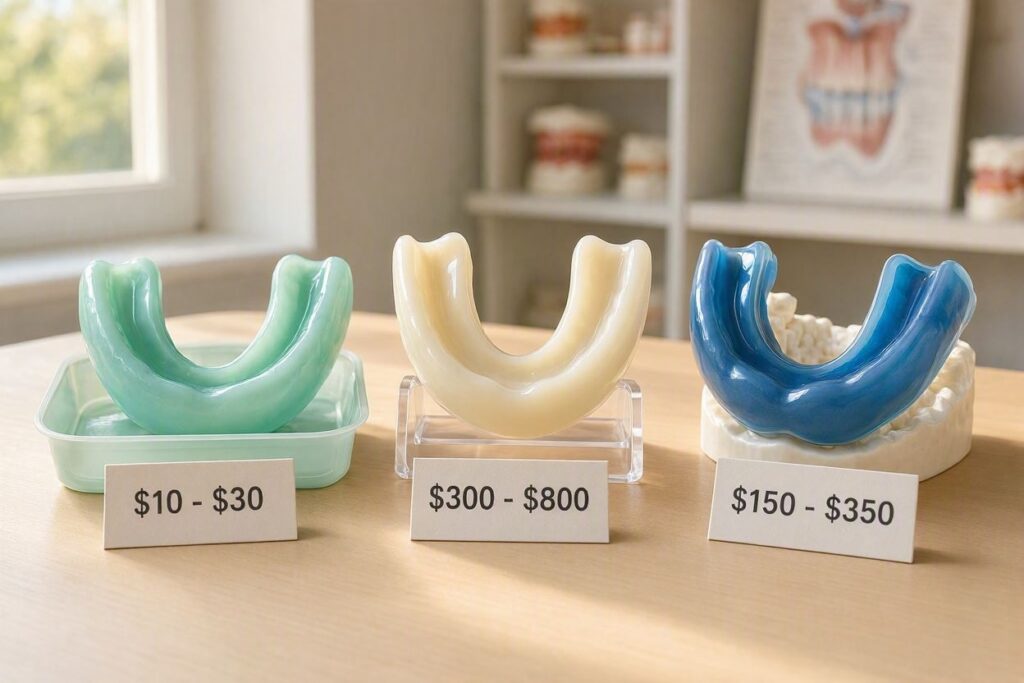
There are three main types of mouthguards:
- Stock mouthguards: Pre-formed, ready to wear. Cheapest, but often bulky and uncomfortable.
- Boil-and-bite mouthguards: Heated in water and molded to your teeth. Mid-range price, better fit than stock.
- Custom-made mouthguards: Made by a dentist from an impression of your teeth. Most expensive, but best fit, comfort, and protection.
The Average Cost Of A Dental Mouthguard
Let us start with the numbers. The cost of a mouthguard depends on the type, where you buy it, and whether it is custom-made.
Here is a breakdown of average costs in the United States:
| Type Of Mouthguard | Average Cost (USD) |
|---|---|
| Stock mouthguard (pharmacy) | $10 – $30 |
| Boil-and-bite mouthguard (pharmacy) | $20 – $60 |
| Boil-and-bite mouthguard (dental office) | $50 – $150 |
| Custom-made sports mouthguard | $200 – $500 |
| Custom-made night guard (bruxism) | $300 – $800 |
| Custom-made TMJ mouthguard | $400 – $1,000+ |
| Replacement custom mouthguard | $150 – $500 |
These prices are for the mouthguard itself. They may not include the cost of the dental visit, impressions, or follow-up adjustments. Always ask for a complete package price.
Custom mouthguards are more expensive because they are made from a precise impression of your teeth. They fit better, are more comfortable, and provide superior protection. They also last longer than over-the-counter options.
What Affects The Cost Of A Dental Mouthguard?
Many factors influence the final price. Let us look at the most important ones.
1. Type Of Mouthguard
Stock mouthguards are the cheapest. Boil-and-bite guards are mid-range. Custom-made guards are the most expensive.
2. Where You Buy It
Pharmacy and sporting goods stores sell stock and boil-and-bite guards. Dentists sell custom guards. Dental offices also sell some boil-and-bite guards, but at a higher price than retail stores.
3. Dentist’s Experience And Reputation
A highly experienced dentist or specialist (like a prosthodontist or TMJ specialist) will charge more than a general dentist. Their expertise ensures a better fit and better results.
4. Geographic Location
Where you live makes a big difference. A dentist in New York City or San Francisco will charge more than a dentist in a small town. The cost of living, rent, and local demand all affect fees.
5. Lab Fees
Custom mouthguards are made in a dental lab. The quality of the lab and the materials used affect the price. High-end labs use better materials and more precise techniques.
6. Additional Features
Some mouthguards include extra features:
- Multiple layers: For added protection. Cost: $50 – $150 extra.
- Custom colors or logos: For sports teams. Cost: $20 – $100 extra.
- TMJ/TMD therapy design: For jaw pain. Cost: $100 – $300 extra.
- Adjustable settings: For varying levels of protection. Cost: $50 – $200 extra.
7. Complexity Of Your Case
If you have severe bruxism, TMJ, or a complex bite, you may need a more specialized mouthguard. This increases the cost.
8. Insurance Coverage
If you have dental or medical insurance, your out-of-pocket cost may be lower. We will discuss insurance later.
9. Time Of Year
Some dental offices offer promotions in January or during Dental Health Month. Sports mouthguards may be discounted at the start of sports seasons.
Comparative Table: Cost Of Mouthguards By Type And Source
| Type Of Mouthguard | Pharmacy/Sports Store (USD) | Dental Office (USD) | Best For |
|---|---|---|---|
| Stock | $10 – $30 | Not sold | Budget, occasional use |
| Boil-and-bite | $20 – $60 | $50 – $150 | Better fit, moderate protection |
| Custom sports | Not available | $200 – $500 | Athletes, maximum protection |
| Custom night guard | Not available | $300 – $800 | Bruxism, clenching |
| Custom TMJ guard | Not available | $400 – $1,000+ | TMJ/TMD, jaw pain |
| Replacement custom | Not available | $150 – $500 | Replacing worn-out guard |
Cost Of Mouthguards Around The World
Prices vary dramatically from country to country. Let us compare costs for a custom-made night guard in different countries.
| Country | Average Cost (Local Currency) | Approx. USD |
|---|---|---|
| United States | $300 – $800 | $300 – $800 |
| Canada | $300 – $700 CAD | $220 – $520 |
| United Kingdom | £150 – £400 | $200 – $520 |
| Australia | $300 – $600 AUD | $200 – $400 |
| Ireland | €200 – €500 | $220 – $540 |
| Germany | €200 – €500 | $220 – $540 |
| France | €180 – €450 | $200 – $490 |
| Spain | €150 – €400 | $165 – $440 |
| Mexico | $1,500 – $4,000 MXN | $75 – $200 |
| Costa Rica | $100 – $300 | $100 – $300 |
| Thailand | ฿2,000 – ฿6,000 | $60 – $180 |
| India | ₹1,500 – ₹5,000 | $20 – $65 |
| Turkey | $80 – $250 | $80 – $250 |
Prices vary by clinic and city. These ranges are for general comparison only.
Does Insurance Cover Dental Mouthguards?
In most cases, dental insurance does not cover mouthguards for sports. Sports mouthguards are considered preventive but are often excluded because they are not medically necessary.
However, night guards and TMJ mouthguards may be covered if they are prescribed by a dentist for a medical condition like bruxism or TMJ disorder. Coverage varies by plan.
Here is what you need to know:
- Dental insurance: Some plans cover night guards and TMJ guards at 50% to 80% after a deductible. Sports mouthguards are usually not covered.
- Medical insurance: Medical insurance may cover mouthguards if they are needed for a medical condition, such as TMJ disorder or sleep apnea. Check your medical plan.
- Annual maximum: Most dental plans have an annual maximum, such as $1,000 or $2,000. This may cover part of the cost.
- Pre-authorization: Some plans require pre-authorization. Ask your dentist to submit a pre-treatment estimate.
Always call your insurance company before ordering a mouthguard. Ask specific questions:
- Is the mouthguard covered?
- What percentage is covered?
- Is there a deductible?
- Is there a frequency limit (e.g., one guard every two years)?
- Do I need pre-authorization?
Even if insurance does not cover the mouthguard, you may be able to use a Flexible Spending Account (FSA) or Health Savings Account (HSA) to pay with pre-tax dollars.
How To Save Money On A Dental Mouthguard
Here are some practical ways to reduce the cost without compromising protection.
1. Choose A Boil-And-Bite Guard
If you need a mouthguard for occasional sports or mild grinding, a boil-and-bite guard from a pharmacy is a good option. It costs $20 to $60 and provides decent protection.
2. Go To A Dental School
Dental schools often offer custom mouthguards at reduced costs. Students make the impression and the guard under the supervision of experienced faculty. Treatment takes longer, but you can save a lot.
3. Use Insurance
If you have dental or medical insurance, use it. Night guards and TMJ guards may be covered if they are medically necessary.
4. Use An FSA Or HSA
If you have a Flexible Spending Account (FSA) or Health Savings Account (HSA), you can use pre-tax dollars to pay for a mouthguard. This can save you 20% to 30% depending on your tax bracket.
5. Ask About Payment Plans
Many dental offices offer in-house payment plans. You pay a down payment and then monthly installments. Some plans are interest-free.
6. Compare Providers
Prices vary. Call a few dental offices and compare. Do not just choose the cheapest option. Check reviews and ask about the dentist’s experience.
7. Negotiate
Dentistry is a business. Sometimes you can negotiate the price, especially if you are paying cash. Be polite and respectful, but do ask.
8. Take Care Of Your Mouthguard
Proper care can extend the life of your mouthguard. Rinse it after each use, clean it regularly, and store it in a ventilated case. This means you will not need to replace it as often.
9. Consider A Sports Mouthguard For Night Use
If you grind your teeth and cannot afford a custom night guard, a boil-and-bite sports mouthguard can be a temporary solution. It is not ideal, but it can protect your teeth.
10. Plan Ahead
If you know you need a mouthguard, start saving early. Set aside money each month. This avoids the need for high-interest loans.
The Process Of Getting A Custom Mouthguard
Understanding the process helps you see where your money goes.
Step 1: Consultation
Your dentist examines your teeth, discusses your needs, and determines the best type of mouthguard for you. They may take X-rays or photos.
Step 2: Impressions
Your dentist takes an impression of your teeth using a soft putty or digital scanner. This creates an exact model of your mouth.
Step 3: Lab Work
The impression is sent to a dental lab. The lab creates a custom mouthguard from plastic or laminate. This takes one to two weeks.
Step 4: Fitting
When the mouthguard is ready, you return to the dentist. They check the fit, adjust it if needed, and give you instructions for care.
Step 5: Follow-Up
You may have a follow-up appointment to ensure the mouthguard is comfortable and effective.
How Long Does A Dental Mouthguard Last?
The lifespan of a mouthguard depends on the type, how often you use it, and how well you care for it.
| Type Of Mouthguard | Average Lifespan |
|---|---|
| Stock | 6 months – 1 year |
| Boil-and-bite | 1 – 2 years |
| Custom sports | 2 – 5 years |
| Custom night guard | 3 – 5 years |
| Custom TMJ guard | 3 – 5 years |
Signs that you need a new mouthguard:
- Cracks, tears, or holes
- Discoloration or odor
- Loose fit
- Pain or discomfort when wearing it
- Your dentist recommends replacement
To extend the life of your mouthguard:
- Rinse it with cool water after each use
- Clean it with a mild soap or mouthguard cleaner
- Store it in a ventilated case
- Avoid leaving it in hot cars or direct sunlight
- Bring it to your dental check-ups for inspection
Quotations From Dental Professionals
“A custom mouthguard is an investment in your teeth. It fits better, protects better, and lasts longer than anything you can buy at a store. For athletes and people with bruxism, it is worth every penny.”
— Dr. Michael Ross, Sports Dentist
“I always tell my patients to bring their mouthguard to every check-up. We can check for wear and tear and make adjustments before problems occur.”
— Dr. Sarah Mitchell, General Dentist
“If you grind your teeth at night, a custom night guard can save your teeth from years of damage. It is much cheaper than fixing worn-down teeth later.”
— Dr. James Carter, Prosthodontist
Important Notes For Readers
- Prices in this article are estimates. Always confirm fees with your dental clinic.
- Custom mouthguards cost more but provide better fit, comfort, and protection.
- Sports mouthguards are usually not covered by insurance. Night guards and TMJ guards may be covered if medically necessary.
- If you play contact sports, wear a mouthguard. It can prevent serious dental injuries.
- If you grind your teeth, talk to your dentist about a night guard. It can protect your teeth and reduce jaw pain.
- Do not boil a custom mouthguard. It will lose its shape.
- Replace your mouthguard when it shows signs of wear.
- Store your mouthguard properly to extend its life.
FAQ
1. How much does a dental mouthguard cost?
A stock mouthguard costs $10 to $30. A boil-and-bite guard costs $20 to $60. A custom mouthguard costs $200 to $1,000 or more.
2. Is a custom mouthguard worth the money?
Yes, for athletes and people with bruxism or TMJ. Custom guards fit better, are more comfortable, and last longer.
3. Does insurance cover mouthguards?
Sports mouthguards are usually not covered. Night guards and TMJ guards may be covered if medically necessary. Check your plan.
4. Can I use a boil-and-bite mouthguard for sports?
Yes. Boil-and-bite guards provide decent protection for many sports. However, custom guards offer the best protection.
5. How often should I replace my mouthguard?
Replace it every 1 to 5 years, depending on the type and how often you use it. Replace it sooner if it shows signs of wear.
6. Can I wear a mouthguard if I have braces?
Yes. Custom mouthguards can be made to fit over braces. Do not use a stock mouthguard with braces, as it may not fit properly.
7. Are mouthguards safe for children?
Yes. Children who play contact sports should wear mouthguards. Custom guards are best, but boil-and-bite guards are a good alternative.
8. Can a mouthguard help with sleep apnea?
Some mouthguards, called mandibular advancement devices, can help with mild to moderate sleep apnea. These are prescribed by a doctor or dentist.
9. How do I clean my mouthguard?
Rinse it with cool water after each use. Clean it with mild soap or a mouthguard cleaner. Store it in a ventilated case.
10. What should I do if my mouthguard is uncomfortable?
See your dentist. They can adjust the fit or make a new one. Do not try to adjust it yourself.
Additional Resource
For more information on mouthguards and dental protection, visit the American Dental Association:
https://www.ada.org