What Is The Cost Of Dental Tooth Molds?
The world of dentistry relies on precision. When a dentist needs to create a crown, a bridge, a set of dentures, a nightguard, or a plan for orthodontic treatment, they cannot simply guess at the shape of your teeth. They need an exact, three-dimensional replica of your mouth. This is where dental tooth molds come into play.
A dental tooth mold, more formally known as a dental impression, is the foundation upon which countless restorative and orthodontic treatments are built. It is the first step in a meticulous process that transforms a gooey substance into a perfectly fitting dental appliance.
For patients, the question of cost often arises when they see this item listed on a treatment plan or bill. What exactly are you paying for? Is it a separate expense? This comprehensive guide will explore the world of dental tooth molds, explain the different types, and provide a realistic breakdown of their costs. Our goal is to demystify this essential diagnostic tool and help you understand its role in your overall dental care.
What is a Dental Tooth Mold? More Than Just a Gooey Tray
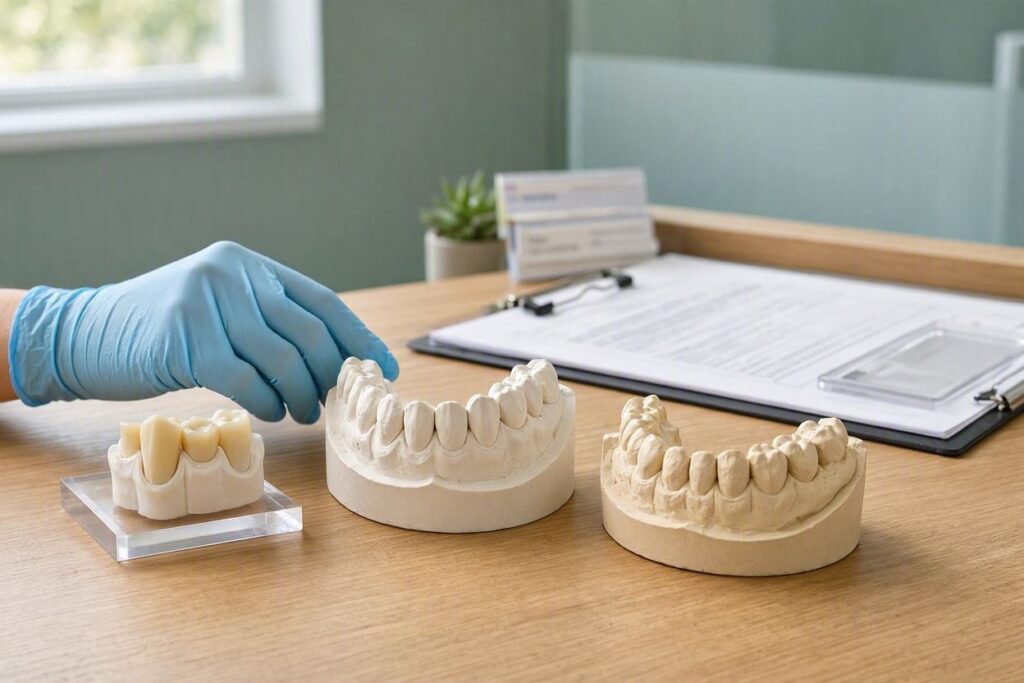
To understand the cost, it is helpful to understand the purpose and the process. A dental tooth mold is a precise, negative imprint of your teeth and the surrounding soft tissues of your mouth. It captures every ridge, groove, and contour of your oral anatomy.
The Purpose of a Tooth Mold
The mold serves several critical functions:
- Diagnosis: A mold allows the dentist to study your bite (how your upper and lower teeth fit together) from angles that are impossible to see in your mouth. This is essential for planning complex treatments.
- Fabrication: The mold is used to create a stone model, a positive replica of your teeth made from plaster. This model is sent to a dental laboratory, where a technician uses it to custom-fabricate your crown, bridge, denture, or other appliance.
- Record-Keeping: A mold provides a permanent record of your teeth at a specific point in time. This is valuable for tracking changes in your mouth over the years, especially during orthodontic treatment.
The Two Main Types of Molds
There are two distinct categories of dental molds, and their costs differ significantly.
1. Diagnostic Molds (Study Models)
These are used for planning and analysis. They are typically made from a material called alginate, a powder derived from seaweed that is mixed with water to form a soft, fast-setting gel. Alginate is inexpensive and easy to use, but it is not the most accurate material. It is perfect for creating study models where extreme precision is not critical.
2. Final Impressions (Master Impressions)
These are the molds used to create the final, permanent restoration, such as a crown or bridge. They require a much higher level of accuracy. The materials used are polyvinyl siloxane (PVS) or polyether. These are rubber-based materials that are highly dimensionally stable. They capture the finest details and do not distort over time. They are significantly more expensive than alginate.
What Is The Cost Of Dental Tooth Molds? A Realistic Breakdown
Now, let’s address the central question. The cost of a dental tooth mold varies based on the type of material used, the purpose of the mold, and the technology involved.
Average Costs for Different Types of Molds
| Type of Mold | Material Used | Average Cost Range (Per Arch) | Typical Use |
|---|---|---|---|
| Diagnostic/Study Model | Alginate | $50 – $150 | Orthodontic records, treatment planning, mouthguards. |
| Final Impression | PVS or Polyether | $150 – $400 | Crowns, bridges, dentures, veneers. |
| Digital Impression | Intraoral Scanner | $100 – $300 | Crowns, aligners, same-day restorations. |
It is important to note that an “arch” refers to either your upper jaw or your lower jaw. If you need molds of both, the cost would be doubled.
The Cost in Context: Bundled vs. Itemized
This is a crucial point for patients to understand. In most cases, the cost of the tooth mold is bundled into the total cost of the procedure you are getting.
- For a Crown: When you are quoted $1,200 for a crown, that price usually includes the cost of the final impression. You will not typically see a separate line item for “impression” on your bill.
- For Braces: The comprehensive fee for orthodontic treatment includes all diagnostic records, which includes the diagnostic molds.
- For a Nightguard: The cost of the alginate impression is usually built into the cost of the nightguard itself.
You are most likely to see a separate charge for a tooth mold when it is used as a stand-alone diagnostic tool. For example, if a dentist wants to take study models to analyze your bite before recommending a treatment plan, they might charge a separate fee for this service.
The Digital Revolution: The Rise of the Intraoral Scanner
The traditional method of taking a mold—with trays and gooey material—is rapidly being replaced by digital technology. The intraoral scanner is a handheld device that uses a small camera to capture thousands of images of your teeth. Sophisticated software then stitches these images together to create a precise 3D digital model of your mouth.
The Benefits of Digital Impressions
- Comfort: This is the most significant advantage. There is no goo, no bulky trays, and no gagging. The scan is quick, painless, and comfortable.
- Accuracy: Digital scans are incredibly precise. They can be even more accurate than traditional PVS impressions in many cases.
- Speed: The scan takes only a few minutes. The digital file can be instantly emailed to the dental laboratory, saving days of shipping time.
- Efficiency: If the dentist has an in-office milling machine (like a CEREC), the digital scan can be used to create a crown in a single visit.
Why the Cost is Similar
While the digital scanner is a significant investment for the dental practice, the cost to the patient is often comparable to a traditional final impression. This is because the technology saves the dentist money on material costs (no PVS or alginate needed) and lab shipping. The efficiency gains help to offset the cost of the equipment.
Why Accuracy Matters: The Hidden Cost of a Poor Mold
It can be tempting to look for the cheapest option, but when it comes to dental molds, accuracy is paramount. An inaccurate mold leads to an ill-fitting restoration.
Imagine a mold for a crown that has a small distortion. The lab creates the crown based on this flawed mold. When the patient returns for the final fitting, the crown does not seat correctly. It is too tight, too loose, or there is a gap between the crown and the tooth.
The consequences of this are:
- The mold must be retaken.
- The crown must be remade.
- The patient must schedule another appointment.
This wastes time and money for everyone involved. A skilled dentist will invest in high-quality materials and take great care to get the mold right the first time.
“Taking a perfect impression is the most critical step in creating a restoration that fits perfectly. It’s a skill that takes years to master. Cutting corners on the impression is a false economy.” — A Perspective from a Dental Lab Technician
Frequently Asked Questions (FAQ)
1. Do I have to pay for a mold if I am getting a crown?
No. The cost of the impression is almost always included in the comprehensive fee for the crown.
2. Is there a more comfortable alternative to a traditional mold?
Yes. Digital impressions using an intraoral scanner are much more comfortable and are becoming increasingly common. Ask your dentist if they offer this technology.
3. How long does a traditional mold take to set?
Alginate sets in about 1-2 minutes. PVS material sets in about 3-4 minutes.
4. What if I have a strong gag reflex?
This is a common problem. Talk to your dentist about your concerns. They can use techniques to minimize the gag reflex, such as using a smaller tray, using a fast-setting material, or having you sit upright. Digital impressions are an excellent alternative for patients with a severe gag reflex.
5. Are dental molds safe?
Yes. The materials used are non-toxic and hypoallergenic. They have been used safely in dentistry for decades.
6. Can I keep my dental mold?
Some dentists will allow you to keep your study models, especially after orthodontic treatment, as a keepsake. It is best to ask your dentist if this is possible.
Additional Resource
For more information on dental procedures and terminology, visit the American Dental Association’s patient education website, MouthHealthy.
Conclusion
The cost of dental tooth molds varies depending on the type of impression and the technology used, ranging from an inexpensive alginate study model to a more costly, highly accurate digital scan. In most cases, this cost is bundled into the comprehensive fee for your crown, braces, or other restorative procedure. Understanding this helps you decode your dental bill and appreciate the critical role a precise mold plays in ensuring a perfect, comfortable fit for your final restoration.