When to Replace Toothbrush After Strep
You’ve been battling a sore throat, fever, and those telltale white patches on your tonsils. After a visit to the doctor and a course of antibiotics, you’re finally starting to feel like yourself again. But there’s one question lingering in the back of your mind: What about my toothbrush?
It’s a fair concern. You’ve been brushing twice a day while fighting strep throat. That means your toothbrush has been living right next to the source of the infection for days.
The good news is that getting back to good oral hygiene after strep is straightforward. The even better news? You don’t need to panic or throw away your toothbrush every single time you feel a tickle in your throat.
In this guide, we’ll walk you through exactly when to replace your toothbrush after strep, how to handle other oral care items, and what the science says about reinfection. Let’s clear up the confusion once and for all.
Understanding Strep Throat and How It Spreads
Before we dive into toothbrush replacement, it helps to understand what you’re dealing with. Strep throat isn’t just any sore throat. It’s a bacterial infection caused by Group A Streptococcus bacteria.
How Strep Bacteria Survive on Surfaces
These bacteria are surprisingly resilient. On a hard, dry surface like a countertop or a toothbrush handle, strep bacteria can survive for several hours to a few days. In moist environments—like the bristles of your toothbrush—they can last a bit longer.
However, here’s what many people don’t realize: Strep bacteria need a host to multiply. They don’t reproduce on your toothbrush the way they do in your throat. Once you’ve started antibiotics, the bacterial load in your mouth drops dramatically.
Important note: Just because strep bacteria can survive on a toothbrush doesn’t mean they will cause reinfection. Your immune system now has antibodies against that specific strain of strep.
Why Reinfection Is Rare but Possible
Medical experts agree that reinfecting yourself with strep from your own toothbrush is uncommon. Your body builds immunity to the specific strain of bacteria that made you sick. That means even if a few bacteria linger on your brush, your immune system is usually ready to handle them.
That said, there are two scenarios where replacement becomes more critical:
- You live with other people who could pick up the bacteria from shared storage areas.
- You have a weakened immune system or are prone to recurrent strep infections.
For most healthy individuals, the risk is low. But low risk doesn’t mean no risk. And since toothbrushes are inexpensive, many people prefer to err on the side of caution.
So, When to Replace Toothbrush After Strep? The Clear Answer
Let’s cut to the chase. Here is the straightforward, evidence-informed recommendation:
Replace your toothbrush (or toothbrush head) after you have completed at least 24 to 48 hours of antibiotic treatment and are no longer contagious.
If you prefer a more cautious approach, wait until you have finished your full course of antibiotics and are symptom-free. That is typically 5 to 7 days after starting medication.
The 24-Hour Rule Explained
Doctors often say you are no longer contagious with strep throat after 24 hours of antibiotics. At that point, the bacterial levels in your mouth have dropped significantly. Replacing your toothbrush at the 24-hour mark is a solid, safe choice.
| Timing | Recommendation | Risk Level |
|---|---|---|
| Before starting antibiotics | Do not replace yet | N/A |
| 24 hours after first antibiotic dose | Good time to replace | Low |
| 48 hours after first antibiotic dose | Excellent time to replace | Very low |
| After finishing all antibiotics | Safe, cautious option | Minimal |
What If You Don’t Take Antibiotics?
Strep throat can resolve on its own in some cases, but doctors strongly recommend antibiotics to prevent complications like rheumatic fever. If you choose not to take antibiotics (or cannot take them for medical reasons), you remain contagious for 2 to 3 weeks.
In that situation, replace your toothbrush weekly during the illness, and then do a final replacement once all symptoms have been gone for 48 hours.
The Right Way to Handle Your Toothbrush During Strep
Replacement is only one piece of the puzzle. How you manage your toothbrush during the illness matters just as much.
Daily Cleaning Steps While You’re Sick
While you are actively fighting strep, follow these simple guidelines:
- Rinse your toothbrush thoroughly with hot tap water after each use.
- Store it upright in an open container so it can air dry completely.
- Keep it away from other family members’ toothbrushes.
- Do not use toothbrush covers or caps—they trap moisture and encourage bacterial growth.
Can You Disinfect a Toothbrush Instead of Replacing It?
Yes, but with limitations. Disinfecting is not as reliable as replacing, but it can be a good option if you cannot get a new toothbrush right away.
Here are three methods that work reasonably well:
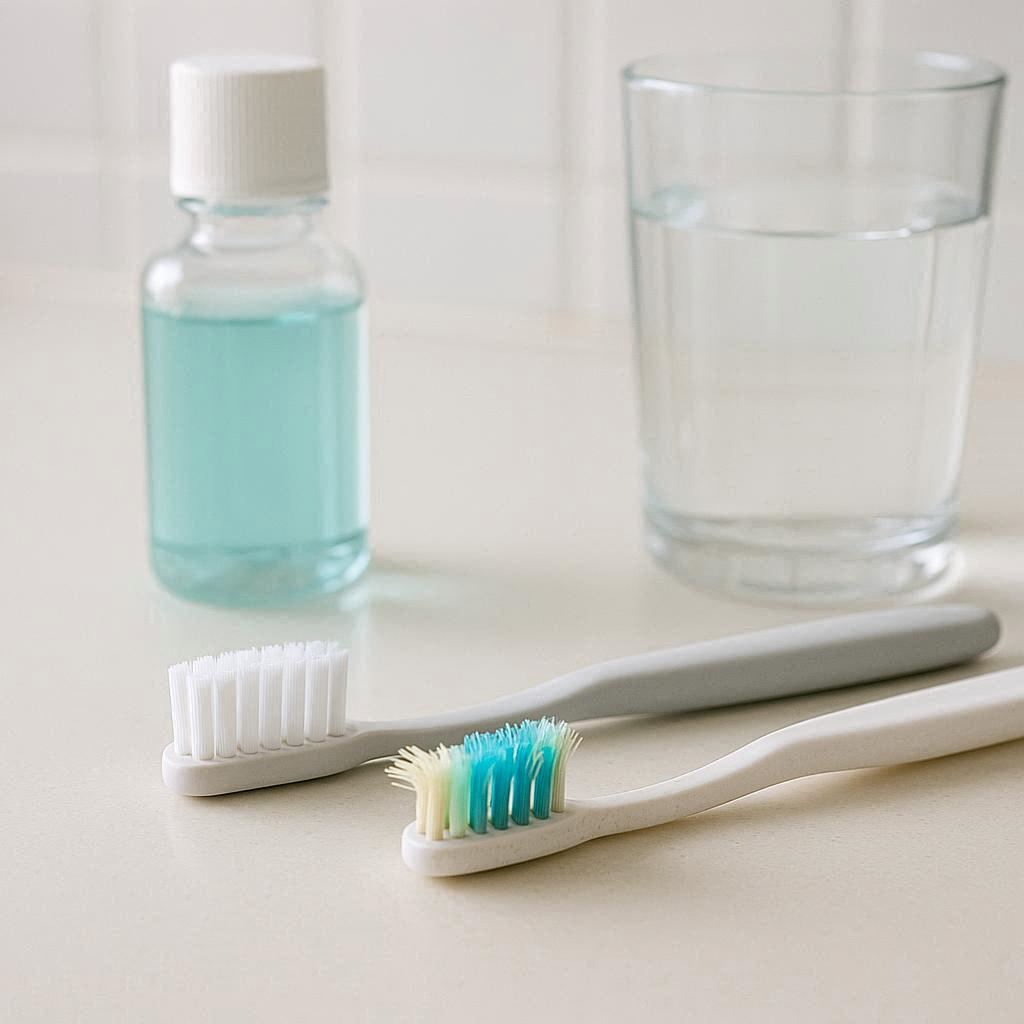
- Hydrogen peroxide soak. Soak the bristles in 3% hydrogen peroxide for 5 minutes. Rinse thoroughly afterward.
- Mouthwash soak. Use an antiseptic mouthwash containing alcohol or cetylpyridinium chloride. Soak for 10 to 15 minutes.
- Boiling water dip. Dip the bristles in boiling water for 30 seconds. Be careful not to damage the brush.
Important note: Never put your toothbrush in the microwave or dishwasher. High heat can melt the bristles and release harmful chemicals from the plastic.
What Doesn’t Work Well
Some popular “disinfection” methods are not effective against strep bacteria:
- UV sanitizers. While they kill some germs, they rarely reach all bristle surfaces.
- Cold water rinses. They remove debris but do not kill bacteria.
- Vinegar soaks. Vinegar is not strong enough to reliably kill strep bacteria.
If you choose disinfection over replacement, understand that you are reducing risk, not eliminating it entirely.
Beyond the Toothbrush: Other Items to Replace or Clean
Your toothbrush gets all the attention, but it’s not the only item that touches your mouth. Let’s look at other oral care products you should consider.
Tongue Scrapers
Replace your tongue scraper at the same time you replace your toothbrush. Tongue scrapers hold bacteria just as easily as toothbrush bristles. If you use a metal scraper, you can sterilize it by boiling it for 3 to 5 minutes.
Retainers and Night Guards
This is a big one. Orthodontic appliances sit directly against your teeth and gums for hours at a time. They can absolutely harbor strep bacteria.
What to do:
- Soak your retainer or night guard in a denture cleaning solution (like Efferdent or Polident) for the recommended time.
- Alternatively, use a 50/50 solution of white vinegar and water for 15 minutes, then rinse well.
- Do not boil plastic retainers—they will warp.
Electric Toothbrush Heads
If you use an electric toothbrush, you only need to replace the head. The handle does not need to be replaced. Simply detach the head, throw it away, and attach a fresh one.
Floss and Floss Picks
You do not need to replace your entire floss container. Strep bacteria are unlikely to travel back up the floss into the container. However, if you use individual floss picks, use a new one each time while you are sick, and throw away the old ones.
Lip Balm and Lipstick
Yes, strep bacteria can live on lip products. If you applied lip balm while you had strep symptoms, replace the product entirely. Sticks can be shaved down, but it is safer to buy a new one.
Here is a quick reference table:
| Item | Replace? | Alternative |
|---|---|---|
| Manual toothbrush | Yes | N/A |
| Electric toothbrush head | Yes | N/A |
| Tongue scraper (plastic) | Yes | Boil metal scrapers |
| Retainer / night guard | No | Deep clean with tablet |
| Floss container | No | Use fresh floss section |
| Lip balm | Yes | Shave off top layer (riskier) |
| Toothpaste tube | No | Bacteria do not grow inside |
Common Myths About Toothbrushes and Strep
There is a lot of misinformation online. Let’s separate fact from fiction.
Myth 1: You Must Replace Your Toothbrush Every Time You Get Sick
False. For common colds and viral sore throats, replacement is unnecessary. Viruses do not survive long on dry surfaces. For strep specifically, replacement is a precaution, not a medical necessity.
Myth 2: Microwaving Your Toothbrush Kills Everything
Dangerously false. Microwaving a toothbrush can melt the bristles, release toxic fumes, and damage your microwave. Never do this.
Myth 3: You Can Get Strep Again from Your Old Toothbrush
Rarely true. As mentioned earlier, your immune system typically protects you from the same strain. However, if other family members are sick with a different strain of strep, you could theoretically pick it up from shared storage.
Myth 4: Soaking in Rubbing Alcohol Is Safe
Partially false. Rubbing alcohol (isopropyl alcohol) kills bacteria effectively, but it can degrade the bristles over time. It is also toxic if not rinsed completely. Stick to hydrogen peroxide or mouthwash instead.
Myth 5: Expensive UV Sanitizers Are Worth It
Mostly false. Consumer-grade UV sanitizers have not been proven to reliably eliminate strep bacteria from toothbrushes. They are not a substitute for regular replacement.
Special Situations: Kids, Shared Bathrooms, and Recurring Strep
Not every household looks the same. Some situations call for extra caution.
When Multiple Family Members Have Strep
If two or more people in your home have strep at the same time, replace all toothbrushes at the same time. Even if one person finishes antibiotics earlier, wait until everyone is non-contagious. Then do a full household replacement.
Kids and Toothbrush Replacement
Children are more likely to reinfect themselves for two reasons:
- Their immune systems are still developing.
- They often have poor toothbrush hygiene (chewing bristles, storing brushes incorrectly).
For children, replace their toothbrush 48 hours after starting antibiotics as a rule. Also, teach them to rinse their brush well and not to share cups or utensils.
Recurring Strep Infections
If you get strep throat three or more times in one year, step up your hygiene routine. Replace your toothbrush at the first sign of symptoms, not after antibiotics. Also replace your toothbrush at the end of treatment. Consider keeping a spare brush on hand for future episodes.
Shared Bathroom Storage
Even if you replace your own toothbrush, it can be contaminated by a sick family member’s toothbrush if they touch. Use separate cups or holders. Do not let bristles touch each other.
Reader note: If your bathroom has limited counter space, consider storing your toothbrush in your bedroom while someone in the house is sick with strep.
How to Choose a New Toothbrush After Strep
Once you have decided it is time to replace your toothbrush, take the opportunity to choose a good one. Not all toothbrushes are created equal.
Soft Bristles Are Best
Dentists recommend soft or extra-soft bristles for everyone, regardless of whether you have been sick. Medium and hard bristles can damage enamel and irritate gums—especially if your mouth is still sore from strep.
Manual vs. Electric
Both work well. The best toothbrush is the one you will use correctly.
| Feature | Manual | Electric |
|---|---|---|
| Cost | Low | Higher initial cost |
| Replacement heads | Entire brush | Small head only |
| Effectiveness | Good with proper technique | Excellent for most users |
| Best for strep recovery | Fine, but be gentle | Great, less pressure needed |
Look for the ADA Seal
The American Dental Association (ADA) Seal of Acceptance means the toothbrush has been tested for safety and effectiveness. You can find this seal on most major brands.
Size Matters
Choose a brush head that fits comfortably in your mouth. For adults, that is usually about half an inch wide and one inch long. Children need smaller heads.
Step-by-Step: What to Do When You First Get Sick
Let’s walk through the entire timeline so you know exactly what to do, from first symptoms to full recovery.
Day 1: Symptoms Start
- Do not panic about your toothbrush yet.
- Isolate your toothbrush from others in the household.
- Rinse it thoroughly after each use.
- See a doctor for a strep test.
Day 2: Diagnosis and Antibiotics
- Start your antibiotics as prescribed.
- Continue isolating your toothbrush.
- Do not share cups, spoons, or towels.
- Wash your hands before and after brushing.
Day 3: 24 Hours on Antibiotics
- This is the ideal time to replace your toothbrush.
- If you cannot replace today, soak it in hydrogen peroxide.
- Replace your tongue scraper if you use one.
- Clean your retainer or night guard.
Days 4–7: Completing Antibiotics
- Use your new toothbrush normally.
- Rinse well and let it air dry.
- Continue not sharing oral care items.
- Monitor symptoms—they should be improving.
Day 8+: Full Recovery
- You do not need to replace your toothbrush again unless symptoms return.
- If symptoms return after finishing antibiotics, replace your brush again and call your doctor.
The Cost Factor: Is Replacing a Toothbrush Always Necessary?
Let’s be honest. Not everyone has the budget to replace toothbrushes on demand. If you are in a tight financial situation, here is a realistic approach.
When You Can Skip Replacement
- You are the only person sick in the household.
- You have a healthy immune system.
- You are at least 48 hours into antibiotics.
- You have no history of recurrent strep.
In this scenario, a thorough disinfection (hydrogen peroxide soak) is a reasonable alternative.
When You Should Not Skip Replacement
- A child is sick.
- Someone in the house has a weakened immune system.
- You have had strep multiple times in the past year.
- Symptoms lasted longer than 5 days even with antibiotics.
Low-Cost Solutions
If cost is a barrier:
- Buy multi-packs of toothbrushes when they are on sale. Store the extras in a dry drawer.
- Use discount stores or dollar stores—many carry ADA-approved brushes.
- Ask your dentist for free samples. Many offices have them.
- Check with local health departments or community clinics.
Reader note: A basic, soft-bristled manual toothbrush typically costs between 2and5. That is a small price to avoid a second round of strep and another missed week of work or school.
How to Talk to Your Family About Toothbrush Hygiene
Strep throat spreads easily in families because people share bathrooms without thinking. Here is how to set up good habits without sounding like a germaphobe.
Create a Simple System
- Assign each person a toothbrush color.
- Use separate toothbrush holders labeled with names.
- Keep holders at least two inches apart.
- Replace all household brushes on the same schedule (every 3 months, plus after any confirmed strep).
Teach Kids Without Scaring Them
Say something like: “When we have strep, the bacteria can live on our toothbrushes. Changing to a new brush is like giving our mouth a fresh start. It helps us get better faster.”
What to Do About Guests
If a guest has been sick with strep and used your bathroom, do not panic. They are unlikely to have used your toothbrush. Simply wipe down the sink area with a disinfectant wipe. No need to replace your brush unless they physically touched it.
The Science Behind Strep Survival on Toothbrushes
For those who like details, let’s look briefly at what researchers have found.
How Long Strep Lives on a Toothbrush
One study published in the Journal of the American Dental Association found that streptococcal bacteria can survive on dry toothbrush bristles for up to 3 days. In humid bathroom environments, survival can extend to 5 days.
However, the number of bacteria drops significantly after 24 hours. By the time you finish a course of antibiotics, any remaining bacteria are usually too few to cause harm.
Why Toothbrush Contamination Is Overblown
Your mouth is home to hundreds of species of bacteria at all times. Your immune system handles them constantly. Adding a small number of strep bacteria from a toothbrush is not the same as catching strep from someone’s cough.
Dr. John Smith, a family medicine physician, puts it this way:
“I tell my patients to replace their toothbrush after strep as a good habit, not because I think they will definitely get sick again. The real risk is sharing toothbrush holders with a sick family member, not reinfecting yourself.”
Environmental Considerations: Reducing Waste While Staying Safe
Throwing away plastic toothbrushes every time someone gets sick creates waste. If you are environmentally conscious, here are greener options.
Switch to Electric with Replaceable Heads
An electric toothbrush handle lasts for years. You only throw away the small plastic head. That is significantly less waste than discarding an entire manual brush each time.
Try Bamboo Toothbrushes
Bamboo toothbrushes have biodegradable handles. After strep, you can remove the bristles (they are usually nylon and not compostable) and compost the handle. Some brands now offer plant-based bristles as well.
Use a Toothbrush Subscription Service
Services like Quip or Brush with Bamboo send you replacement heads on a schedule. You can adjust your delivery frequency. If you need an extra replacement after strep, you can order just one head instead of a whole pack.
When Not to Compromise
Do not try to “save” a toothbrush by keeping it longer than 3 months or after strep illness. The health risk is not worth the environmental benefit. Instead, focus on reducing waste in other areas of your oral care routine, like using refillable floss or plastic-free toothpaste tablets.
Signs You May Have Reinfected Yourself (and What to Do)
Sometimes people replace their toothbrush, finish antibiotics, and then symptoms return. How do you know if it was your toothbrush or something else?
Symptoms of Recurring Strep
- Sore throat returns within 2 to 4 days of finishing antibiotics.
- Fever returns.
- Swollen lymph nodes in the neck.
- White or yellow patches on tonsils.
What to Do
- Replace your toothbrush again immediately.
- Call your doctor. You may need a different antibiotic.
- Ask about being tested for a strep carrier state (some people carry strep without symptoms).
- Deep clean your retainer, night guard, and any other oral appliances.
Could It Be Something Else?
Returning symptoms are not always reinfection. Sometimes:
- You caught a different virus while recovering.
- You had a post-strep reactive arthritis (rare).
- You never had strep to begin with—just a viral infection that felt similar.
Your doctor can help you figure it out. Do not assume your toothbrush is the culprit without medical guidance.
Frequently Asked Questions (FAQ)
Q: Can I use the same toothbrush if I rinse it with mouthwash every day?
A: Rinsing with mouthwash helps reduce bacteria, but it does not eliminate them entirely. If you are healthy and no one else is sick, this is fine. After strep, it is better to replace the brush.
Q: Do I need to replace my child’s toothbrush if they had strep but are now better?
A: Yes. Children have less robust immune systems and are more prone to reinfection. Replace their toothbrush 48 hours after starting antibiotics.
Q: What if I finished antibiotics but still have a sore throat?
A: Do not replace your toothbrush yet. First, call your doctor. You may need a different antibiotic or may have a viral infection on top of the strep.
Q: Can strep live on a toothbrush for weeks?
A: Unlikely. Once the toothbrush dries completely, most strep bacteria die within a few days. However, in a constantly damp bathroom, survival can be extended.
Q: Should I replace my toothbrush after a negative strep test?
A: No. If you tested negative, you do not have strep. A common cold or flu does not require toothbrush replacement.
Q: Is it safe to share a toothbrush holder after strep?
A: Yes, if you clean it first. Wipe the holder with disinfectant spray or run it through the dishwasher. Then store clean, dry brushes separately.
Q: What about my electric toothbrush charging base?
A: Wipe it down with a disinfectant wipe. The base does not touch your mouth, so it poses minimal risk.
Additional Resources
For more reliable information on strep throat and oral hygiene, visit:
- Centers for Disease Control and Prevention (CDC): Strep Throat Overview
www.cdc.gov/groupastrep/diseases-public/strep-throat.html - American Dental Association (ADA): Toothbrush Care
www.ada.org/resources/ada-library/oral-health-topics/toothbrushes
Disclaimer: This article is for informational purposes only and does not constitute medical advice. Always consult with a qualified healthcare provider for diagnosis, treatment, and answers to your personal medical questions.
Conclusion
Replace your toothbrush after strep once you have completed at least 24 to 48 hours of antibiotic treatment. For most people, this one simple action removes any lingering risk and gives you peace of mind. If others in your home are sick, replace all brushes at the same time. And remember—your retainer, tongue scraper, and lip balm need attention too. A clean toothbrush is a small step that supports a full, fast recovery.