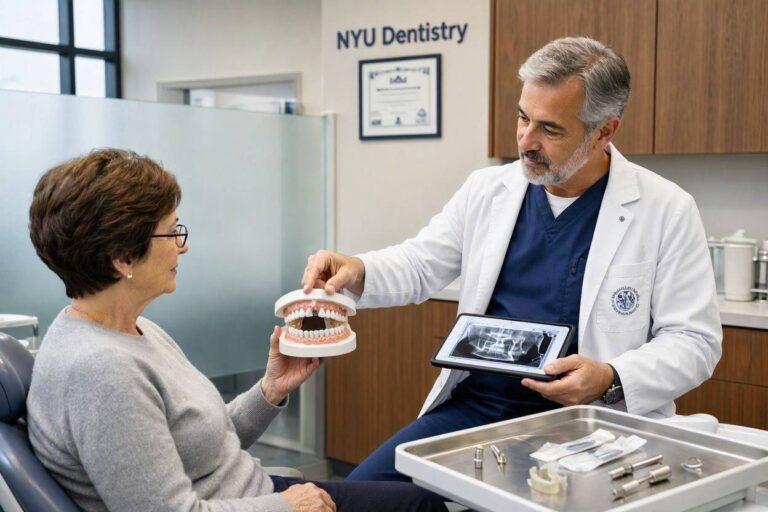
Who Should Do Your Dental Implant?
Choosing the right provider for your dental implant is one of the most important decisions you will make. The skill and experience of the person placing your implant directly affect the success of the procedure. A well-placed implant can last a lifetime. A poorly placed implant can fail, causing pain, expense, and frustration.
This guide explains who is qualified to place dental implants, the differences between provider types, and how to choose the best professional for your case.

Understanding Who Can Place Dental Implants
Dental implants are not a recognized specialty in the same way that orthodontics or oral surgery are. This means that dentists from various backgrounds can place implants if they have received appropriate training.
General Dentists
General dentists complete four years of dental school after earning a bachelor’s degree. They receive basic training in all aspects of dentistry, including some surgical procedures. Many general dentists pursue additional continuing education in implant dentistry.
A general dentist with proper training can place implants successfully. Many place implants regularly and have excellent outcomes. However, the level of implant training among general dentists varies widely. Some have completed extensive courses and placed hundreds of implants. Others may have only taken a weekend course and placed a handful.
Oral and Maxillofacial Surgeons
Oral surgeons are specialists who complete four to six years of additional training after dental school. Their training focuses on surgical procedures of the mouth, jaw, and face.
Oral surgeons are the most extensively trained providers for implant placement. They handle complex cases, including patients with significant bone loss, anatomical challenges, and medical complications. For difficult cases, an oral surgeon is often the best choice.
Periodontists
Periodontists specialize in the treatment of gum disease and the supporting structures of the teeth. They complete three years of additional training after dental school.
Periodontists are experts in the soft tissue and bone that support implants. They are particularly skilled at managing cases involving gum disease or bone grafting. If you have a history of periodontal problems, a periodontist is an excellent choice.
Prosthodontists
Prosthodontists specialize in the restoration and replacement of teeth. They complete three years of additional training after dental school.
Prosthodontists focus on the aesthetic and functional aspects of the final restoration. They may place implants themselves or work with an oral surgeon who places the implant while the prosthodontist designs the crown. For complex restorative cases, a prosthodontist offers the highest level of expertise.
Factors to Consider When Choosing a Provider
Several factors should influence your choice of implant provider.
Training and Credentials
Ask about the provider’s specific training in implant dentistry. Look for credentials from organizations like the American Academy of Implant Dentistry or the International Congress of Oral Implantologists. Board certification in a relevant specialty is also a strong indicator of expertise.
Experience
Ask how many implants the provider has placed. Experience matters. Providers who place implants regularly are more skilled and better equipped to handle complications. Ask about their success rate and whether they have experience with cases similar to yours.
Technology
Modern implant practices use advanced technology. Ask about 3D imaging, computer-guided implant placement, and digital impressions. These technologies improve accuracy and outcomes.
Communication Style
Choose a provider who communicates clearly and answers your questions thoroughly. You should feel comfortable asking questions and expressing concerns. A good provider takes the time to explain the procedure and what to expect.
Referrals and Reviews
Ask for referrals from friends, family, or your general dentist. Read online reviews from previous patients. Look for reviews that specifically mention implant treatment.
When to Choose a Specialist
While a general dentist can place implants, there are situations where a specialist is strongly recommended.
Complex Surgical Cases
If your case involves significant bone loss, sinus proximity, nerve proximity, or other anatomical challenges, choose an oral surgeon. Their surgical training equips them to handle complex anatomy.
History of Gum Disease
If you have a history of gum disease or need bone grafting, a periodontist is an excellent choice. Their expertise in gum and bone health is invaluable.
Complex Restorative Cases
For full mouth reconstruction or complex aesthetic cases, a prosthodontist offers the highest level of expertise. They can manage both the surgical and restorative aspects of treatment.
Medical Complications
If you have medical conditions that complicate surgery, such as uncontrolled diabetes or autoimmune disorders, choose a specialist. They are better equipped to manage these challenges.
The Team Approach
Many dental practices use a team approach to implant treatment. Different specialists collaborate to provide comprehensive care.
How the Team Approach Works
In a team approach, the oral surgeon or periodontist places the implant. The prosthodontist or general dentist designs and places the final crown. This collaboration ensures that each aspect of treatment is performed by the most qualified professional.
Benefits of the Team Approach
The team approach offers several advantages. Each specialist brings their unique expertise to the case. The patient benefits from the combined knowledge and experience of multiple professionals.
Finding a Team
Ask your general dentist about their approach to implant treatment. Do they place implants themselves, or do they refer to a specialist? If they work with a team, ask about the coordination of care.
Questions to Ask Your Potential Provider
Before choosing a provider, ask these important questions.
About Training and Experience
- What specific training have you completed in implant dentistry?
- How many implants have you placed?
- What is your success rate?
- Have you handled cases similar to mine?
About the Procedure
- What type of implant do you recommend for my case?
- Will I need bone grafting or other preparatory procedures?
- What type of anesthesia will be used?
- How long will the entire process take?
About Cost and Payment
- What is the total cost, including all components?
- What is included in the quoted price?
- Do you offer payment plans or financing?
- Does my insurance cover any portion of the treatment?
About Follow-Up Care
- What kind of follow-up care do you provide?
- What happens if there is a complication?
- How do I care for my implant after treatment?
Red Flags to Watch For
Be cautious of providers who exhibit these warning signs.
Unusually Low Prices
While everyone wants affordable care, unusually low prices may indicate lower quality materials, less experience, or hidden costs. Be wary of prices that seem too good to be true.
Pressure to Decide Quickly
A good provider gives you time to consider your options. Be cautious of anyone who pressures you to make an immediate decision.
Lack of Transparency
If a provider is vague about costs, credentials, or the procedure, look elsewhere. You deserve clear, honest answers.
No Before-and-After Photos
Experienced implant providers should be able to show you examples of their work. If they cannot or will not, that is a red flag.
Important Notes for Patients
- The skill of your provider is the most important factor in implant success.
- General dentists can place implants, but specialists offer more advanced training.
- Choose a specialist for complex cases or if you have medical complications.
- Ask about training, experience, and success rates.
- The team approach can provide the best of all specialties.
- Do not choose based on price alone.
Frequently Asked Questions
Can my regular dentist place dental implants?
Yes, many general dentists place implants after completing additional training. Ask about their specific training and experience.
Who is the best person to place a dental implant?
Oral surgeons are the most extensively trained for surgical implant placement. Periodontists excel in cases involving gum disease. Prosthodontists excel in restorative cases. The best choice depends on your individual needs.
Do I need a referral to see an implant specialist?
Some insurance plans require a referral. Even without insurance requirements, your general dentist can recommend a qualified specialist.
How do I know if my dentist is qualified to place implants?
Ask about their training, credentials, and experience. Look for fellowship credentials from implant organizations. Ask to see before-and-after photos.
Is it safe to have a general dentist place my implant?
Yes, if the general dentist has appropriate training and experience. Ask about their specific qualifications before proceeding.
What is the difference between an oral surgeon and a periodontist?
Oral surgeons complete four to six years of surgical training. Periodontists complete three years of training focused on gum disease and supporting structures. Both can place implants.
Should I get a second opinion before getting implants?
Yes, getting a second opinion is always a good idea for major procedures. It confirms the diagnosis and helps you compare treatment approaches and costs.
How much does a dental implant cost?
A single dental implant costs between $3,000 and $6,000. The cost varies depending on the provider, location, and complexity of the case.
Conclusion
Choosing the right provider for your dental implant is crucial for success. General dentists, oral surgeons, periodontists, and prosthodontists can all place implants, but their training and expertise vary. For complex cases, a specialist is recommended. Ask about training, experience, and success rates. Consider the team approach for comprehensive care. Do not choose based on price alone. The skill of your provider is the most important factor in the long-term success of your implant.
Additional Resource
For more information on finding a qualified implant dentist, visit the American Academy of Implant Dentistry at www.aaid.com. This professional organization offers a directory of credentialed implant dentists.