Why Do You Get Dental Implants? Understanding the Reasons Behind Tooth Replacement
People choose dental implants for reasons that extend far beyond filling a gap in their smile. The decision to pursue implant treatment reflects concerns about health, function, confidence, and quality of life that missing teeth compromise. Understanding why patients choose implants helps you evaluate whether this treatment aligns with your own needs and priorities.
Dental implants represent the most comprehensive solution to tooth loss that dentistry has ever developed. Unlike alternatives that replace only the visible portion of teeth, implants replace both crown and root, providing benefits that other options cannot match. The reasons patients pursue implant treatment are as individual as the patients themselves, yet common themes emerge when you ask why people make this significant investment in their oral health.
I wrote this guide because understanding the why behind dental implants helps you make informed decisions about your own tooth replacement options. When you recognize what implants offer beyond just filling space, you can evaluate whether these benefits matter enough to pursue treatment.
Preserving Jawbone and Facial Structure
The most important reason to get dental implants operates beneath the surface, where you cannot see it happening.
The Hidden Consequence of Tooth Loss
When you lose a tooth, you lose more than what shows when you smile. The tooth root provided essential stimulation to the surrounding jawbone. Every time you chewed, forces traveled through the root into the bone, signaling your body to maintain bone density in that area.
Without this stimulation, your body begins resorbing the bone. The process starts within months of tooth loss and continues indefinitely. Over years, significant bone volume disappears. This bone loss affects adjacent teeth, alters facial contours, and complicates future tooth replacement.
You cannot feel this bone loss happening. It causes no pain, creates no obvious early symptoms, and progresses so gradually that you may not notice changes until substantial damage has occurred. Yet the process never stops as long as the tooth remains missing.
How Implants Prevent Bone Loss
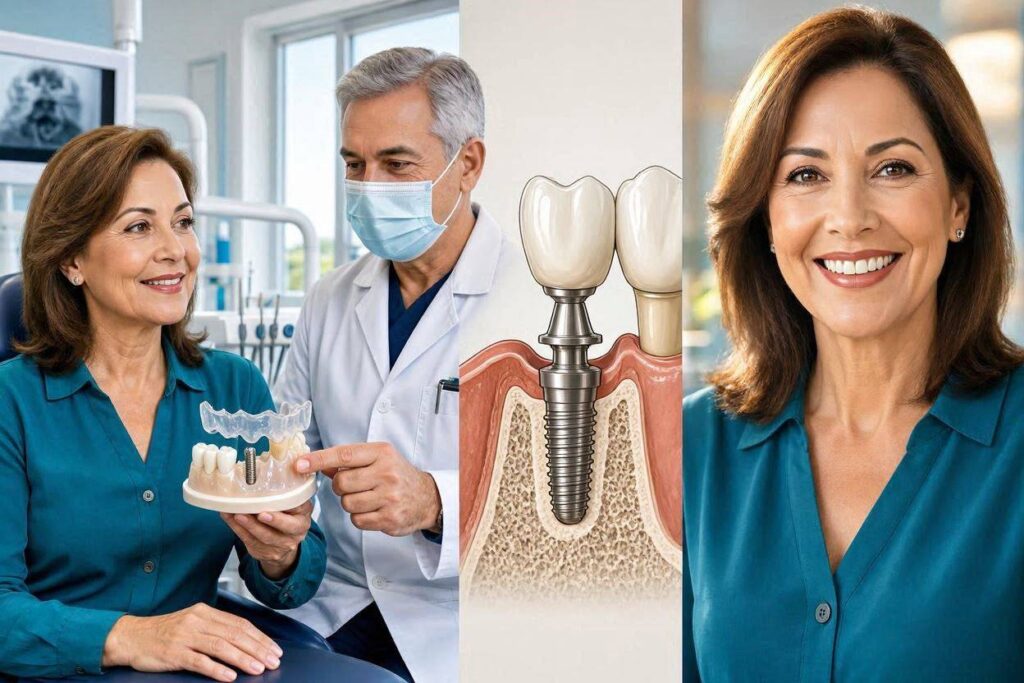
Dental implants are the only tooth replacement option that addresses bone loss. Because implants replace the tooth root, they restore the stimulation that maintains jawbone density. Chewing forces travel through the implant into the surrounding bone, providing the mechanical signals needed to preserve bone volume.
This bone preservation matters for both health and appearance. Adequate bone supports adjacent natural teeth, preventing them from shifting or becoming unstable. It maintains facial contours, preventing the sunken appearance that develops with extensive tooth loss. It preserves options for future dental treatment.
Protecting Remaining Natural Teeth
Dental implants protect your healthy teeth in ways that traditional tooth replacement cannot.
The Hidden Cost of Dental Bridges
For decades, fixed bridges represented the standard of care for replacing single missing teeth. A bridge replaces the missing tooth by crowning the adjacent teeth and suspending a false tooth between them. This approach works, but at a cost to healthy tooth structure.
Placing a bridge requires removing enamel from the neighboring teeth, often teeth that have never had decay or restorations. This enamel removal is permanent and irreversible. The crowned teeth become vulnerable to decay at the crown margins and may eventually require root canal treatment if preparation irritates the nerve. A bridge essentially sacrifices two healthy or restorable teeth to replace one missing tooth.
Dental implants replace missing teeth without involving adjacent teeth at all. The implant stands independently, supported by the jawbone rather than by neighboring teeth. Your healthy teeth remain untouched.
Preventing Teeth from Shifting
When a gap exists in your dental arch, surrounding teeth begin to shift. Adjacent teeth tilt into the space. The opposing tooth over-erupts because nothing contacts it during chewing. These movements alter your bite, create areas that trap food and promote decay, and complicate future tooth replacement.
Dental implants fill the gap and maintain proper tooth positioning. Adjacent teeth have no space to drift into. Opposing teeth contact the implant restoration during chewing, preventing over-eruption. The dental arch maintains its proper form and relationships.
Restoring Normal Function
The ability to eat and speak comfortably affects daily quality of life more than most people realize until they lose it.
Eating Without Compromise
Missing teeth impair chewing function. Patients adapt, avoiding certain foods, chewing on one side, or swallowing food less thoroughly chewed. These adaptations become habitual, and patients forget what normal eating felt like.
Dental implants restore chewing function more completely than other replacement options. Because implants anchor in bone, they provide stable, strong support for biting and chewing. Implant patients eat virtually any food without restriction. Steak, apples, crusty bread, and crunchy vegetables return to the menu.
This functional restoration supports better nutrition. Patients who avoided fiber-rich foods due to chewing difficulty can resume a varied, healthy diet. The pleasure of eating returns along with the nutritional benefits.
Speaking Clearly
Missing teeth affect speech in ways patients may not notice until teeth are replaced. Air escapes through gaps, creating whistling sounds. The tongue positions differently when teeth are missing, altering pronunciation. Denture wearers experience clicking and slipping that interfere with clear speech.
Implant-supported restorations remain absolutely stable during speaking. Speech returns to natural patterns without the compensations required by missing teeth or removable appliances. The ability to speak clearly without self-consciousness affects professional communication, social interactions, and personal confidence.
Restoring Confidence and Quality of Life
The psychological impact of tooth loss can equal or exceed the physical consequences.
The Emotional Toll of Missing Teeth
Missing teeth affect how people feel about themselves. Many patients with visible tooth loss avoid smiling, cover their mouths when laughing, and feel self-conscious in social situations. They may decline invitations, avoid photographs, and withdraw from activities they once enjoyed.
These psychological effects accumulate over time. Confidence erodes. Self-image suffers. The person you see in photographs or mirrors no longer matches how you feel inside. These emotional consequences of tooth loss are real and significant.
The Transformation of Restoration
Dental implants provide the most natural-feeling and natural-looking tooth replacement available. Implant-supported crowns, bridges, and dentures restore the appearance of a complete smile. Equally importantly, they restore the confidence to use that smile freely.
Patients describe transformative psychological benefits from implant treatment. They smile again in photographs. They accept social invitations without anxiety about eating or speaking. They feel like themselves again. These quality of life improvements are among the most compelling reasons patients choose implants.
Long-Term Value and Practicality
Dental implants offer practical advantages over alternative treatments when viewed over a lifetime.
Longevity
Dental implants can last decades or a lifetime with proper care. Success rates exceeding 95 percent over ten years are well-documented. Many patients have maintained implants for thirty years or longer.
Alternative treatments have shorter lifespans. Fixed bridges typically last ten to fifteen years before requiring replacement. Dentures require periodic replacement or relining as bone loss alters fit. Over a lifetime, the seemingly lower initial cost of alternatives may exceed implant costs when replacements are factored in.
Convenience and Lifestyle
Dental implants become part of your body. You care for them like natural teeth, with brushing, flossing, and regular dental visits. There is nothing to remove, no adhesives to apply, no special cleaning routines.
Patients who transition from removable dentures to implant-supported restorations describe the convenience as life-changing. Freedom from denture adhesives, soaking solutions, and constant awareness of a removable appliance in the mouth restores normalcy to daily life.
Medical and Health Reasons
Some patients pursue dental implants for reasons related to broader health concerns.
Nutrition and General Health
Chewing is the first step in digestion. Properly chewed food presents greater surface area for digestive enzymes, supporting nutrient extraction. Patients with impaired chewing often develop compromised nutritional status.
Dental implants restore the ability to chew thoroughly, supporting proper digestion and nutrition. Patients can consume the full range of foods recommended for healthy eating, including fibrous vegetables, nuts, and lean proteins that may be difficult with compromised dentition.
Oral Health and Systemic Disease
Chronic oral inflammation from periodontal disease and dental infections has been linked to cardiovascular disease, diabetes complications, and other systemic conditions. Replacing diseased teeth with implant-supported restorations eliminates these sources of chronic inflammation.
Dental implants themselves do not decay and, when properly maintained, support healthy oral tissues. By restoring a complete, healthy, cleanable dentition, implants contribute to overall oral health and potentially to systemic health as well.
Specific Clinical Scenarios
Certain situations particularly favor dental implant treatment.
Single Tooth Replacement
When a single tooth requires replacement, implants offer clear advantages over traditional bridges. The adjacent teeth remain untouched. The implant preserves bone at the extraction site. Long-term costs often favor implants when bridge replacement costs are considered.
Younger patients particularly benefit from implants for single tooth replacement. Preserving intact adjacent teeth and preventing bone loss over decades of remaining life provides substantial long-term value.
Stabilizing Loose Dentures
Patients struggling with loose lower dentures represent one of the most grateful populations in implant dentistry. Even two implants supporting a lower overdenture transform the denture experience from constant frustration to reliable function.
The improvement in quality of life for denture patients who receive implant support is dramatic and well-documented. Eating, speaking, and social confidence all improve significantly.
Full Arch Restoration
Patients with failing or missing dentition in an entire arch face a choice between conventional dentures and implant-supported restoration. Implant-supported options provide vastly superior function, comfort, and quality of life.
Fixed implant-supported restorations feel and function most like natural teeth. While the investment is substantial, patients who proceed with treatment rarely express regret about choosing implants.
Frequently Asked Questions About Why to Get Implants
Why choose implants over a bridge?
Implants preserve adjacent natural teeth, prevent bone loss at the extraction site, and typically last longer than bridges. Bridges require damaging healthy adjacent teeth and need replacement every ten to fifteen years on average. The long-term value often favors implants despite higher initial cost.
Why do denture wearers switch to implants?
Denture wearers seek implants because of instability, discomfort, dietary limitations, and the inconvenience of removable appliances. Implant-supported dentures eliminate movement, improve chewing ability, and restore confidence in social situations.
Are implants worth the investment?
For most patients, yes. Implants preserve bone, protect adjacent teeth, restore function, and can last decades or a lifetime. When considering long-term costs including replacement of alternative treatments, implants often prove cost-effective despite higher initial expense.
Why get an implant soon after tooth extraction?
Bone loss begins immediately after extraction and continues indefinitely. Early implant placement preserves the maximum amount of bone, often allowing simpler treatment with better outcomes. Delaying implant treatment may necessitate bone grafting that could have been avoided.
Can implants improve my overall health?
By restoring chewing function, implants support better nutrition. By eliminating sources of chronic oral infection, they may reduce systemic inflammation. By improving quality of life, they support psychological well-being. These benefits extend beyond the mouth.
Conclusion
Patients choose dental implants to preserve jawbone, protect remaining natural teeth, restore normal eating and speaking function, regain confidence and quality of life, and obtain a long-term solution that avoids the recurring costs and inconveniences of alternative treatments. Implants uniquely address both the visible and hidden consequences of tooth loss, providing benefits that no other replacement option can match. Understanding these reasons helps patients evaluate whether implant treatment aligns with their own health priorities and quality of life goals.