Why No Exercise After Dental Implant?
You are a person who thrives on movement. A runner, a lifter, a yogi, a cyclist. Your daily workout is not just a routine; it is your mental clarity, your stress relief, your identity. Then you undergo dental implant surgery. The post-operative instructions are handed to you, and among the warnings about soft foods and ice packs, there is one that hits you hardest: no exercise. No gym, no running, no yoga, for a period of time that feels like an eternity. The question rises from a place of genuine frustration: why? Why is physical exertion so dangerous after a dental implant?
This article is a direct, physiologically grounded explanation of the biological reasons behind this restriction. This is not an arbitrary, overly cautious suggestion designed to annoy you. It is a critical, non-negotiable protocol to protect the intricate healing processes happening deep in your jawbone and to prevent complications that can lead to the failure of your implant. Understanding the “why” will, I hope, transform this restriction from a frustrating denial into a purposeful, strategic pause.
The First Line of Defense: Protecting the Blood Clot
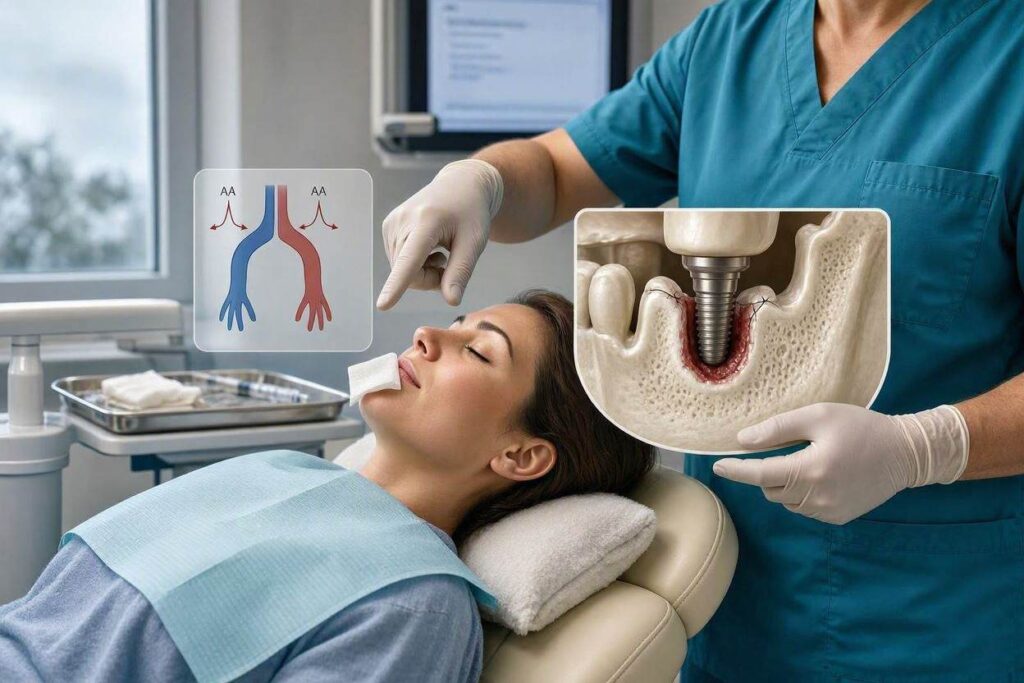
The immediate healing after implant surgery is not primarily about the bone. It is about the soft tissue, the gum, and the formation of a stable blood clot within the surgical wound. When the implant is placed and the gum is sutured closed, the small space around the implant and under the gum flap fills with blood. This blood coagulates, forming a fibrin-rich clot that acts as a biological bandage. It seals the wound, prevents bleeding, and provides the initial scaffold for new cells to migrate into and begin the healing cascade.
Physical exertion, particularly cardiovascular exercise, increases your heart rate and, more critically, your blood pressure. A sudden spike in blood pressure can push against the newly formed, fragile blood clot. It can cause a small vessel that was sealed by the clot to re-open and bleed. This is called post-operative hemorrhage. The bleeding may not be dramatic, but it disrupts the wound environment. A more subtle but equally damaging consequence is that the pulsing, increased blood flow can physically dislodge the clot from the wound. Losing the blood clot exposes the underlying bone and the implant surface to the oral environment, leading to a painful condition called a dry socket (alveolar osteitis) or, more precisely, a disruption of the peri-implant healing. The clot is the foundation of soft tissue closure. Exercise in the first 48 to 72 hours is a direct threat to its integrity.
The Vascular Physiology: Exercise-Induced Blood Flow Diversion
When you engage in strenuous exercise, your body undergoes a profound systemic shift in blood distribution. Blood is shunted away from non-essential vascular beds and redirected to the working muscles, the heart, and the skin for cooling. The splanchnic circulation (the gut) is constricted. The oral and maxillofacial blood flow, while not as dramatically constricted, is certainly not a priority during a heavy squat or a five-mile run.
The healing surgical site in your jaw is in desperate need of a rich, steady, uninterrupted blood supply. It needs oxygen, glucose, amino acids, and immune cells to be delivered continuously to fuel the energy-intensive processes of tissue repair and bone regeneration. Strenuous exercise, by diverting blood flow to the large muscle groups, competes with the healing wound for these limited resources. You are effectively starving your implant site of the biological building blocks it needs to heal, just when it needs them most. The body can only prioritize one major physiological event at a time. A heavy workout forces it to choose between healing a bone wound and powering your quadriceps. The bone wound loses.
The Thermal Factor: Local Hyperthermia
Exercise generates heat. Your core body temperature rises, and the blood circulating through your body carries this heat to all tissues, including the healing jaw. The surgical site is already in a state of acute inflammation. The tissue is warm, swollen, and metabolically hyperactive. Adding a systemic heat load from a vigorous workout can elevate the local tissue temperature to a level that is detrimental to the delicate, newly forming bone cells and blood vessels. Think of the post-operative instruction to apply ice to the jaw for the first 24 to 48 hours. This is done to reduce inflammation and metabolic demand by cooling the tissues. Exercise does the exact opposite. It is a systemic heat source that counteracts the therapeutic cooling and can exacerbate post-operative swelling and pain.
The Vibration and Physical Jarring: Mechanical Disruption
The osseointegration of a dental implant depends on a period of absolute mechanical stability. The bone cells must lay down new bone directly onto the surface of the titanium implant without any micromovement. This is a silent, microscopic, biological process.
High-impact exercise, like running on pavement, jumping, or heavy lifting that involves a Valsalva maneuver (holding your breath and straining), transmits vibrations and jarring forces through the entire skeleton. The jaw, intimately connected to the skull base, is not isolated from these forces. The vibration and strain can reach the implant-bone interface, causing imperceptible but biologically significant micromovements. These micromovements can disrupt the delicate cellular attachments, tear the fragile new blood vessels, and shift the healing pathway away from bone formation and toward the formation of a fibrous, non-bony scar tissue capsule. The implant will fail to osseointegrate. The risk of this mechanical disruption is highest in the first few weeks, the critical initial phase of bone healing.
The Increased Intra-Oral and Sinus Pressure
The Valsalva maneuver is an almost unavoidable component of weightlifting and many core-strengthening exercises. You take a deep breath and bear down against a closed glottis, creating immense intra-abdominal and intra-thoracic pressure. This pressure is transmitted through the vascular and fascial planes into the head and neck. It can dramatically increase the pressure within the sinuses and the oral cavity.
For a patient who has had an upper implant, particularly one involving a sinus lift, this pressure surge can be catastrophic. It can strain the delicate sinus membrane suture line, cause a perforation, force air and bacteria into the graft site, or even dislodge the bone graft material. For any implant surgery, the sudden venous congestion and pressure can strain the gum sutures, causing wound dehiscence (the wound opening up) and post-operative bleeding. The gym is a high-pressure environment for your head. Your healing implant site does not need that pressure.
The Recommended Timeline: A Phased Return to Activity
The restriction on exercise is not permanent. It follows a logical, phased timeline that mirrors the stages of healing.
- First 48-72 Hours: Complete rest. No exercise of any kind. Elevate your head, even while sleeping. Walk slowly and gently for essential activities only. This is the clot protection phase.
- First Week: Light, low-impact walking is permitted, keeping your heart rate well below a cardio zone. Absolutely no lifting, running, bending, or straining.
- Weeks 2-4: Gradual return to low-impact, non-strenuous activity. Gentle yoga (avoiding inversions and heavy straining), light cycling, and continued walking. No heavy lifting or high-intensity interval training.
- After 4-6 Weeks: Most patients can return to their normal exercise routine, with the clearance of their surgeon. The bone has healed sufficiently to tolerate normal cardiovascular and strength-training loads. Heavy contact sports or activities with a high risk of facial trauma (boxing, martial arts) may require a longer waiting period.
The Swelling Feedback Loop: Listen to your body. If you return to a light activity and you feel any throbbing, increased swelling, or pain in the surgical site, stop immediately. This is a direct signal that the blood pressure and vibration are disturbing the healing tissues. Your body is the best monitor. Respect its signals.
Conclusion
The post-operative exercise restriction after dental implant surgery is not optional. It is a biologically mandated protocol to protect the fragile blood clot, ensure an uninterrupted blood supply to the healing bone, prevent mechanical micromovement, and avoid dangerous pressure surges. Strenuous exercise creates a systemic physiological environment that is directly hostile to the quiet, oxygen-dependent, undisturbed process of osseointegration. This pause, typically two to six weeks, is a small but critical investment in the decades of function your implant is designed to provide.
Frequently Asked Questions
Can I go for a walk after implant surgery?
Yes, a gentle, slow walk for essential movement is fine, starting the day after surgery. Avoid hills and any pace that elevates your heart rate significantly. The goal is to prevent blood from pooling and to maintain circulation, not to achieve a cardiovascular workout.
What about yoga? Can I do gentle stretching?
Gentle, seated stretching that does not involve forward bends, inversions (like downward dog), or any straining is usually acceptable after the first week. The critical prohibition is on any pose that places your head below your heart or requires a Valsalva maneuver. Inversions dramatically increase blood pressure in the head and can cause post-operative bleeding.
When can I lift weights again?
Heavy weightlifting, which inevitably involves the Valsalva maneuver and significant systemic strain, should be avoided for at least four to six weeks post-surgery, and only resumed with your surgeon’s explicit clearance. Starting with light weights and high repetitions, without straining, is a safe way to re-enter your lifting routine.
Additional Resource:
For general post-operative care instructions after oral surgery, including activity restrictions, visit the American Association of Oral and Maxillofacial Surgeons: https://myoms.org/procedures/dental-implant-surgery/after-your-surgery