
4 On 8 Dental Implants: A Complete, Honest Guide to Full-Mouth Restoration
Losing most or all of your teeth is more than a cosmetic issue. It affects how you eat, speak, and smile. It can even change the shape of your face. For years, dentures were the only solution. Then came traditional implants. Now, we have smarter options like the 4 on 8 dental implants technique.
This guide will walk you through everything you need to know. No hype. No confusing medical terms. Just clear, useful information to help you make a confident decision.
What Are 4 On 8 Dental Implants?
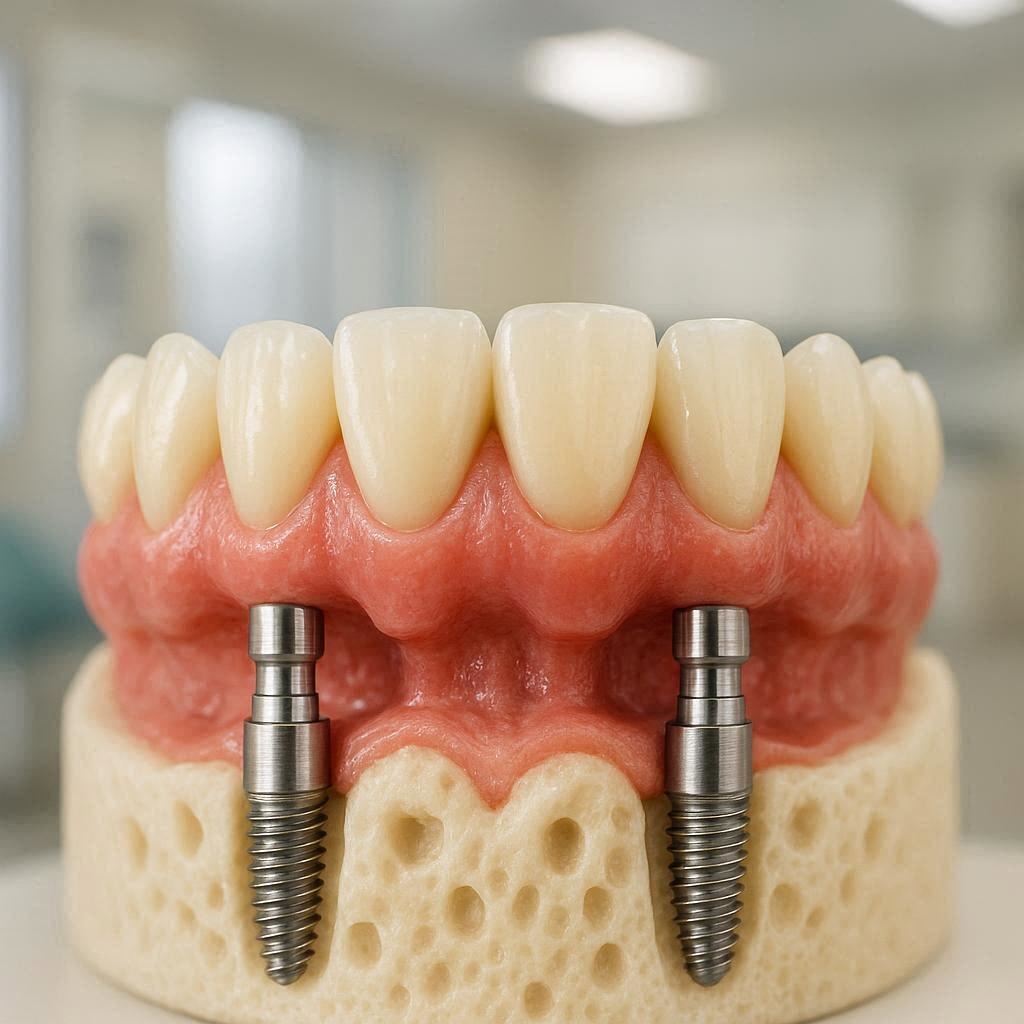
The name tells you almost everything. Four on 8 means you receive eight dental implants in one jaw (upper or lower). These eight implants support a fixed bridge of fourteen teeth. In other words, you get a full set of new teeth anchored by eight titanium posts.
Why eight? The number provides exceptional stability. Each implant shares the chewing load. This reduces stress on any single implant. It also allows your dentist to place a non-removable bridge that feels very close to natural teeth.
Some people confuse 4 on 8 with All-on-4. They are different. All-on-4 uses only four implants per jaw. 4 on 8 uses double that amount. The extra implants mean more support, less bone grafting, and a more natural feel.
Important note: 4 on 8 is not for everyone. It works best for patients who have enough bone density but want extra security. Your dentist will help you decide if you are a candidate.
How It Differs from All-on-4 and All-on-6
Let us clarify the most common options. The table below shows a quick comparison.
| Feature | All-on-4 | All-on-6 | 4 On 8 |
|---|---|---|---|
| Implants per jaw | 4 | 6 | 8 |
| Bone grafting often needed? | Sometimes | Sometimes | Rarely |
| Number of teeth in final bridge | 12–14 | 12–14 | 14 |
| Typical cost range (USD) | $15k–$25k | $20k–$30k | $24k–$40k |
| Best for | Moderate bone loss | Moderate bone loss | Thin bone or high bite force |
| Removable? | No (fixed) | No (fixed) | No (fixed) |
As you can see, 4 on 8 sits at the premium end. But the benefits go beyond price.
Who Is a Good Candidate for 4 On 8 Implants?
Not everyone needs eight implants per jaw. In fact, many people do very well with four or six. However, certain situations make 4 on 8 the better choice.
You might be a good candidate if:
- You have already lost most or all of your teeth in one jaw.
- You have thin jawbone but do not want bone grafting.
- You grind your teeth at night (bruxism).
- You have a heavy bite or eat tough foods often.
- You want the most stable, non-removable option available.
- Previous implant attempts failed due to lack of support.
Let us look at each of these situations more closely.
Thin Jawbone Without Grafting
Bone grafting adds months to your treatment time. It also increases cost and recovery discomfort. With 4 on 8, your dentist can place more implants in the bone you already have. Each implant is smaller than traditional ones. Eight smaller implants distribute force better than four larger ones.
Bruxism and Heavy Chewing
If you grind your teeth, you put extra force on any dental work. Standard dentures can break. Even All-on-4 may feel unstable over time. Eight implants create a stronger foundation. The bridge attaches at more points, so no single area takes all the pressure.
Failed Previous Implants
Some patients come to 4 on 8 as a rescue solution. Perhaps an older implant failed. Maybe dentures never worked well. Eight new implants placed strategically can save a jaw that otherwise would need a removable denture.
Quote from Dr. Elena Marchetti, prosthodontist:
“In my practice, 4 on 8 is not the first choice for every patient. But for those with high functional demands or limited bone, it is often the last and best option.”
The Step-by-Step Procedure for 4 On 8 Implants
Understanding the process reduces fear. Here is what a typical 4 on 8 treatment looks like from start to finish.
Initial Consultation and Imaging
Your dentist will take a 3D CT scan of your jaw. This shows bone density, nerve locations, and sinus positions. The surgeon uses this data to plan exactly where each implant will go.
You will also discuss your medical history. Conditions like uncontrolled diabetes or active gum disease may need treatment first.
Tooth Extractions (If Needed)
If you still have damaged teeth, they must come out. Most dentists do this on the same day as implant placement. You will receive local anesthesia or sedation. You should not feel pain.
Implant Placement Surgery
This is the main event. The surgeon makes small incisions in your gums. They drill precise holes into the jawbone. Then they insert eight titanium implants. The whole procedure takes two to four hours per jaw.
You go home the same day. You will have a temporary bridge or denture to wear during healing.
Healing and Osseointegration
Osseointegration is the process where bone grows around the implants. It locks them in place like natural tooth roots. This takes four to six months. During this time, you eat soft foods and avoid chewing directly on the implants.
Final Bridge Placement
Once healing is complete, your dentist removes the temporary bridge. They take new impressions. A dental lab creates your permanent bridge. This bridge is made of zirconia or acrylic reinforced with metal. It attaches to all eight implants. The result is a fixed, non-removable set of teeth.
Total treatment time: Usually six to nine months from start to finish.
Advantages of Choosing 4 On 8 Implants
Why go through this longer, more expensive process? The advantages are significant for the right patient.
Superior Stability
With eight anchors, your new teeth will not move. Not even a millimeter. You can bite into an apple, chew steak, or laugh loudly without worry.
No Denture Adhesives
Denture wearers know the struggle. Pastes, powders, and strips that never work perfectly. 4 on 8 eliminates all of that. Your teeth are screwed into place. They stay put.
Preserves Jawbone and Face Shape
When you lose teeth, your jawbone shrinks. This makes your chin look pointy and your lips sink in. Implants stimulate the bone like natural roots. Eight implants do a better job than four. Your face stays fuller for longer.
More Natural Chewing Power
Studies show that implant-supported bridges restore up to 90% of natural chewing force. Traditional dentures give you only 20% to 30%. With 4 on 8, you are closer to 80–85%. That is a massive quality of life improvement.
Easier Cleaning
A fixed bridge on eight implants does not come out. You clean it like natural teeth. Brush twice a day. Floss under the bridge using special superfloss or a water flosser. No soaking. No messy adhesives.
Helpful list: Daily cleaning tools for 4 on 8 implants
- Soft-bristled toothbrush
- Water flosser (e.g., Waterpik)
- Superfloss or implant-specific floss
- Interdental brushes
- Non-abrasive toothpaste
Disadvantages and Risks You Should Know
Honesty matters. 4 on 8 implants are not perfect. Here are the real downsides.
Higher Cost
This is the biggest barrier. Eight implants cost more than four or six. You also pay for a larger bridge and more surgical time. In the United States, expect to pay between $24,000 and $40,000 per jaw. Both jaws double that amount.
Longer Surgery and Healing
More implants mean more drilling. More drilling means more swelling and discomfort. Healing takes a full four to six months. During that time, you wear a temporary bridge that may feel bulky.
Not Reversible
Once you place eight implants, you cannot go back. The bone grows around them. Removing them would destroy significant bone tissue. This is a permanent decision.
Potential Complications
Any surgery carries risks. Infection, nerve damage, and implant failure are possible but rare with a skilled surgeon. Smokers have higher failure rates. So do people with uncontrolled diabetes or osteoporosis.
Difficult to Repair if Broken
If your permanent bridge cracks or chips, repairing it is complex. The bridge is screwed into eight implants. Removing it requires a special appointment. You may need a whole new bridge.
Important note: Always ask your dentist about their warranty on implants and the bridge. Many clinics offer five to ten years of coverage. Some offer lifetime guarantees on the implants themselves.
Cost Breakdown of 4 On 8 Dental Implants
Let us talk numbers clearly. The total price depends on location, dentist experience, materials, and whether you need one jaw or both.
Typical Price Components
| Component | Estimated cost (USD) |
|---|---|
| CT scan and planning | $500 – $1,500 |
| Extractions (if needed) | $100 – $300 per tooth |
| Eight implants per jaw | $12,000 – $20,000 |
| Temporary bridge | $1,500 – $3,000 |
| Permanent zirconia bridge | $8,000 – $15,000 |
| Anesthesia/sedation | $500 – $1,500 |
| Follow-up visits | $500 – $1,000 |
Total per jaw: $23,000 – $42,000
Total for both jaws: $46,000 – $84,000
Ways to Reduce Cost
- Dental schools: Teaching hospitals offer lower rates. Final year residents perform the work under expert supervision.
- Medical tourism: Mexico, Costa Rica, Colombia, and Hungary offer quality care at half the price. Always research the clinic thoroughly.
- Dental insurance: Most plans do not cover implants fully. But some cover extractions, CT scans, and part of the bridge.
- Payment plans: Many clinics offer in-house financing or work with companies like CareCredit.
Quote from a patient (Michael, 62):
“I paid $48,000 for my lower jaw in Chicago. It hurt my wallet, but three years later, I have zero regrets. I eat ribs again.”
4 On 8 vs. Other Full-Arch Solutions
You have options. Here is an honest comparison to help you choose.
Vs. Traditional Dentures
Dentures cost less upfront ($1,000–$3,000 per arch). But they slip, click, and limit your diet. They also accelerate bone loss. Over ten years, you may spend more on adhesives, relines, and replacements. 4 on 8 costs more now but lasts 20+ years with proper care.
Vs. All-on-4
All-on-4 is the most popular implant solution. It works well for most people. Choose 4 on 8 only if you have thin bone, a heavy bite, or want extra security. Otherwise, All-on-4 saves you money and surgical time.
Vs. Removable Implant Overdentures
Some patients place two to four implants and snap a denture over them. This costs less ($10k–$20k per arch) but the denture still comes out. It feels more stable than regular dentures but less stable than 4 on 8.
Summary Recommendation
| Your priority | Best choice |
|---|---|
| Lowest cost | Traditional dentures |
| Moderate cost + good stability | All-on-4 |
| Maximum stability + no removal | 4 On 8 |
| Budget + better than dentures | Implant overdenture |
Recovery and Aftercare: What to Expect
Knowing what happens after surgery helps you prepare.
First 24 Hours
- Bleeding and swelling are normal.
- Use ice packs on your face (20 minutes on, 20 off).
- Do not spit, rinse, or use a straw.
- Eat only cold soft foods like yogurt, smoothies, and pudding.
First Two Weeks
- Swelling peaks around day two or three.
- Stick to a soft food diet: mashed potatoes, scrambled eggs, soup.
- Rinse gently with warm salt water after day one.
- Take prescribed antibiotics and pain relievers.
First Three to Six Months (Healing Phase)
- Wear your temporary bridge.
- Avoid chewing on the implant side.
- Do not smoke. It dramatically increases failure risk.
- Visit your dentist for regular checks.
After Final Bridge Placement
- Brush twice daily with a soft brush.
- Use a water flosser to clean under the bridge.
- Visit your dentist every six months for professional cleaning.
- Avoid chewing ice, hard candy, or bones.
Important note: Even with eight implants, you can still get gum disease around them. This is called peri-implantitis. Good oral hygiene prevents it.
Frequently Asked Questions (FAQ)
How long do 4 on 8 implants last?
With proper care, the titanium implants can last a lifetime. The bridge usually lasts 15 to 20 years before needing replacement.
Is the procedure painful?
During surgery, you feel no pain due to anesthesia. Afterward, expect soreness and swelling for a few days. Most patients say it is less painful than multiple tooth extractions.
Can I get 4 on 8 for both upper and lower jaws?
Yes. Many patients do both jaws in separate appointments. Your dentist may recommend doing the lower jaw first, then the upper a few months later.
Will my insurance cover any of it?
Most dental insurance plans cover extractions, CT scans, and temporary bridges. Some cover up to $1,500–$3,000 toward implants. Call your provider to confirm.
How do I clean under the bridge?
Use a water flosser daily. Aim the water stream under the bridge from both the cheek side and tongue side. Also use superfloss to thread under and remove debris.
Can I eat normally with 4 on 8?
Yes, after full healing. You can eat steak, apples, nuts, and corn on the cob. Avoid extremely hard foods like ice cubes or crab shells.
What happens if an implant fails?
Failure is rare (under 5% for lower jaw, under 10% for upper jaw). If one implant fails, the remaining seven often support the bridge. Your dentist may add a new implant later.
Additional Resource
For a detailed comparison of implant brands, success rates, and patient reviews, visit the American Academy of Implant Dentistry’s patient education page:
🔗 www.aaid.com/patient-resources
Final Conclusion
4 on 8 dental implants offer exceptional stability and a natural feel for patients with thin jawbone, heavy bite forces, or a desire for the most secure full-arch restoration. The procedure is longer and more expensive than All-on-4, but it often eliminates the need for bone grafting and provides peace of mind for decades. Always consult an experienced implant dentist to determine if eight implants per jaw are right for your unique anatomy and budget.


