How Much Do Mini Dental Implants Cost
Losing a tooth changes more than just your smile. It affects how you eat, how you speak, and often how you feel about yourself in social situations. You might have been researching your options and stumbled upon something called mini dental implants. The name sounds promising—less invasive, perhaps less expensive. But one question immediately springs to mind: what will this actually cost me?
You are not alone in asking this. In fact, “How much do mini dental implants cost” is one of the most common questions asked by people looking for an affordable path to a restored smile. The short answer is that you can expect to pay between $500 and $1,500 for a single mini dental implant. However, that single number hides a world of variables. The true cost depends on where you live, who performs the procedure, the materials used, and how many implants you need.
This guide will give you the complete, honest picture. No inflated promises. No hidden agendas. Just a clear, detailed breakdown of what mini dental implants cost, why they cost what they do, and how you can plan for this important investment in your health.
What Exactly Are Mini Dental Implants
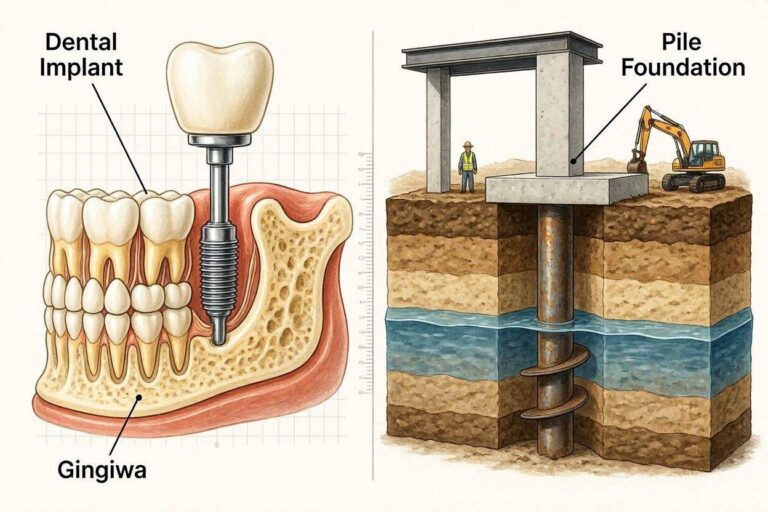
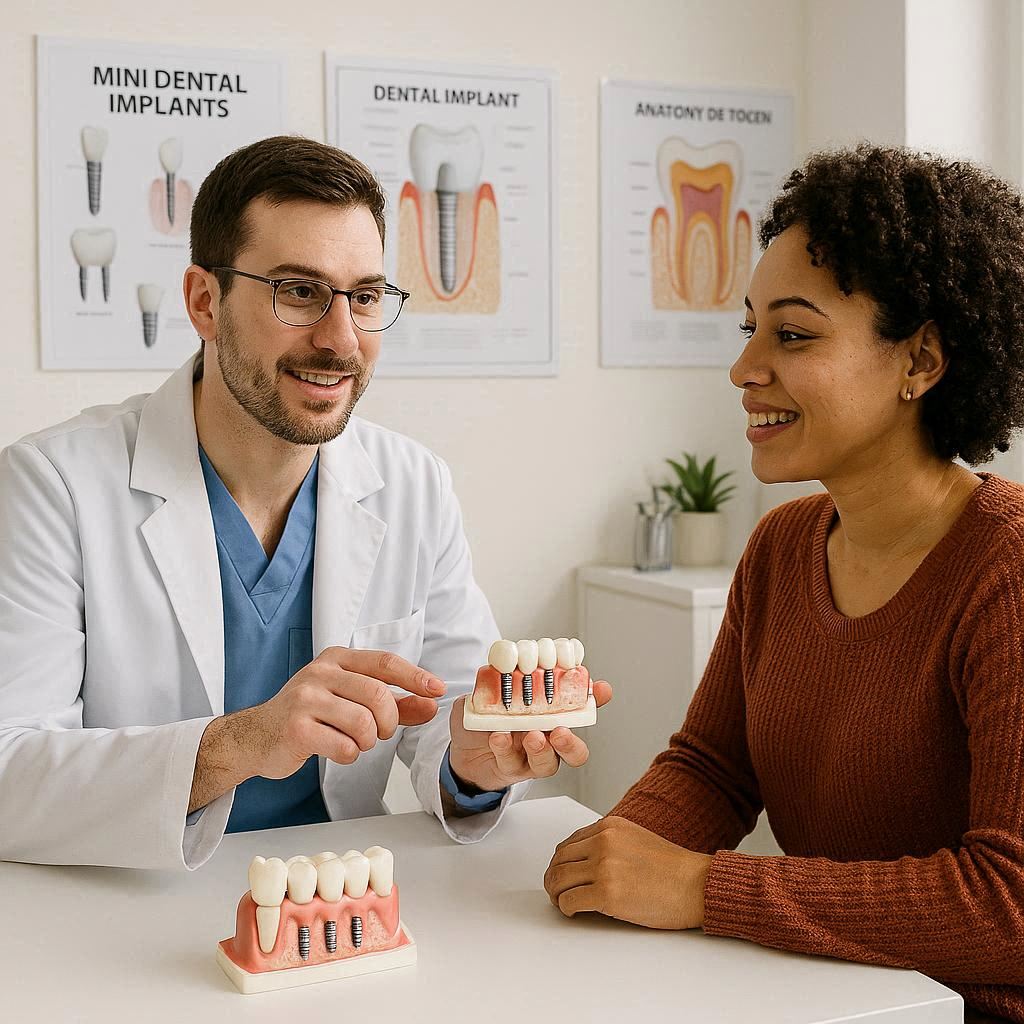
Before we dive deeper into the numbers, let us clarify what we are discussing. A mini dental implant is a tooth root replacement device. It resembles a conventional implant but comes with a smaller diameter. While standard implants typically measure between 3.4 and 5.8 millimeters in width, mini implants generally measure less than 3.3 millimeters.
This smaller size offers distinct advantages. The placement procedure is less invasive. It often requires no incisions or stitches. The dentist can usually place a mini implant directly through the gum tissue into the bone. Healing time is typically faster. Discomfort is usually minimal.
Most mini dental implants consist of a single piece. The implant post and the abutment—the part that holds the new tooth—form one solid unit. This differs from conventional implants, which usually come in two or three separate pieces. This one-piece design contributes to a lower manufacturing cost, and that saving often passes on to you.
Mini implants primarily serve two purposes. They stabilize lower dentures, preventing the embarrassing slip that many denture wearers dread. They also replace small teeth, like incisors or premolars, where a full-sized implant simply will not fit.
The Big Number: Average Cost Breakdown
Let us get straight to the figures you came here to find. The following table provides a clear, realistic overview of what you can expect to pay in the current market. These numbers represent averages across the United States. Your specific quote may fall above or below these ranges.
| Procedure Type | Average Cost Range (Per Implant) | What’s Usually Included |
|---|---|---|
| Single Mini Implant (no tooth) | $500 – $1,000 | Implant body, basic surgical placement |
| Single Mini Implant with Crown | $1,000 – $1,500 | Implant body, placement, abutment, standard porcelain crown |
| Implant-Retained Denture (4 implants) | $2,500 – $5,000 (total for 4) | 4 mini implants, placement, denture attachments |
| Full-Arch Fixed Bridge (6-8 implants) | $6,000 – $12,000 (total) | 6-8 mini implants, placement, fixed acrylic bridge |
These figures represent the base cost. They do not typically include preliminary procedures like X-rays, 3D scans, or extractions. They also assume you have adequate healthy bone and gum tissue. We will explore these potential additional costs shortly.
Why the Wide Range in Prices
You might wonder why the range is so broad. The difference between $500 and $1,500 for a single tooth is significant. Several legitimate factors explain this spread.
Geographic location plays a major role. A practice in a major metropolitan area like New York City or San Francisco carries higher overhead costs than one in a rural community in the Midwest. Those costs—rent, staff salaries, local taxes—influence the final fee.
The dentist’s expertise and credentials matter. A general dentist who places mini implants occasionally will likely charge less than a board-certified periodontist or oral surgeon who performs these procedures daily. Greater experience can mean a higher fee, but it also often brings greater predictability and a lower risk of complications.
The material quality also affects the price. Most mini implants are made from a titanium alloy. However, the specific grade of titanium and the precision of the manufacturing process vary among brands. Premium brands invest heavily in research and design, creating implant surfaces that promote faster, more secure bone bonding. You pay for that innovation. Bargain implants exist, but your dentist’s advice to stick with reputable, well-researched brands is counsel worth heeding. Your bone needs to fuse to this device; it is not a place to cut corners.
Mini Implants vs. Conventional Implants: A Cost Comparison
Placing the cost of mini implants next to conventional implants provides essential context. It helps you understand what you are saving, and just as importantly, what you might be trading for that saving.
| Feature | Mini Dental Implants | Conventional Dental Implants |
|---|---|---|
| Cost (Implant Only) | $500 – $1,000 | $800 – $1,500 |
| Cost (with Crown) | $1,000 – $1,500 | $1,500 – $3,000 |
| Procedure | Less invasive, often flapless | More invasive, requires incision |
| Healing Time | Often faster, less discomfort | Longer osseointegration period |
| Ideal Use | Denture stabilization, small teeth, narrow bone | Replacing any single or multiple teeth |
| Longevity Data | Excellent for stabilization; less long-term data for single crowns than conventional | Decades of data supporting long-term success |
The immediate cost advantage of mini implants is clear. For a single tooth, you might save between $500 and $1,500. For a full-arch stabilization, the savings can be dramatic, potentially cutting the cost of an implant-retained denture in half compared to using conventional implants with a locator abutment system.
However, view this comparison with a mature perspective. Price is one factor. A responsible decision balances price against your specific clinical situation, the long-term goal, and a realistic understanding of what each option offers. A mini implant is not simply a cheaper standard implant; it is a different tool designed for specific situations.
Breaking Down the Cost Factors
When you receive a treatment plan, the total fee rarely reflects a single item. It bundles several distinct components and services. Understanding these parts helps you ask informed questions and evaluate one quote against another.
The Preliminary Examination and Imaging
Your journey begins long before any implant touches your jawbone. The initial diagnostic phase is critical. A thorough examination might cost between $100 and $300. This includes a review of your medical and dental history, a clinical examination of your mouth, and a discussion of your goals.
Imaging is non-negotiable. A simple panoramic X-ray, costing $60 to $150, provides a flat, two-dimensional view. Many dentists now insist on cone beam computed tomography, or CBCT. This 3D scan, which can cost between $150 and $500, creates a precise three-dimensional model of your jaws. It reveals the exact height, width, and density of your bone. It also maps vital structures like nerves and sinuses. This information prevents catastrophic surgical errors. Paying for a CBCT is not an upsell; it is an investment in safety and predictability.
The Implant Fixture Itself
This is the physical device your dentist orders from a manufacturer. For a mini implant, the lab fee or product cost to the dentist typically ranges from $150 to $400 per implant. Reputable brands include IMTEC (now 3M), MDL, and Dentatus. The dentist marks up this cost to cover inventory management, ordering time, and the inherent value of using a proven product.
Important Note for Readers: If a quote seems unusually low, ask which brand of implant the dentist plans to use. Ask if they have been using that brand for many years. A quality implant from a company with a long track record is what you want.
The Surgical Placement Fee
This fee covers the dentist’s skill, time, and the resources used during the placement procedure. It also reflects the cost of local anesthesia, sterile surgical drapes, and the assistant’s time. For a single, straightforward mini implant placement, this fee usually falls between $300 and $800.
If your situation is more complex—for example, if you have very dense bone or the implant needs to be placed at a precise angle to avoid a nerve—the fee may increase. You are paying for the dentist’s judgment and technical ability to navigate your unique anatomy safely.
The Restoration: Your New Tooth
For many mini implants, the restoration is a crown. The cost of this crown varies based on the material.
- Standard Porcelain-Fused-to-Metal Crown: This is a common, durable option, ranging from $500 to $900. It features a metal base for strength, covered with tooth-colored porcelain.
- Full Zirconia Crown: This superior aesthetic option costs between $600 and $1,100. Zirconia is incredibly strong and reflects light much like a natural tooth. It is an excellent choice for front teeth.
- Acrylic or Composite Crown: Sometimes used for temporary restorations or as part of a fixed bridge on multiple mini implants. These cost less, usually $300 to $500 per tooth, but are less durable.
The O-Ring Housing for Dentures
If you are getting mini implants to secure a lower denture, the restoration is not a crown. It is a metal housing containing a rubber O-ring, fitted into your existing or new denture. Each housing corresponds to a ball-shaped abutment on the implant, creating a secure snap-fit. The cost to retrofit a denture with these housings ranges from $200 to $500 per housing, or $800 to $2,000 for a set of four. This fee includes the dental laboratory work and the dentist’s chair time to precisely fit the housings so your denture seats perfectly.
Additional Procedures You Might Need
The base prices quoted in the table earlier assume a clear path. But sometimes, the ground must be prepared before the implant can be placed. These additional procedures add to the total cost.
Tooth Extractions
If a broken or failing tooth remains in the site, it must be removed. A simple extraction of a visible tooth might cost $100 to $250. A surgical extraction of a broken tooth or one with curved roots can cost $250 to $600. Your dentist must also wait for the extraction socket to heal, which takes several weeks to months, before placing an implant.
Bone Grafting
When a tooth is lost, the surrounding bone slowly resorbs, or melts away. A mini implant, despite its name, still requires a minimum amount of healthy bone for stability. If your bone is insufficient, your dentist will recommend a bone graft.
This procedure places bone particles into the deficient area to create a scaffold for your own body to rebuild upon. A minor socket graft done at the time of extraction might add $300 to $800. A larger block graft to rebuild a significant deficiency is a much more substantial procedure, costing between $2,000 and $4,500. The material can be synthetic, from a human tissue bank, or from an animal source. Using your own bone, harvested from another site in your jaw, adds surgical time and expense.
Bone grafting is the most common reason a seemingly straightforward implant case becomes more expensive. It also necessitates a healing period of four to nine months before the implant can be placed.
Sinus Lifts
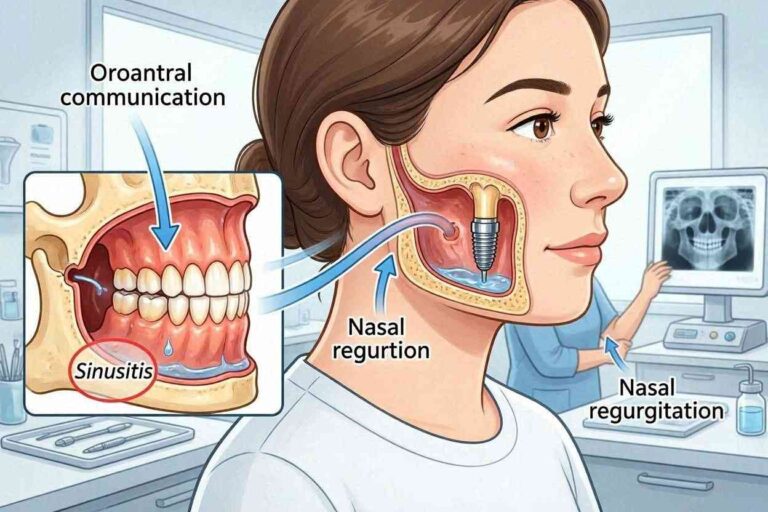
In the upper jaw above your back teeth is an air-filled cavity called the maxillary sinus. When these teeth are lost, the sinus floor can drop down, leaving very little bone between your gum and the sinus. Placing an implant into this thin bone risks pushing the implant into the sinus. A sinus lift procedure gently raises the sinus membrane and places bone graft material underneath it to create adequate height. This specialist procedure can cost $2,500 to $6,000 per side.
Treatment Scenarios: Real-World Cost Examples
To make these numbers concrete, let us walk through three common patient scenarios. These examples show how the individual line items add up into a real treatment plan.
Scenario 1: Replacing a Single Lower Incisor
Sarah, a 42-year-old teacher, lost a lower front tooth in a bicycle accident years ago. The space is small, too narrow for a conventional implant. Her bone is healthy.
- Preliminary exam and panoramic X-ray: $150
- CBCT 3D scan: $250
- Mini implant placement (single): $750
- Porcelain-fused-to-metal crown: $700
- Total Estimated Cost: $1,850
This cost could be reduced to about $1,600 if she chose a dentist who uses 2D X-rays instead of CBCT, though most specialists would strongly advise the 3D scan for safety.
Scenario 2: Stabilizing a Lower Denture
Mark, a 68-year-old retired firefighter, has a full lower denture he hates. It floats and clicks when he eats. His bone ridge is flat but adequate in the front of his jaw. He chooses four mini implants to stabilize the denture.
- Preliminary exam and CBCT scan: $450
- Placement of 4 mini implants: $3,200 total ($800 each)
- Retrofitting existing denture with O-ring housings: $1,600 ($400 per housing)
- Total Estimated Cost: $5,250
Mark now enjoys a denture that clicks securely onto the implants. He can eat an apple for the first time in a decade. He removes the denture at night for cleaning. This is a life-changing outcome for a manageable investment.
Scenario 3: Full-Arch Fixed Bridge on Mini Implants
Linda, a 72-year-old artist, is missing all her upper teeth. She wants fixed teeth—nothing removable. Her bone is moderate. She is not a candidate for conventional implants without significant grafting, which she wants to avoid. Her dentist proposes a fixed acrylic bridge supported by 8 mini implants.
- Preliminary exam and full CBCT scan: $500
- Extractions of 3 remaining failing teeth: $600
- Placement of 8 mini implants: $7,200 total ($900 each)
- Immediate fixed acrylic bridge: $4,500
- Final fixed zirconia-reinforced acrylic bridge after healing: $6,000
- Total Estimated Cost: $18,800
This is a significant investment. However, compare it to a full-arch fixed solution using conventional implants, which can easily range from $25,000 to $50,000 per arch. The mini implant option, in the right hands, can provide a fixed, beautiful smile for a far more accessible price.
Important Note for Readers: The “immediate” bridge placed on the day of surgery is a provisional restoration. It allows your bone and gums to heal in a guided shape. A final, more durable bridge is made several months later. Always confirm with your dentist whether their quoted fee covers both the interim and final prostheses. Disappointment occurs when a patient discovers the final teeth are a separate, large fee.
The Factor No One Discusses: Long-Term Value and Durability
A lower upfront cost is appealing, but a wise buyer considers the total cost of ownership. What is the value over five, ten, or twenty years?
For denture stabilization, the long-term track record for mini implants is excellent. Studies show success rates well above 90% over many years. The forces on these implants are shared among several of them and cushioned by the soft tissue under the denture. Occasional replacement of the rubber O-rings, a minor $20 to $50 expense per ring every year or two, maintains the snug fit.
For a single crown, the long-term picture is more nuanced. Conventional implants have decades of research demonstrating their durability under the intense forces of chewing, especially in the back of the mouth. Mini implants used as single tooth replacements do not yet have that same depth of long-term data. A 2019 review in the Journal of Oral Implantology found that mini implants for single crowns had encouraging survival rates but recommended careful case selection. They are generally best suited for narrow spaces and low-stress areas, like the front lower jaw.
A catastrophic failure of a mini implant—fracture of the body—is rare but more likely than with a wider implant. If a mini implant fails, the dentist often can place another mini implant, sometimes in a slightly different position, after a short healing period. The cost to replace a failed implant will likely be similar to the original surgical fee.
Insurance and Mini Implants: Navigating the Maze
Dental insurance can reduce your out-of-pocket cost, but the rules are complex and often frustrating to navigate. Understanding the landscape will help you avoid unpleasant surprises.
Dental Insurance
Most dental insurance plans categorize implants under “major services.” If your plan includes implant coverage—and not all do—it typically reimburses at 50% of the policy’s allowed amount, after you meet your deductible. There is almost always an annual maximum benefit, commonly $1,500 or $2,000 per year.
Let’s say you need a single mini implant and crown costing $1,500. Your plan covers implants at 50%. Your deductible is $50, and your annual maximum is $1,500.
- Total cost: $1,500.
- Subtract deductible: $1,450.
- Insurance pays 50% of $1,450: $725.
- You pay the remaining: $775.
- Your $1,500 annual maximum is not depleted, but $725 of it is used.
If you need multiple implants totaling $7,000, you will hit that $1,500 annual maximum very quickly. The insurance will pay $1,500 for the year, and you will be responsible for the remaining $5,500. This is why staging treatment across two benefit years—placing the implants in December and restoring them with the crown in January—can be a savvy financial strategy. Discuss this timing openly with your dentist.
Medical Insurance
In specific circumstances, medical insurance may cover parts of the implant procedure. This typically applies if the tooth loss resulted from a medical condition, a traumatic accident, or if the implant is a necessary part of a larger medically required jaw reconstruction. The process requires pre-authorization, a detailed narrative from your doctor, and perseverance. Most standard tooth replacements from decay or gum disease will not qualify.
Discount Dental Plans
These are not insurance. For an annual membership fee, usually between $100 and $200, you gain access to a network of dentists who have agreed to provide services at a negotiated reduced fee. A plan might offer a 20% to 30% discount on implant procedures. This can translate to significant savings. However, you must use an in-network dentist. Verify that a reputable dentist in your area participates in the plan before you purchase the membership.
Financing Your Smile: Making Treatment Affordable
When insurance leaves a large gap, or you lack coverage entirely, a direct payment with a credit card or cash might not be possible. Several popular financing routes can spread the cost over time.
Third-Party Healthcare Financing
Companies like CareCredit and LendingClub offer credit lines specifically for healthcare expenses. They often feature promotional periods with zero percent interest if the balance is paid in full within a set timeframe—often 6, 12, or 18 months.
Critical Warning: These are deferred interest plans. If you do not pay every single cent of the balance within the promotional period, you will be charged all the interest that would have accrued from the original date of the procedure, often at a high rate above 25%. Only use this option if you are absolutely certain you can pay off the balance in time.
In-House Membership Plans
Many dental practices offer their own membership or savings plans directly to uninsured patients. For a flat monthly or annual fee, you receive a package of preventive care and a discount, often 15% to 25%, on other treatments, including implants. This can be an excellent option that builds a direct value relationship between you and your practice.
Regular Installment Payments
Some private, fee-for-service practices will allow you to split the payment for a major procedure into several installments, paid directly to the office. Your treatment is often staged: you pay for the surgical phase and then, weeks later, pay for the restorative phase. This naturally divides the cost.
Questions You Must Ask Your Dentist
Receiving a treatment plan quote can be overwhelming. Arm yourself with a short list of clear questions to ask before you commit.
“Can you please itemize this quote? I would like to see the separate fee for the implant placement and for the crown.”
An ethical dentist will provide this breakdown without hesitation. A lump-sum number tells you nothing about what you are actually buying.
“Does this fee include the cost of any necessary bone grafting or extractions? If I need a graft, what is the additional cost?”
This question unmasks hidden expenses. A low initial quote might exclude procedures that become evident only after a 3D scan.
“Which brand of mini implant do you use, and how long have you been using it? What is your personal success rate with this system?”
You are asking for their experience and the quality of their tools. A confident clinician will answer proudly.
“What sort of warranty or guarantee do you offer on your implant work? If this implant fails in the first year, what is your policy for replacement?”
Policies vary. Some dentists cover their own surgical fee for a re-do but you must pay a new lab fee for the crown. Others provide a comprehensive no-charge replacement within a certain window. Know the terms.
The Danger of Dental Tourism for Implants
The lure of drastically lower prices abroad is strong. Countries like Mexico, Costa Rica, Hungary, and Thailand advertise mini implants at a fraction of U.S. prices. A $1,000 implant and crown here might cost $300 there.
There are talented, ethical dentists all over the world. The problem is not with them. The problem is the system in which a tourist-patient exists. An implant is not a transaction; it is the beginning of a relationship. The bone must heal around the implant for months. The final crown must be placed. Then, for years, you need professional maintenance to monitor the health of the gum and bone around it.
Complications happen. An implant can develop peri-implantitis, an infection of the surrounding gum and bone. A screw can loosen. Porcelain can chip. If your treating dentist is a four-hour flight away, a minor complication becomes a logistical and financial crisis. The local dentist who you ask to fix a problem created elsewhere may be reluctant or unable to do so, often because they do not have the exact parts for an unfamiliar implant brand.
The true cost of an implant includes the value of a local clinician who will stand by their work and be available for you next week, next year, and in the next decade. If you do choose dental tourism, factor in the cost of two trips for a single implant (one for placement, one to return for the crown weeks later) and the cost of lodging. Factor in the risk that if something goes wrong, you may end up paying a local dentist full price to redo the entire procedure anyway.
A Regional Tour: How Location Shapes Price
We touched on geography earlier. Let us zoom in on the practical differences you might see as you compare prices around the country.
| U.S. Region | Single Mini Implant (with Crown) | Notes |
|---|---|---|
| Northeast (NYC, Boston) | $1,400 – $1,800+ | High overhead, high specialist density |
| West Coast (LA, SF, Seattle) | $1,300 – $1,700+ | Similar to Northeast, strong demand |
| Midwest (Chicago, rural areas) | $900 – $1,300 | Lower operating costs in many areas |
| South (Atlanta, Dallas, rural areas) | $850 – $1,400 | Competitive markets, lower prevailing wages |
| Southwest (Phoenix, Albuquerque) | $1,000 – $1,500 | Large retirement communities, high demand for denture stabilization |
Dental schools represent a unique geographic opportunity. If you live near a university with a dental school, their faculty-supervised student clinics offer services at significantly reduced fees. A single mini implant and crown might cost $600 to $900. The trade-off is time. Appointments are long. Every step is checked by a seasoned instructor. The pace is deliberate. If you have more time than money, this is an excellent, safe path.
The Surprising Connection Between Dentures and Mini Implant Costs
For many people, the deep dive into mini implant costs begins with a failing denture. A conventional lower denture, even a well-made one, rests on a constantly shrinking ridge of bone. It is a prosthetic on a moving, changing foundation. Mini implants change that foundation by giving the denture solid, stable anchors.
The most common and most successful application for mini implants is the mandibular two-implant overdenture. The standard of care, endorsed by the well-respected McGill Consensus statement in 2002, is for a lower denture to be retained by two conventional implants. However, a vast clinical experience has shown that four mini implants can provide an equally transformative result at a significantly lower cost.
When you compare options for a lower arch, the numbers tell a clear story.
- New lower denture only: $1,500 – $3,000. It will still move.
- New lower denture retained by 2 conventional implants: $6,000 – $10,000. Excellent stability.
- Retrofit existing denture with 4 mini implants: $3,500 – $5,500. Excellent stability, lower cost, less surgery.
- Fixed lower bridge on 4-6 conventional implants: $20,000 – $35,000. The premium option.
For the right candidate, the mini implant overdenture is the functional sweet spot. The cost-to-benefit ratio is outstanding.
“For my patients who are not ready for the expense of a full fixed bridge, a mini-implant-retained lower denture is a total game-changer. It gives them back their confidence to eat in public for an investment they can manage. Seeing them smile when they feel that secure snap for the first time—that’s why I do this.” — A practicing general dentist in Colorado, whose words I share with permission to give you an honest, frontline perspective.
Step-by-Step: What to Expect and When to Pay
Understanding the timeline helps you anticipate when payments will be due. Treatment is typically phased. You rarely pay the total sum on the first day.
Phase 1: Diagnostics and Planning (Day 1)
You pay for the exam, X-rays, perhaps a CBCT scan. You receive a treatment plan with a detailed total cost. $200 – $500 due now.
Phase 2: Surgical Placement (Day 30-60, once you are ready)
Local anesthesia numbs the area. The dentist uses a series of precise drills to create a small channel in your bone. The mini implant is twisted into place, much like a tiny screw. The top of the implant sits just above the gum. If you are replacing a single tooth, a temporary crown or healing cap might be placed. For dentures, your existing denture is retrofitted with temporary soft liners so you can wear it over the healing implants without putting pressure on them. You pay the surgical fee now. For our single-tooth example: $750.
Phase 3: Healing (Day 30 to Day 120)
Osseointegration occurs. Your bone cells grow onto the titanium surface, locking the implant in place. You wait. You have no new payments due during this period.
Phase 4: Restoration (Day 90-120)
The dentist takes an impression of the stable implant. A dental lab fabricates your custom crown or, for dentures, retrofits the denture with the permanent O-ring housings. A few weeks later, the final restoration is seated and adjusted. You pay the restoration/lab fee now. For our single-tooth crown: $700.
This phased approach naturally spaces out the financial impact over several months, making it more manageable than a single large bill.
The Unspoken Truth About “Affordable” Mini Implant Centers
You may see advertisements for dental centers specializing in “affordable dentures and implants,” often located in shopping malls. These are high-volume practices. Their business model relies on speed and volume. A patient is a chair to be turned over.
This model can certainly offer genuine lower prices. They purchase supplies in massive quantities and streamline every step of the process. For a straightforward case, the outcome can be perfectly acceptable.
The risk arises if your case has any complexity. A high-volume, speed-focused environment may not allow the careful deliberation needed for compromised bone, a difficult bite, or a complex medical history. A one-size-fits-all approach to implant placement, ignoring the unique anatomy of your jaw, can lead to problems. Implants placed in poor positions can fail or be impossible to restore well.
If you visit such a center, go in with your eyes open. Ask the same tough questions you would ask any other provider. Ask who will be doing the surgery—a licensed dentist, or a traveling specialist who is at that location only two days a month. Continuity of care matters.
Post-Procedure Costs: Ownership, Not Just Purchase
Your financial relationship with your implant does not end the day the crown is delivered. Responsible ownership involves ongoing maintenance. Budget for these items so they do not become a stressful surprise.
- Professional Cleanings: You should see your dentist or hygienist at least twice a year. They will use special instruments, often plastic or titanium scalers, to clean the implant crown and the surrounding gum without scratching the metal. A standard cleaning might cost $100 to $200. An implant-specific maintenance visit might cost slightly more.
- Annual X-rays: Once a year, your dentist will take a small X-ray of the implant site. This image checks the bone level around the implant, looking for early signs of bone loss. This might cost $30 to $50.
- O-Ring Replacement: If you have mini implants for a denture, the small rubber O-rings inside the housings will wear out. They lose their grip, and the denture starts to feel loose. Replacing them is quick and inexpensive, usually $20 to $50 per ring. Most wearers replace them once a year.
- Crown Replacement: No crown lasts forever. A well-made porcelain crown on a mini implant can last 10 to 15 years or longer, but it is subject to the same wear, chipping, and aesthetic aging as any dental restoration. Replacing it will involve a new lab fee, likely in the range of $600 to $1,100 in today’s currency.
A Closer Look at Implant Materials and Their Value
The titanium alloy used in your mini implant is not generic metal. It is a medical-grade material, specifically chosen for its biocompatibility. Your body does not recognize it as a foreign invader and reject it. Instead, bone cells willingly attach to the specially treated surface.
This surface treatment is a key differentiator between a premium implant and a budget copy. Leading manufacturers use techniques like sandblasting, acid-etching, or laser-ablating to create a micro-rough surface texture. This roughness dramatically increases the surface area for bone cells to grip. Think of it like the texture of a climbing wall versus a smooth sheet of metal. The rough surface allows for a stronger, faster bond.
When you pay for a brand-name implant, you are paying for the engineering of this surface. You are also paying for the engineering of the threads—the tiny spiral ridges that give the implant its initial mechanical grip in the bone. Thread design, depth, and pitch are all meticulously calculated based on the density of different bone types.
A dentist may choose a more aggressive thread design for soft bone and a finer thread for dense bone. A single-sized, single-threaded generic implant cannot offer this tailored approach. This is not marketing language; it is implant biomechanics. The long-term success of your implant is built upon this invisible, extraordinary engineering.
When Mini Implants Might Be the Only Affordable Path to Fixed Teeth
For a specific patient profile, mini implants are not just a nice option; they are the definitive door-opener to fixed teeth.
Consider a patient who has been wearing a complete upper denture for 20 years. The bone of their upper jaw has severely resorbed. The ridge is a thin, flat knife-edge. The maxillary sinuses have expanded downward. Placing conventional implants would require major bone grafting, often including a block graft from the hip and bilateral sinus lifts. This preparatory surgery alone could cost $15,000 to $20,000 and require a year of healing before an implant can even be placed. The total cost for fixed teeth could exceed $40,000.
This patient simply cannot afford that path. In years past, they would be told they are destined to wear a loose denture forever. Today, an experienced dentist might plan to place 6 or 8 mini implants, carefully angled to engage the available bone and avoid the sinuses, perhaps even anchoring into denser bone at the base of the skull (pterygoid implants, though these are distinct). By using the slender mini implants and strategic placement, the dentist can often bypass the need for the massive, expensive grafting. The patient can receive a fixed, cross-arch bridge for under $20,000.
In this context, mini implants deliver not just a lower cost, but a result that would otherwise be financially impossible. They solve an access-to-care problem in a profound way.
The Critical Role of the Laboratory
You will never meet them, but the dental lab technician is a silent partner in your outcome. The quality of their work directly impacts the look, fit, and longevity of your crown or bridge.
A skilled technician handcrafts your restoration. They layer porcelain powders to mimic the translucency and color gradients of a natural tooth. They carefully follow the dentist’s prescription to build a crown that fits your bite precisely, so that when you chew, the forces flow down the long axis of the implant and out into the bone evenly. A poorly made crown can create lateral, prying forces on the mini implant, leading to screw fracture or bone loss.
Dentists choose their lab based on quality, consistency, and communication. A higher lab fee in your quote often reflects the use of a top-tier domestic laboratory that uses premium materials and has master ceramists on staff. A lower lab fee might involve sending impressions to a high-volume, lower-cost lab, often overseas, where quality control can be less direct. The difference in the final result can be night and day. You can ask your dentist, “Tell me about the lab you use. Where are they located, and what kind of restorations do they specialize in?” This is a marker of quality.
How to Read Your Treatment Plan Like a Pro
Let’s equip you to dissect a treatment plan document. It might contain dental codes. Knowing the common ones gives you power.
- D0140: Limited oral evaluation, problem-focused.
- D0367: Cone beam CT capture and interpretation.
- D6013: Surgical placement of a mini implant.
- D6057: Custom abutment, in this context, often part of a one-piece implant.
- D6065: Implant-supported porcelain/ceramic crown.
- D6110: Implant-supported complete denture (removable).
- D6111: Implant-supported complete denture (fixed).
If you see code D6013 on your plan, you know it’s specifically for a mini implant. A separate code for a conventional implant is D6010. The fee for D6013 should be significantly lower. If you see codes for bone grafting (such as D4263 or D7953) or extractions (D7140), the costs for those must be added to get the true total.
Important Note for Readers: Dental benefit plans use these codes to determine coverage. However, just because a code exists does not mean your plan covers it. Always get a pre-treatment estimate sent to your insurance company by the dental office before you begin. This document will come back to you showing exactly what the insurance will pay, and what your patient portion is. It is an estimate, not a guarantee, but it is the clearest picture you will get beforehand.
Conclusion
The cost of mini dental implants is not a single number but a spectrum, ranging from a few hundred dollars for a simple implant to over eighteen thousand for a full-arch restoration, shaped by location, materials, and the unique canvas of your own anatomy. This investment secures more than just a replacement tooth—it preserves your jawbone, restores the profound confidence of a stable smile, and returns the simple, joyful function of eating without fear. Ultimately, the truest value of a mini implant is measured not on a spreadsheet, but in the years of unthinking comfort and genuine laughter it gives back to you.
Frequently Asked Questions
Can you eat normally with mini dental implants?
Yes. Once fully healed and restored, mini implants allow you to eat with significantly more confidence than a traditional denture. For denture wearers, they provide a secure snap that prevents slipping, letting you tackle foods like steak or raw vegetables again. For a single tooth, the function is very similar to a natural tooth, though your dentist may advise avoiding extremely hard or sticky foods to protect the crown.
How painful is the mini dental implant procedure?
Most patients are surprised by how little discomfort they feel. The procedure is typically performed under local anesthesia. Because the implant is narrow and placed with minimal tissue disruption, post-operative soreness is usually mild. Over-the-counter pain relievers are often all that is needed for a day or two.
How long do mini dental implants last?
With diligent home care and regular professional maintenance, a mini implant itself can last for decades. The prosthesis it supports—the crown or the denture—has a shorter lifespan and may need replacement due to normal wear over 10 to 15 years. O-rings for denture stabilization need replacement approximately once a year.
What is the downside of mini dental implants?
The primary downside compared to conventional implants is that they have a thinner diameter. This makes them inherently less resistant to fracture under extreme sideways forces. They are not the ideal choice for replacing a large molar in a patient with a heavy bite or a tooth-grinding habit. The long-term data for single-tooth mini implants is also less robust than for conventional implants.
Does dental insurance cover mini implants?
Some plans do. If your plan covers major services, mini implants are often classified similarly to conventional implants. The coverage is typically a percentage, such as 50%, up to a low annual maximum. Very few plans cover the full cost. Always get a pre-treatment estimate.
Additional Resource:
For a deeper, evidence-based understanding of implant treatments and how to find a qualified provider, visit the patient resources section of the American Academy of Implant Dentistry at www.aaid.com.
Disclaimer: This article is intended for informational purposes only and does not constitute medical or dental advice. The costs presented are averages and estimates, and they vary based on location and individual patient needs. Always consult a licensed dental professional for a personal examination, diagnosis, and tailored treatment plan. Any treatment decision is a personal choice to be made between you and your dentist based on your specific clinical situation.