Can You Get Dental Implants After Having Dentures
If you have been wearing dentures for a while, you might know the feeling. They slip. They click. They change how you taste your food. Maybe you have even stopped smiling as wide as you used to. You are not alone. Millions of people ask themselves the same quiet question every morning while applying adhesive cream: Is there a better way?
The short answer is yes. You can absolutely get dental implants after having dentures. In fact, many people do exactly that. They start with traditional dentures as a temporary or long-term solution, and later they transition to the stability of implants.
But here is the honest truth. The process is not always simple. It depends on your bone health, your budget, your medical history, and how long you have worn your dentures. Some people need extra procedures. Others can get implants in a single day.
This guide walks you through everything you need to know. No fluff. No fake promises. Just real, practical information from a professional perspective.
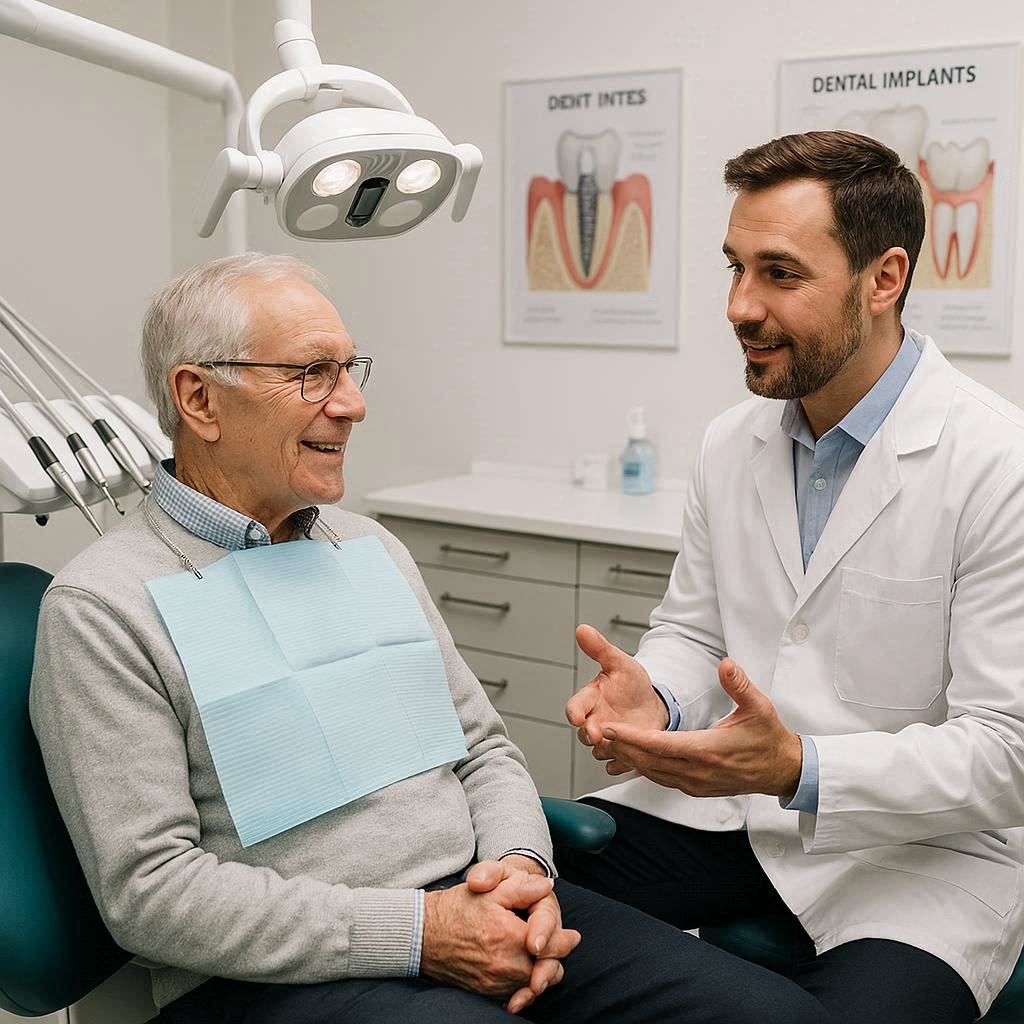
Understanding the Difference: Dentures vs. Dental Implants
Before we talk about switching from one to the other, it helps to understand what each solution actually does inside your mouth.
What Dentures Really Do
Dentures are prosthetics. They sit on top of your gums. They do not fuse with your bone. Instead, they rely on suction, adhesive, or the natural shape of your jaw to stay in place.
There are two main types:
- Full dentures – Replace all teeth on the upper or lower arch.
- Partial dentures – Fill gaps while hooking onto remaining natural teeth.
Dentures are removable. You take them out at night. You soak them in cleaner. They serve a purpose, and for many decades, they were the only affordable option for tooth replacement.
But dentures come with hidden costs. Not financial costs, but biological ones. Because dentures do not stimulate your jawbone, your bone starts to resorb. That means it shrinks. Over time, your dentures fit less and less well. That is why people need new dentures every five to seven years.
What Dental Implants Actually Do
Dental implants are different. They are small titanium posts that a surgeon places directly into your jawbone. Over several months, your bone grows around the implant. This process is called osseointegration. It sounds complicated, but it just means the implant becomes part of your body.
Once the implant heals, the dentist attaches a crown, bridge, or denture on top. The result feels natural. It looks natural. And most importantly, it stops bone loss.
Note for readers: Implants are not a magic fix. They require surgery. They require healing. They require commitment. But for the right candidate, they are life-changing.
Why People Switch from Dentures to Implants
You might be wondering: why go through the trouble? Dentures already work, right? For some people, yes. For others, not so much.
Here are the most common reasons people decide to switch.
The Slipping Problem
Have you ever laughed too hard and felt your dentures shift? Or bitten into an apple only to have your teeth stay behind? That slipping sensation is frustrating. It is also embarrassing. Many people stop eating in public or covering their mouth when they smile. Implants lock into place. They do not move.
Bone Loss in the Jaw
This is the big one. Most people do not realize that their jawbone needs stimulation from tooth roots to stay dense. When teeth go missing, the bone starts melting away. Dentures speed up this process because they rest on the gums but do not transfer chewing forces to the bone.
Over ten years of wearing dentures, you can lose a significant amount of bone height. That changes your facial structure. Your chin moves forward. Your cheeks sink in. You look older than you are. Implants prevent this completely.
Difficulty Eating and Tasting
Dentures cover the roof of your mouth. That full-coverage design blocks many taste buds. It also reduces your ability to feel temperature and texture. Implants do not cover your palate. You taste your food again. You feel the crunch of a salad or the warmth of soup.
Ongoing Costs of Adhesives and Refits
Adhesives cost money. Denture cleaning tablets cost money. Relines and replacements cost money. Over ten years, these small expenses add up to thousands of dollars. Implants have a higher upfront cost, but low long-term maintenance.
| Dentures Over 10 Years | Implants Over 10 Years |
|---|---|
| Initial set: $1,500 – $3,000 | Initial placement: $3,000 – $5,000 per implant |
| Adhesives: $20 – $50/month | No adhesives needed |
| Relines: $300 – $500 every 2 years | Regular checkups only |
| Replacement: $1,500 – $3,000 every 5-7 years | Implants last 20+ years |
| Estimated total: $8,000 – $15,000 | Estimated total: $4,000 – $6,000 per implant (one-time) |
Note: Prices vary by location and provider. These are average estimates.
Can Anyone Make the Switch? The Honest Eligibility Check
Here is where we get real. Not everyone who wears dentures is a good candidate for implants. You need to meet certain conditions.
Bone Density Requirements
Remember bone loss from earlier? That is the biggest hurdle. After years of wearing dentures, your jawbone may have shrunk significantly. Implants need a certain thickness and height of bone to hold them securely.
If you have been wearing dentures for:
- Less than 2 years – Good chance you have enough bone.
- 3 to 5 years – Possible bone loss, but many still qualify.
- 6 to 10 years – Moderate to significant bone loss likely.
- Over 10 years – High probability you will need bone grafting.
Do not panic if you fall into the longer category. Bone grafting solves this problem. More on that later.
Overall Health Considerations
Your body needs to heal after implant surgery. Certain health conditions can slow healing or increase risks.
You are still a candidate if you have well-managed:
- Diabetes (controlled blood sugar)
- High blood pressure
- Osteoporosis (with medication review)
- Autoimmune conditions (depending on severity)
You may not be a candidate if you have:
- Uncontrolled diabetes
- Active cancer radiation to the jaw area
- Severe uncontrolled gum disease
- Heavy smoking (more than 10 cigarettes per day)
Age Is Not a Barrier
Many people assume they are too old for implants. That is not true. Healthy seniors in their 80s and 90s receive implants successfully. Age does not matter. Biological health matters.
“I got my implants at 72 after wearing dentures for 18 years. The bone grafting added four months, but now I eat steak again. Best decision I ever made.” – Robert, retired electrician
The Step-by-Step Process: From Dentures to Implants
If you decide to move forward, what exactly happens? This section walks you through the entire journey from start to finish.
Step 1: The Comprehensive Exam
Your implant dentist will not just look in your mouth. They will take:
- CBCT scan – A 3D X-ray that shows your bone volume, nerve locations, and sinus positions.
- Medical history review – Including current medications.
- Gum health assessment – Any active infection must be treated first.
This appointment usually takes 60 to 90 minutes. You will leave with a clear treatment plan and a cost estimate.
Step 2: Bone Grafting (If Needed)
If your CBCT scan shows insufficient bone, you need a graft. The surgeon takes bone from one of three sources:
- Your own body – Usually from the chin, lower jaw, or hip.
- Donor bone – Processed human bone from a tissue bank.
- Synthetic bone – Laboratory-made material that encourages natural growth.
The graft needs time to heal. Small grafts take 4 months. Large grafts can take 6 to 9 months. During this time, you continue wearing your dentures. Your dentist will add a soft liner to keep them comfortable.
Step 3: Implant Placement Surgery
On surgery day, you will receive local anesthesia. Many dentists also offer sedation options like nitrous oxide (laughing gas) or oral medication for anxiety.
The procedure itself:
- The surgeon makes small incisions in your gums.
- They drill precise holes at specific angles.
- The titanium implants go into those holes.
- Healing caps or cover screws go on top.
- Your gums are sutured closed.
For a single implant, the surgery takes about 60 minutes. For full-arch reconstruction, up to 3 hours.
Step 4: The Healing Period (Osseointegration)
Now you wait. Your bone needs to grow around the implants. This takes:
- Lower jaw – 3 to 4 months
- Upper jaw – 4 to 6 months (bone is softer here)
During healing, you will wear your existing dentures. Your dentist will modify them with a soft liner so they do not put pressure on the healing implants. Some patients choose temporary dentures instead.
Step 5: Uncovering and Abutment Placement
Once healing is complete, a small second surgery uncovers the implants. This is much simpler than the first surgery. The dentist removes the healing cap and attaches an abutment. The abutment is a small metal connector that sticks up through your gum. It acts as the bridge between the implant and your final tooth.
Healing from this step takes 2 to 4 weeks.
Step 6: Final Restoration
Your dentist takes impressions of your mouth with the abutments in place. A dental lab fabricates your final teeth. Options include:
- Single crowns – For one or two missing teeth.
- Implant bridge – Multiple crowns connected together.
- Implant-supported denture – A full arch of teeth that clips onto implants.
This step takes 2 to 4 weeks. When the restorations arrive, your dentist screws or cements them onto the abutments.
Step 7: Ongoing Maintenance
Implants do not get cavities. But they do need care. Your maintenance routine includes:
- Brushing around the abutments twice daily
- Using a water flosser to clean underneath bridges
- Regular checkups every 6 months
- Professional cleanings with special implant instruments
Bone Grafting: What You Really Need to Know
Bone grafting scares many people. The word sounds intense. But let me demystify it for you.
Why Denture Wearers Almost Always Need Grafts
Remember: dentures do not stimulate bone. Your jaw senses that no teeth are present. Over time, it thinks: “I do not need this bone anymore.” And it reabsorbs the bone back into your body.
After five years of dentures, you may have lost 30% of your original bone height. After ten years, up to 50% or more.
That lost bone does not grow back on its own. A graft is the only way to recreate a solid foundation for implants.
What the Procedure Actually Feels Like
Most people describe bone grafting as less painful than they expected. You are completely numb during the procedure. You may feel pressure or vibration, but not sharp pain.
Afterward, you will have some swelling and bruising. Over-the-counter pain relievers usually manage this well. The worst discomfort happens in the first 48 hours.
Success Rates for Grafts in Denture Patients
Bone grafting is very predictable. Small grafts succeed in over 95% of cases. Larger grafts succeed in 85-90% of cases. The key is following your dentist’s post-operative instructions carefully.
Bone Graft Recovery Timeline
| Time After Graft | What to Expect |
|---|---|
| Days 1-3 | Swelling peaks. Soft food only. No dentures. |
| Days 4-7 | Swelling decreases. Resume gentle brushing. Dentures can be worn with soft liner. |
| Weeks 2-4 | Most swelling gone. Normal light chewing. |
| Months 4-9 | Bone matures. Implant surgery scheduled. |
Types of Implant Solutions for Former Denture Wearers
Not all implant cases look the same. Depending on your situation, your dentist will recommend one of these approaches.
Overdentures (Implant-Retained Dentures)
An overdenture is a removable denture that snaps onto implants. You still take it out at night to clean. But during the day, it stays firmly in place.
Number of implants needed:
- Lower jaw – 2 to 4 implants
- Upper jaw – 4 to 6 implants
Best for: People who want stability but are comfortable with some removal.
Pros:
- Lower cost than fixed solutions
- Easier to clean
- Good for people with limited bone
Cons:
- Still removable
- Plastic teeth eventually wear down
- Some rocking motion possible
Fixed Implant Bridges (Non-Removable)
A fixed bridge screws directly onto your implants. You cannot remove it at home. Only a dentist can take it off.
Number of implants needed:
- Small bridge (3-4 teeth) – 2 implants
- Large bridge (5-6 teeth) – 3 to 4 implants
Best for: People who want the closest thing to natural teeth.
Pros:
- Most stable option
- No plastic wear
- No rocking sensation
- Feels completely natural
Cons:
- More expensive
- Harder to floss (requires special tools)
- More implants needed
All-on-4 or All-on-6 Full Arch
This is the premium solution for people missing all teeth on one arch. The dentist places four or six implants strategically, then attaches a full bridge of 12 to 14 teeth.
Best for: Long-term denture wearers with significant bone loss (the angled implants avoid low-bone areas).
Pros:
- Permanent solution
- No palate coverage (unlike traditional dentures)
- Immediate function in some cases
Cons:
- Highest upfront cost ($20,000 – $30,000 per arch)
- Complex procedure
The Financial Reality Check
Let us talk money openly. Implants are not cheap. But neither are dentures when you factor in decades of maintenance.
Average Costs (USA Estimates)
| Procedure | Typical Cost Range |
|---|---|
| Single implant + crown | $3,000 – $5,000 |
| Implant bridge (3 units) | $6,000 – $10,000 |
| Overdenture (2-4 implants) | $8,000 – $15,000 per arch |
| All-on-4 (full arch) | $20,000 – $30,000 per arch |
| Bone grafting (small) | $500 – $1,500 per site |
| Bone grafting (large) | $2,000 – $5,000 per site |
| Sinus lift (upper jaw) | $1,500 – $3,000 |
Does Insurance Cover Anything?
Traditional dental insurance rarely covers implants. Some plans cover parts of the procedure, such as:
- The crown portion (30-50%)
- Bone grafting if medically necessary
- Extractions of remaining teeth
Medical insurance may cover implants if tooth loss resulted from an accident or medical condition like cancer.
Financing Options
Many patients finance implants through:
- CareCredit – Healthcare credit card with promotional financing
- Lending Club – Personal loans for medical procedures
- In-house payment plans – Some dental offices offer zero or low-interest plans
- Dental schools – Up to 50% lower costs with supervised students
- Medical tourism – Mexico, Costa Rica, or Colombia offer quality care at lower prices (research carefully)
Important note for readers: Be very skeptical of “budget implants” advertised for $500 or less. These often use low-quality materials or are not true implants at all. Quality implant treatment requires skilled professionals and certified components.
Timeline Expectations: From First Appointment to Final Teeth
How long until you can eat corn on the cob again? Here is the honest timeline.
Best Case Scenario (No Graft Needed)
- Month 1: Consultation and treatment planning
- Month 2: Implant surgery (one day)
- Months 3-6: Healing period
- Month 7: Final restoration placement
- Total time: 6 to 8 months
Realistic Scenario for Long-Term Denture Wearers (Graft Needed)
- Month 1: Consultation and CBCT scan
- Months 2-3: Bone grafting surgery and initial healing
- Months 4-9: Graft maturation period
- Month 10: Implant placement surgery
- Months 11-15: Implant healing (osseointegration)
- Month 16: Abutment placement
- Month 17: Final restoration placement
- Total time: 16 to 18 months
Immediate Load Implants (Teeth in a Day)
Some patients qualify for “immediate loading.” This means you receive temporary teeth on the same day as implant surgery. You leave the office with a fixed, non-removable bridge.
Requirements for immediate loading:
- Excellent bone quality
- Enough natural bone without grafting
- Strong primary stability (implants feel tight)
- Non-smoker
Drawback: Not everyone qualifies. Over 75% of denture wearers do not meet the criteria for immediate loading.
Living Through the Transition: What to Expect Day by Day
The journey from dentures to implants is not always comfortable. Here is an honest preview.
The First Week After Implant Surgery
You will have swelling. Your face may look like a chipmunk for three to five days. Ice packs help. So does sleeping with your head elevated.
You will eat only soft foods. Think yogurt, smoothies, mashed potatoes, and scrambled eggs. No hot foods for the first 24 hours because heat increases bleeding.
Your existing dentures may not fit well during this time. If your dentist placed a soft liner, wear them as instructed. Some patients go without dentures for a few days to let the gums rest.
The Emotional Side
Many people feel a strange emotional dip around weeks two to three. The excitement of starting the process wears off. You are still healing. You cannot eat normally. Your temporary smile might not look perfect.
This is normal. Remind yourself that this is temporary. Every day of healing brings you closer to the final result.
Adjusting to Permanent Teeth
When you finally receive your permanent restorations, expect an adjustment period. Your bite feels different. Your tongue does not know where to rest. Some sounds may feel strange when you speak.
Give yourself two weeks to adapt. By day 14, most people forget they even have implants.
Success Rates and Longevity
The data on implants is excellent. According to long-term clinical studies:
- 10-year success rate: 95% for lower jaw implants, 90% for upper jaw
- 20-year success rate: 85-90% with good maintenance
- Failure risk factors: Smoking (doubles failure rate), uncontrolled diabetes, poor oral hygiene
For denture wearers specifically, success rates are slightly lower when significant bone grafting is needed. But they still exceed 85% at 10 years.
What Causes Implant Failure?
Implants rarely “break.” When they fail, it is usually due to:
- Peri-implantitis – An infection around the implant similar to gum disease
- Failed osseointegration – The bone never grew around the implant
- Overloading – Too much pressure too soon
- Poor placement – Damage to nerves or adjacent teeth
Note for readers: Choosing an experienced implant dentist is the single most important factor in long-term success. Do not shop on price alone.
Preparing for Your Consultation: Questions to Ask
Walking into a consultation unprepared is like buying a car without a test drive. Here are the questions you need answers to.
Questions About Your Specific Case
- “How much bone do I have on my CBCT scan?”
- “Will I definitely need bone grafting? Where and how much?”
- “How many implants do you recommend for my situation?”
- “What is your personal success rate with denture wearers?”
- “Do you have before-and-after photos of similar cases?”
Questions About the Process
- “Can I keep wearing my existing dentures during healing?”
- “Will I have temporary teeth, or will I have gaps?”
- “What type of sedation do you offer? Is it included in the quote?”
- “Who performs the actual surgery? You or an outside specialist?”
- “What is your protocol if an implant fails?”
Questions About Costs
- “Is your quote all-inclusive, or are there separate fees for anesthesia, CT scan, and temporary restorations?”
- “Do you offer payment plans? What are the terms?”
- “Which parts of this treatment might my insurance cover?”
- “What is your warranty on implants and restorations?”
Common Myths About Switching from Dentures to Implants
Let us clear up some misinformation.
Myth 1: “I need one implant for every missing tooth”
False. You do not replace each tooth individually. One implant can support a bridge of three or four teeth. Two implants can support a full lower denture. Four to six implants can support an entire arch.
Myth 2: “Implants are dangerous for older people”
False. Age is not a contraindication. Healthy 90-year-olds receive implants successfully. Your biological health matters more than your chronological age.
Myth 3: “The surgery is extremely painful”
False. Most patients report less discomfort than a tooth extraction. The procedure is done with excellent anesthesia. Post-operative pain is typically managed with over-the-counter medication.
Myth 4: “My dentures have to be thrown away”
Not necessarily. Your existing dentures can be modified to serve as temporary teeth during healing. Some dentists even convert old dentures into implant-supported overdentures by adding special attachments.
Myth 5: “Once I get implants, I never need to see the dentist again”
False. Implants require professional maintenance. You still need regular checkups every six months. Your dentist will check for signs of peri-implantitis and ensure your restoration remains intact.
Real Patient Stories (Anonymized)
Case 1: Patricia, 68, Denture Wearer for 22 Years
Patricia lost her teeth gradually due to gum disease. She wore full upper and lower dentures for over two decades. Her chief complaint: she could not taste food and her dentures floated during meals.
Treatment plan: Bone grafting to both jaws (sinus lift on upper, block graft on lower). Six implants placed in the upper jaw. Four implants in the lower jaw. All-on-6 upper and All-on-4 lower fixed bridges.
Outcome: After 18 months of treatment, Patricia reports eating steak, apples, and nuts for the first time in 20 years. Her facial profile improved. She no longer uses adhesive.
Case 2: Marcus, 54, Partial Denture for 8 Years
Marcus lost his lower molars to failed root canals. He wore a removable partial denture that hooked onto his front teeth. The partial broke twice and the clasps loosened his remaining natural teeth.
Treatment plan: Extraction of two compromised front teeth. Two implants placed in the molar areas. Implant-supported bridge covering four missing teeth.
Outcome: 7 months total treatment time. Marcus says the cost was worth it to stop damaging his remaining teeth.
Case 3: Linda, 71, Immediate Load Patient
Linda had worn upper dentures for only 3 years after losing teeth to medication-related decay. Her bone was excellent because her denture use was short-term.
Treatment plan: Four upper implants with same-day temporary bridge. Permanent bridge placed after 5 months.
Outcome: Linda never experienced a day without teeth. She walked in with removable dentures and walked out with fixed teeth. Total treatment time: 5 months.
Pros and Cons Summary
| Pros of Switching | Cons of Switching |
|---|---|
| No more slipping or clicking | Significant upfront cost |
| Stops bone loss permanently | Multiple surgeries required |
| Eat any food you want | Long treatment timeline (6-18 months) |
| No palate coverage (better taste) | Minor complications possible |
| Lasts 20+ years | Requires good oral hygiene |
| Improves facial appearance | May need bone grafting |
| No adhesives ever again | Not always covered by insurance |
Frequently Asked Questions (FAQ)
Q: Can I get implants if my dentures have been loose for years?
A: Yes. Loose dentures usually indicate bone loss, which means you will likely need bone grafting. But that does not prevent implants. It just adds an extra step.
Q: How long after removing dentures can I get implants?
A: You can begin the consultation process immediately. Some dentists prefer you continue wearing your dentures to preserve remaining tissue. Others ask you to remove them for a few weeks before scanning. Follow your specific dentist’s advice.
Q: Will my face change shape after getting implants?
A: Yes, for the better. Implants restore bone volume, which lifts the lower third of your face. Many patients look younger and less sunken-in after treatment.
Q: Can I get implants in both jaws at the same time?
A: You can, but most dentists recommend staging treatment. Typically, they complete the lower jaw first, wait for healing, then complete the upper jaw. Full-mouth reconstruction at once requires extensive surgery and long anesthesia time.
Q: What happens if an implant fails years later?
A: Your dentist will assess why it failed. In many cases, a failed implant can be removed, the area bone grafted, and a new implant placed. The success rate for replacement implants is still high.
Q: Do implants feel different from natural teeth?
A: They feel very similar, but not identical. Implants lack the periodontal ligament that gives natural teeth slight movement. Some people describe implants as feeling “firmer” or more solid than natural teeth.
Q: Can I switch from dentures to implants without anyone knowing?
A: Yes. The transition can be invisible to others. You wear your dentures during the healing phases. When the final restorations are placed, your smile looks natural and beautiful.
Q: Are mini implants an option for denture wearers?
A: Mini implants (narrow diameter) are sometimes used to stabilize lower dentures. However, they are less durable than standard implants. Most experienced dentists prefer standard-diameter implants for long-term success.
Additional Resources
For more reliable, evidence-based information about dental implants after dentures, visit:
American Academy of Implant Dentistry (AAID) – Patient Resources
This professional organization offers a “Find an Implant Dentist” tool, educational videos, and a checklist for consultation questions. Their content is reviewed by board-certified implant surgeons.
Important Notes for Readers
- Do not stop wearing your dentures without professional advice. Abruptly stopping can lead to gum swelling and bite changes.
- Never go to a dentist who guarantees 100% success. Implant dentistry has science-backed success rates, but no ethical professional guarantees outcomes.
- Get a second opinion for any treatment plan involving more than $10,000. Implant treatment plans vary widely between providers. A second CBCT scan and consultation often reveal different approaches.
- Smoking dramatically reduces success. If you smoke, set a quit date before starting implant treatment. Most dentists require at least two weeks smoke-free before surgery and throughout healing.
- Your nutrition matters during treatment. Healing requires protein, vitamin C, and calcium. Consider working with a nutritionist if you have trouble eating soft foods.
Conclusion
You can get dental implants after having dentures. Millions of people have made this successful transition. The process involves a thorough evaluation, possible bone grafting, implant surgery, a healing period, and finally, your permanent teeth.
The honest truth is that switching takes time and financial investment. But the reward is freedom. Freedom from adhesives. Freedom from slipping. Freedom to eat an apple in public without anxiety. If you are tired of the limitations of dentures, implants offer a permanent solution that preserves your bone, your smile, and your quality of life.
Start with a consultation. Ask the hard questions. Get the scans. And take the first step toward a mouth that finally feels like yours again.
Disclaimer: This article is for informational purposes only and does not constitute medical or dental advice. Every patient’s situation is unique. Always consult with a licensed dental professional before making decisions about your oral health. The author and publisher are not liable for any outcomes resulting from actions taken based on this content.