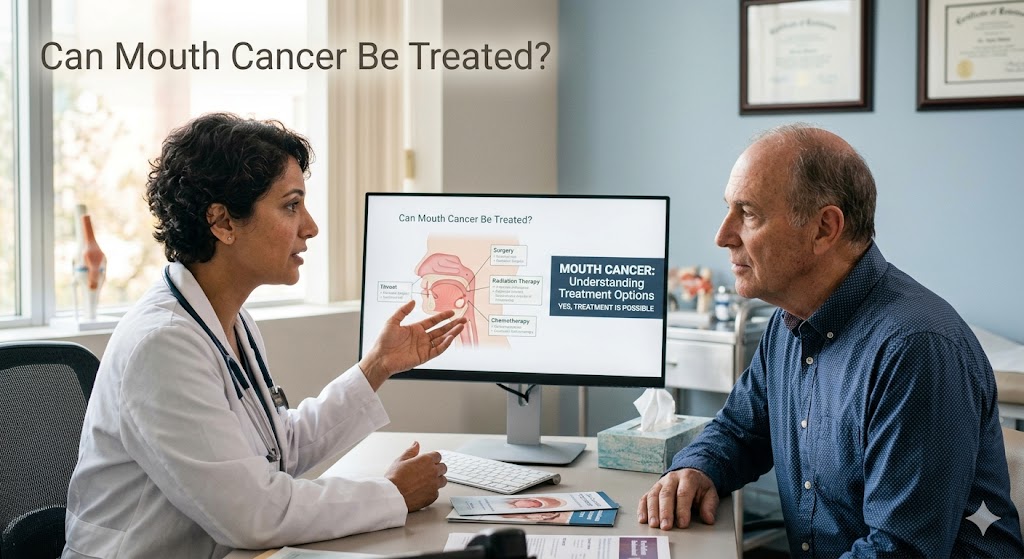
Can Mouth Cancer Be Treated?
The question comes the moment you or someone you love hears the diagnosis. The world stops for a second. Among the flood of fears and uncertainties, one thought rises above the noise: Can mouth cancer be treated?
The direct answer is yes. Mouth cancer is treatable, and when doctors find it early, the chances of a cure stand remarkably high. Modern medicine offers a range of powerful tools that were unimaginable a generation ago. This is not a journey anyone wants to take, but it is a path where skilled professionals stand ready to fight with you. They bring surgical precision, advanced radiation techniques, and smart drugs that target cancer at its genetic roots.
This guide gives you an honest, thorough look at that path. We will walk through every major treatment method, explain how doctors personalize your care, and describe the support that helps you recover. No false promises, no sugar-coating. Just the clear, realistic, and hopeful picture you need right now.
Understanding the Starting Point: Why Early Detection Changes Everything
Before diving into the treatments themselves, we need to understand why the answer to “can mouth cancer be treated” depends so heavily on one factor: the stage at diagnosis. Think of mouth cancer as a weed in a garden. If you spot a small weed and pull it out by the roots, the job is done, and the surrounding plants are fine. If the weed grows deep roots and spreads seeds across the whole garden, the task becomes much harder.
Mouth cancer works the same way. In its early stages, it often appears as a small, painless sore or a red or white patch that doesn’t heal. At this point, the cancerous cells sit on the surface or just beneath the lining of the mouth. They haven’t reached deeper tissues or traveled to the lymph nodes in the neck. Treatment at this stage leads to a five-year survival rate of around 83% to 90%. Those numbers mean that the vast majority of people are still alive five years after their diagnosis, a standard benchmark oncologists use to talk about a cure.
When the cancer grows larger or spreads to nearby lymph nodes, the survival rate drops significantly, to around 40% to 65%, depending on the specific extent of the spread. The treatments still work, but they need to be more aggressive and extensive. This stark difference explains why dentists and doctors constantly check your mouth during routine visits. They are looking for those early signs before you even feel a symptom.
The Anatomy of a Treatment Plan: Who Decides What?
The moment a biopsy confirms mouth cancer, a team of specialists assembles. You don’t just get one doctor. You get a multidisciplinary team, often called a tumor board. This group includes a head and neck surgeon, a radiation oncologist, a medical oncologist, a pathologist, a radiologist, a dental specialist, a speech and swallowing therapist, and a nutritionist. They all sit together, review your scans and pathology report, and craft a strategy built specifically for you.
They base this strategy on several critical factors:
- The exact location of the tumor (tongue, floor of the mouth, gums, cheek lining, hard palate, or lip).
- The size of the tumor (T-stage).
- Whether cancer cells have reached lymph nodes (N-stage).
- Whether the cancer has metastasized to distant organs (M-stage).
- The type of cancer cells, with squamous cell carcinoma making up over 90% of cases.
- Your overall health status, often called the performance status.
- Your age and personal preferences regarding quality of life.
This team doesn’t just think about killing the cancer. They think about how you will speak, swallow, and smile after treatment. That holistic approach makes a world of difference.
“The goal is not just survival. The goal is a life worth living after treatment. We plan the exit strategy the moment we plan the treatment.” — A philosophy shared by many head and neck oncology teams.
The First Line of Attack: Surgery for Mouth Cancer
For most people with mouth cancer, surgery stands as the primary and most definitive treatment. The surgeon’s goal is simple to state but incredibly complex to execute: remove every single cancer cell with a clear margin of healthy tissue all around it, while preserving as much function and appearance as possible. This balance between a complete cure and a preserved quality of life defines modern surgical oncology.
The Principle of Clear Margins
Imagine drawing a circle around a coin on a piece of paper. You don’t just cut out the coin. You cut a wider circle, taking some clean paper around it to make absolutely sure nothing is left behind. Surgeons do the same thing. They aim for a margin of 5 millimeters or more of completely normal, cancer-free tissue surrounding the tumor in all three dimensions. A pathologist examines this tissue immediately during surgery, a process called a frozen section. If they find cancer cells touching the ink on the specimen’s edge, the surgeon goes back and takes more tissue right then. A clear margin is the single most powerful predictor of a cure.
Wide Local Excision: Removing the Tumor
This is the fundamental operation for a small, early-stage tumor. The surgeon removes the tumor and that crucial rim of healthy tissue. For a tiny cancer on the side of the tongue or the inside of the cheek, this procedure might take an hour. The resulting wound often closes directly with dissolvable stitches. In many cases, the scar heals so well inside the mouth that it becomes nearly invisible over time. Patients usually go home the same day or after one night of observation. The immediate recovery involves a soft diet and careful oral hygiene, but long-term function remains excellent.
Partial Glossectomy: Operating on the Tongue
The tongue is the most common site for mouth cancer. A partial glossectomy removes a portion of the tongue. The impact on speech and swallowing depends entirely on the volume and location of the tissue removed. The tongue has remarkable redundancy; a person can lose a significant portion of it and still learn to speak clearly and swallow safely. Surgeons skillfully reconstruct the defect immediately. If the removed piece is small, they close it primarily. If it’s larger, they bring in tissue from elsewhere.
The amazing thing about the tongue is its ability to adapt. The remaining tongue muscle learns to move differently. Speech therapy after surgery plays a huge role here. Patients often worry terribly about never speaking again. In reality, after a partial glossectomy, most people regain highly functional, intelligible speech, even if some sounds require practice.
Mandibulectomy: When Cancer Touches the Jawbone
If the cancer sits right next to the jawbone or has started to invade the outer lining of the bone, the surgeon performs a mandibulectomy. This procedure removes part of the lower jaw.
A marginal mandibulectomy shaves off a segment of bone, leaving the main lower border of the jaw intact. This preserves the jaw’s structural continuity, so the face doesn’t change shape, and you don’t need a metal plate or bone replacement. A segmental mandibulectomy removes a full-thickness section of the jaw when the cancer has deeply invaded the bone. This requires immediate reconstruction, usually with a free flap, which we will discuss shortly.
Neck Dissection: The Critical Step You Can’t See
Even if scans show no cancer in the lymph nodes, surgeons often recommend an elective neck dissection for tumors thicker than 3 or 4 millimeters. Why? Because microscopic cancer cells can travel to these nodes and remain invisible to the best CT or MRI scans. The risk of hidden spread in a tumor of a certain thickness is high enough—often above 20%—that acting proactively saves lives.
During a neck dissection, the surgeon makes an incision in the neck and systematically removes the groups of lymph nodes most likely to harbor cancer cells. A pathologist then slices each node into thin sections and examines them under a microscope. This gives the team absolute certainty about the true stage of the disease. If the nodes are clear, you have incredible peace of mind. If a few nodes contain microscopic cancer, the team adjusts the post-surgery treatment plan to include radiation. This tailored approach prevents overtreatment for those who don’t need it and identifies those who urgently do.
Types of Neck Dissection:
| Type | Structures Removed | Structures Preserved | Typical Indication |
|---|---|---|---|
| Selective Neck Dissection | Specific groups of lymph nodes at highest risk. | Spinal accessory nerve, sternocleidomastoid muscle, internal jugular vein. | Elective procedure when no cancer is palpable in the neck. |
| Modified Radical Neck Dissection | All lymph node groups on one side of the neck. | One or more of the three key non-lymphatic structures. | Cancer in the neck nodes that is not fixed to vital structures. |
| Radical Neck Dissection | All lymph nodes, spinal accessory nerve, sternocleidomastoid muscle, internal jugular vein. | Nothing. This is the most extensive removal. | Extensive cancer invading the nerve, muscle, or vein. Rarely needed now. |
The Art of Reconstruction: Building You Back Up
Removing the cancer is the first job. Rebuilding what was removed is the equally important second job. Without reconstruction, you couldn’t speak, swallow, or close your mouth. Modern reconstructive techniques represent one of the most profound advances in cancer care.
Skin Grafts and Local Flaps
For small defects inside the mouth, a skin graft taken from the thigh or a local flap using nearby cheek tissue works beautifully. The graft acts like a patch, covering the raw area and allowing new tissue to grow.
Regional Flaps
For moderate-sized defects, surgeons use a pectoralis major flap. They take a section of muscle and skin from the chest, tunnel it under the skin of the neck, and pull it up into the mouth. This muscle has its own blood supply, so it stays alive. This technique is robust and reliable, though it can look a bit bulky in the neck and chest.
Free Tissue Transfer (Free Flaps)
This represents the gold standard for major reconstruction, especially after a segmental mandibulectomy. A microvascular surgeon takes a piece of bone, skin, and muscle from another part of your body—most commonly the fibula in the lower leg, the forearm, or the hip—and transfers it to the head and neck. The surgeon then connects the tiny 1-to-2-millimeter arteries and veins of the flap to blood vessels in the neck using a surgical microscope.
The fibula free flap is a game-changer. The surgeon sculpts the fibula bone to match the curve of the jaw you lost. They secure it with titanium plates and screws. The skin and muscle from the leg become the new floor of the mouth or tongue. This living tissue heals just as it did in its original location. Once the microvascular connection is made, blood flows instantly. The flap turns pink. It is alive in its new home. This surgery lasts 8 to 14 hours and requires a dedicated team, but it allows patients to regain facial form and eventually eat by mouth and speak. The donor site on the leg has a scar and some weakness, but people walk, run, and live fully active lives afterward.
| Flap Type | Donor Site | Tissue Included | Best Used For |
|---|---|---|---|
| Radial Forearm Free Flap | Inner forearm | Thin, pliable skin | Tongue, floor of mouth, soft palate |
| Fibula Free Flap | Lower leg | Bone and skin | Jaw (mandible or maxilla) reconstruction |
| Anterolateral Thigh Flap | Thigh | Thick skin and muscle | Large volume defects, skull base |
| Pectoralis Major Flap | Chest | Muscle and skin | Salvage situations, patients not fit for free flap |
Important Note: Choosing a high-volume academic medical center that performs these complex free flap reconstructions every week significantly improves outcomes. A team that does 100 free flaps a year has a success rate above 95%. Always ask your surgeon how many they perform.
The Invisible Scalpel: Radiation Therapy
Radiation therapy uses high-energy X-rays or particles to destroy cancer cells’ DNA, killing them or stopping them from dividing. It acts as a primary treatment for people who cannot undergo surgery or as an adjuvant treatment after surgery to sterilize the area and kill any microscopic cells left behind.
When Doctors Use Radiation as the Main Treatment
Sometimes, surgery poses too high a risk. The tumor might be in a location where removal would destroy the ability to speak or swallow completely, or the patient might have medical conditions that make general anesthesia dangerous. In these cases of inoperable cancer, radiation therapy, often combined with chemotherapy, becomes the definitive radical treatment. The goal remains a cure, just through a different route.
Adjuvant Radiation: The Insurance Policy
After surgery, the pathology report might reveal high-risk features: a close or positive margin, cancer spreading along nerves (perineural invasion), multiple positive lymph nodes, or a node where the cancer broke through its capsule (extracapsular extension). These findings mean the risk of cancer returning in the same spot is too high to ignore. Adjuvant radiation sweeps through the entire surgical bed and the neck, wiping out the invisible disease that escapes the surgeon’s scalpel. This treatment starts about 4 to 6 weeks after surgery, giving you time to heal.
IMRT and IGRT: The Precision Revolution
Imagine a flashlight that can shape its beam to the exact outline of a complex shadow puppet, all while the puppet is breathing and moving. That is what modern radiation does. Intensity-Modulated Radiation Therapy (IMRT) uses computer-controlled linear accelerators that move in an arc around you, delivering thousands of tiny, pencil-thin beams of radiation. Each beam’s intensity varies, so the high-dose region perfectly conforms to the 3D shape of your tumor while the radiation dose to nearby critical organs—the salivary glands, the jawbone, the spinal cord, and the optic nerves—drops sharply.
Image-Guided Radiation Therapy (IGRT) pairs with IMRT. Just before each daily treatment, the machine takes a CT scan or X-ray with you on the table. The software overlays this image on the original treatment plan and adjusts your position with sub-millimeter accuracy. Your jaw and neck can shift slightly day to day. IGRT ensures you treat the cancer, not the air next to it.
What Treatment Feels Like Day by Day
Radiation treatment is painless while it’s happening. You lie on a hard table. A custom-molded thermoplastic mask locks your head and shoulders into the exact same position every time. The machine hums and whirls around you. You feel nothing. The whole appointment takes 15 to 20 minutes. The actual radiation delivery lasts only a few minutes. You go home and live your life. This happens Monday through Friday, for 6 to 7 weeks.
However, the effects accumulate invisibly. Around week 2 or 3, you notice your mouth getting dry and food starting to taste like cardboard or metal. By week 4, the lining of your mouth becomes red and raw, like a severe sunburn inside your throat. Swallowing becomes painfully difficult, a condition called mucositis. You lose weight. The skin on your neck turns dark, red, and peels, like a bad burn. The fatigue is bone-deep. You must understand this is not a sign the treatment isn’t working. It’s a sign the treatment is hitting the rapidly dividing cells—both the cancer and the normal mucosal lining.
“The side effects are temporary. The cure is permanent. During week five, you will want to stop. Don’t. Your radiation oncologist has the tools to manage the pain and the nutrition. Finish the race. Every single treatment matters.” — A radiation oncology nurse’s daily reassurance.
Proton Therapy: A Powerful Alternative
Proton therapy uses protons, which are charged particles, instead of X-rays. Protons deposit the bulk of their energy at a specific depth and then stop dead. This is the Bragg peak. There is virtually no exit dose. This physics property allows doctors to treat a tumor on the left side of the tongue without sending any radiation to the right side of the mouth or the brainstem. For mouth cancer, proton therapy offers a significant advantage in reducing long-term side effects like dry mouth, difficulty swallowing, and the risk of radiation-induced cancers decades later. It is ideal for young patients, those with HPV-positive cancers who will live many decades, and tumors in complex locations. The main barriers are limited availability and higher cost.
| Feature | IMRT (Photon) | Proton Therapy |
|---|---|---|
| Particle Used | X-rays (photons) | Protons |
| Dose Deposition | Entrance dose, target dose, and exit dose | Entrance dose, target dose, then stops (Bragg Peak) |
| Integral Body Dose | Higher low-dose bath to normal tissue | Significantly lower |
| Xerostomia Risk | Present, especially with bilateral neck radiation | Much lower when avoiding contralateral salivary glands |
| Availability | Widely available at most cancer centers | Limited to specialized proton centers |
| Cost | Standard insurance coverage | Higher, requires specific authorization |
The Systemic Shield: Chemotherapy and Beyond
Chemotherapy uses cytotoxic drugs that kill rapidly dividing cells throughout the body. For mouth cancer, doctors rarely use chemotherapy alone for a cure. Instead, they use it in strategic combination.
The Radiosensitizer: Chemotherapy’s Most Powerful Role
The most common use of chemotherapy in mouth cancer is concurrent chemoradiation. You receive radiation daily and a dose of chemotherapy, usually cisplatin, once every three weeks. The chemotherapy makes cancer cells more sensitive to the radiation, preventing them from repairing the DNA damage the radiation inflicts. This synergy increases the cell-kill effect by 20% to 30% compared to radiation alone for advanced cancers. The trade-off is a dramatic increase in acute side effects. The mucositis becomes more severe. The nausea requires aggressive anti-emetics. You need a feeding tube more often. You must be medically fit to withstand this combined assault.
Induction Chemotherapy: The Shrinking Prelude
Sometimes, the tumor is so large that surgery would be disfiguring, or the cancer in the neck is fixed to the carotid artery. Doctors give 2 to 3 cycles of high-dose chemotherapy first—a combination like TPF (docetaxel, cisplatin, and 5-fluorouracil). The hope is to shrink the tumor dramatically. If the tumor responds well, the subsequent surgery can be less extensive, or the radiation fields can be smaller. The data on its overall survival benefit remains debated, but for the right patient, it can be a limb- and organ-sparing bridge.
The Rise of Targeted Therapy: Cetuximab
Traditional chemotherapy attacks all rapidly dividing cells, cancerous and healthy. Targeted therapy is smarter. Cetuximab is a monoclonal antibody that blocks the epidermal growth factor receptor (EGFR). Many squamous cell carcinomas have too many EGFRs. When a growth factor binds to this receptor, it tells the cell to divide. Cetuximab blocks that signal. It can be given with radiation, similar to cisplatin, for patients who cannot tolerate cisplatin’s severe kidney or hearing toxicity. Its signature side effect is an acne-like rash on the face and chest. Interestingly, the severity of the rash often correlates with how well the drug is working.
Immunotherapy: Waking Up Your Own Immune Army
This represents the most exciting breakthrough in the last decade. Your immune system has T-cells that should recognize and kill cancer cells. But cancer cells learn to display a protein called PD-L1. This protein acts like a handshake that tells the T-cell, “I’m friend, don’t attack.” Checkpoint inhibitor drugs like pembrolizumab and nivolumab block that handshake. They bind to either PD-1 on the T-cell or PD-L1 on the tumor cell. The T-cell can now see the cancer for what it is and attacks ferociously.
For metastatic or recurrent mouth cancer that has failed platinum-based chemotherapy, immunotherapy has doubled the long-term survival rate for a subset of patients. Some people with widely spread cancer see their tumors melt away and remain in remission for years. This durable response is a hallmark of immunotherapy. The side effects are entirely different from chemotherapy: fatigue, skin rash, diarrhea, and inflammation of the lungs, liver, or thyroid. These autoimmune side effects require prompt management, but for many, the quality of life on immunotherapy is far superior to continuous chemotherapy.
Important Note: Not everyone responds. In mouth cancer, about 15% to 20% of patients have a significant and lasting response. Research now focuses on combining immunotherapy with radiation or chemotherapy earlier in the disease to increase those cure rates.
Building a Personalized Treatment Roadmap by Stage
Doctors combine surgery, radiation, and drug therapy based on the stage. This isn’t a one-size-fits-all algorithm, but the general principles hold true.
Stage I and II: The Era of Single-Modality Cure
These are small tumors (less than 4 cm) with no lymph node spread. A single treatment method cures the vast majority.
- The Standard Path: Surgery, specifically a wide local excision and a selective neck dissection. The neck dissection is the diagnostic and therapeutic gold standard. If the pathology shows clear margins and no cancer in any nodes, you are done. No radiation. No chemotherapy. You proceed to surveillance.
- The Alternative Path: For a patient who refuses surgery or whose tumor is in a location where a functional outcome would be terrible, primary radiation therapy to the tumor and the neck delivers an equivalent cure rate. The choice between equally effective treatments depends on functional outcomes. A small tongue cancer might be better treated with surgery to avoid the lifelong dry mouth from radiation. A small tonsil cancer might be better treated with radiation to avoid the swallowing difficulties of a transoral surgery.
Stage III and IVA/B: The Era of Combined Modality
This is locally advanced disease. The tumor is large, or it has spread to the lymph nodes in the neck. The goal is still a cure, but the path requires two, and sometimes three, treatment types.
- The Surgery-First Path: You undergo a major resection of the tumor and a full neck dissection, often with a free flap reconstruction. The pathology report drives the next step. If the report shows a high risk (positive margins or cancer breaking out of the lymph node capsule), you proceed to adjuvant chemoradiation, typically with cisplatin. If the risk is intermediate (multiple positive nodes, perineural invasion), you undergo adjuvant radiation alone.
- The Non-Surgical Organ Preservation Path: You receive definitive concurrent chemoradiation. You keep your tongue and jaw, but the treatment is grueling. After treatment, a PET-CT scan checks for any remaining cancer. If a small pocket of resistant cancer remains in the neck, you go for a salvage neck dissection. This path attempts to preserve the organ while wielding a surgical safety net if needed.
Stage IVC: The Era of Metastatic Management
Cancer has spread to the lungs, liver, or bones. The goal shifts from a cure to long-term control and quality of life.
- First-Line Treatment: Doctors check the PD-L1 expression of the tumor. If it is high, immunotherapy alone might be the first choice. If not, a combination of chemotherapy and immunotherapy (the KEYNOTE-048 regimen) often works best.
- Local Treatments for Oligometastasis: If you only have one or two spots of spread in the lung, stereotactic body radiation therapy (SBRT) can zap those spots with an ablative dose, potentially giving you a long break from systemic treatment.
| Stage | Tumor Description | Lymph Node Status | Typical Primary Treatment | Adjuvant (After Surgery) Therapy |
|---|---|---|---|---|
| Stage I | T1 (≤2 cm) | N0 (None) | Surgery alone (Wide excision + neck dissection) | None if margins and nodes are clear |
| Stage II | T2 (>2 cm but ≤4 cm) | N0 (None) | Surgery alone | None if margins and nodes are clear |
| Stage III | T3 (>4 cm) or minimal node spread | N1 (Single node) | Surgery then risk-based radiation | Radiation +/- chemo based on pathology |
| Stage IVA | T4a (invades bone, deep tongue muscle, skin) | N0-N2 | Major surgery + flap + neck dissection | Chemoradiation usually indicated |
| Stage IVB | T4b (inoperable, invades skull base or carotid) | N3 (Large nodes) | Definitive chemoradiation or clinical trial | N/A (non-surgical) |
| Stage IVC | Any T | M1 (Distant spread) | Systemic therapy (Chemo, Immuno, Targeted) | Palliative radiation for symptoms |
HPV-Positive Mouth Cancer: A Different Disease
This topic deserves its own spotlight. Human papillomavirus, specifically type 16, now drives a rapidly growing subset of mouth cancers, particularly at the base of the tongue and the tonsils. This is not the same as HPV-related cervical cancer, nor does it carry any moral judgment. It is a virologically and biologically distinct disease.
Patients with HPV-positive oropharyngeal cancer tend to be younger, healthier, and non-smokers. Their tumors have a completely different genetic profile. Crucially, these cancers are significantly more sensitive to radiation and chemotherapy. The cure rate for HPV-positive, locally advanced throat cancer reaches 85% to 90%, compared to 50% to 60% for a similar-stage HPV-negative cancer in a heavy smoker.
This profound difference has led to a major shift called de-escalation. Researchers are asking a brave question: if the cure rate is so high, can we use less radiation or a less toxic chemotherapy drug to still cure the cancer but spare the patient a lifetime of swallowing problems and dry mouth? Clinical trials test lower radiation doses and replacing cisplatin with cetuximab or immunotherapy. This effort aims to protect a population of patients who will survive decades and must live with the consequences of their treatment. We must balance cure and quality of life, and in HPV-positive disease, the scales are tipping toward preserving function.
The Brutal and Temporary Toll: Navigating Treatment Side Effects
The treatments work. They also hurt. Being prepared for this battle is a form of active participation in your cure.
The Central Crisis: Nutrition and the Feeding Tube
The acute crisis of mouth cancer treatment is not pain—it’s starvation. When your mouth and throat are covered in thick, burning mucositis, swallowing even water becomes an act of extreme will. Your body needs 2,000 to 3,000 calories a day to heal and fight. A percutaneous endoscopic gastrostomy (PEG) tube, a small flexible tube placed directly through the abdominal wall into the stomach, is not a sign of failure. It is a lifeline. It allows you to pump all the liquid nutrition, water, and crushed medications you need, bypassing your burning mouth entirely. Patients who get a feeding tube early, before they lose 10% of their body weight, have better outcomes. They maintain their strength. They complete their radiation without a break. Many view the tube with dread beforehand and see it as their savior afterward.
The Devastation of Dry Mouth (Xerostomia)
Radiation damages the salivary glands. The effect is permanent, though IMRT has made a massive difference in sparing them. Thick, ropey saliva gives way to a dry, sticky mouth. Without saliva’s protective enzymes, your teeth become vulnerable to rapid, devastating radiation caries. Food lacks taste and texture. Speech becomes difficult as your tongue sticks to your palate.
The management is proactive: a strict fluoride tray program started before radiation to protect the teeth, daily jaw stretching exercises to prevent trismus (lockjaw), and the use of a prescription cholinergic agonist like pilocarpine to stimulate any remaining salivary tissue. You will carry a water bottle everywhere for the rest of your life. Some salivary function may return partially over months to years, but it is never the same. This is a harsh reality.
The Hidden Disability: Lymphedema and Trismus
After a neck dissection and radiation, the lymphatic channels in your neck and face can become blocked, leading to soft, puffy swelling under the chin and in the cheeks—internal lymphedema. This swelling further hardens into fibrosis. The muscles of mastication clamp down, and you can’t open your jaw more than a finger’s width. This is trismus. It prevents eating, speaking, and dental care. Dedicated lymphedema therapists use a specific, gentle manual lymphatic drainage massage to move the fluid. They fit you with devices like the TheraBite or a stack of tongue depressors to mechanically stretch the jaw open. You must do this daily, permanently. The work is tedious, but without it, your jaw will lock shut.
The Psychological Underbelly
You will look different. A scar curves across your neck. Your lip droops if a nerve was sacrificed. You speak with a new lisp or hoarseness. You eat through a tube while your family eats dinner. The isolation and grief for your lost self can become a profound depression. This is not weakness. This is a normal reaction to a traumatic loss. Psychosocial support—a clinical psychologist specializing in cancer, a support group of fellow head and neck cancer survivors—is as essential as the chemotherapy drug. No one understands your experience like someone who has worn the same mask, lain on the same table, and learned to swallow again. Seek them out.
“You will find a new normal. It will be different. Some days you will hate it. But you will find it, and you will realize you are stronger than you ever knew.” — A five-year oral cancer survivor.
Life After the Fire: The Long-Term Surveillance Map
You finish treatment. The scans show no evidence of disease. Your heart soars, but a new anxiety settles in: the fear of recurrence. The surveillance plan is your map through this fear.
The 3-Month Crucible: The first PET-CT scan 12 weeks after radiation is the moment of truth. Everyone holds their breath. Inflammation from radiation can light up on a scan, causing a false positive, but a completely clean scan is a powerful predictor of long-term control.
The Two-Year Window: The highest risk of recurrence, about 80% to 90% of them, happens in the first two years. Your schedule is intense. You see your head and neck surgeon or oncologist every 1 to 3 months. They put a tiny fiberoptic scope through your nose to inspect your throat. They palpate your neck meticulously. You may get a chest X-ray or a CT scan annually, as the lungs are the most common site for distant spread.
The Three-to-Five-Year Mark: The appointments space out to every 4 to 6 months. The anxiety mellows into a quiet hum rather than a constant scream. At 5 years, with no evidence of disease, you are considered cured by the statistical definition. Your risk of a new, second primary cancer from the same risk factors (smoking, alcohol) remains, so vigilance never ends.
Lifetime Needs: You must have your thyroid function checked annually, as neck radiation damages the thyroid gland. You need continued dental surveillance by a dentist who understands the fragility of irradiated bone. A simple tooth extraction in an irradiated jaw can trigger osteoradionecrosis, a non-healing bone death. Hyperbaric oxygen therapy before and after an extraction is a mandatory preventive measure. Your jaw is permanently altered tissue.
When the First Battle Isn’t Enough: Recurrent and Metastatic Disease
Can mouth cancer be treated if it comes back? Yes, but the context changes.
Locoregional Recurrence
If the cancer returns only in the mouth or neck, the goal returns to a cure. This requires a salvage treatment. If you had surgery alone the first time, salvage might involve radical surgery and chemoradiation. If you had radiation the first time, surgery becomes the only curative option, and it is complex. Operating in a previously irradiated field is like cutting through leathery, blood-poor tissue. Healing is slow. The risk of wound breakdown and fistula formation is high. A successful salvage surgery is a magnificent achievement.
The Oligometastatic State
If the cancer spreads to just one or two spots in the lung, a new aggressive philosophy emerges. Instead of conceding to lifelong systemic chemotherapy, interventional radiologists use radiofrequency ablation or SBRT to locally destroy those isolated metastases. This can reset the clock, giving a patient a year or more without systemic treatment. This approach, treating a few spots of spread as a local problem, is growing in popularity.
Systemic Disease
For widespread disease, the treatment is palliative in intent—it aims to extend life and manage symptoms, not cure. Immunotherapy becomes the foundation. Gene sequencing of the tumor becomes vital to look for rare mutations like NTRK gene fusions, for which miraculous targeted drugs exist. The goal is to sequence lines of therapy: first-line chemo-immunotherapy, second-line immunotherapy alone if not used, third-line a targeted agent or a clinical trial. We string these treatments together, buying years of quality life, one line at a time.
The Supportive Web You Cannot Ignore
No one walks this path alone. The people you bring into your recovery make the difference between suffering and thriving.
The Speech and Swallowing Therapist
This professional is your coach for years. Before treatment, they record your baseline swallowing function with a modified barium swallow study. During and after treatment, they teach you a series of exercises—the effortful swallow, the Masako maneuver, the Shaker exercise—that retrain your muscles. They change the texture of your food from pureed to soft to solid as you strengthen. They are the reason you eventually eat a meal with your family again.
The Dental Oncologist
A general dentist cannot manage your mouth. You need a maxillofacial prosthodontist or a hospital-based dentist who works with your oncology team. Before radiation, they remove any teeth with a hopeless prognosis and allow 10 to 14 days of healing. They make you custom fluoride trays and train you to use a prescription 1.1% sodium fluoride gel daily, forever. After treatment, they watch for decay and manage the dreaded osteoradionecrosis risk. They are the guardians of your irradiated mouth.
Physical Therapy and Lymphedema Management
For the stiff neck from a modified radical neck dissection and the trismus and lymphedema, a specialized cancer rehabilitation therapist is essential. They release the fibrotic bands of tissue, teach you stretches, and use laser therapy to heal radiation burns. Their hands-on work releases the physical cage that treatment builds around your neck and shoulders.
Frequently Asked Questions
If I catch mouth cancer very early, is a full cure likely?
Yes. For Stage I and II mouth cancers, the five-year cure rate with standard surgery or radiation alone ranges from 83% to 90%. This is why immediate attention to any non-healing sore in the mouth is critical. The treatment is less intense, and the outcome is overwhelmingly positive.
Will I need a feeding tube, and is it permanent?
Many patients undergoing combined chemoradiation will need a reactive feeding tube to maintain their weight during the worst of the mucositis. For the vast majority, this tube is temporary. As the acute burns heal over 4 to 8 weeks after treatment ends, you learn to swallow again and the tube is removed. A small subset of patients with significant swallowing dysfunction may need it long-term, but that is the exception, not the rule.
How does an HPV diagnosis affect my treatment plan?
An HPV-positive tumor, typically in the tonsil or base of the tongue, has a much better prognosis. Doctors now offer you the chance to participate in clinical trials using de-intensified treatment—less radiation or less toxic chemotherapy—with the goal of achieving the same high cure rate while drastically reducing lifelong side effects like dry mouth and difficulty swallowing.
What is the single most important thing I can do after my treatment ends?
Commit to lifelong surveillance. Attend every single follow-up appointment, no matter how you feel. A recurrence caught early in a surveillance visit is often manageable, whereas one found late after skipping appointments is much harder to control. Also, never, ever miss your daily fluoride tray application. Protecting your irradiated teeth is a non-negotiable, lifelong job.
Can mouth cancer treatment affect my speech permanently?
Surgery on the tongue and radiation both affect speech. A small tumor resection rarely causes a permanent, noticeable change. A larger glossectomy will cause a lisp and difficulty with certain sounds. However, dedicated speech pathology can retrain your residual tongue and surrounding muscles to compensate to a remarkable degree. The voice will change, but functional communication is almost always preserved.
The Horizon of Hope: Innovation in the Next Decade
The landscape shifts constantly. Here is what is coming.
Transoral Robotic Surgery (TORS): Surgeons use a 3D high-definition camera and miniature wristed robotic instruments inserted through the mouth. They can now remove tumors at the back of the tongue and tonsil without splitting the jaw or performing a major open surgery. This reduces hospital stay, decreases blood loss, and gets patients back to swallowing faster. For the right oropharyngeal tumor, TORS has been a paradigm shift.
Neoadjuvant Immunotherapy: Researchers now give immunotherapy before the main curative surgery. The idea is to prime a massive anti-tumor immune response while the whole tumor is still present as a vaccine. Early trials show some patients have a complete pathologic response—when surgeons remove the tumor, they find only dead cancer cells and a sea of immune cells. The potential here is to select patients who might need no radiation or chemotherapy at all, curing them with surgery and their own immune system.
Circulating Tumor DNA (ctDNA) Surveillance: A simple blood draw can detect fragments of tumor DNA floating in your bloodstream. This liquid biopsy technology is becoming sensitive enough to detect a recurrence months before it is visible on a PET-CT scan. We are moving toward an era where a routine blood test gives you a “molecular recurrence score,” allowing us to catch and treat a microscopic recurrence before it ever has a clinical chance.
FLASH Radiation Therapy: An experimental technology that delivers an entire radiation dose in less than a second, with an ultra-high dose rate. Early data suggests this instantaneous delivery kills tumors just as well as standard radiation but spares normal tissues from the debilitating side effects. A course of radiation could theoretically take one second and one session. This is years away but represents a seismic potential shift.
Conclusion
Mouth cancer is a formidable opponent, but it faces an equally formidable array of modern treatments that can cure a significant majority of cases when detected early. The journey demands endurance through surgery, precision radiation, and smart systemic therapies, all orchestrated by a dedicated multidisciplinary team focused on your survival and your quality of life. The path through treatment is brutally hard, yet survivors emerge on the other side with a re-engineered but functional new normal, supported by an essential web of rehabilitation specialists. Real hope rests not just in current curative rates, but in a dynamic future of de-escalated treatments and immune-based strategies that aim to deliver a cure with a gentler touch.
Additional Resources
For the most reliable, up-to-date, and deeply compassionate information, the first place you should go is the National Cancer Institute’s Head and Neck Cancer page. You’ll find detailed treatment guides, clinical trial databases, and information on coping with side effects, all written and reviewed by the world’s top experts in the field.
For direct peer support, the Head and Neck Cancer Alliance and the Oral Cancer Foundation offer direct connection to a vast community of survivors and caregivers who understand this walk intimately. Their message boards and support networks are a lifeline during the darkest days.
Disclaimer: The information in this article is for general informational purposes only and is not a substitute for professional medical advice, diagnosis, or treatment. Always seek the advice of your physician or another qualified health provider with any questions you may have regarding a medical condition. Never disregard professional medical advice or delay in seeking it because of something you have read here.