What Material Are Dental Implant Crowns Made Of?
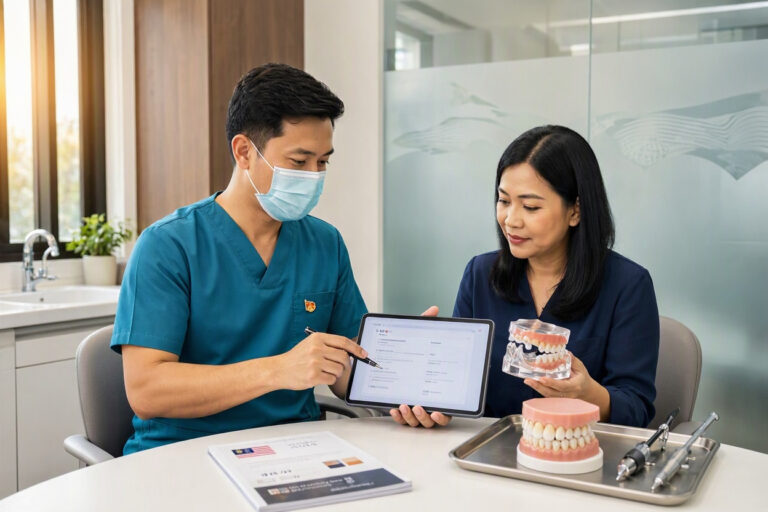
You have completed the surgical phases of your dental implant journey. The titanium post has fused to your jawbone. The healing abutment has shaped your gum tissue. Now comes the visible part, the crown that everyone will see. Your restorative dentist presents you with material options, each with different esthetic properties, strength characteristics, longevity expectations, and costs. The choice matters more than many patients realize. The crown material affects not only how your smile looks but how the restoration functions, how it wears over time, and how it interacts with the surrounding tissues and opposing teeth. Understanding the materials available for implant crowns empowers you to make an informed decision aligned with your priorities, whether those are maximum strength, optimal esthetics, biocompatibility, or cost-effectiveness.
The Role of the Implant Crown
The implant crown serves as the visible, functional replacement for the missing natural tooth. While the implant provides the root, hidden beneath the gum, the crown restores the part of the tooth that participates in chewing, speaking, and smiling. The material selected must withstand years of functional forces while maintaining its esthetic appearance and biological compatibility.
Functional Requirements
Implant crowns face demanding mechanical conditions. Normal chewing generates forces ranging from 70 to 150 pounds per square inch in the posterior region. Patients who clench or grind their teeth can generate forces exceeding 500 pounds per square inch. The crown material must withstand these forces without fracturing, chipping, or excessively wearing the opposing natural teeth or restorations.
Unlike natural teeth, which have a periodontal ligament that provides shock absorption and proprioceptive feedback, implants are rigidly fixed in bone. The crown material absorbs the full force of occlusion without the dampening effect of a ligament. This rigidity places additional stress on the crown material and requires careful occlusal design to prevent overload.
The crown must also resist the oral environment’s chemical challenges. Saliva, dietary acids, and temperature fluctuations subject the material to conditions that can degrade some materials over time. The material must remain stable, non-porous, and resistant to staining and degradation throughout its functional lifetime.
Esthetic Considerations
The implant crown must match the adjacent natural teeth in shade, translucency, surface texture, and contour. This esthetic integration determines whether the implant is detectable to observers. Anterior implant crowns in the smile zone demand the highest esthetic performance. Posterior crowns, less visible during normal social interaction, allow some compromise in esthetics for improved strength.
The material’s optical properties determine how naturally it mimics tooth structure. Natural enamel is semi-translucent, allowing some light transmission that creates depth and vitality. Dentin, the layer beneath enamel, is more opaque and determines the tooth’s basic shade. The ideal crown material replicates this layered optical behavior, with sufficient translucency at the incisal edge and appropriate opacity in the body.
Tissue response to the crown material affects the appearance of the gum surrounding the implant. Some materials promote healthier soft tissue attachment and maintain a more natural pink color in the overlying gum. The material’s interaction with the gingival tissues contributes to the overall esthetic result, particularly in patients with thin gum tissue or high smile lines.
Porcelain-Fused-to-Metal Crowns
Porcelain-fused-to-metal, commonly abbreviated as PFM, has been the workhorse of dental restorations for decades. This material system combines a metal substructure for strength with a ceramic outer layer for esthetics.
Composition and Fabrication
The metal substructure is cast from dental alloys and provides the crown’s mechanical backbone. This coping fits precisely onto the implant abutment and supports the ceramic layer. The metal extends over the abutment and provides a platform onto which porcelain is baked in multiple layers.
The porcelain is applied by a dental laboratory technician in a multi-step process. An opaque layer masks the metal color, preventing the dark metal from showing through the translucent porcelain. Dentin-shade porcelain builds the body of the crown, creating the basic tooth color and form. Enamel-shade porcelain on the outer surface provides translucency and surface characterization. Each layer is fired in a porcelain furnace at high temperature, fusing to the underlying layers and to the metal substructure.
The bond between metal and porcelain relies on both mechanical interlocking and chemical bonding through oxide formation on the metal surface. This bond must withstand the stresses of oral function without delamination. The metal framework is designed to support the porcelain adequately, with porcelain thickness limited to approximately 2 millimeters to prevent fracture under load.
Advantages of PFM Crowns
PFM crowns offer an established track record spanning decades of clinical use. The long history of this material system provides abundant data on longevity, failure modes, and clinical performance. Dentists and laboratory technicians are thoroughly familiar with the fabrication process and clinical management of PFM restorations.
The metal substructure provides excellent strength and fracture resistance. Well-made PFM crowns withstand posterior occlusal forces reliably. When failure occurs, it is typically porcelain chipping or fracture rather than catastrophic framework failure. The metal coping protects the underlying abutment and implant from occlusal forces.
PFM crowns are more cost-effective than all-ceramic alternatives. The materials and laboratory fabrication process are less expensive than those for high-strength ceramics. Many dental insurance plans base their implant crown coverage on PFM fees, making this option more affordable for insured patients.
The metal margin can be placed subgingivally, where it is hidden by the gum tissue. The porcelain extends to the visible portion of the crown. This design allows a strong metal-to-abutment interface at the critical marginal area while maintaining esthetics where the crown is visible.
Disadvantages and Limitations
The esthetic limitations of PFM crowns become apparent in demanding esthetic situations. The metal substructure blocks light transmission, creating an opacity that differs from natural tooth structure. The porcelain, while color-matched, lacks the depth and vitality of layered all-ceramic restorations. Under certain lighting conditions, the metal may create a shadow or grayish cast visible through the porcelain or the gum tissue.
The metal margin, even when placed subgingivally, can become visible if gingival recession occurs over time. As the gum recedes, a dark line appears at the gum level where the metal coping becomes exposed. This is particularly problematic in patients with thin gingival tissue or high smile lines. The metal margin also may cause a bluish discoloration of the overlying gum tissue.
Porcelain chipping and fracture occur more frequently with PFM crowns than with monolithic ceramic crowns. The interface between metal and porcelain is a potential failure point under occlusal stress. Small chips may be polished. Larger fractures require crown replacement. The opposing dentition may experience wear from the porcelain surface, particularly if the porcelain is not adequately polished.
Some patients express concern about metal content in dental restorations. While the alloys used in PFM crowns are considered biocompatible, patients with known metal allergies or those who prefer metal-free dentistry may object to PFM materials. The nickel content in some base metal alloys can cause allergic reactions in sensitive individuals, though noble and high-noble alloys largely avoid this concern.
Metal Alloy Options
The metal substructure can be fabricated from several alloy categories, each with different properties and costs. High-noble alloys contain at least 60 percent noble metals including gold, platinum, and palladium, with gold content of at least 40 percent. These alloys offer excellent biocompatibility, corrosion resistance, and bonding to porcelain. Their gold content provides a warm yellow color that is easier to mask with porcelain than the gray of base metal alloys. They are the most expensive metal option.
Noble alloys contain at least 25 percent noble metals. They provide good biocompatibility and corrosion resistance at a lower cost than high-noble alloys. These alloys may contain palladium as the primary noble metal, with varying amounts of silver, gold, and base metals.
Base metal alloys contain less than 25 percent noble metals and rely on nickel, chromium, or cobalt for their properties. These alloys offer high strength and lower cost. Nickel-chromium alloys have been widely used but raise concerns about nickel allergy. Nickel-free base metal alloys using cobalt-chromium avoid this concern. Base metal alloys are the least expensive metal option for PFM crowns.
Full Ceramic Crowns
The demand for metal-free, highly esthetic restorations has driven the development of all-ceramic materials for implant crowns. These materials span a range of compositions and properties, each suited to specific clinical situations.
Zirconia Crowns
Zirconia has emerged as the dominant all-ceramic material for implant crowns, particularly in posterior sites where strength is paramount. Modern dental zirconia is yttria-stabilized tetragonal zirconia polycrystal, commonly called Y-TZP. This material offers a unique combination of high strength, fracture toughness, and acceptable esthetics.
The mechanical properties of zirconia are impressive. Flexural strength ranges from 900 to 1200 megapascals, exceeding that of most other dental ceramics and approaching that of some metals. Fracture toughness, the resistance to crack propagation, is significantly higher than other ceramics due to a transformation toughening mechanism. When a crack begins to propagate through the zirconia, the stress triggers a phase transformation from tetragonal to monoclinic crystal structure at the crack tip. This transformation involves a volume expansion that compresses the crack, preventing its propagation.
Monolithic zirconia crowns are milled from a solid block of zirconia in a partially sintered state, then sintered at high temperature to achieve full density and final dimensions. This monolithic approach, where the entire crown is made from a single piece of zirconia without a separate esthetic veneer, provides maximum strength. The elimination of the veneer layer removes the risk of porcelain chipping that affects layered restorations.
Layered zirconia crowns combine a zirconia coping with a veneering porcelain for improved esthetics. The zirconia provides the strength. The porcelain provides the esthetic layering that mimics natural tooth structure. However, this approach reintroduces the risk of porcelain chipping that monolithic zirconia avoids. The bond between zirconia and veneering porcelain has been a clinical challenge, with chipping rates higher than those for PFM crowns in some studies.
Esthetic zirconia formulations have been developed to address the material’s inherent opacity. Early zirconia was notably opaque, suitable for posterior crowns but limited for anterior esthetic applications. Modern translucent and high-translucency zirconias incorporate different yttria concentrations and cubic phase content to increase light transmission. These materials approach the translucency of lithium disilicate while maintaining higher strength, making them suitable for anterior implant crowns when adequate space exists.
Lithium Disilicate Crowns
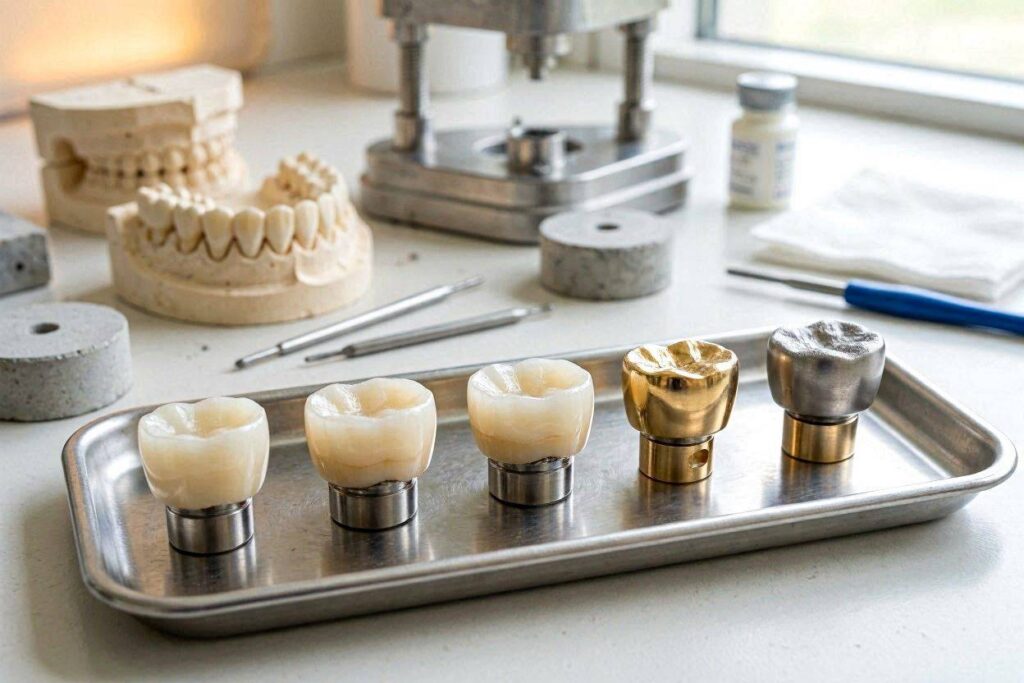
Lithium disilicate, marketed primarily as IPS e.max by Ivoclar Vivadent, offers an attractive balance of esthetics and strength. This glass-ceramic material contains approximately 70 percent lithium disilicate crystals embedded in a glass matrix. The crystals provide strength and crack deflection. The glass matrix allows acid etching for adhesive bonding.
The flexural strength of lithium disilicate, approximately 360 to 400 megapascals, is substantially lower than zirconia but adequate for most implant crown applications when the crown is designed with appropriate thickness. The material is less strong than zirconia but stronger than earlier glass-ceramics like leucite-reinforced materials.
Where lithium disilicate excels is in esthetics. The material’s translucency, color, and light transmission closely match natural tooth structure. Layered lithium disilicate restorations, where a high-strength framework is veneered with more translucent porcelain, achieve excellent esthetic results. Monolithic lithium disilicate, where the entire crown is pressed or milled from a single ingot or block, provides good strength with acceptable esthetics.
Lithium disilicate crowns can be fabricated through two processes. Pressed crowns use the lost-wax technique, where a wax pattern of the crown is invested and burned out, then molten lithium disilicate is pressed into the mold under vacuum. Milled crowns are cut from pre-crystallized blocks using CAD/CAM technology, then crystallized in a furnace to achieve final strength and esthetic properties. Both processes produce clinically acceptable restorations.
The material’s translucency makes it particularly suitable for anterior implant crowns where maximum esthetics are required. The ability to etch the internal surface with hydrofluoric acid and bond with resin cement provides excellent retention to the underlying abutment. However, lithium disilicate cannot be used as an abutment material in two-piece implant systems because the material’s strength is insufficient for the thin sections required in an abutment.
Traditional Feldspathic Porcelain
Feldspathic porcelain, the oldest all-ceramic material, continues to be used for specific implant crown applications. These porcelains consist of a glass matrix with crystalline filler particles that provide strength and control optical properties. They are typically used as veneering materials over stronger cores or, less commonly, as full-contour crowns built up on a refractory die.
The esthetic potential of feldspathic porcelain is unsurpassed. Skilled ceramists can create remarkably lifelike restorations with internal characterization, multiple shades, and natural translucency patterns. For anterior implant crowns in patients with the highest esthetic demands, feldspathic porcelain on a zirconia or metal core provides esthetic results that other materials cannot match.
The strength limitations of feldspathic porcelain restrict its use as a full-contour crown material. Flexural strength of approximately 60 to 100 megapascals makes the material prone to fracture under occlusal loading when used monolithically. The material requires support from a stronger substructure, either metal or ceramic.
Feldspathic porcelain remains the standard veneering material for PFM and layered zirconia restorations. Its coefficient of thermal expansion is matched to the underlying framework material, ensuring that the porcelain remains under compression during cooling after firing, which protects against fracture. The material’s wear characteristics against opposing natural teeth are generally favorable when the surface is adequately polished.
Comparison of Crown Materials
Properties and Selection Criteria
| Material | Flexural Strength | Esthetics | Wear on Opposing Teeth | Typical Cost | Best Application |
|---|---|---|---|---|---|
| PFM (high-noble) | 80-100 MPa (porcelain) | Good | Moderate | $$$ | Posterior, any site |
| PFM (base metal) | 80-100 MPa (porcelain) | Fair-Good | Moderate | $$ | Posterior, cost-sensitive |
| Monolithic Zirconia | 900-1200 MPa | Good-Very Good | High if unpolished | $$$ | Posterior, bruxers |
| Layered Zirconia | 900-1200 MPa (core) | Very Good-Excellent | Moderate | $$$$ | Anterior, high esthetics |
| Lithium Disilicate | 360-400 MPa | Excellent | Low-Moderate | $$$ | Anterior, premolars |
| Feldspathic (layered) | 60-100 MPa | Excellent | Low | $$$$ | Ultimate anterior esthetics |
This comparison table provides a framework for material selection. Individual clinical factors including implant position, occlusal forces, available space, opposing dentition, and patient priorities influence the final material choice.
Wear Characteristics and Opposing Dentition
The implant crown material’s wear behavior affects the long-term health of the opposing teeth or restorations. Ideally, the crown material should wear at a rate similar to natural enamel, neither causing excessive wear to the opposing dentition nor wearing excessively itself.
Polished zirconia surfaces wear opposing enamel at rates comparable to or slightly higher than natural enamel wear. Unpolished or adjusted zirconia surfaces, however, are highly abrasive and can cause rapid wear of opposing teeth. Any zirconia restoration that has been adjusted in the mouth must be carefully polished to restore a smooth surface. Glazed zirconia surfaces may lose their glaze over time, exposing the underlying zirconia which, if not polished, can become abrasive.
Lithium disilicate causes enamel wear rates similar to or less than natural enamel. The material’s hardness is closer to enamel than zirconia, making it more wear-friendly. When the opposing dentition is natural teeth, lithium disilicate is considered an excellent choice from a wear perspective.
Porcelain surfaces, whether on PFM or layered all-ceramic restorations, wear opposing enamel at rates that depend on the surface finish. Well-polished porcelain causes minimal wear. Roughened or unglazed porcelain can be abrasive. The porcelain may also wear over time, losing surface characterization and requiring eventual replacement.
Hybrid and Specialty Materials
Beyond the standard material categories, several hybrid and specialty materials offer unique combinations of properties for specific implant crown applications.
Resin-Based Hybrid Materials
Resin nanoceramics and polymer-infiltrated ceramic networks represent a newer category of dental materials that combine ceramic and polymer properties. These materials are milled from blocks using CAD/CAM technology and offer several potential advantages for implant crowns.
The resilience of these hybrid materials, with a modulus of elasticity closer to dentin than ceramics, may provide some shock absorption that rigid ceramics lack. This property could theoretically reduce stress transmission to the implant-bone interface, though clinical evidence supporting this benefit is limited.
The materials are less brittle than ceramics, with lower fracture rates in some applications. They can be milled to thinner sections than ceramics, which may be advantageous when interocclusal space is limited. Repairs are possible with composite resin, whereas ceramic fractures typically require crown replacement.
However, hybrid materials have lower wear resistance than ceramics and may lose surface polish over time. Their long-term clinical performance in implant applications is less documented than traditional materials. They currently occupy a niche for specific clinical situations rather than serving as a primary implant crown material.
Gold Crowns
Gold alloy crowns, once common, are now rarely used for implant restorations due to esthetic demands. However, gold remains an excellent functional material with specific advantages that justify its use in selected cases.
Gold alloys offer unmatched biocompatibility and tissue response. The soft tissue around gold restorations tends to be healthier than around other materials. Gold margins are kind to the surrounding gum. The material’s corrosion resistance in the oral environment is essentially absolute.
The wear characteristics of gold are favorable. Gold wears at a rate similar to natural enamel, neither causing excessive wear to opposing teeth nor wearing excessively itself. The metal’s slight malleability provides a cushioning effect that may reduce stress transmission.
Gold crowns are indicated primarily for posterior implants in patients who are not concerned about the esthetics of a metal crown. Second molars, particularly in the lower arch, are often not visible during normal social interaction, making gold an acceptable choice for patients who prioritize function and tissue health over appearance.
Titanium Crowns
Titanium, the same material used for the implant body, can be used for implant crowns in specific situations. Titanium crowns are milled from solid titanium blocks using CAD/CAM technology, providing a metal restoration with excellent biocompatibility.
The primary advantage of titanium crowns is material compatibility. The crown, abutment, and implant can all be titanium, eliminating galvanic corrosion concerns and creating a homogeneous restoration. For patients with known allergies to other dental materials, titanium provides a safe alternative.
Titanium’s gray color limits its application to posterior sites where esthetics are not critical. The metal can show through thin gingival tissue, creating a grayish cast. For visible areas, titanium is not an esthetic choice. The material’s low density makes titanium crowns lighter than gold crowns, which some patients appreciate.
Titanium crowns are less common than other options because zirconia and lithium disilicate provide better esthetics with adequate strength for most applications. They remain a useful option for specific situations where metal is preferred and gold cost is prohibitive.
The Abutment-Crown Interface
The crown material does not exist in isolation. The abutment, the component that connects the implant to the crown, also plays a critical role in the restoration’s performance and affects crown material selection.
Custom vs. Stock Abutment Materials
Stock abutments, provided by the implant manufacturer in standard shapes and sizes, are typically made of titanium. These abutments work well with all crown materials, though the metal may show through thin gingival tissue or affect the esthetics of all-ceramic crowns if not adequately masked.
Custom abutments can be fabricated from titanium, zirconia, or gold alloy. Titanium custom abutments provide strength and compatibility with all crown materials. Gold custom abutments offer excellent tissue response and are used primarily with PFM or gold crowns. Zirconia custom abutments provide esthetic advantages when used with all-ceramic crowns, as the white abutment material is more easily masked by the crown and does not create gray show-through in the gingival tissue.
Zirconia abutments have specific requirements. The implant-abutment connection experiences high stress, and zirconia’s lower fracture toughness compared to titanium raises concerns about connection durability. Zirconia abutments are typically reserved for anterior sites with lower occlusal forces, and the connection design must be appropriate for a ceramic abutment. Some manufacturers offer titanium bases with zirconia superstructures, combining the strength of a titanium connection with the esthetics of a zirconia abutment body.
Cemented vs. Screw-Retained Design Implications
The retention method affects crown material selection and design. Screw-retained crowns require an access hole through the crown to reach the retaining screw. This access hole, typically on the occlusal surface of posterior crowns or the lingual surface of anterior crowns, is filled with composite resin after screw tightening.
Screw-retained zirconia crowns present the challenge of accessing and sealing the screw channel in a ceramic material. The access hole can be created during crown design, and the composite filling material bonds adequately to properly prepared zirconia. The esthetic impact of a screw access hole on the occlusal surface of a posterior crown is minimal. On anterior crowns, the lingual access is generally not visible.
Cement-retained crowns avoid the screw access hole but introduce the complication of cement cleanup. Excess cement extruded below the gum line during crown cementation is a documented cause of peri-implantitis. When cement retention is used, the cement margin should be positioned no deeper than 2 millimeters subgingivally, and meticulous cement cleanup technique is essential. Some clinicians prefer screw retention specifically to eliminate cement-related complications.
Crown material selection intersects with retention choice. Lithium disilicate crowns can be either screw-retained or cement-retained, though the access hole requires careful design. Zirconia crowns function well in either configuration. PFM crowns are commonly cement-retained but can be screw-retained with appropriate framework design.
Material Selection Based on Implant Location
The optimal crown material varies by the implant’s position in the mouth. The functional demands, esthetic requirements, and available space differ between anterior and posterior sites, driving different material choices.
Anterior Implant Crowns
Anterior implant crowns in the esthetic zone demand the highest level of natural appearance. The crown must match adjacent teeth in shade, translucency, surface texture, and contour. The material must support healthy soft tissue that frames the restoration naturally.
Lithium disilicate is often the material of choice for anterior implant crowns. Its translucency and color properties most closely mimic natural tooth structure. The material can be layered for maximum esthetics or used monolithically with surface characterization for good esthetics with higher strength. The ability to bond adhesively to the abutment provides excellent retention.
Layered zirconia provides an alternative for anterior cases when higher strength is required or when the clinician prefers a zirconia abutment with a matched zirconia crown. The zirconia coping provides strength while the veneering porcelain provides esthetics. The risk of porcelain chipping, while real, is lower in anterior applications where occlusal forces are less than posterior sites.
Feldspathic porcelain layered on a zirconia or metal coping remains the ultimate esthetic option for anterior implants. When the highest level of customization is required, such as matching a single central incisor in a patient with characteristically unique adjacent teeth, a skilled ceramist working in feldspathic porcelain can achieve results that other materials cannot match.
Posterior Implant Crowns
Posterior implant crowns face higher occlusal forces and have less stringent esthetic requirements. Strength, durability, and wear compatibility take priority over ultimate esthetics.
Monolithic zirconia is the leading material choice for posterior implant crowns. The material’s high strength withstands posterior occlusal forces reliably. The elimination of a veneering layer removes the chipping risk that affects layered restorations. Translucent zirconia formulations provide acceptable esthetics for posterior sites, where the crowns are less visible than anterior restorations.
PFM crowns remain a valid option for posterior implants, particularly when cost is a significant consideration. The metal substructure provides proven strength. The porcelain occlusal surface, while susceptible to chipping over time, can be repaired or the crown replaced when necessary. The esthetic limitations of PFM are less consequential in posterior sites.
Gold crowns, while uncommon, offer excellent functional performance for posterior implants. The material’s favorable wear characteristics, tissue response, and longevity make it a sound choice for patients who accept the esthetic compromise. Second molar sites, particularly in the mandible, are ideally suited to gold restorations.
Longevity and Maintenance of Different Materials
The expected lifespan of an implant crown varies by material, occlusal forces, oral hygiene, and maintenance. Understanding the longevity expectations and maintenance requirements of different materials helps patients make informed choices.
Expected Lifespan by Material
PFM crowns have a documented track record spanning decades. Studies report survival rates of 85 to 95 percent at ten years and 75 to 85 percent at fifteen years. The most common failure mode is porcelain fracture, which may or may not require crown replacement depending on the fracture location and size. Metal framework fracture is rare.
Zirconia crowns have shorter-term data but excellent results thus far. Monolithic zirconia crowns show very low fracture rates in short to medium-term studies. Layered zirconia crowns have higher chipping rates, similar to or slightly higher than PFM restorations. Long-term data beyond ten years is limited due to the material’s relative newness compared to PFM.
Lithium disilicate crowns demonstrate survival rates of 95 percent or higher at five to eight years in implant applications. Fracture rates are low when the material is used appropriately and occlusal forces are managed. The material’s long-term performance beyond ten years continues to be documented.
Gold crowns demonstrate the longest documented survival of any dental restorative material, with many gold restorations serving for thirty years or more. The material’s resistance to corrosion, favorable wear, and biocompatibility contribute to this longevity.
Maintenance Requirements by Material
All implant crowns require regular professional maintenance including evaluation of occlusion, assessment of soft tissue health, and radiographs to monitor bone levels. The crown material influences some specific maintenance considerations.
Zirconia crowns require careful polishing after any occlusal adjustment. Unpolished zirconia is highly abrasive to opposing teeth. The occlusion should be evaluated at each maintenance visit, as changes in the patient’s bite can create damaging forces on the implant crown.
PFM crowns should be inspected for porcelain chipping or delamination at maintenance visits. Small chips may be polished. Larger areas of exposed metal may require crown replacement if esthetics are compromised or if the rough surface irritates the tongue or cheek.
Lithium disilicate crowns should be evaluated for surface integrity. While resistant to fracture, the material can chip if subjected to excessive forces or impact. The opposing dentition should be evaluated for signs of wear that might indicate occlusal problems.
Allergies and Biocompatibility Considerations
Material selection must account for patient-specific biological responses. While true allergies to dental materials are uncommon, they do occur and can cause significant problems when unrecognized.
Metal Allergies
Nickel allergy is the most common metal allergy affecting dental patients, with prevalence estimated at 10 to 15 percent of the population, higher in women. Nickel-containing base metal alloys used in some PFM crowns can trigger allergic reactions in sensitive individuals. Symptoms include gingival inflammation, redness, swelling, and discomfort localized to the restoration site.
Palladium allergy occurs less frequently but has been documented. High-noble and noble alloys may contain palladium. Patients with known palladium allergy should have this documented and communicated to the dental team.
Titanium allergy is extremely rare but has been reported in isolated cases. Titanium is considered one of the most biocompatible metals, which is why it is used for the implant body itself. True titanium allergy confirmed by patch testing is exceptionally uncommon.
Gold allergy is also rare. Gold alloys used in dentistry are generally considered biocompatible. Patients who report gold jewelry reactions may be reacting to nickel in the alloy rather than the gold itself. Pure gold is essentially inert in biological systems.
Ceramic Biocompatibility
Zirconia is highly biocompatible. The material is chemically inert in the oral environment, does not corrode, and does not release ions. Soft tissue response to zirconia is excellent, with studies showing comparable or superior tissue health around zirconia abutments and crowns compared to metal alternatives. For patients who prefer metal-free dentistry or who have documented metal allergies, zirconia provides a safe alternative.
Lithium disilicate is similarly biocompatible. The glass-ceramic material is inert and does not cause adverse tissue reactions. Some studies suggest that ceramic surfaces may accumulate less bacterial biofilm than metal surfaces, though this difference is less significant with proper oral hygiene.
Feldspathic porcelain has a long history of safe intraoral use. The material is biologically inert. The primary biological concern with porcelain is not the material itself but the potential for rough surfaces to accumulate plaque, which is a maintenance issue rather than a material allergy issue.
Cost Considerations and Insurance Coverage
The financial aspect of material selection impacts many patients’ decisions. Understanding the cost hierarchy and typical insurance coverage helps set realistic expectations.
Material Cost Hierarchy
The cost of implant crowns increases with the complexity of fabrication and the materials used. Base metal PFM crowns are typically the least expensive option. Noble and high-noble PFM crowns cost more due to the precious metal content. Monolithic lithium disilicate crowns are moderately priced. Monolithic zirconia crowns are comparable or slightly higher. Layered zirconia crowns with custom abutments represent the higher end of the cost spectrum.
These costs reflect the laboratory fees for crown fabrication, which vary by geographic region and the specific laboratory used. The restorative dentist’s fees for crown delivery include the impression, try-in, adjustment, and placement appointments in addition to the laboratory cost.
Patients should discuss the total fee for the restorative phase, including all appointments and the crown itself, before beginning treatment. Some practices bundle the surgical and restorative phases into a single fee, while others separate them.
Insurance Reimbursement
Dental insurance plans typically categorize implant crowns as major restorative services. The reimbursement is based on the plan’s fee schedule, which often uses PFM as the benchmark material. If a more expensive material is chosen, the patient is responsible for the difference between the plan’s allowance and the actual fee.
Patients should obtain a pre-treatment estimate from their insurance carrier before committing to a specific material. This estimate specifies what the plan will pay and what the patient’s out-of-pocket responsibility will be. Understanding this before treatment prevents financial surprises.
Some plans have specific exclusions or limitations on implant crown materials. Certain plans may not cover all-ceramic crowns on posterior teeth, considering them cosmetic rather than medically necessary. Others may cover any material the dentist deems appropriate. The patient’s specific policy language determines coverage.
Conclusion
Dental implant crowns are fabricated from several material categories, each with distinct advantages: porcelain-fused-to-metal combines proven strength with acceptable esthetics at a moderate cost, monolithic zirconia offers maximum fracture resistance ideal for posterior sites and patients with heavy occlusal forces, lithium disilicate provides the best combination of translucency and natural appearance for anterior esthetic zone applications, and traditional gold delivers unmatched longevity and tissue compatibility for patients who accept the metallic appearance. Material selection depends on the implant location, opposing dentition, occlusal forces, esthetic requirements, and patient preferences regarding cost and metal content. The choice should be made collaboratively between patient and restorative dentist, considering the specific clinical circumstances and long-term expectations for the restoration. With appropriate material selection and proper maintenance, modern implant crowns routinely provide decades of functional and esthetic service.
Frequently Asked Questions
Which crown material looks most natural?
Lithium disilicate and layered feldspathic porcelain on custom zirconia abutments provide the most natural appearance. These materials closely replicate the translucency, color depth, and light transmission of natural tooth structure. For anterior implants where esthetics are paramount, these materials are the preferred choice.
How long do different implant crown materials last?
PFM crowns typically last ten to fifteen years before requiring replacement, usually due to porcelain chipping. Monolithic zirconia crowns show excellent durability in medium-term studies and are expected to last fifteen years or more. Lithium disilicate crowns have documented survival beyond ten years. Gold crowns can last thirty years or longer with proper maintenance.
Can I be allergic to my implant crown?
True allergies to dental crown materials are uncommon but possible. Nickel allergy affects approximately ten to fifteen percent of the population and can be triggered by base metal alloys. Titanium, zirconia, and lithium disilicate allergies are extremely rare. If you have known metal allergies, inform your dentist before crown material selection.
Why are zirconia crowns recommended for back teeth?
Zirconia’s high flexural strength of 900 to 1200 megapascals withstands the heavy chewing forces in the posterior region. Monolithic zirconia eliminates the porcelain chipping risk that affects layered restorations. For patients who grind or clench, zirconia provides the fracture resistance needed for long-term posterior implant crown survival.
Does insurance cover all-ceramic implant crowns?
Insurance coverage varies by plan. Many plans base reimbursement on PFM crown fees, regardless of the material actually used. All-ceramic crowns on anterior teeth are more likely to be covered than on posterior teeth. Obtain a pre-treatment estimate from your insurance carrier to understand your specific coverage and out-of-pocket cost.
Can implant crowns be whitened like natural teeth?
No. Dental ceramic materials do not respond to whitening treatments. The crown shade is permanent. If you are considering whitening your natural teeth, do so before the implant crown is fabricated so the crown can be matched to your whitened teeth.
What material is best for someone who grinds their teeth?
Monolithic zirconia is the material of choice for patients with bruxism or clenching habits. Its high strength resists fracture under parafunctional forces. A night guard is also recommended to protect both the implant crown and the opposing teeth from the effects of grinding.
Can a chipped implant crown be repaired?
Small porcelain chips on PFM or layered ceramic crowns can sometimes be polished or repaired with composite resin. Larger fractures or fractures of monolithic ceramic crowns typically require crown replacement. The repairability depends on the material, the fracture location, and the esthetic requirements of the site.
Additional Resource
American College of Prosthodontists: Dental Materials for Tooth Replacement
https://www.prosthodontics.org/about-acp/patient-education-resources/