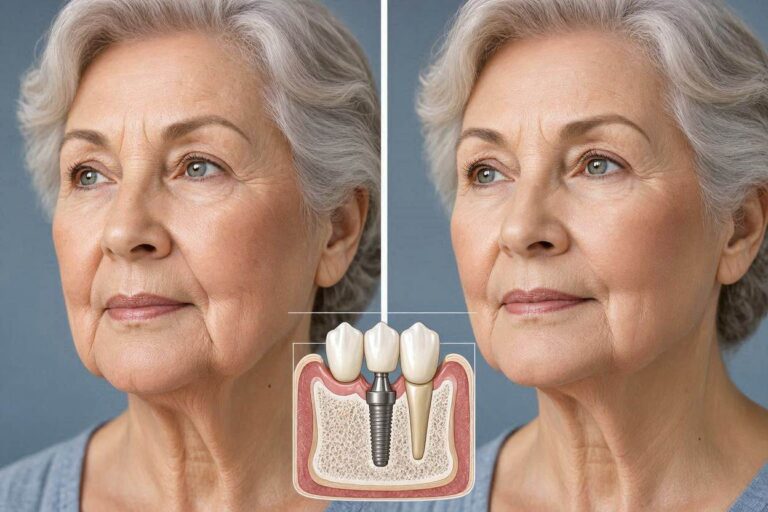
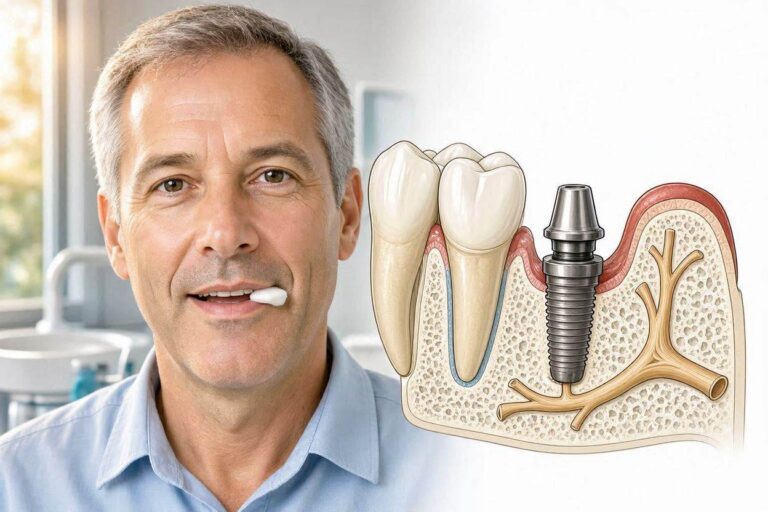
What Is Basal Dental Implant?
You hear the term “basal implant” and it sounds technical, perhaps even intimidating. Your dentist mentioned it as an option. A friend told you it works differently from regular implants. Online forums offer conflicting opinions. You need clear, reliable information about what basal dental implants are, how they work, and whether they might be right for you.
This guide provides a thorough, evidence-based explanation of basal dental implants. You will learn what defines them, how they differ from conventional implants, the surgical procedure involved, their advantages and limitations, and the clinical situations where they offer the most value.
The Core Definition
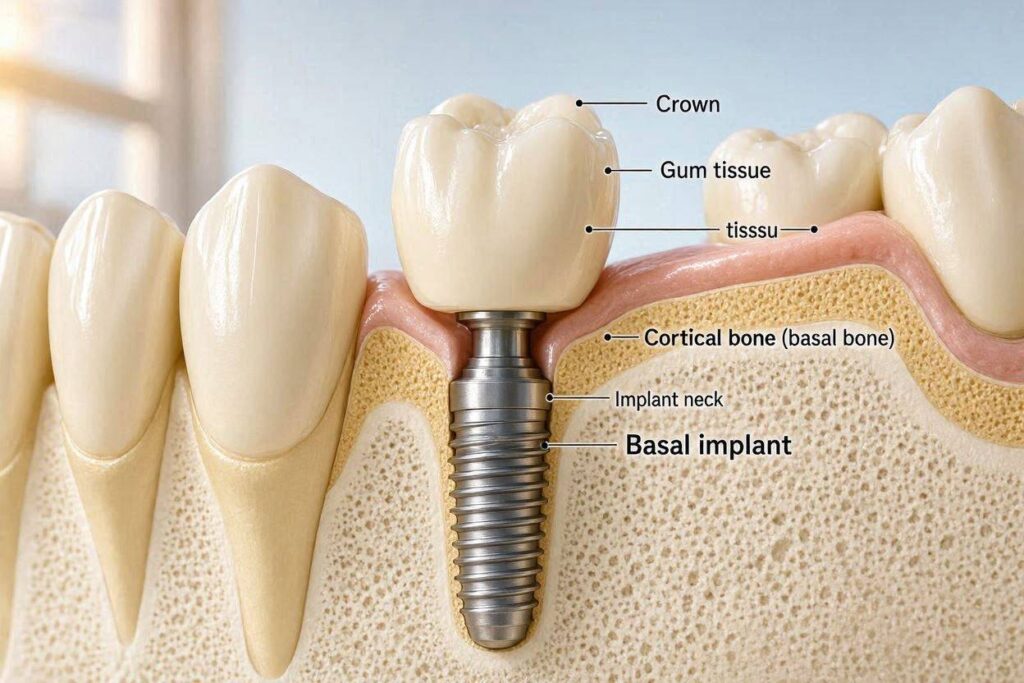
A basal dental implant is a type of dental implant that derives its primary support from the basal bone, the dense cortical bone that lies deep in the jaw, rather than from the crestal or alveolar bone near the surface. Basal implants are specifically designed for immediate loading, meaning they can support replacement teeth within days of placement, and they often eliminate the need for bone grafting in patients with significant bone loss.
This definition contains several distinguishing features that set basal implants apart from conventional implants. Understanding each element reveals why basal implantology represents a distinct philosophy of implant treatment.
Understanding Basal Bone: The Anatomical Foundation
To understand basal implants, you must first understand the different types of bone in the jaw.
The Layers of Jawbone
The jawbone is not uniform. It consists of distinct layers with different properties:
| Bone Layer | Location | Characteristics |
|---|---|---|
| Alveolar bone | Surrounds tooth sockets; most superficial | Softer; resorbs after tooth loss |
| Basal bone | Deep to alveolar bone; forms the jaw’s core structure | Dense cortical bone; highly mineralized; resistant to resorption |
| Cortical plates | Outer surfaces of the jaw | Dense, compact bone |
What Happens After Tooth Loss
When teeth are lost, the alveolar bone that once supported them begins to resorb. This is a natural biological process. The body recognizes that the bone is no longer needed for tooth support and gradually removes it. Over years and decades, the alveolar bone can resorb significantly, leaving insufficient bone for conventional implant placement.
The basal bone, however, remains. It is embryologically distinct from alveolar bone and resists resorption even when teeth have been missing for many years. This is the critical insight behind basal implantology: even in patients with severe bone loss, the basal bone persists and can provide stable anchorage for implants.
How Basal Implants Differ from Conventional Implants
The differences between basal and conventional implants are fundamental, not merely cosmetic.
Design Differences
| Feature | Conventional Implant | Basal Implant |
|---|---|---|
| Shape | Cylindrical or tapered root form | Often one-piece; varied designs including screw, plate, and disk forms |
| Surface | Roughened for osseointegration | Often smooth or minimally roughened in basal contact areas |
| Length | Typically 8–16 mm | Often longer; designed to reach basal bone |
| Diameter | 3.5–6 mm | Variable; may be wider in basal engagement area |
| Components | Two or three pieces (fixture, abutment, crown) | Often one piece (implant and abutment combined) |
| Thread design | Uniform threads along most of the length | May have aggressive cutting threads in the basal portion |
Placement Philosophy
Conventional implants are placed into the alveolar bone, ideally surrounded by at least 1–2 mm of bone on all sides. They require adequate bone volume, and when that volume is insufficient, bone grafting is performed to create it.
Basal implants are placed through the remaining alveolar bone and anchored into the basal bone beneath. They bypass the deficient alveolar bone entirely, engaging the dense cortical bone at the base of the jaw. This approach eliminates the need for bone grafting in most cases.
Loading Protocol
Conventional implants typically require a healing period of 3–6 months before they can support replacement teeth. During this time, osseointegration occurs.
Basal implants are designed for immediate loading. The patient receives temporary or permanent teeth within days, sometimes within 72 hours, of implant placement. This is possible because the implants achieve their primary stability from mechanical engagement with the dense basal bone rather than relying on osseointegration alone.
Osseointegration and Basal Implants
This is an important distinction. Basal implants do osseointegrate over time, but their initial stability does not depend on it. The mechanical interlocking of the implant with dense cortical bone provides sufficient stability to support immediate loading. Osseointegration occurs secondarily, providing additional long-term stability.
Types of Basal Implants
Basal implantology encompasses several implant designs, each with specific applications.
Screw-Form Basal Implants
These are the most common type of basal implant in current use. They resemble conventional implants in having a screw form but differ in key respects:
- One-piece design: The implant and abutment are a single unit
- Aggressive thread pattern: Deep, widely spaced threads designed to engage cortical bone
- Smooth or polished neck: The portion that passes through the alveolar bone may be smooth to reduce bacterial adherence
- Tapered body: The implant narrows toward the apex
- Various lengths available: Often 12–25 mm to reach basal bone
Lateral Basal Implants (Disk Implants)
Lateral basal implants, also called disk implants or BOI (Basal Osseointegrated Implants), are placed from the side of the jaw rather than from the top.
Characteristics:
- Thin, disk-shaped basal plate that engages the cortical bone on the side of the jaw
- One or more pins or posts that extend through the gum to support teeth
- Placement requires a lateral approach; the surgeon accesses the jawbone from the cheek side
- Particularly useful in extremely atrophic jaws where vertical bone height is minimal
Bicortical Implants
Bicortical implants engage two cortical bone layers simultaneously, typically the crestal cortical bone at the top of the ridge and the basal cortical bone at the bottom of the mandible or the floor of the maxillary sinus.
Characteristics:
- Extremely stable due to dual cortical engagement
- Often used in the anterior mandible
- Can be very long to span the entire height of the jaw
- Excellent load-bearing capacity
Comparison of Basal Implant Types
| Type | Approach | Bone Engagement | Best Application |
|---|---|---|---|
| Screw-form basal | Crestal (from top) | Apical basal bone | General use; most common |
| Lateral basal (disk) | Lateral (from side) | Lateral cortical bone | Severe vertical atrophy |
| Bicortical | Crestal | Crestal and basal cortices | Anterior mandible; high load areas |
The Surgical Procedure for Basal Implants
The placement of basal implants differs from conventional implant surgery in several important ways.
Pre-Surgical Planning
Basal implant placement requires thorough imaging:
- Cone beam computed tomography (CBCT): Essential for evaluating basal bone quantity and quality
- Panoramic radiograph: Provides overview of jaw anatomy
- Assessment of vital structures: Inferior alveolar nerve, mental nerve, maxillary sinus
The surgeon uses 3D imaging to plan implant trajectories that engage the basal bone while avoiding anatomical structures.
Surgical Technique
The procedure varies by implant type but generally follows these steps:
- Anesthesia: Local anesthesia; sedation or general anesthesia may be offered depending on the case complexity
- Incision: For crestal approach, an incision along the top of the ridge; for lateral approach, an incision on the cheek side
- Site preparation: Specialized drills prepare the osteotomy, often with emphasis on engaging cortical bone rather than removing it
- Implant placement: The implant is inserted and torqued into the basal bone
- Stability verification: The surgeon confirms high primary stability, typically measured as insertion torque
- Impression taking: For immediate loading, impressions are taken at this appointment
- Temporary restoration delivery: Within 24–72 hours, the patient receives a temporary or permanent prosthesis
Immediate Loading Protocol
The immediate loading process works as follows:
- Impressions are taken at the time of surgery or shortly after
- A dental laboratory fabricates the prosthesis
- Within 24–72 hours, the prosthesis is delivered and attached to the implants
- The prosthesis splints multiple implants together, distributing forces and protecting individual implants
- The patient leaves with functional teeth days after surgery
Advantages of Basal Dental Implants
Basal implants offer specific advantages that make them attractive for certain patient populations.
Elimination of Bone Grafting
This is the primary advantage. By anchoring in basal bone that resists resorption, basal implants eliminate the need for bone grafting in the vast majority of cases. This means:
- No bone graft surgery
- No graft healing period (which adds 3–6 months to treatment)
- No graft donor site morbidity
- Reduced overall treatment cost
- Treatment possible for patients who cannot or will not undergo grafting
Immediate Loading
Patients receive teeth within days rather than months. This is a significant quality-of-life advantage:
- No period without teeth
- Immediate restoration of function and aesthetics
- Psychological benefit of leaving the office with teeth
- Faster return to normal eating and social function
Treatment of Severe Atrophy
Basal implants can be placed in jaws that have been deemed unsuitable for conventional implants due to severe bone loss. This expands the population that can receive fixed implant-supported teeth.
Reduced Treatment Time
The combination of no grafting period and immediate loading compresses the treatment timeline dramatically:
| Treatment Phase | Conventional Implants with Grafting | Basal Implants |
|---|---|---|
| Bone grafting | 3–6 months | Not required |
| Healing after grafting | 3–6 months | Not applicable |
| Implant placement | 1 day | 1 day |
| Osseointegration period | 3–6 months | Not required for loading |
| Restoration delivery | 3–6 months after placement | 24–72 hours after placement |
| Total treatment time | 6–18 months | Days to weeks |
Reduced Cost
Eliminating bone grafting and multiple surgical procedures reduces the overall cost of treatment, even though basal implants themselves may be comparably priced to conventional implants.
Limitations and Risks of Basal Implants
Basal implants are not without drawbacks. An honest assessment requires acknowledging their limitations.
Limited Long-Term Data
Compared to conventional root-form implants, which have decades of research supporting their success rates, basal implants have less robust long-term data. The available studies show acceptable success rates, but the volume and duration of research are less extensive than for conventional implants.
Prosthetic Challenges
One-piece basal implants have the abutment integrated into the implant. This means:
- The angle of the abutment is fixed and cannot be adjusted after placement
- If the abutment is not ideally positioned, prosthetic solutions may be compromised
- Correcting angulation problems is more challenging than with two-piece systems
- The restorative dentist has less flexibility
Removal Difficulty
Basal implants, once osseointegrated in dense cortical bone, are extremely difficult to remove if failure occurs. The aggressive thread design and cortical engagement that provide excellent stability also make explanation challenging.
Limited Availability
Not all implant surgeons are trained in basal implantology. The technique requires specific training and experience. Finding a qualified provider may be more difficult than finding a conventional implant surgeon.
Specific Complications
| Complication | Description |
|---|---|
| Implant fracture | One-piece designs may be more susceptible to metal fatigue |
| Crestal bone loss | The smooth neck design may allow some bone loss around the implant neck |
| Peri-implantitis | Infection around the implant can progress rapidly along smooth surfaces |
| Nerve injury | Long implants placed in the mandible risk inferior alveolar nerve damage |
| Sinus complications | Implants engaging the sinus floor may cause sinus issues |
Candidacy for Basal Implants
Basal implants are not for everyone. They are particularly well-suited to specific patient profiles.
Ideal Candidates
- Patients with severe alveolar bone atrophy who wish to avoid bone grafting
- Patients who need immediate teeth and cannot tolerate a prolonged edentulous period
- Patients with failed conventional implants and significant bone loss
- Patients with medical conditions that make multiple surgeries or prolonged treatment undesirable
- Patients for whom bone grafting is contraindicated or has failed previously
Less Suitable Candidates
- Patients with adequate bone for conventional implants (conventional approaches may be preferable)
- Patients with uncontrolled systemic diseases affecting healing
- Patients with active periodontal disease
- Heavy smokers (increased risk of complications)
- Patients with severe bruxism (high occlusal forces may overload implants)
- Patients with unrealistic expectations about outcomes
Basal Implants vs. Conventional Implants: A Detailed Comparison
| Factor | Conventional Implants | Basal Implants |
|---|---|---|
| Bone requirement | Adequate alveolar bone; grafting if deficient | Basal bone must be adequate |
| Bone grafting | Often required in atrophic cases | Rarely required |
| Treatment time | 3–18 months | Days to weeks |
| Loading | Typically delayed 3–6 months | Immediate (24–72 hours) |
| Component design | Two or three pieces | Often one piece |
| Prosthetic flexibility | High; abutments can be angled or changed | Lower; abutment angle is fixed |
| Long-term data | Extensive; decades of research | Growing but less extensive |
| Success rates (10-year) | 93–98% documented | 90–95% reported in available studies |
| Removability if failure | Relatively straightforward | More difficult |
| Surgeon availability | Widely available | Limited; requires specific training |
| Cost | Varies; grafting adds expense | May be lower overall (no grafting) |
The History and Development of Basal Implantology
Understanding the origins of basal implants provides context for their current use.
Early Foundations
The concept of engaging basal bone for implant support dates to the mid-20th century. Early implantologists observed that implants placed in dense cortical bone performed better than those placed only in softer alveolar bone.
Development of Specific Systems
In the 1970s and 1980s, European clinicians, particularly in France and Germany, developed implant systems specifically designed to engage basal bone. The BOI system (Basal Osseointegrated Implants) and the disk implant concept emerged during this period.
Evolution and Refinement
Over subsequent decades, basal implant designs have been refined:
- Improved materials and surface treatments
- Better understanding of biomechanical principles
- Development of prosthetic solutions for immediate loading
- Integration of 3D imaging and computer-guided planning
Current Status
Today, basal implantology is practiced worldwide, with particularly strong adoption in Europe and India. It remains a distinct subspecialty within implant dentistry, with its own training programs, professional organizations, and scientific literature.
The Scientific Evidence
A balanced assessment requires examining the available research.
What Studies Show
Research on basal implants, while less voluminous than for conventional implants, demonstrates acceptable outcomes:
- Survival rates: Studies report survival rates of 90–97% over observation periods of 5–10 years
- Immediate loading success: Success rates for immediately loaded basal implants are comparable to delayed loading protocols when proper patient selection criteria are applied
- Bone preservation: Basal implants appear to preserve bone levels adequately, though crestal bone loss patterns differ from conventional implants
- Patient satisfaction: High satisfaction rates reported, particularly related to immediate function and avoidance of grafting### Limitations of Current Evidence
- Fewer large-scale, long-term randomized controlled trials compared to conventional implants
- Many studies come from individual centers or practitioners, potentially introducing bias
- Heterogeneity in implant designs makes pooling data difficult
- Standardized success criteria developed for conventional implants may not apply perfectly to basal designs
Choosing Between Basal and Conventional Implants
The decision between basal and conventional implants should be individualized.
Factors to Consider
- Bone availability: If you have adequate bone, conventional implants offer the most predictable long-term data. If you have severe atrophy and wish to avoid grafting, basal implants become more attractive.
- Timeline: If you need teeth immediately and cannot tolerate a prolonged treatment course, basal implants offer a significant advantage.
- Surgical preference: If you wish to minimize surgical procedures (no grafting), basal implants may be preferable.
- Surgeon expertise: The best outcomes come from surgeons experienced in the specific technique they are using. A skilled conventional implant surgeon may achieve better results than a less experienced basal implant surgeon, and vice versa.
- Long-term considerations: Consider the prosthetic maintainability, potential need for future intervention, and the availability of clinicians who can manage complications.
Questions to Ask Your Surgeon
- How many basal implant cases have you completed?
- What are your personal success and complication rates?
- Why do you recommend basal implants over conventional implants in my case?
- What happens if an implant fails?
- How will the prosthesis be maintained over time?
- What is the long-term plan if complications develop?
Conclusion
A basal dental implant is a specialized type of dental implant that anchors into the dense basal cortical bone of the jaw, designed for immediate loading and typically eliminating the need for bone grafting. It differs fundamentally from conventional implants in design, placement philosophy, and treatment timeline. Basal implants offer significant advantages for patients with severe bone atrophy who wish to avoid grafting and prolonged treatment. However, they carry specific limitations including less extensive long-term data, prosthetic inflexibility, and more challenging removal if failure occurs. The decision to use basal implants should be made collaboratively with an experienced clinician who can weigh individual anatomical, medical, and personal factors.
Frequently Asked Questions
What is the main difference between basal and conventional dental implants?
Basal implants anchor in the dense basal cortical bone deep in the jaw, while conventional implants are placed in the alveolar bone nearer the surface. Basal implants are designed for immediate loading and usually eliminate the need for bone grafting.
Are basal implants safe?
When placed by properly trained and experienced clinicians, basal implants have demonstrated acceptable safety and success profiles. As with any surgical procedure, risks exist and should be discussed with your surgeon.
How long do basal implants last?
Available studies report survival rates of 90–97% over 5–10 years. Long-term data beyond 10–15 years is less extensive than for conventional implants, but properly maintained basal implants can provide many years of function.
Can basal implants be used for single teeth?
Yes, basal implants can be used for single tooth replacement, though their design philosophy is particularly well-suited to full arch restorations where multiple implants are splinted together.
Do basal implants require special maintenance?
Maintenance requirements are similar to conventional implants: excellent oral hygiene, regular professional cleanings, and periodic evaluation of the prosthesis and implant stability. The smooth neck design of some basal implants may require particular attention to hygiene.
Additional Resources
- International Implant Foundation: www.implantfoundation.org
- American Academy of Implant Dentistry: www.aaid.com
- International Congress of Oral Implantologists: www.icoi.org