How to Stop Bleeding After Dental Implant Surgery
You leave the surgical office with gauze pressed against the implant site, the lower half of your face still numb, a list of post-operative instructions in your hand. By the time you get home, the gauze is pink with blood-tinged saliva. You replace it as instructed. An hour later, the bleeding continues. A flicker of concern crosses your mind. Is this normal? When should you worry? What can you do to help the bleeding stop? Post-operative bleeding after dental implant surgery is expected, but knowing how to manage it, what techniques actually work, and when to seek professional help transforms an anxious experience into a manageable one. This guide provides clear, actionable steps for controlling bleeding after implant surgery, grounded in the biological principles of clot formation and wound healing.
Understanding Post-Implant Bleeding
Before addressing how to stop bleeding, it is essential to understand why bleeding occurs and what constitutes normal versus concerning bleeding after implant surgery.
Why Bleeding Occurs After Implant Surgery
Implant placement is a surgical procedure that involves incising gum tissue and drilling into bone. Both tissues contain blood vessels that are cut during the procedure. The bleeding you experience after surgery is blood from these cut vessels mixing with saliva in your mouth.
The bone preparation for implant placement involves drilling into highly vascular bone marrow. The marrow spaces contain numerous small blood vessels that bleed when cut. Unlike the gum tissue, which the surgeon can cauterize or suture, bleeding from within the bone cannot be directly closed. The body must form a blood clot within the prepared site to stop this bleeding.
The blood clot that forms is not simply a nuisance to be managed. It is the essential first step in healing. The clot provides the provisional matrix for cell migration, contains the growth factors that initiate the healing cascade, and protects the implant surface during the early healing period. Preserving this clot while managing visible bleeding is the goal of post-operative bleeding control.
What Normal Bleeding Looks Like
Normal post-operative bleeding presents as pink or red-tinged saliva. When you bite on gauze, the gauze becomes stained with blood, but it is not soaked through rapidly with bright red blood. The bleeding is oozing rather than flowing.
For the first few hours after surgery, pink-tinged saliva is expected. The amount of blood in the saliva should decrease over time. By the evening of surgery, the saliva may still be pink but should not be bright red. By the next morning, bleeding should have essentially stopped, though you may notice a slight pink tinge when you rinse for the first time.
Oozing that persists for 24 to 48 hours, particularly when you are active or when you disturb the surgical site, can be normal. The blood clot is fragile during this period, and minor disruption can cause temporary oozing. This is different from continuous, active bleeding.
When Bleeding Is Excessive
Active bleeding that fills the mouth with bright red blood or requires gauze changes every few minutes is not normal and requires attention. Bleeding that does not slow or stop after applying pressure for 30 to 60 minutes is concerning. Bleeding that increases rather than decreases over time is not expected.
Significant bleeding can occur if a larger blood vessel was damaged during surgery, though this is uncommon with proper surgical technique and preoperative planning using CBCT imaging to identify vessel locations. It can also occur in patients with undiagnosed bleeding disorders or those taking medications that affect clotting.
Bleeding accompanied by lightheadedness, dizziness, rapid heart rate, or feeling faint suggests significant blood loss and requires emergency medical attention. This scenario is extremely rare after routine implant surgery.
Immediate Bleeding Control Techniques
The techniques for controlling post-operative bleeding are simple but must be performed correctly to be effective. Technique matters more than the specific materials used.
The Gauze Pressure Technique
Direct pressure is the most effective method for controlling surgical bleeding. The principle is simple: pressure compresses the bleeding vessels, allowing the clotting cascade to proceed and a stable clot to form.
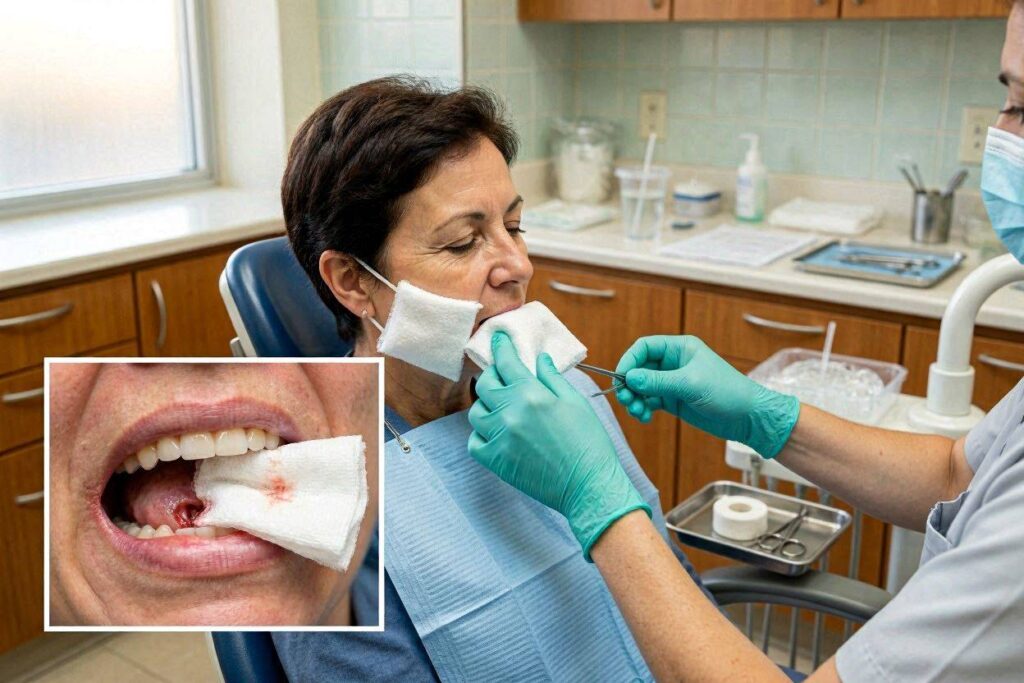
Fold a piece of sterile gauze into a pad thick enough to provide cushion and absorbency, typically about one inch square and a quarter inch thick. Place the gauze directly over the surgical site. Do not place it on top of adjacent teeth where it cannot apply pressure to the bleeding tissue.
Bite down firmly on the gauze, maintaining constant pressure for 30 to 60 minutes without releasing. Do not check the gauze every few minutes to see if bleeding has stopped. Each time you release pressure and remove the gauze, you disrupt the forming clot and restart the bleeding. Set a timer and leave the gauze in place for the full duration.
After the pressure period, gently remove the gauze. If it sticks to the surgical site, moisten it with a small amount of water to release it without disrupting the clot. Evaluate the bleeding. If active bleeding continues, repeat the process with fresh gauze.
The Tea Bag Method
Moistened black tea bags are a time-tested remedy for post-extraction and post-surgical bleeding. The tannic acid in tea has astringent properties that constrict blood vessels and promote clotting.
If gauze pressure alone is insufficient, moisten a black tea bag with cool water, wrap it in a single layer of gauze, and place it over the surgical site. Bite down with firm pressure for 30 to 60 minutes. The combination of pressure and tannic acid often controls bleeding that has not responded to gauze alone.
Use only black tea, not herbal tea or green tea. Black tea has the highest tannic acid content. The tea bag should be unused. Do not add sugar or other substances to the tea bag.
Proper Positioning
Your body position affects bleeding. Keep your head elevated above your heart level, even while sleeping. Use two or three pillows to prop yourself up. This reduces blood pressure in the head and neck, decreasing bleeding.
Avoid bending over, lifting heavy objects, or engaging in physical activity that increases blood pressure. Rest quietly for the first 24 hours after surgery. Activity increases heart rate and blood pressure, which promotes bleeding.
Sit in a recliner or propped up in bed rather than lying flat. If you must lie down, keep your head elevated on pillows. Sleeping on the side opposite the surgical site prevents pressure on the area.
Cold Therapy
Cold constricts blood vessels, reducing blood flow and bleeding. It also reduces swelling and provides pain relief. Apply cold therapy in conjunction with pressure techniques.
Apply an ice pack or cold compress to the cheek over the surgical site. Use cycles of 20 minutes on and 20 minutes off. Do not apply ice directly to the skin. Wrap the ice pack in a thin cloth to protect your skin from cold injury.
Cold therapy is most effective during the first 24 to 48 hours after surgery. After 48 hours, switch to warm compresses if swelling persists, as heat promotes circulation and healing at that stage.
What to Avoid When Trying to Stop Bleeding
Certain actions that seem intuitively helpful actually make bleeding worse. Avoiding these common mistakes is as important as performing the correct techniques.
Do Not Rinse or Spit
Rinsing your mouth, even with water or salt water, disrupts the blood clot and promotes bleeding. Do not rinse at all for the first 24 hours. When you do begin rinsing after 24 hours, do so gently, allowing the fluid to fall from your mouth rather than spitting forcefully.
Spitting creates negative pressure in the mouth that can suction the clot from the surgical site. This is the same reason you must avoid drinking through straws. Allow saliva and any blood-tinged fluid to drool out or be gently wiped away rather than spitting.
Do Not Change Gauze Too Frequently
Checking gauze every few minutes disrupts the forming clot. Each time you remove gauze from the surgical site, you pull away the clot that is beginning to form. The bleeding vessels, which had started to constrict and clot, are reopened.
Place the gauze and leave it in place for a full 30 to 60 minutes. Set a timer. Resist the urge to check. If bleeding continues after one pressure cycle, repeat with fresh gauze for another 30 to 60 minutes. Multiple cycles may be needed.
Do Not Apply Heat
Heat dilates blood vessels and increases blood flow, which promotes bleeding. Avoid hot foods and beverages for the first 48 hours. Do not apply warm compresses to the face during this period. Do not take hot showers or baths, which increase blood flow to the head.
Cool or room temperature foods and beverages are appropriate. The restriction on heat applies to everything you consume and apply to your face.
Do Not Engage in Physical Activity
Physical activity increases heart rate and blood pressure, promoting bleeding. Rest for the first 24 hours. Avoid bending, lifting, straining, or any activity that increases your heart rate. This includes housework, yard work, exercise, and sexual activity.
Even after the first 24 hours, ease back into activity gradually. Strenuous exercise should be avoided for at least three to five days after surgery, longer for complex procedures or if you had significant bleeding.
Do Not Drink Alcohol or Use Tobacco
Alcohol dilates blood vessels and impairs blood clotting. It also interacts with pain medications and antibiotics. Avoid alcohol for at least one week after surgery.
Tobacco use, including smoking and chewing tobacco, dramatically impairs healing and promotes bleeding. Nicotine constricts blood vessels initially but the overall effect of tobacco use on surgical healing is profoundly negative. The suction of smoking can also dislodge the clot. Avoid all tobacco products during the healing period.
Medications and Bleeding
Medications that you take routinely can significantly affect post-operative bleeding. Understanding how to manage these medications around the time of surgery is essential.
Common Medications That Increase Bleeding
Anticoagulants, prescribed to prevent blood clots in conditions such as atrial fibrillation, mechanical heart valves, and previous deep vein thrombosis or pulmonary embolism, directly impair the clotting cascade. Warfarin, apixaban, rivaroxaban, and dabigatran are common anticoagulants.
Antiplatelet medications prevent platelets from aggregating, the first step in clot formation. Clopidogrel, ticagrelor, prasugrel, and daily aspirin therapy are common antiplatelet medications.
Over-the-counter supplements that affect bleeding include fish oil, vitamin E in high doses, ginkgo biloba, garlic supplements, ginseng, and other herbal products with antiplatelet effects.
Pre-Surgical Medication Management
The decision to continue, modify, or temporarily discontinue anticoagulant or antiplatelet medications before surgery must be made by the prescribing physician in consultation with your surgeon. Never stop these medications on your own. The risk of surgical bleeding must be balanced against the risk of thrombotic events if the medication is stopped.
This discussion should occur well before your surgery date. Some medications require days to weeks for their effects to dissipate. Others can be managed with local hemostatic measures during surgery without stopping the medication.
Your surgeon should have reviewed your complete medication list, including over-the-counter products and supplements, before surgery. Medications and supplements that increase bleeding risk should have been identified and a management plan established.
Post-Operative Medication Resumption
If your anticoagulant or antiplatelet medication was stopped before surgery, confirm with your surgeon and prescribing physician when it should be resumed. The timing depends on the medication, the surgical procedure, and your post-operative bleeding status.
Most medications are resumed within 24 to 72 hours after surgery, once the initial bleeding risk has passed. Your prescribing physician should provide specific instructions. Do not delay resuming medically necessary anticoagulation beyond the recommended period.
When to Contact Your Surgeon
Most post-operative bleeding can be managed at home with the techniques described. However, certain situations require professional evaluation and intervention.
Signs That Require Professional Attention
Bleeding that does not slow or stop after applying firm gauze pressure for 60 minutes on two consecutive attempts warrants a call to your surgeon. Persistent active bleeding may require professional intervention with local hemostatic agents or suturing.
Bright red blood that fills the mouth rapidly or requires gauze changes every few minutes is not normal. This level of bleeding suggests a larger vessel has been compromised and requires professional attention.
Bleeding that increases after initially slowing or stopping may indicate disruption of the clot by a medication effect, physical activity, or an underlying bleeding tendency. Contact your surgeon for guidance.
Bleeding accompanied by symptoms of significant blood loss, including lightheadedness, dizziness, rapid heart rate, shortness of breath, or feeling faint, requires emergency medical attention. Go to the nearest emergency department or call emergency services.
Bleeding that persists beyond 24 hours at a level that requires gauze pressure is not typical. While minor oozing and pink-tinged saliva can persist, active bleeding should have stopped by this time.
What Your Surgeon Can Do
If you require professional intervention for post-operative bleeding, your surgeon has several options. Local anesthetic with vasoconstrictor can be injected to constrict bleeding vessels. Local hemostatic agents, including oxidized cellulose, collagen sponges, or thrombin preparations, can be placed in the surgical site to promote clotting.
Additional sutures can be placed to close the wound more tightly and compress bleeding vessels. Electrocautery can seal small bleeding vessels that are accessible.
In rare cases of significant bleeding, particularly in the floor of the mouth where an expanding hematoma can compromise the airway, hospital-based management may be necessary. This scenario is extremely uncommon with proper surgical technique and preoperative planning.
Bleeding Management for Specific Situations
Certain patient populations and surgical scenarios require modified approaches to bleeding management.
Patients on Anticoagulants
If you take anticoagulant or antiplatelet medications, your post-operative bleeding may be more persistent than typical. You should have received specific instructions from your surgeon about what to expect and how to manage bleeding.
Local hemostatic measures, including gauze pressure, tea bags, and cold therapy, are even more important for patients on these medications. Be patient. It may take longer for bleeding to stop, but it should still be controllable with these measures.
Have a lower threshold for contacting your surgeon if bleeding is persistent or seems excessive. Your surgeon may have specific protocols for managing bleeding in anticoagulated patients, including the use of tranexamic acid mouth rinse or other local hemostatic agents.
Multiple Implant Surgery
When multiple implants are placed during the same surgical session, the total surgical area is larger and more blood vessels are disrupted. Expect more bleeding than with a single implant, though it should still be controllable with standard measures.
Gauze placement may need to cover a larger area. Multiple gauze pads may be needed. The pressure technique is the same, but you may need to apply pressure over a broader area.
The duration of bleeding may be longer than for a single implant, simply because there is more surgical surface area from which oozing can occur. Oozing that persists for 24 to 48 hours may be normal after multiple implant placement.
Implants With Simultaneous Bone Grafting
Bone grafting increases the surgical surface area and introduces graft material that can wick blood, making bleeding appear more significant than it actually is. The blood mixed with graft particles may look different from blood alone.
The pressure technique is the same. Be aware that some graft particles may appear in the gauze or saliva. A small amount of graft particle loss is normal. Significant loss of graft material warrants contacting your surgeon.
The sutures over a graft site are particularly important for containing the graft and controlling bleeding. Protect these sutures. Avoid any activity that could disrupt them.
Patients with Bleeding Disorders
If you have a known bleeding disorder, including von Willebrand disease, hemophilia, or platelet disorders, your implant surgery should have been planned in consultation with your hematologist. Specific perioperative management protocols should be in place.
Your post-operative bleeding management plan should be individualized based on your specific condition and the recommendations of your hematologist. You should know what is normal for you and when to seek help.
Have a lower threshold for contacting your surgical team and your hematologist if bleeding is persistent or concerning. Your hematologist may have specific interventions available, including factor replacement or other therapies.
Conclusion
To stop bleeding after dental implant surgery, apply direct pressure by folding sterile gauze into a firm pad and biting down continuously for 30 to 60 minutes without checking, as each interruption disrupts the forming clot and restarts bleeding. If gauze alone is insufficient, a moistened black tea bag wrapped in gauze provides the additional hemostatic effect of tannic acid, while cold therapy applied to the cheek in 20-minute cycles constricts blood vessels and reduces blood flow. Keep your head elevated above heart level at all times, avoid rinsing or spitting for 24 hours, refrain from physical activity, and avoid hot foods, alcohol, and tobacco. Contact your surgeon promptly if bleeding does not respond to two consecutive pressure cycles, if bright red blood fills the mouth rapidly, or if bleeding is accompanied by lightheadedness or other signs of significant blood loss.
Frequently Asked Questions
How long should bleeding last after implant surgery?
Pink-tinged saliva is normal for the first 24 hours. Active bleeding should stop within a few hours with proper pressure technique. Minor oozing that produces pink saliva may persist for 24 to 48 hours, particularly after multiple implants or complex procedures.
Is it normal to bleed the day after implant surgery?
Minor oozing that produces pink-tinged saliva the day after surgery can be normal, particularly when you are active or when you disturb the surgical site. Active bleeding that requires gauze pressure the day after surgery is not typical and warrants contacting your surgeon.
Can I sleep with gauze in my mouth?
No. Do not sleep with gauze in your mouth, as it can become dislodged and pose a choking hazard. If you are concerned about bleeding overnight, apply pressure with gauze for 30 to 60 minutes immediately before bed, then sleep with your head elevated on multiple pillows. If bleeding is active enough to require gauze, you should contact your surgeon before going to sleep.
What if I swallow blood?
Swallowing small amounts of blood is not harmful, though it may cause nausea or upset stomach. If you are swallowing significant amounts of blood, your bleeding is more than minor oozing and warrants attention. Eating something bland like crackers or toast before taking pain medication can help settle a stomach that is irritated by swallowed blood.
Can I use a styptic pencil or powder on the implant site?
No. Styptic products designed for shaving cuts are not formulated for intraoral use and can be toxic if ingested. They can also damage the healing tissues. Use only the methods recommended by your surgeon: gauze pressure, tea bags, and cold therapy.
When can I rinse with salt water?
Begin gentle warm salt water rinses 24 hours after surgery. Mix half a teaspoon of salt in eight ounces of warm water. Rinse gently without forceful swishing, and allow the water to fall from your mouth rather than spitting. Rinsing before 24 hours can disrupt the clot and restart bleeding.
Does bleeding increase the risk of implant failure?
Minor post-operative bleeding managed appropriately does not increase implant failure risk. Significant bleeding that disrupts the blood clot or leads to hematoma formation could theoretically compromise healing, but this is uncommon. The implant success depends far more on long-term factors including oral hygiene, smoking status, and systemic health than on minor post-operative bleeding.
How can I tell if the bleeding is from the implant site or somewhere else?
Bleeding after implant surgery is almost always from the surgical site. If you have other oral conditions, bleeding could potentially originate from those sites if they are irritated. The surgical site will be the primary source. If you are unsure, your surgeon can identify the bleeding source at a post-operative visit.
Additional Resource
American Association of Oral and Maxillofacial Surgeons: Post-Operative Care
https://myoms.org/procedures/post-operative-care