What to Do Now When Dental Implants Have Failed
You felt the wobble. You saw the radiograph showing bone loss around the implant that was supposed to last a lifetime. You heard the words from your dentist confirming what you already suspected: your dental implant has failed. The wave of emotions that follows is complex and valid. Frustration that your investment of time, money, and hope has not delivered the promised result. Anxiety about what comes next and whether you will ever have a stable, functional tooth in that space. Anger that you may need to go through this all over again. These feelings are normal, but they should not paralyze you. Dental implant failure, while distressing, is a manageable clinical situation with clear treatment pathways. Understanding exactly what to do now, step by step, transforms a crisis into a plan. This guide walks you through the practical, clinical, and emotional steps to take when implant failure occurs, from immediate actions through treatment completion.
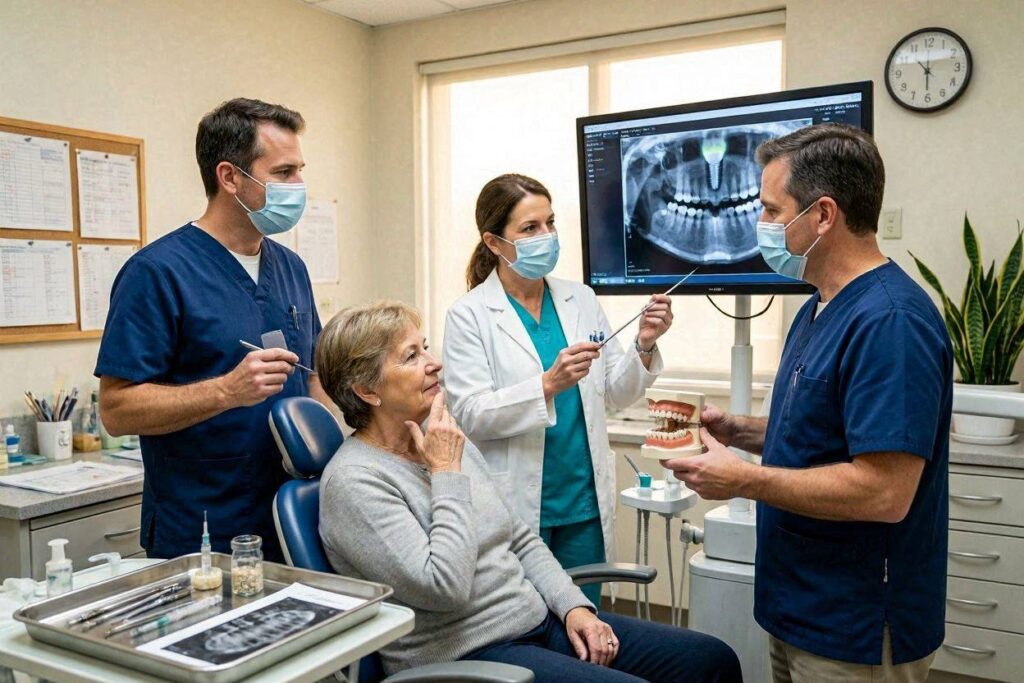
Step One: Confirm the Diagnosis
Before taking any action, ensure that what you are experiencing is truly implant failure and not a reversible complication that can be managed without implant loss.
Distinguishing Failure from Treatable Complications
Not every problem with a dental implant means the implant has failed. Many implant complications are treatable, and the implant can be saved. Understanding the difference prevents unnecessary implant removal.
A loose abutment screw causes the crown to move while the implant remains firmly integrated in the bone. The treatment is simple: access the screw, retighten it to the proper torque, and reseal the access hole. The implant is not failing. The restoration component simply needs maintenance.
Peri-implant mucositis causes bleeding, redness, and swelling around the implant without bone loss. This reversible condition responds to professional cleaning and improved home care. The implant is healthy. The soft tissue needs treatment.
Peri-implantitis with bone loss that is not yet advanced may be treatable. If the implant is not mobile and the bone loss is moderate, surgical debridement and possibly regenerative procedures can arrest the disease and preserve the implant. The implant has not failed, though it requires active treatment.
True implant failure involves one of two scenarios: the implant is mobile, indicating complete loss of osseointegration, or the bone loss is so advanced that the implant cannot be maintained and must be removed even if some integration remains. Your dentist or specialist will confirm the diagnosis through clinical examination and radiographs.
Seeking a Second Opinion
If you have doubts about the diagnosis or the proposed treatment plan, a second opinion is entirely appropriate. Implant failure is significant enough to warrant confirmation before proceeding with implant removal and replacement.
A second opinion should come from a clinician with substantial implant experience, ideally a specialist such as an oral and maxillofacial surgeon or periodontist who manages implant complications regularly. Bring your records, including pre-surgical imaging, surgical notes, post-placement radiographs, and any maintenance records.
The second opinion clinician should provide an independent assessment of whether the implant has truly failed, what caused the failure, and what treatment options exist. This information helps you make an informed decision about how to proceed.
Understanding Why the Implant Failed
Identifying the cause of failure is essential for preventing recurrence. If the cause is not addressed, a replacement implant placed into the same environment may fail for the same reason.
Early failure, occurring before the implant was restored or shortly after restoration, suggests surgical factors such as inadequate primary stability, bone overheating during preparation, or bacterial contamination. It may also suggest patient factors such as smoking, uncontrolled diabetes, or compromised healing.
Late failure, occurring after a period of successful function, most commonly results from peri-implantitis driven by bacterial plaque and inadequate maintenance. It may also result from occlusal overload, particularly in patients with bruxism or poorly designed restorations.
Your dentist or specialist should discuss the likely cause of your implant failure and how it can be addressed before a replacement implant is placed. If your provider cannot offer a plausible explanation, this is another reason to seek a second opinion.
Step Two: Address Active Problems
Before implant removal and replacement can be planned, any active infection or acute problems must be managed.
Managing Infection
If the failing implant is infected, with suppuration, swelling, or pain, the infection must be controlled before definitive treatment. Antibiotics may be prescribed to reduce the bacterial load and resolve the acute infection.
Infection associated with a failing implant will not resolve permanently while the implant remains in place, because the implant surface harbors the bacterial biofilm that drives the infection. However, reducing the acute infection before implant removal improves the surgical environment and reduces the risk of post-operative complications.
Warm salt water rinses and good oral hygiene help manage the local environment while awaiting definitive treatment. Do not attempt to clean the implant aggressively if it is mobile, as this can cause further tissue damage.
Pain Management
Pain from a failing implant varies. Some failed implants cause significant discomfort. Others cause none. If you are experiencing pain, over-the-counter pain relievers such as ibuprofen or acetaminophen can help manage it while you await treatment.
Avoid chewing on the failing implant. Loading a mobile implant causes further bone damage and increases discomfort. Stick to a soft diet and chew on the opposite side of your mouth.
If pain is severe or not controlled by over-the-counter medications, contact your dental office. Prescription pain medication may be appropriate while you await the implant removal appointment.
Temporary Functional and Esthetic Management
A failing implant that is mobile or has significant bone loss should not be used for chewing. If the implant supported a single crown, you may be left with a visible gap or a loose restoration.
If the implant crown is very loose and at risk of being swallowed or aspirated, it may be removed by your dentist at an urgent appointment. Do not attempt to remove it yourself unless it falls out with minimal force. A loose restoration that is at risk of being lost should be addressed promptly.
A temporary removable appliance, such as a partial denture or a temporary tooth, can be fabricated to maintain esthetics and some function while you go through the implant removal and replacement process. Discuss this option with your dentist. The temporary appliance must be designed so that it does not place pressure on the failing implant site.
Step Three: Implant Removal
Once the diagnosis is confirmed and any acute problems are managed, the failed implant must be removed. This procedure, while psychologically daunting, is typically straightforward in experienced hands.
What the Removal Procedure Involves
Implant removal is performed under local anesthesia. The area is numbed completely, just as it was when the implant was placed. For anxious patients or complex removals, sedation options are available.
A truly failed implant with complete loss of osseointegration may be removed with minimal force. The surgeon engages the implant with forceps or a removal tool and unscrews it from the bone. Because no bone remains attached to the implant surface, it rotates out with little resistance. Patients are often surprised at how quick and painless this procedure can be.
Implants that retain some osseointegration require more surgical effort to remove. The surgeon separates the implant from the remaining bone using specialized instruments. The goal is to remove the implant while preserving as much surrounding bone as possible for future implant placement.
The removal procedure for a single implant typically takes 15 to 45 minutes, depending on the degree of remaining integration and the implant location. The entire office visit, including anesthesia and post-operative care, spans one to two hours.
What to Expect During Healing After Removal
After implant removal, the site heals through a combination of blood clot organization and bone regeneration. The socket left by the implant fills with blood, which organizes into granulation tissue and eventually new bone.
Post-operative discomfort is typically less than after the original implant surgery. The procedure is shorter, and the bone is not prepared for a new implant. Most patients manage with over-the-counter pain relievers and return to normal activities the next day.
Soft tissue closure occurs within two to four weeks. The underlying bone requires three to six months to fill the defect and mature. Follow-up radiographs confirm bone fill before a replacement implant is considered.
Bone Grafting at the Time of Removal
Your surgeon may recommend placing bone graft material into the implant removal site. This socket preservation approach maintains ridge dimensions for future implant placement and can reduce or eliminate the need for a separate grafting procedure later.
The graft material, typically allograft or xenograft, fills the void left by the implant. A collagen membrane may cover the graft to contain the particles and exclude soft tissue. Sutures close the site over the graft.
Grafting at the time of removal can be performed when the site is not actively infected. If significant infection is present, the surgeon may prefer to allow the site to heal without grafting, performing grafting as a separate procedure once the infection has resolved.
Step Four: Addressing the Cause of Failure
Before a replacement implant is placed, the factors that led to the original failure must be identified and addressed. Skipping this step invites the replacement implant to fail for the same reasons.
Modifying Patient Risk Factors
If smoking contributed to the original implant failure, smoking cessation before replacement implant placement is essential. Some surgeons will not place a replacement implant in a patient who continues to smoke. Smoking cessation programs, nicotine replacement therapy, and counseling can support this critical behavioral change.
If uncontrolled diabetes contributed to failure, work with your physician to optimize blood sugar control before proceeding with replacement. Hemoglobin A1c below 7 percent is the goal. Your surgeon may require documentation of recent A1c results before scheduling replacement implant surgery.
If inadequate oral hygiene contributed to peri-implantitis and failure, commit to improved home care habits and more frequent professional maintenance. A replacement implant in a patient who cannot or will not maintain adequate oral hygiene will eventually fail as well.
Addressing Surgical Factors
If the original implant was poorly positioned, the replacement should be planned using CBCT imaging and possibly a surgical guide to ensure optimal positioning. The implant must be placed within the bony envelope, at the correct depth and angulation, to support a healthy, functional, and esthetic restoration.
If the original implant was of inadequate size for the site, a larger or differently designed implant should be selected for the replacement. Narrow implants in posterior sites, for example, are more prone to fracture and failure. The replacement implant should be matched to the mechanical demands of the site.
If surgical technique contributed to failure, choosing a more experienced surgeon for the replacement procedure is appropriate. Specialist surgeons with extensive implant experience may achieve better outcomes, particularly in complex cases or compromised sites.
Addressing Restorative Factors
If the original implant restoration had occlusal problems, including premature contacts, heavy excursive contacts, or cantilever forces, the replacement restoration must be designed differently. A careful occlusal analysis and adjustment protects the replacement implant from overload.
If excess cement contributed to peri-implantitis and failure, the replacement restoration should use a screw-retained design that eliminates cement entirely. If cement retention is necessary, the cement margin should be placed no deeper than 2 millimeters subgingivally, and meticulous cement removal technique must be employed.
If the original restoration was overcontoured or had closed embrasures that prevented effective cleaning, the replacement restoration should be designed with hygiene-access contours that allow the patient to clean effectively around the implant.
Step Five: Planning the Replacement
Once the failed implant has been removed, the site has healed, and the causes of failure have been addressed, planning for the replacement implant can begin.
Timing of Replacement
The timing of replacement implant placement depends on the healing of the removal site and whether bone grafting was performed. Uncomplicated implant removal without grafting typically allows replacement after three to four months. Sites that received bone graft at the time of removal typically require four to six months of healing, longer for large grafts.
The surgeon evaluates readiness for replacement through clinical examination and imaging. The site should be healed with adequate soft tissue coverage. CBCT imaging confirms adequate bone volume for the planned replacement implant. Bone density should have recovered sufficiently to support implant placement.
Rushing into replacement before the site is adequately healed risks another failure. The waiting period, while frustrating, protects the investment in the replacement implant.
Bone Grafting Before Replacement
If significant bone loss occurred as a result of the original implant failure, or if bone was lost during implant removal, additional grafting may be necessary before a replacement implant can be placed.
Ridge augmentation rebuilds bone width or height that was lost. Guided bone regeneration uses particulate graft material and a barrier membrane to restore the ridge. Block grafting uses a solid piece of bone to rebuild larger defects. Sinus lifts restore bone height in the posterior maxilla.
Grafting procedures add four to nine months to the treatment timeline, depending on the graft type and size. The time must be allowed for the graft to mature before an implant can be placed into it.
Choosing the Right Implant and Approach
The replacement implant may differ from the original in size, design, or even material. A wider or longer implant may be selected to engage more bone and provide greater surface area for osseointegration. A different implant system with features suited to the specific site may be chosen.
In some cases, a zirconia implant may be considered for the replacement, particularly if metal sensitivity was suspected as a contributing factor to the original failure. Zirconia implants offer a metal-free alternative with documented success in appropriate applications.
The surgical approach may be modified from the original procedure. A two-stage approach with the implant buried during healing may be chosen to provide maximum protection during osseointegration, even if the original implant was placed with a one-stage protocol.
Step Six: The Replacement Procedure
The replacement implant procedure follows the same surgical and restorative sequence as the original, with modifications based on the lessons learned from the failure.
Surgical Considerations
The surgical site for the replacement implant is different from a pristine site. There is scar tissue from the original surgery and the implant removal. The bone has healed but may have different density and vascularity than undisturbed bone. The surgeon must account for these differences.
The replacement implant should achieve excellent primary stability, as this was likely a factor in the original failure. The surgeon may use a slightly larger implant, modify the preparation technique, or select a different implant design to maximize stability.
The surgeon should be prepared for the possibility that the bone quality or quantity is not what was expected from the imaging. Contingency plans, including the availability of different implant sizes and grafting materials, should be in place before surgery begins.
Restorative Considerations
The replacement restoration should address any restorative factors that contributed to the original failure. The occlusion should be carefully designed to avoid overload. The emergence profile should facilitate hygiene. The retention method should minimize the risk of cement-induced peri-implantitis.
The patient may need temporary restoration during the osseointegration period. The temporary must be designed to avoid loading the healing implant. A removable temporary or a fixed temporary with light or no occlusal contact may be appropriate.
Success Rates for Replacement Implants
Studies report success rates for replacement implants that are somewhat lower than for primary implant placement, but still favorable. Success rates of 80 to 90 percent at five to ten years are reported for implants placed into previously failed sites, compared to 95 percent or higher for primary implants in healthy patients.
The lower success rate reflects the compromised nature of the site and the patient factors that contributed to the original failure. Patients should have realistic expectations. A replacement implant is more likely to succeed than to fail, but the risk is higher than it was for the original implant.
Meticulous attention to the factors that caused the original failure, combined with excellent surgical and restorative technique, gives the replacement implant the best possible chance for long-term success.
Financial Considerations
Implant failure carries significant financial implications that should be addressed proactively.
Warranty and Insurance Coverage
Many implant manufacturers offer warranties that cover replacement of the implant component if the implant fails to integrate or fractures. This warranty typically covers the cost of a new implant fixture but not the surgical fees or restorative costs associated with replacing it.
Some dental practices offer their own guarantees on implant treatment. These may cover re-treatment at reduced or no professional fee for a specified period after placement. Review your original treatment agreement to understand what coverage applies.
Dental insurance typically covers replacement of a failed implant under the same terms as the original implant, subject to annual maximums and waiting periods. If failure occurs soon after the original placement, the remaining annual maximum may be insufficient. Your dental office can submit a pre-treatment estimate to determine coverage for the replacement.
Planning for Out-of-Pocket Costs
The cost of replacing a failed implant may be similar to or greater than the original implant cost. Additional procedures such as bone grafting, which may not have been required initially, are often necessary for the replacement. The total cost should be estimated and planned for before proceeding.
Some patients choose to delay replacement to accumulate funds or wait for insurance benefits to renew. During this delay, a temporary removable prosthesis maintains space and function. Bone grafting during implant removal preserves the site for future replacement.
Discuss financial arrangements with your dental office candidly. Some practices offer reduced fees for replacement of implants that failed within a certain timeframe. Payment plans may be available. Understanding the financial picture before treatment prevents difficult surprises.
Emotional and Psychological Aspects
Implant failure carries emotional weight that deserves acknowledgment and care. The psychological aspects of failure are as real as the clinical aspects.
Processing the Disappointment
It is normal to feel disappointed, frustrated, or angry when an implant fails. You invested time, money, and hope into the procedure. You endured surgery and healing. You expected a permanent result. The failure feels like a betrayal of that investment and expectation.
Allow yourself to feel these emotions without judgment. They are valid responses to an adverse outcome. At the same time, do not let them paralyze you or prevent you from moving forward with treatment. Implant failure is a setback, not a permanent defeat.
Talk with your dental provider about your feelings. A compassionate clinician acknowledges the emotional impact of implant failure and addresses it as part of the treatment process. If your provider dismisses your emotional response, consider whether they are the right partner for the replacement process.
Rebuilding Trust in the Process
After experiencing implant failure, trusting the process enough to undergo replacement surgery can be challenging. You may fear that the replacement will fail as well, subjecting you to another cycle of surgery, healing, disappointment, and expense.
Understanding why the original implant failed and how the replacement plan addresses those causes helps rebuild confidence. Knowledge is the antidote to fear. Ask questions until you understand the cause of failure and the rationale for the replacement plan.
Some patients benefit from a second opinion for the replacement plan, even if they are comfortable with their original provider. An independent confirmation that the plan is sound provides additional reassurance.
Setting Realistic Expectations for the Replacement
The replacement implant is not guaranteed to succeed. The risk of failure is higher than it was for the original implant, though still acceptably low. Accepting this uncertainty is part of moving forward.
Focus on what you can control: your oral hygiene, your compliance with post-operative instructions, your smoking cessation if applicable, your professional maintenance schedule. These factors significantly influence the outcome. You are not a passive participant in the success or failure of the replacement implant.
When Not to Replace the Implant
For some patients, replacing a failed implant may not be the right decision. Alternative tooth replacement options may be more appropriate.
Medical Contraindications
If the patient’s medical status has changed since the original implant was placed, implant surgery may now be contraindicated. New medications, new diagnoses, or progression of existing conditions can make implant surgery inadvisable.
If the original implant failure was related to a medical condition that cannot be adequately controlled, such as progressive osteoporosis requiring ongoing bisphosphonate therapy, replacement implant surgery may carry unacceptable risk.
Financial or Personal Choice
Some patients, after experiencing implant failure, choose not to invest in another implant. The financial cost, the time commitment, and the emotional toll may make alternative options more appealing.
Fixed bridges, removable partial dentures, or accepting the edentulous space are valid alternatives. Each has its own advantages, disadvantages, and costs. The right choice is the one that aligns with the patient’s priorities, resources, and willingness to undergo additional surgery.
No replacement is also an option, particularly for posterior teeth where function and esthetics are less critical. The decision to leave a space should consider the potential for adjacent tooth drifting and opposing tooth overeruption.
Conclusion
When dental implant failure is confirmed, the first steps are to confirm the diagnosis definitively, distinguishing true failure from treatable complications, and to manage any active infection or acute problems while planning for implant removal. The failed implant is removed under local anesthesia, typically a straightforward procedure when osseointegration has been lost, and the site is allowed to heal for three to six months, often with bone grafting to preserve ridge dimensions for future replacement. The critical intermediate step is identifying and addressing the causes of the original failure, whether patient factors such as smoking or poor hygiene, surgical factors such as malposition or inadequate stability, or restorative factors such as occlusal overload or cement-induced peri-implantitis, so that the replacement implant is placed into a more favorable environment. Replacement implant success rates, while somewhat lower than primary implant rates, are favorable when the causes of failure have been addressed and meticulous technique is employed, with the replacement procedure following the same surgical and restorative sequence as the original but with modifications based on the lessons learned from the failure.
Frequently Asked Questions
Can a failed dental implant be saved?
Once an implant is mobile due to complete loss of osseointegration, it cannot be saved and must be removed. Implants with peri-implantitis that are not yet mobile can often be treated to arrest the disease and preserve the implant. Early intervention provides the best chance for implant salvage.
How long after implant removal can I get a new implant?
The site typically requires three to six months of healing before a replacement implant can be placed. If bone grafting was performed at the time of removal, healing extends to four to nine months. The surgeon confirms readiness through clinical examination and imaging.
Will the replacement implant fail too?
The risk of failure is higher for replacement implants than for primary implants, but success rates of 80 to 90 percent are reported. Addressing the causes of the original failure significantly improves the replacement implant’s prognosis. Meticulous technique, good oral hygiene, and regular maintenance further reduce failure risk.
Does insurance cover replacement of a failed implant?
Dental insurance typically covers replacement under the same terms as the original implant, subject to annual maximums and waiting periods. Manufacturer warranties may cover the implant component cost. Practice guarantees vary. Review your coverage before proceeding.
Is the implant removal procedure painful?
Implant removal is performed under local anesthesia and is typically less uncomfortable than the original implant surgery. Post-operative discomfort is usually manageable with over-the-counter pain relievers. Truly failed implants with no osseointegration may be removed with minimal force and minimal post-operative discomfort.
What if I do not want another implant?
Alternatives include fixed bridges, removable partial dentures, or accepting the space without replacement. Each option has functional, esthetic, and financial implications. Discuss these alternatives with your dentist to determine the best choice for your situation.
Can I sue my dentist for implant failure?
Implant failure alone does not constitute malpractice. Implants fail for many reasons, including patient factors and normal biological variation, even when treatment is performed competently. Malpractice requires demonstrating that the provider’s care fell below the accepted standard and that this caused harm. If you have concerns about the quality of care you received, a second opinion from an independent specialist can help assess whether the standard of care was met.
How can I prevent my replacement implant from failing?
Address the factors that caused the original failure. Stop smoking. Control diabetes. Improve oral hygiene. Use a night guard if you grind your teeth. Attend professional maintenance visits every three to six months. Follow post-operative instructions meticulously during healing. Choose an experienced provider for the replacement procedure.
Additional Resource
American Academy of Implant Dentistry: Implant Complications and Failure
https://www.aaid.com/patient_education/dental_implant_complications.html