How Long to Fly After Dental Implant Surgery
You have just completed your dental implant surgery, or perhaps you are planning the procedure and need to coordinate travel arrangements. Whether you traveled specifically for implant treatment and need to fly home, or you have a scheduled trip in the days or weeks following your surgery, the question of when it is safe to fly carries both medical and practical significance. The confined environment of an aircraft cabin, the pressure changes during ascent and descent, and the logistical challenges of managing post-operative care while traveling all intersect with the healing process in ways that deserve careful consideration. Understanding the risks, the recommended waiting periods, and the precautions that make flying safer after implant surgery allows you to plan appropriately and travel with confidence.
Understanding the Concerns About Flying After Implant Surgery
The concern about flying after dental implant surgery is not based on a single risk but on a constellation of factors that can affect healing, comfort, and safety during air travel.
Cabin Pressure Changes and Their Effects
Commercial aircraft cabins are pressurized to an equivalent altitude of approximately 6,000 to 8,000 feet above sea level, not to sea level pressure. This means the air pressure in the cabin is lower than the pressure you experience on the ground. During ascent and descent, the pressure changes, and these changes can affect gas-filled spaces in the body.
In dental implant surgery, the sinus cavity is the gas-filled space of primary concern. When implants are placed in the upper back jaw, they are in close proximity to the maxillary sinus. If a sinus lift was performed or if the implant encroaches on the sinus, pressure changes could theoretically affect the surgical site.
For implants placed in the lower jaw or the front of the upper jaw, away from the sinuses, cabin pressure changes have minimal to no direct effect on the surgical site. The bone and soft tissue around the implant are not gas-filled spaces and are not directly affected by pressure changes.
The primary concern with pressure changes is not that they will dislodge the implant, which is mechanically anchored in bone, but that they could cause discomfort, disrupt a healing sinus membrane after sinus lift surgery, or cause expansion of air trapped in the surgical site.
The Risk of Barotrauma After Sinus Procedures
Barotrauma refers to tissue damage caused by pressure differences between gas-filled spaces in the body and the external environment. After sinus lift surgery or implant placement near the sinus, the sinus membrane is healing and may be more vulnerable to pressure changes.
During ascent, air in the sinus expands as cabin pressure decreases. Normally, this air vents through the sinus ostium, the natural opening that connects the sinus to the nasal cavity. If the ostium is blocked by post-surgical swelling or congestion, the expanding air cannot vent, causing pressure buildup and pain. In extreme cases, this could disrupt the healing sinus membrane.
During descent, cabin pressure increases, and air in the sinus compresses. This creates negative pressure that can cause pain and potentially draw fluid or bacteria into the sinus. For most passengers, swallowing or yawning opens the eustachian tubes and equalizes pressure. After sinus surgery, this equalization may be impaired.
The risk of barotrauma is highest in the first few days after sinus surgery when swelling is at its peak and the sinus membrane is most vulnerable. As healing progresses and swelling subsides, the risk decreases.
General Surgical Recovery Considerations
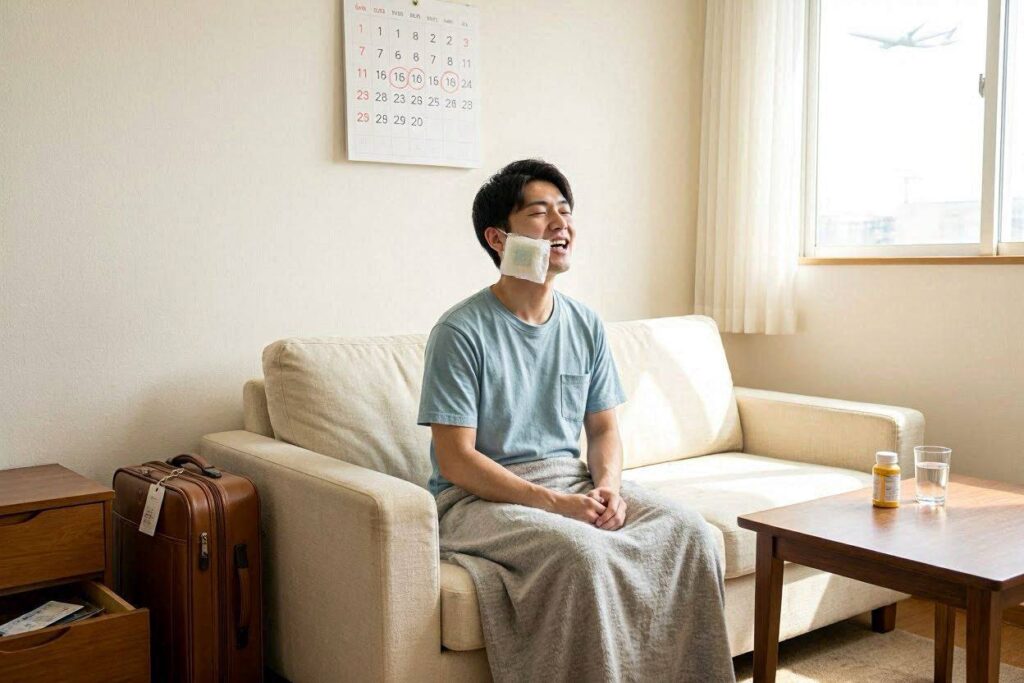
Beyond the specific concerns about pressure changes, flying shortly after surgery presents practical challenges. The first 24 to 48 hours after implant surgery are when swelling, discomfort, and bleeding are most significant. Managing these in the confined space of an aircraft, with limited access to ice packs, comfortable positioning, and the ability to rest properly, is difficult.
Post-operative complications, including excessive bleeding, severe pain, or infection, are most likely to occur in the first few days after surgery. Being in flight or at a destination far from your surgeon when a complication occurs complicates management. Access to emergency dental care may be limited, particularly if you are traveling internationally.
The physical demands of travel, including navigating airports, managing luggage, and sitting in an upright position for extended periods, can increase swelling, discomfort, and bleeding. Rest is an important component of post-surgical recovery, and travel is not restful.
Recommended Waiting Periods by Procedure Type
The appropriate waiting period before flying depends on the specific surgical procedure performed and the patient’s individual healing response.
Routine Single Implant Placement
For straightforward implant placement in the lower jaw or anterior upper jaw, without bone grafting or sinus involvement, the recommended waiting period before flying is 24 to 48 hours.
The primary reason for this waiting period is not concern about pressure effects on the implant itself but rather management of the immediate post-operative recovery. During the first 24 to 48 hours, you need access to ice packs for swelling management, the ability to rest with your head elevated, and proximity to your surgeon if complications develop.
After 48 hours, swelling has typically peaked and begun to subside. Bleeding has stopped. Pain is manageable with oral medications. You are better able to tolerate the physical demands of travel and are past the period of highest risk for immediate post-operative complications.
If you must fly within 48 hours of routine implant placement, it is generally safe to do so from a medical perspective, provided you take appropriate precautions. The implant is mechanically stable in the bone, and cabin pressure changes will not affect it directly.
Implant Placement With Bone Grafting
When bone grafting is performed concurrently with implant placement, the recommended waiting period extends to three to five days. The additional surgical trauma of grafting, the need to protect the graft material, and the greater swelling and discomfort justify a longer recovery before flying.
The graft material placed around the implant requires protection during the initial healing phase. Pressure changes will not directly affect the graft, but the overall recovery demands more rest and care than implant placement alone.
If a membrane was placed over the graft, protecting the surgical site is particularly important. Activities that increase blood pressure, including the physical exertion of travel, can increase swelling and potentially compromise the graft site.
Sinus Lift Procedures
Sinus lift surgery, whether performed with simultaneous implant placement or as a separate preparatory procedure, requires the most conservative approach to flying. The recommended waiting period is one to two weeks, with some surgeons recommending two full weeks before air travel.
The sinus membrane has been elevated and bone graft material placed beneath it. The membrane is healing and is vulnerable to pressure changes during the first week. Flying during this period risks barotrauma that could disrupt the healing membrane, compromise the graft, or create a communication between the sinus and the oral cavity.
During the waiting period, in addition to avoiding air travel, you must avoid activities that create pressure changes in the sinus. Do not blow your nose. If you must sneeze, do so with your mouth open. Do not use straws. Do not smoke. These precautions prevent pressure buildup in the sinus.
After two weeks, the sinus membrane has typically healed sufficiently to tolerate normal pressure changes. Your surgeon may clear you for air travel at your follow-up appointment based on your individual healing progress.
Multiple Implant Surgery
When multiple implants are placed during the same surgical session, particularly if both sides of the mouth are involved, the recommended waiting period is three to five days. The greater surgical trauma, more extensive swelling, and increased post-operative care requirements justify a longer recovery before travel.
Full-arch implant procedures, such as All-on-4, involve significant surgery with multiple implants, often combined with extractions and bone grafting. The recommended waiting period is typically one to two weeks, depending on the extent of the procedure and the patient’s recovery progress.
Summary of Recommended Waiting Periods
| Procedure Type | Minimum Waiting Period | Recommended Waiting Period |
|---|---|---|
| Single implant, no graft | 24 hours | 48 hours |
| Single implant with bone graft | 48 hours | 3-5 days |
| Multiple implants | 48 hours | 3-5 days |
| Sinus lift with or without implant | 7 days | 14 days |
| Full-arch restoration | 5 days | 7-14 days |
These recommendations assume uneventful surgery and normal recovery. Your surgeon may recommend a longer or shorter waiting period based on your individual procedure and healing response.
Precautions for Flying After Implant Surgery
When you do fly after implant surgery, certain precautions make the experience safer and more comfortable.
Before the Flight
Schedule a post-operative check with your surgeon before traveling, particularly if you are flying home after traveling for implant treatment. The surgeon can confirm that healing is progressing normally, remove or adjust sutures if needed, and clear you for travel.
Fill any prescriptions before traveling. You should have adequate pain medication, antibiotics if prescribed, and any other recommended supplies for the duration of your trip. Do not assume you can obtain these at your destination.
Pack a post-operative care kit in your carry-on luggage. Include sterile gauze pads, pain medication, any prescribed mouth rinse, lip balm, a small bottle of water, and your surgeon’s contact information. If you are still applying ice, gel packs may not be permitted through security if frozen. Instant cold packs that activate when squeezed are a travel-friendly alternative.
Arrange for assistance with luggage and navigating the airport if possible. Lifting heavy bags and rushing through terminals increases blood pressure and can promote bleeding and swelling.
During the Flight
Stay hydrated. Aircraft cabin air is very dry, and dehydration impairs healing and increases discomfort. Drink water regularly throughout the flight. Avoid alcohol and caffeine, which are dehydrating.
Continue with prescribed medications on schedule, accounting for time zone changes if applicable. Set reminders on your phone to ensure you do not miss doses during travel.
Avoid chewing on the surgical side, even if soft food is served. Stick to cool or room-temperature soft foods. Do not use straws for any beverages, as the suction can disrupt healing.
If you experience sinus pressure or pain during ascent or descent, particularly after sinus lift surgery, try to equalize pressure by swallowing repeatedly, yawning widely, or performing the Valsalva maneuver if your surgeon has approved this. Do not hold your nose and blow forcefully, as this can force air into the surgical site.
Change gauze if needed in the aircraft lavatory, bringing your own supplies. Practice good hand hygiene before and after touching the surgical site.
After Arrival
Rest after your flight. Travel is fatiguing even without recent surgery, and your body needs energy for healing. Avoid planning activities immediately after arrival.
Know where to find emergency dental care at your destination. If you are traveling domestically, your home surgeon may be able to provide phone guidance or recommend a local colleague. If you are traveling internationally, identify a reputable dental clinic before you travel, in case the need arises.
Monitor the surgical site for signs of complications. Increased swelling, pain, bleeding, or discharge after travel warrants professional evaluation, not a wait-and-see approach.
Special Considerations for Dental Tourism
Patients who travel specifically for implant treatment, often to countries where costs are lower, face unique challenges that require additional planning.
Planning Your Travel Around Treatment
Dental tourism for implant treatment requires careful coordination of travel with the treatment timeline. Implant treatment is not a single-appointment procedure. It involves multiple phases over months, and some of these phases require recovery time before travel.
For the surgical phase, plan to remain at the treatment location for the recommended recovery period plus a buffer day or two. Do not schedule your return flight for the day after surgery. Give yourself adequate time to recover and to address any immediate complications before traveling.
If your treatment involves sinus lift surgery, plan for an extended stay of at least one to two weeks. The cost savings of dental tourism should be weighed against the extended accommodation costs and time away from home.
Coordinating Follow-Up Care
Discuss the plan for follow-up care with your treating clinician before traveling. Some follow-up can be managed remotely through photographs, video calls, and communication with a local dentist. Other aspects, including suture removal and management of complications, require in-person care.
Identify a dentist in your home area who is willing to provide follow-up care for implant treatment performed elsewhere. Not all dentists are comfortable managing complications from treatment they did not provide. Establish this relationship before you travel, not when a complication arises.
Obtain copies of your records, including pre-operative imaging, surgical notes, implant system information, and post-operative instructions. Bring these records with you and provide them to any clinician who will be involved in your follow-up care.
Managing Complications from a Distance
If a complication develops after you have returned home, your treating clinician in the treatment location may be limited in what they can do. They can provide advice by phone or video call, but they cannot provide hands-on care.
Your local dentist or a local specialist may need to manage the complication. This can be challenging if the implant system used is not one they typically work with, or if they are unfamiliar with the specific surgical technique. The cost of managing complications at home should be factored into the overall cost calculus of dental tourism.
Some dental tourism providers have partnerships with dentists in patients’ home countries for follow-up care. Others offer warranties that cover complication management. Understand these arrangements before committing to treatment.
When to Delay Planned Travel
If you have a trip scheduled and then need implant surgery, the timing of the surgery relative to your travel requires consideration.
Emergency vs. Elective Implant Surgery
If the implant surgery is elective, meaning the tooth is already missing and there is no urgency, it is generally advisable to schedule the surgery for after your trip, or to schedule your trip for after the recovery period. Elective surgery should not compromise important travel plans, and travel should not compromise the recovery from elective surgery.
If the surgery is urgent, such as immediate implant placement after a tooth extraction that cannot be delayed, you may need to adjust your travel plans to allow adequate recovery time. Discuss the situation with your surgeon, who can help you weigh the risks and make an informed decision.
Adjusting Travel Plans After Surgery
If you have already had surgery and have a trip scheduled within the recommended waiting period, discuss the situation with your surgeon. They can assess your individual healing progress and provide guidance on whether travel is safe.
You may need to postpone your trip by a few days to a week, depending on the procedure and your recovery. While disappointing, this is preferable to traveling while compromised and risking complications away from your surgeon.
If postponing is not possible, follow all precautions for flying after surgery meticulously. Have a plan for managing complications at your destination. Stay in communication with your surgeon during your trip.
Conclusion
The recommended waiting period before flying after dental implant surgery ranges from 24 to 48 hours for routine single implant placement without grafting, to three to five days for implant placement with bone grafting or multiple implants, to one to two full weeks after sinus lift procedures due to the risk of barotrauma to the healing sinus membrane during cabin pressure changes. The primary concerns are not that pressure changes will affect the implant itself, which is mechanically stable in bone, but rather managing post-operative swelling, discomfort, and bleeding in the travel environment, avoiding barotrauma after sinus surgery, and having access to professional care if complications develop. Precautions for flying include staying hydrated, continuing medications on schedule, avoiding straws and chewing on the surgical side, carrying a post-operative care kit in carry-on luggage, and knowing how to access emergency dental care at the destination. Patients traveling for dental tourism should plan extended stays to allow adequate recovery before return travel and should establish follow-up care arrangements with a local provider before leaving the treatment location.
Frequently Asked Questions
Can I fly the same day as implant surgery?
Flying the same day as implant surgery is not recommended. You will be recovering from anesthesia, managing bleeding and swelling, and need access to ice packs and the ability to rest. The first 24 hours are the most critical for protecting the surgical site. Wait at least 24 hours, and preferably 48 hours, before flying.
Will cabin pressure cause pain in my implant?
For implants placed in the lower jaw or front upper jaw, away from the sinuses, cabin pressure changes do not cause pain because the implant is in bone, not in a gas-filled space. For implants near the maxillary sinus, particularly if sinus lift was performed, pressure changes can cause discomfort if the sinus membrane is still healing.
Can I fly after sinus lift surgery?
Most surgeons recommend waiting one to two weeks before flying after sinus lift surgery. The sinus membrane is healing and vulnerable to pressure changes during this period. Flying too soon risks barotrauma that could disrupt the membrane and compromise the graft.
What if I have a complication while traveling?
If you experience excessive bleeding, severe pain, signs of infection, or any concerning symptoms while traveling, seek local dental care. Your travel insurance may cover emergency dental treatment. Contact your home surgeon for guidance. In a foreign country, your hotel concierge or the local embassy or consulate may be able to recommend reputable dental providers.
Should I take pain medication before flying?
If you are still requiring pain medication, you are probably not ready to fly. Pain medication can mask symptoms that would otherwise alert you to problems. If you are past the acute pain phase but want medication for comfort during the flight, over-the-counter options are appropriate. Follow medication instructions and do not combine medications with alcohol.
Can I fly with dissolvable stitches?
Yes. Dissolvable sutures are not affected by flying. They will dissolve on their normal timeline regardless of air travel. The presence of sutures does not create any additional flying restrictions beyond those related to the underlying surgical procedure.
How soon can I fly internationally after implant surgery?
The same waiting periods apply to international and domestic flights. However, international travel involves longer flight times, greater logistical complexity, and potentially more limited access to follow-up care. Consider extending the recommended waiting period for international travel, particularly after complex procedures or if traveling to regions with limited dental care infrastructure.
Does travel insurance cover complications from implant surgery?
Standard travel insurance may exclude pre-existing conditions and elective procedures. If you are traveling for implant surgery, specialized medical tourism insurance may provide coverage for complications. Review policy terms carefully. Understand what is covered, what is excluded, and how to access care if needed.
Additional Resource
International Air Transport Association: Medical Guidelines for Air Travel
https://www.iata.org/en/programs/passenger/medical/