Will Braces Improve My Jawline?
You look in the mirror and notice the shape of your jaw. Maybe it seems weak, recessed, or asymmetrical. Perhaps your chin appears too far back, or your profile does not have the definition you would like. You have heard that braces can improve a jawline, and you wonder whether orthodontic treatment might give your face the structure you desire. The question connects dental health with facial aesthetics, and the answer is not as simple as yes or no.
Braces primarily move teeth within the existing jawbone. Whether they change the jawline itself depends on the specific problems being treated, the type of treatment, the patient’s age, and the underlying skeletal structure. In some cases, orthodontic treatment can produce noticeable improvements in jawline appearance. In others, braces alone will not alter the jaw contour, and surgical intervention may be the only way to achieve significant skeletal change. This guide explains the relationship between braces and jawline aesthetics with clarity and honesty, helping you understand what orthodontics can and cannot do for your facial profile.
Understanding the Jawline
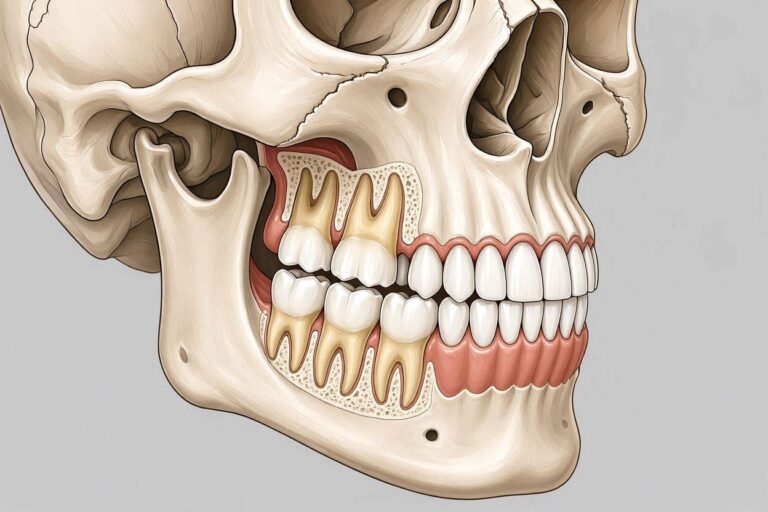
The jawline is the contour of the lower border of the mandible, the lower jawbone, as seen from the front and from the side. It extends from the chin to the angle of the jaw near the ear. A well-defined jawline is often considered an attractive feature in both men and women, though beauty standards vary across cultures and time periods.
What Determines Jawline Shape
The shape of your jawline is determined primarily by the underlying bone structure. The size, shape, and position of your mandible are largely genetic. The soft tissues, the muscles of mastication, the amount of subcutaneous fat, and the skin elasticity, also contribute to the appearance of the jawline.
The position of the teeth and their relationship to each other affect how the lips and cheeks are supported, which in turn influences the profile and the appearance of the lower face. This is where orthodontics enters the picture.
Dental vs. Skeletal Issues
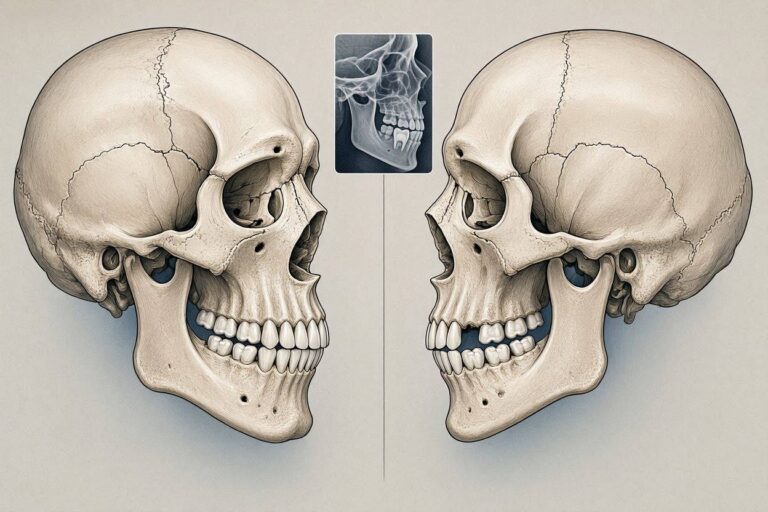
A critical distinction in orthodontics is between dental problems and skeletal problems. A dental malocclusion involves teeth that are crowded, spaced, or misaligned within otherwise normally positioned jaws. A skeletal malocclusion involves a discrepancy in the size, shape, or position of the upper or lower jaw relative to each other or to the skull base.
Braces are designed primarily to correct dental malocclusions. They move teeth through the bone. They can tip teeth forward or backward and can guide eruption. They cannot, in most cases, move the jawbone itself. When the jawline issue is skeletal, braces alone may have limited ability to change it.
How Braces Can Affect Jawline Appearance
Despite primarily moving teeth, braces can produce changes in facial appearance that affect how the jawline is perceived. These changes range from subtle to moderately noticeable.
Correction of Overbite and Profile Improvement
An overbite, technically called an increased overjet or Class II malocclusion, occurs when the upper front teeth protrude significantly beyond the lower front teeth. This often gives the appearance of a weak or receding chin because the lower lip and chin seem to fall behind the upper lip.
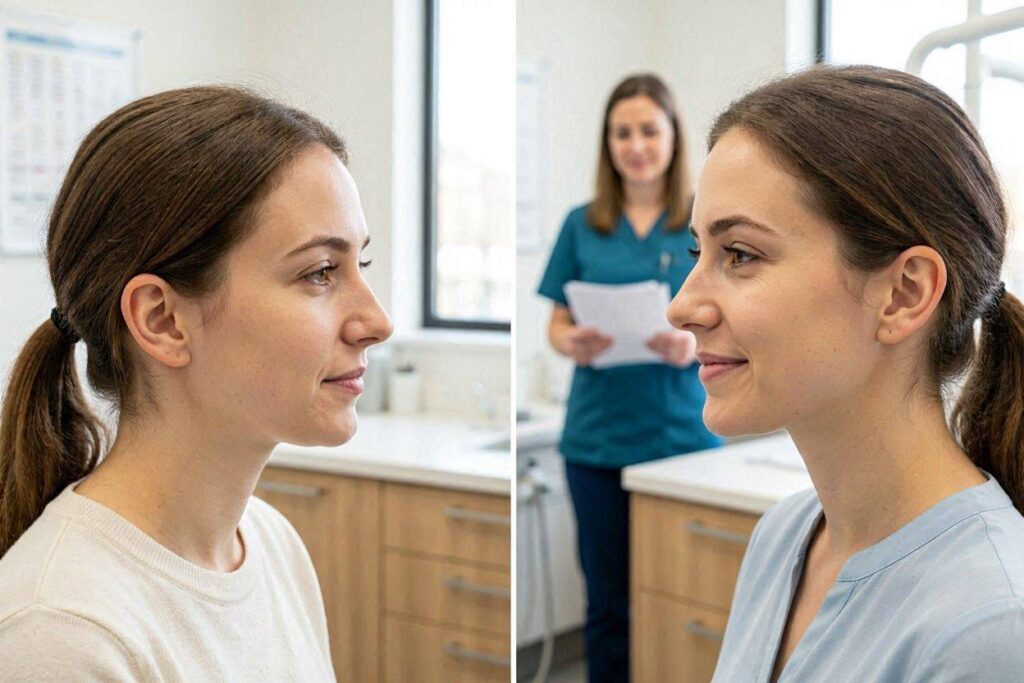
Braces can retract the protruding upper teeth, bringing them back into a more normal relationship with the lower teeth. As the upper teeth move back, the upper lip follows, reducing the discrepancy between the upper and lower lips. The chin does not actually change position, but because the upper lip is less prominent, the chin appears more forward. The profile improves, and the jawline looks stronger relative to the rest of the face.
This improvement is real but optical. The braces have not moved the mandible. They have reduced the prominence of the upper teeth and lip, which makes the chin look more balanced. For patients with a dental overjet rather than a skeletal jaw discrepancy, this change can be quite satisfying.
Correction of Underbite and Lower Face Balance
An underbite, a Class III malocclusion, occurs when the lower teeth sit in front of the upper teeth. This can create an appearance of a prominent, jutting jaw. In growing children and adolescents, orthopedic appliances such as reverse-pull headgear or a chin cup can modify the growth direction of the mandible, achieving genuine skeletal change.
In adults, braces can sometimes camouflage a mild underbite by tipping the lower teeth back and the upper teeth forward. This does not change the jaw position, but it can improve the relationship of the lips and create a more balanced profile. For significant skeletal underbites in adults, jaw surgery combined with braces is typically required to achieve meaningful jawline change.
Correction of Open Bite and Facial Height
An anterior open bite, where the front teeth do not meet when the back teeth are together, can be associated with increased lower facial height. The face may appear long, and the lips may not close comfortably at rest. Closing an open bite with braces, sometimes combined with extractions or temporary anchorage devices, can allow the mandible to rotate upward and forward slightly.
This autorotation can reduce lower facial height and improve chin projection. The jawline may appear more defined because the soft tissues are positioned differently. The change is usually subtle but can contribute to a more balanced facial appearance.
Arch Development and Cheek Support
Braces that expand the dental arches, particularly in patients with narrow arches and crowding, can provide better support for the cheeks and lips. The corners of the mouth may appear more supported, and the smile may widen. This change affects the middle and lower face, creating a fuller, more youthful appearance.
The jawline itself is not changed by arch expansion, but the overall balance of the lower face can improve, making the jawline appear more harmonious with the rest of the facial features. This is another optical improvement rather than a structural one.
Impact of Extractions on Profile
Some orthodontic treatment plans involve the extraction of premolars to create space for aligning crowded teeth or retracting protruding incisors. The decision to extract teeth can affect the profile and, by extension, the appearance of the jawline.
When extractions are performed and the anterior teeth are retracted significantly, the lips may flatten slightly. In a patient with protrusive lips, this flattening can improve facial balance. In a patient whose lips are already well-supported or slightly flat, excessive retraction can create an undesirable sunken appearance around the mouth, which may make the chin and jawline appear more prominent in an unbalanced way.
Skilled orthodontists carefully evaluate the facial profile before recommending extractions. Modern orthodontics emphasizes preserving lip support whenever possible, using alternative space-creation methods such as interproximal reduction or arch expansion when appropriate.
Cases Where Braces Alone Will Not Change the Jawline
In many situations, braces cannot alter the jawline because the problem is fundamentally skeletal rather than dental. Understanding these limitations prevents unrealistic expectations.
Skeletal Class II Malocclusion
When the overbite is due not to protruding upper teeth but to a mandible that is significantly smaller or more posteriorly positioned than the maxilla, braces alone cannot move the jaw forward. Retracting the upper teeth will not correct the underlying skeletal discrepancy. The patient may still have a weak chin and a convex profile even after orthodontic treatment.
For these patients, the definitive treatment is orthognathic surgery. The mandible is surgically advanced, moving the chin and the entire lower jaw forward. Braces are placed before and after surgery to align the teeth and coordinate the arches, but the skeletal change comes from the surgery, not from the braces.
Skeletal Class III Malocclusion
A true skeletal underbite involves a mandible that is too large or a maxilla that is too small relative to the mandible. Braces alone cannot reduce the size of the mandible or advance the maxilla. Camouflage treatment can improve the dental relationship, but the underlying jaw discrepancy remains visible in the profile.
Surgical correction involves either setting the mandible back, advancing the maxilla, or a combination of both. The result is a dramatic improvement in the jawline and facial profile, but the braces are an adjunct to surgery, not the primary agent of change.
Vertical Maxillary Excess
Some patients have a gummy smile and excessive display of the upper gums, often associated with a long lower face and a steep mandibular plane angle. The jawline may appear weak because the mandible is rotated downward and backward. Braces alone cannot correct this vertical skeletal excess.
Surgery to impact the maxilla, moving it upward, allows the mandible to autorotate forward and upward, improving chin projection and jawline definition. This is combined with orthodontic treatment but depends on surgical intervention for the skeletal change.
Severe Asymmetry
Facial asymmetry caused by unequal growth of the mandible or condyles cannot be corrected with braces alone. Mild dental asymmetries can be improved, but when the jawbone itself is asymmetric, surgery is required to reposition the bones and create symmetry.
The Role of Age in Jawline Changes
The age of the patient significantly affects whether orthodontic treatment can influence jaw growth and, consequently, the jawline.
Growing Children and Adolescents
During growth, the jaws are still developing. Orthopedic appliances, such as functional appliances, headgear, and facemasks, can modify the direction and amount of jaw growth. A growing child with a retrusive mandible can be treated with a functional appliance that encourages forward growth of the lower jaw. This can produce genuine skeletal change that improves the jawline permanently.
The window for this growth modification is limited. Once growth is complete, the opportunity for orthopedic change closes. This is why early orthodontic evaluation, around age seven, is recommended. Identifying skeletal discrepancies early allows intervention during the growth period.
Adults
In adults, growth is complete. The sutures of the skull and jaw are fused. Braces move teeth through the alveolar bone but do not change the position of the basal bone of the mandible or maxilla. The jawline, determined by the basal bone, will not be altered by braces alone.
Adult patients seeking significant jawline changes must consider surgical options. Orthodontics can prepare the teeth for surgery, and the surgery itself can produce dramatic improvements, but braces alone will be limited to dental changes.
Orthodontic Appliances and Jawline Changes
Different orthodontic approaches have different effects on facial aesthetics. Understanding these differences helps patients make informed decisions.
Traditional Braces
Traditional brackets and wires move teeth effectively but do not change jaw position in adults. The facial changes produced by traditional braces are limited to the dental and soft tissue effects described above.
Clear Aligners
Clear aligners, like Invisalign, have similar capabilities and limitations to traditional braces. They move teeth, not jaws. Claims that aligners can reshape the jawline should be viewed skeptically. Aligners can produce the same dental corrections as braces, with similar effects on profile and lip support, but they do not change the underlying skeletal structure.
Functional Appliances
In growing patients, functional appliances such as the Herbst, Twin Block, or Bionator can encourage forward mandibular growth. These appliances posture the mandible forward during function, stimulating growth at the condyle. The jawline improvement from successful functional appliance treatment can be significant and permanent because it represents a change in the jaw position, not just the teeth.
Temporary Anchorage Devices
Temporary anchorage devices, or TADs, are small screws placed in the bone to provide anchorage for tooth movement. In some cases, TADs can achieve tooth movements that were previously impossible without surgery, such as intruding over-erupted molars or retracting the entire dental arch. These movements can affect the profile and the relationship of the lips to the chin, but they do not change the position of the jawbone itself.
The Value of a Professional Assessment
The only way to know whether braces will improve your specific jawline is to undergo a comprehensive orthodontic evaluation.
What the Orthodontist Evaluates
The orthodontist examines your facial profile, your smile, and the relationship of your jaws to each other and to your skull. They take X-rays, including a cephalometric radiograph, which allows precise measurement of the skeletal and dental relationships. They may take photographs and digital scans of your teeth.
From this information, the orthodontist determines whether your malocclusion is primarily dental or skeletal, whether growth remains, and what treatment options are appropriate. They can simulate the expected facial changes and show you what is realistically achievable.
Questions to Ask
During your consultation, ask specifically about how treatment will affect your facial appearance and jawline. Ask whether your concern is dental or skeletal. If it is skeletal, ask whether braces alone will address it or whether surgery is the appropriate recommendation. Ask to see before-and-after photographs of similar cases the orthodontist has treated.
An ethical orthodontist will give you an honest assessment, not overpromise results that are not achievable with braces alone. If your goals exceed what orthodontics can deliver, they should explain why and discuss alternative options.
Alternative and Complementary Approaches to Jawline Enhancement
For patients whose jawline concerns are skeletal or related to soft tissue rather than tooth position, several approaches exist beyond orthodontics.
Orthognathic Surgery
For significant skeletal discrepancies, orthognathic surgery combined with orthodontics provides the most dramatic and definitive improvement in jawline appearance. The surgery repositions the jaws, changing the underlying bone structure. The recovery is significant, and the process takes longer than braces alone, but for appropriate candidates, the results can be life-changing.
Genioplasty
A genioplasty is a surgical procedure that moves the chin independently of the rest of the mandible. It can advance a recessed chin, reduce a prominent chin, or correct chin asymmetry. The procedure does not change the teeth or the bite, but it can dramatically improve the jawline profile. It is sometimes performed in conjunction with orthognathic surgery or as a standalone cosmetic procedure.
Dermal Fillers and Facial Aesthetics
Non-surgical approaches to jawline enhancement include dermal fillers injected along the border of the mandible to create a more defined contour. Fillers can add volume to a weak chin or sharpen the angle of the jaw. These treatments are temporary, lasting months to a couple of years, and they do not change the underlying bone or teeth.
Neuromodulators such as Botox can be injected into the masseter muscles to reduce their bulk. Patients with a wide lower face due to hypertrophic masseters may see a slimming effect that improves jawline aesthetics. This treatment does not affect the teeth or bite.
Weight Management
Submental fat, a double chin, can obscure the jawline regardless of the underlying bone structure. Weight loss can reduce this fat and reveal the jaw contour. For patients with good skeletal structure and aligned teeth, weight management may be the most direct path to a more defined jawline.
Conclusion
Braces can improve the appearance of the jawline when the issue is dental, such as protruding upper teeth that make the chin appear weak, because retracting those teeth creates a more balanced profile. However, braces alone cannot alter the position or shape of the jawbone itself, meaning that skeletal discrepancies, a truly recessed mandible, a severe underbite, or facial asymmetry, require orthognathic surgery combined with orthodontics for meaningful jawline change. A comprehensive orthodontic evaluation with cephalometric analysis is essential to determine whether your jawline concern is dental, skeletal, or soft tissue-related, and which treatment approach offers realistic hope of achieving your aesthetic goals.
FAQ
Can braces give me a more defined jawline?
If your weak jawline appearance is caused by protruding upper teeth that make your chin look recessed, braces that retract those teeth can improve your profile and make your jawline appear more defined. If your chin is actually recessed due to a small mandible, braces alone will not move it forward.
Will Invisalign change my jawline?
Invisalign has the same capacity to change jawline appearance as traditional braces. It can improve dental protrusion and create a more balanced profile, but it cannot change the position of the jawbone. Claims that Invisalign reshapes the jawline should be evaluated critically.
At what age can braces still improve my jawline?
In growing children and adolescents, orthopedic appliances combined with braces can modify jaw growth and produce genuine skeletal changes that improve the jawline. In adults, growth is complete, and the jawbone position cannot be changed by braces alone.
Do extractions for braces ruin your jawline?
When extractions are planned carefully and executed well, they do not ruin the jawline. Excessive retraction of anterior teeth can flatten the lips and create an unbalanced profile. A skilled orthodontist considers the facial profile when planning extractions and avoids over-retraction.
Can braces fix jaw asymmetry?
Mild dental asymmetries can be improved with braces. True skeletal asymmetry, where one side of the mandible is longer or positioned differently than the other, cannot be corrected without surgery.
How long does it take for braces to improve your profile?
Changes in lip position and profile occur gradually throughout treatment. Significant profile improvement from retraction of protruding incisors may become noticeable after several months of treatment. The most noticeable changes typically occur during the space closure phase of treatment.
What is the difference between a dental and a skeletal overbite?
A dental overbite involves teeth that are positioned too far forward on a normally positioned jaw. A skeletal overbite involves a mandible that is too small or too far back relative to the maxilla. Dental overbites respond well to braces. Skeletal overbites may require surgery for complete correction.
Can I avoid jaw surgery and just get braces?
For mild to moderate skeletal discrepancies, camouflage orthodontic treatment with braces can produce an acceptable result without surgery. For significant skeletal problems, camouflage has limits, and attempting to avoid surgery may result in compromised aesthetics or stability. Your orthodontist can advise whether your specific case is amenable to camouflage treatment.
Additional Resource
For authoritative information about orthodontic treatment and its effects on facial aesthetics, visit the American Association of Orthodontists at aaoinfo.org. The AAO provides patient education resources and a directory of board-certified orthodontists who can evaluate your specific concerns.