Why Do People Get Dental Implants?
A patient stares at the gap where a tooth used to be. Another struggles with a loose denture that clicks when they speak. A third faces the extraction of a cracked tooth and wants to understand the replacement options. Each of these individuals shares a common destination: the dental implant consultation. But the paths that lead people to choose implants are as varied as the patients themselves.
This guide explores the diverse reasons why people choose dental implants. We examine the functional, esthetic, psychological, and health-driven motivations. We look at how different life circumstances and dental conditions lead to the same treatment decision. Understanding these motivations helps patients clarify their own goals and helps clinicians communicate the value of implant treatment effectively.
The Fundamental Human Need: A Complete, Functional Smile
Behind every implant decision lies a primal human drive: the desire for a complete mouth. Teeth serve essential biological functions, and their loss disrupts fundamental aspects of daily life.
The Functional Imperative
Humans use their teeth to eat. The act of chewing, or mastication, is the first step in digestion. Missing teeth impair this function. A person missing molars cannot grind food efficiently. They swallow larger particles, which can contribute to digestive discomfort. They avoid certain foods altogether: nuts, raw vegetables, steak, fresh fruit. Their diet narrows, sometimes to the point of nutritional deficiency.
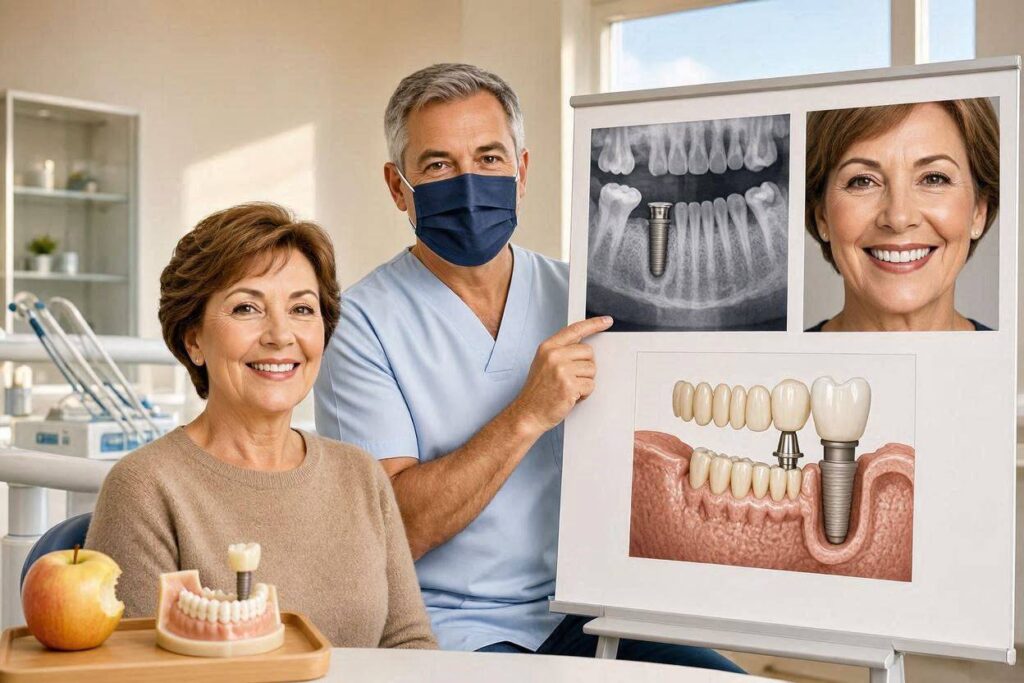
Dental implants restore masticatory function to a level approaching that of natural teeth. A patient who receives implants can often return to a varied, nutritious diet. This functional restoration is one of the most powerful motivators for choosing implants.
The Social and Psychological Dimension
Humans are social creatures. The face, and particularly the mouth, is central to communication and social interaction. Missing teeth, especially anterior teeth, carry a social stigma. They can signal poverty, neglect, or poor health. People with visible missing teeth may smile with closed lips, cover their mouths when laughing, and avoid social situations.
Dental implants restore the visible dentition. The patient can smile without self-consciousness. They can laugh freely. They can engage in social and professional interactions without the background anxiety of whether their missing teeth are noticeable. This psychological liberation is often cited by patients as the single greatest benefit of their implant treatment.
The Speech Consideration
Teeth are articulators. The tongue presses against them to form certain sounds. Missing teeth, particularly anterior teeth, create speech difficulties. Dentures, if they move, cause clicking and slurring. Implants, being fixed and stable, provide a platform for clear, confident speech.
Common Clinical Pathways Leading to Dental Implants
The decision for an implant is almost always preceded by a dental problem that necessitates tooth replacement.
The Unrestorable Tooth
This is the most common starting point. A tooth has deep decay extending below the gum line. A root fracture has occurred. A previous root canal has failed with a large periapical lesion. A tooth has severe periodontal bone loss and is mobile. The dentist or endodontist delivers the news: this tooth cannot be saved. Extraction is necessary. The conversation then shifts immediately to replacement, and an implant is presented as the optimal choice.
The Congenitally Missing Tooth
Some people never develop certain permanent teeth. Maxillary lateral incisors and mandibular second premolars are the most commonly missing teeth. A young adult who has been maintaining a primary tooth finally faces its loss, or an orthodontist has created space for a permanent replacement that never existed. The implant represents the first time that space will have a permanent tooth.
The Failing Dentition
Years of neglect, periodontal disease, or rampant decay have destroyed multiple teeth. The patient faces the loss of all or most of their teeth. The choice is between complete dentures and implant-supported solutions. For many, the prospect of removable dentures, with their associations of aging and decline, is unacceptable. Implants offer a fixed, stable alternative that preserves bone and facial structure.
The Traumatic Tooth Loss
An accident, a sports injury, or an assault results in the sudden loss of a healthy tooth. The patient, often young and otherwise healthy, wants the best possible replacement immediately. An implant is the ideal solution because it does not require damaging adjacent healthy teeth for a bridge.
Motivation Profiles: Who Chooses Implants and Why
Different demographic groups often express different primary motivations.
The Young Professional
A 28-year-old marketing executive loses a maxillary first molar. Their primary concerns are esthetics, the ability to eat at business lunches, and the permanence of the solution. They do not want a removable appliance. They do not want to cut down adjacent healthy teeth for a bridge. They want a solution that will last for decades. An implant is the clear choice.
The Retiree with Failing Dentition
A 70-year-old retiree has worn partial dentures for years. The remaining teeth are failing. They want to enjoy meals with family. They want to taste food, not have their palate covered by a denture. They want to smile in photographs with grandchildren. Implant-supported fixed prostheses or overdentures provide the stability and comfort they seek.
The Athlete with Traumatic Loss
A 22-year-old soccer player loses a central incisor to an elbow during a match. The tooth is reimplanted but fails. The patient needs a replacement that can withstand an active lifestyle. An implant, with proper protection via a mouthguard, is the most durable and functional option.
The Denture Wearer Desperate for Stability
A 60-year-old has worn a lower complete denture for fifteen years. The ridge has resorbed. The denture floats. They cannot eat a salad or speak without the denture shifting. Adhesives are a daily frustration. Two implants to retain the denture transform their quality of life. This is one of the most profoundly grateful patient populations in implant dentistry.
The Health-Conscious Individual
Some patients choose implants based on an understanding of bone physiology. They know that extracting a tooth without replacement leads to bone loss. They want to preserve their jawbone and facial structure. The implant’s bone-preserving property is their primary motivation.
Comparative Motivations: Implants Versus Other Options
Understanding why patients choose implants over bridges or dentures clarifies their values.
The Aversion to Damaging Healthy Teeth
A traditional fixed bridge requires reducing the enamel of the adjacent teeth, which may be perfectly healthy. Many patients find this unacceptable. They reason that one damaged tooth should not require sacrificing two healthy ones. An implant, which is independent of adjacent teeth, aligns with this principle of conservation.
The Desire for Permanence
Bridges and dentures have finite lifespans. A bridge lasts ten to fifteen years on average before decay at the margins or abutment failure necessitates replacement. Dentures require relines and eventually replacement. An implant, while initially more expensive, has the potential to last a lifetime with proper care. Patients who think long-term often find the implant’s value proposition compelling.
The Rejection of Removable Appliances
The psychological resistance to a removable partial or complete denture is strong. Patients associate dentures with being old. They do not want something they take out at night. They do not want adhesive. They want teeth that feel like their own. Implants satisfy this desire for a fixed, permanent solution.
The Esthetic Standard
Modern implant-supported crowns, when executed well, are virtually indistinguishable from natural teeth. Bridges can also be esthetic, but they require the adjacent teeth to be crowned, altering the natural esthetics of those teeth. Removable partial dentures have visible clasps. Implants provide the most natural-looking result.
The Role of the Dental Team in Patient Motivation
Patients do not make implant decisions in a vacuum. The dental team shapes the decision.
Education and Case Presentation
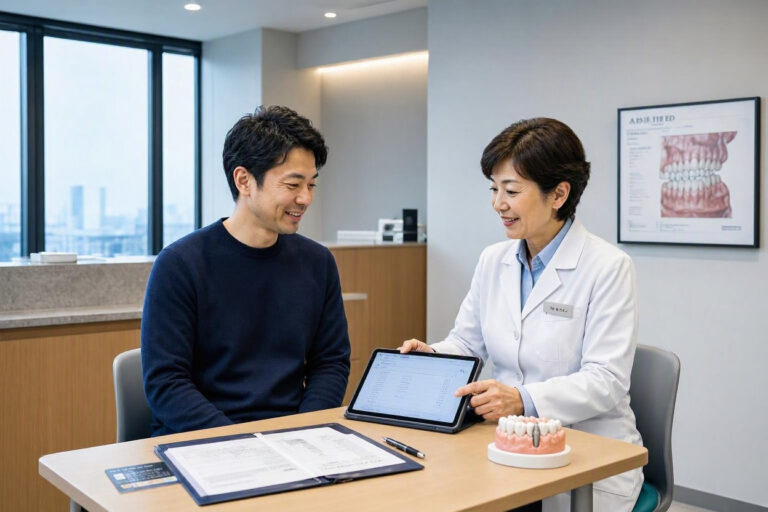
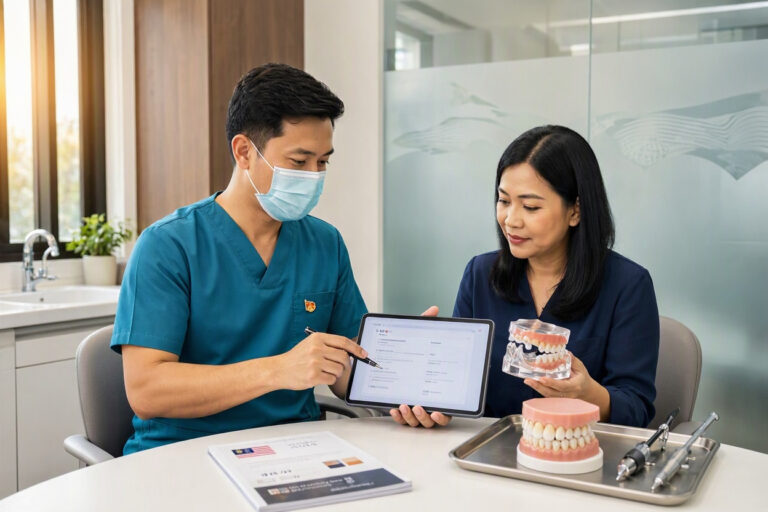
A skilled dentist or prosthodontist educates the patient about the consequences of tooth loss and the benefits of implant treatment. They show radiographs, intraoral photographs, and models. They explain the biological rationale for implants. This education often transforms a patient’s vague desire for a replacement into a specific, informed preference for an implant.
The Specialist Referral
The general dentist refers the patient to an oral surgeon or periodontist for the surgical phase. The specialist reinforces the benefits and addresses surgical anxieties. The team approach reassures the patient that multiple experts are invested in their outcome.
Shared Decision-Making
The best treatment decisions arise from a collaboration between the patient and the clinical team. The clinician presents the options with their risks, benefits, costs, and timelines. The patient shares their values, priorities, and constraints. Together, they arrive at the treatment plan.
When Patients Choose Not to Get Implants
Understanding rejection helps clarify motivations for acceptance.
Cost Barriers
The most common reason patients decline implants is financial. The upfront cost, even with financing, exceeds what many can afford. They choose a bridge or partial denture because it is covered, at least partially, by dental insurance.
Surgical Fear
Some patients have profound dental anxiety or fear of surgery. They cannot bring themselves to undergo implant placement, even with sedation options. A non-surgical bridge or removable appliance feels safer.
Time Commitment
Implant treatment takes months. Patients who need a tooth replaced immediately for an upcoming event, or who cannot take time for multiple appointments and a healing period, may opt for a faster alternative.
Medical Contraindications
Some patients are not candidates due to active chemotherapy, recent radiation to the jaws, or severe uncontrolled systemic disease. The implant is not an option regardless of motivation.
The Role of Marketing and Patient Awareness
In recent decades, public awareness of dental implants has grown substantially.
Direct-to-Consumer Marketing
Implant manufacturers and dental chains advertise implants directly to patients. “Teeth in a Day” and “All-on-Four” have entered the public vocabulary. This marketing raises awareness but also creates expectations that must be managed with clinical reality.
Social Media and Online Communities
Patients share their implant experiences on social media, YouTube, and patient forums. Before-and-after photographs circulate. Testimonials describe life-changing results. This peer-to-peer influence is a powerful motivator for prospective implant patients.
The Informed Consumer
Today’s patients often arrive at the consultation having already researched implants online. They know the terminology. They have seen videos of the procedure. Their questions are specific and informed. The consultation is a discussion between a knowledgeable consumer and a clinical expert, rather than a one-way recommendation.
Conclusion
People get dental implants to restore what tooth loss takes away: the ability to eat comfortably, speak clearly, smile confidently, and maintain the health of their jawbone. The motivations span functional necessity, esthetic desire, psychological well-being, and long-term health preservation. Whether replacing a single unrestorable tooth, stabilizing a loose denture, or reconstructing a full arch, patients choose implants because they offer the closest available approximation to natural teeth. The decision emerges from a blend of clinical recommendation, personal values, financial capacity, and the deep human need for a complete, functional, and attractive smile.
Frequently Asked Questions
What is the most common reason people get dental implants?
The most common reason is to replace a single tooth that cannot be saved due to fracture, deep decay, or failed root canal treatment, without damaging adjacent healthy teeth.
Why choose an implant over a bridge?
An implant does not require cutting down adjacent healthy teeth. It preserves bone in the extraction site. It is cleaned like a natural tooth, without special flossing under a pontic. It has the potential to last longer than a bridge.
Are dental implants only for older people?
No. Implants are for any adult with completed jaw growth, typically late teens and older. Young adults who lose teeth to trauma or congenital absence are excellent candidates.
Do people get implants just for cosmetic reasons?
While esthetics are a major component of patient satisfaction, implants are primarily placed to restore function and prevent the consequences of tooth loss. The esthetic benefit is inseparable from the functional restoration.
How has the perception of dental implants changed over time?
Implants were once considered experimental or exotic. They are now the standard of care for tooth replacement, widely accepted by both the profession and the public as the best long-term solution for missing teeth.
Additional Resources
American Academy of Implant Dentistry – Patient Information
https://www.aaid.com
Comprehensive patient education on the benefits of dental implants, the procedure, and what to expect from implant treatment.