How To Care For A New Dental Implant?
A new dental implant represents a significant investment in your oral health. The weeks and months following implant placement determine whether the implant integrates successfully with the bone and remains healthy for decades. Proper care during the initial healing phase and beyond is essential. This article provides a comprehensive, practical guide to caring for a new dental implant, from the immediate post-surgical period through long-term maintenance.
The First 24 to 48 Hours After Surgery
The immediate post-operative period sets the stage for uneventful healing.
Bleeding Management
Some oozing of blood is normal during the first 24 hours. The surgical site may appear pink-tinged or have small amounts of blood mixed with saliva. Bite gently on the gauze pad placed by your surgeon, maintaining pressure for 30 to 60 minutes. Replace gauze as needed. Do not chew on the gauze or change it too frequently, as this disrupts clot formation.
If bleeding seems excessive, bite on a moistened black tea bag wrapped in gauze. The tannic acid in tea promotes clotting. Avoid rinsing, spitting forcefully, or using a straw during the first 24 hours. These actions create suction or pressure that can dislodge the blood clot.
Pain Management
Take prescribed or recommended pain medication before the local anesthetic wears off completely. This preemptive approach manages discomfort more effectively than waiting for significant pain to develop. Over-the-counter non-steroidal anti-inflammatory drugs like ibuprofen, often alternated with acetaminophen, control most post-implant discomfort effectively.
Apply an ice pack to the outside of the face over the surgical area. Use the ice for 20 minutes on, then 20 minutes off, for the first 24 to 48 hours. The cold reduces swelling and provides analgesic effect. After 48 hours, switch to warm moist heat if swelling persists.
Diet Restrictions
Consume only cool or lukewarm liquids and soft foods for the first 24 to 48 hours. Appropriate choices include yogurt, smoothies without seeds, applesauce, pudding, lukewarm soup, mashed potatoes, and protein shakes. Avoid hot foods and beverages, which increase bleeding and swelling. Avoid crunchy, hard, or spicy foods that could irritate the surgical site. Do not chew on the implant side.
Activity Restrictions
Rest for the remainder of the day following surgery. Avoid strenuous exercise, heavy lifting, and bending over for 48 to 72 hours. These activities increase blood pressure and can provoke bleeding. Sleep with your head elevated on an extra pillow for the first few nights to reduce swelling.
The First Week of Healing
As initial healing progresses, care routines expand.
Oral Hygiene Modifications
Begin gentle rinsing with warm salt water 24 hours after surgery. Mix one-half teaspoon of salt in eight ounces of warm water. Rinse gently without vigorous swishing. Repeat after meals and before bed. If prescribed a chlorhexidine mouth rinse, use it as directed, typically twice daily. Avoid commercial mouthwashes containing alcohol, which irritate healing tissue.
Do not brush the surgical site directly for the first week. Continue brushing your other teeth carefully, avoiding the implant area. A soft-bristled toothbrush used gently prevents trauma to the healing tissue. Do not use an electric toothbrush near the surgical site during this period.
Suture Care
Sutures placed during surgery may be dissolvable or require removal. Dissolvable sutures typically disappear within seven to fourteen days. Non-dissolvable sutures will be removed at a follow-up appointment, usually at seven to ten days post-surgery.
Do not pull at sutures with your tongue or fingers. Some sutures may feel loose as healing progresses. This is normal. If a suture comes out prematurely and bleeding occurs, apply gentle pressure with gauze and contact your surgeon.
Diet Progression
Gradually advance to a soft diet as comfort allows. By day three or four, you may incorporate foods like scrambled eggs, soft pasta, well-cooked vegetables, soft fish, and ground meats. Continue to avoid chewing on the implant side. Avoid hard, crunchy, or chewy foods for at least two weeks.
The Osseointegration Period
The months following surgery, during which the implant fuses with the bone, require particular attention to habits and maintenance.
Understanding Osseointegration
Osseointegration is the biological process by which living bone forms a structural and functional connection with the implant surface. This process requires time, typically three to six months. During this period, the implant must remain undisturbed. Excessive force or micromotion disrupts the delicate cellular processes at the bone-implant interface.
Protecting the Implant from Loading
Avoid chewing on the implant side until your dentist clears you to do so. If a temporary restoration was placed, it is designed to be non-functional, meaning it should not contact opposing teeth during chewing. Adhere to any dietary restrictions provided by your dentist.
If you wear a removable provisional prosthesis such as a flipper or partial denture over the implant site, your dentist may instruct you to remove it as much as possible during healing. Pressure from a removable prosthesis can interfere with osseointegration.
Hygiene During Osseointegration
If a healing abutment protrudes through the gum, clean it gently with a soft toothbrush and the prescribed rinse. Do not use interdental brushes or water flossers directly on the healing abutment unless specifically instructed. The goal is to keep the area clean without disturbing the tissue attachment forming around the abutment.
If the implant is submerged beneath the gum, maintain excellent hygiene of adjacent teeth and the gum over the implant site. Gentle brushing of the gum surface is acceptable.
After the Final Crown is Delivered
Once the implant receives its permanent crown, care protocols shift to long-term maintenance.
Initial Adjustment Period
The new crown may feel strange initially. The sensation of the crown contacting opposing teeth differs from a natural tooth. This is normal and resolves as you acclimate. Report any persistent discomfort, high spots in the bite, or pressure sensation to your restorative dentist for adjustment.
Daily Home Care Routine
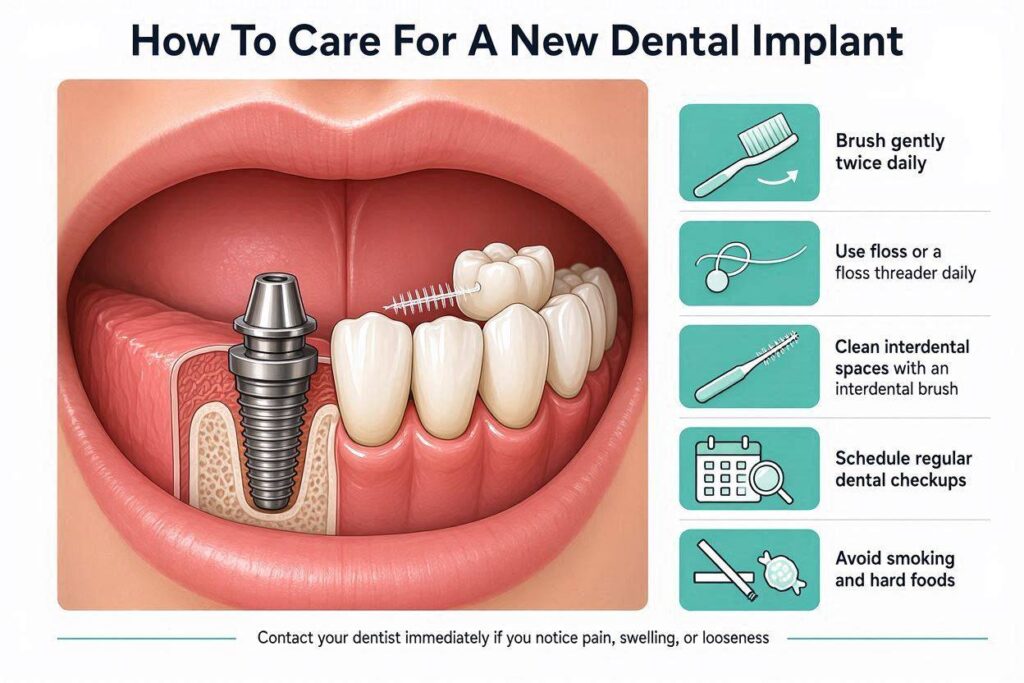
Brush the implant crown as you would a natural tooth, using a soft-bristled toothbrush and non-abrasive toothpaste. Avoid abrasive whitening toothpastes that could scratch ceramic crown surfaces.
Floss around the implant crown daily. Use implant-specific floss, which has a stiff threader on one end and a thicker, softer cleaning section. Alternatively, use floss threaders or super floss. The goal is to clean beneath the crown where it meets the gum and abutment.
Interdental brushes of appropriate size clean the spaces between the implant crown and adjacent teeth effectively. Select a size that passes through the space with slight resistance. Do not force a brush that is too large.
Water flossers with non-metal tips provide additional plaque removal around implant restorations. Use a low to medium pressure setting. Direct the stream at the gum line and between teeth.
Professional Maintenance Visits
Schedule professional maintenance at intervals recommended by your dentist, typically every three to six months. These visits include examination of the implant and surrounding tissues, assessment of implant stability, probing of peri-implant sulcus depth, radiographic evaluation of bone levels, professional cleaning with implant-safe instruments, and evaluation of the occlusion and restoration integrity.
Instrumentation for Implant Cleaning
Professional cleaning of implants requires special instruments. Metal scalers and ultrasonic tips used on natural teeth can scratch the implant abutment surface. Scratched surfaces accumulate plaque more readily and are harder to clean. Implant maintenance uses plastic, graphite, or titanium scalers designed specifically for implant surfaces. Confirm that your hygienist uses implant-safe instruments.
Habits That Harm Implants
Certain behaviors significantly increase implant complication risk.
Smoking and Vaping
Nicotine and tobacco products impair healing and increase peri-implantitis risk. The vasoconstrictive effects reduce blood flow. The immunologic effects impair the body’s defense against bacteria. Smokers experience significantly higher rates of implant failure and peri-implant bone loss. Cessation is the strongest positive action an implant patient can take.
Parafunctional Habits
Clenching and grinding, collectively called bruxism, place excessive forces on implants. The implant lacks the shock-absorbing periodontal ligament of natural teeth. Forces transmit directly to the bone. Over time, this overload can cause screw loosening, component fracture, or marginal bone loss. A custom night guard protects implants from bruxism forces during sleep.
Using Teeth as Tools
Do not use implant crowns to open packages, hold objects, or crack nuts. These habits place unpredictable lateral forces on the implant that natural teeth tolerate better than implants.
Chewing Hard Objects
Avoid chewing ice, hard candy, popcorn kernels, or bones. These hard objects can fracture the crown, abutment, or in extreme cases, damage the implant fixture itself.
Signs of Problems Requiring Attention
Recognize warning signs and seek prompt evaluation.
- Bleeding when brushing or probing around the implant
- Redness, swelling, or tenderness of the gum around the implant
- Pus or discharge from the implant site
- Bad taste emanating from the implant area
- Mobility of the crown or implant
- Change in the way the bite feels
- Radiographic bone loss noted by the dentist
- Pain when chewing
Early intervention for peri-implant disease offers better outcomes than delayed treatment. Do not ignore subtle changes.
Conclusion
Caring for a new dental implant involves distinct phases: the immediate post-surgical period requiring rest and gentle care, the osseointegration period demanding protection from loading, and the long-term maintenance phase centered on meticulous hygiene and professional monitoring. Success depends on patient commitment to daily cleaning, avoidance of harmful habits, and regular professional evaluation. An implant well cared for can provide decades of reliable service. An implant neglected may fail despite excellent surgical and restorative treatment.
Frequently Asked Questions
When can I brush my implant normally?
You can resume gentle brushing around the implant site after the first week, avoiding direct contact with sutures. Normal brushing of the implant crown begins after the final restoration is delivered and the gum tissue has healed.
How often should I see the hygienist after getting an implant?
Most implant patients benefit from professional maintenance every three to four months, at least initially. Your dentist will recommend a recall interval based on your risk factors.
Can I use an electric toothbrush on my implant?
Yes, once the implant is fully healed and restored. Use a soft brush head and avoid aggressive pressure. Electric toothbrushes can be very effective for implant hygiene.
Is mouthwash safe for implants?
Alcohol-free mouthwashes are safe. Chlorhexidine rinses, used short-term as directed, control bacteria during healing. Avoid alcohol-based rinses, which can dry tissues.
Additional Resource
For comprehensive implant maintenance information, visit the American Academy of Periodontology at www.perio.org. The AAP provides patient resources on implant care and periodontal health.