When Start Using Dental Implants?
The dental implant you rely on today is not a recent invention born from a single eureka moment. It is the culmination of millennia of human experimentation, failure, discovery, and scientific refinement. Understanding when the use of dental implants began, how they evolved, and when you can start using them after placement provides a profound appreciation for this modern miracle of restorative dentistry. This guide takes you on a journey from ancient civilizations to contemporary clinical protocols. We will explore the archaeological evidence of early attempts, the serendipitous discovery that launched the modern implant era, and the precise, evidence-based timeline that governs when you can begin to use your new implant for its intended purpose: chewing.
The Ancient Roots: Early Attempts at Tooth Replacement
The human drive to replace lost teeth is ancient and universal. Archaeological discoveries reveal that our ancestors went to remarkable lengths to fill the gaps in their smiles, using the materials available in their time. The earliest known evidence of a tooth replacement dates back over 4,000 years to ancient China. Excavations of burial sites have uncovered bamboo pegs, carved and shaped, that were driven into the jawbone to replace missing teeth. We have no way of knowing if these were placed in living patients or as part of post-mortem rituals, but the intent is clear: the desire for a complete dentition is deeply rooted in human culture.
In ancient Egypt, roughly 3,000 years ago, a more sophisticated approach emerged. Archaeologists have found a skull where a missing upper incisor was replaced by a shaped piece of shell, hammered into the alveolar bone. The precision of the fit suggests this was not a random act but a deliberate surgical procedure. The use of precious metals for tooth replacement also appeared in antiquity. The Etruscans, in what is now modern Italy, crafted artificial teeth from gold and ivory as early as 700 BCE. They used gold bands to attach these artificial teeth to the adjacent natural teeth, creating the first fixed bridges. The Phoenicians and later the Romans continued this tradition. A Roman burial site in France yielded a skull with a wrought iron tooth in the position of a second premolar. Analysis of the bone around the iron implant showed evidence of osseointegration, the same biological process we rely on today, suggesting the implant was functional and the patient survived the procedure.
The Dark Ages of Implant Experimentation
The centuries that followed were marked by a regression in scientific understanding and surgical technique. The medieval and early modern periods were not kind to the concept of implanting foreign objects into living bone. The primary barrier to success was not a lack of audacity but a complete absence of understanding of infection, asepsis, and biocompatibility. Surgeons attempted to transplant teeth from one human to another, a practice known as allotransplantation. Wealthy aristocrats would pay for the teeth of impoverished donors, or even cadavers, to be extracted and immediately implanted into their own jaws. These procedures were catastrophic failures, inevitably resulting in infection, rejection, and the transmission of diseases like syphilis and tuberculosis.
In the 18th and 19th centuries, experimenters tried implanting a bizarre variety of materials, including platinum, gold, porcelain, and even gutta-percha. Some designs attempted to create a basket-like structure that would allow bone to grow through the implant for mechanical retention. All of these attempts failed for the same fundamental reason: the materials were not truly biocompatible, and the concept of a sterile surgical environment was nonexistent. The body’s response to these foreign invaders was not integration, but an inflammatory fibrous encapsulation. The implant would become surrounded by a layer of scar tissue, become infected, loosen, and eventually be rejected. The entire field of implantology was considered a fringe, disreputable pursuit by the mainstream dental profession. It was viewed as quackery.
The Accidental Revolution: Per-Ingvar Brånemark and Osseointegration
The modern era of dental implants began not in a dental school but in a laboratory of experimental biology in Sweden. In 1952, a young orthopedic surgeon named Per-Ingvar Brånemark was studying blood flow in rabbit bone marrow using a specially designed optical chamber. The chamber was encased in a titanium cylinder, and these titanium components were surgically implanted into the rabbit’s leg bone. When Brånemark attempted to remove the expensive titanium chambers at the conclusion of his experiment, he discovered, to his astonishment, that the bone had fused to the metal so completely that the chambers could not be removed without fracturing the bone. He had stumbled upon the phenomenon of osseointegration.
Brånemark, a visionary, immediately recognized the transformative potential of this discovery for both orthopedics and dentistry. He coined the term “osseointegration” and dedicated the next two decades of his career to rigorous, systematic scientific research to prove the biocompatibility of titanium and the clinical viability of titanium implants. He established that commercially pure titanium was not just tolerated by the body but actively accepted. The living bone cells did not just sit passively next to the metal; they grew directly onto the oxidized surface of the titanium, forming a structural and functional bond at the light-microscopic level. His research was meticulous, exhaustive, and initially met with extreme skepticism from the dental establishment, which had been burned by a century of implant failures.
The First Titanium Implant Patient and the Long Road to Acceptance
In 1965, Brånemark placed his first titanium dental implants in a human volunteer, a Swedish man named Gösta Larsson. Larsson had severe jaw deformities and was edentulous, unable to wear conventional dentures. Brånemark placed four titanium implants in Larsson’s mandible, and after a healing period, attached a fixed full-arch prosthesis. Those implants remained stable, functional, and healthy for the remaining 40 years of Larsson’s life. This single, monumental clinical case was the proof of concept that changed everything.
Despite this success, Brånemark’s work faced fierce resistance from the dental academic community for over a decade. He was criticized, ridiculed, and denied funding. But he persisted. He published his landmark study on a cohort of patients in 1977, presenting overwhelming clinical and histological evidence of the long-term predictability of osseointegrated titanium implants. In 1982, the pivotal moment of acceptance occurred at the Toronto Conference on Osseointegration in Clinical Dentistry. Brånemark presented his 15-year data to an audience of the world’s leading dental academics. The evidence was so compelling that the paradigm shifted overnight. The dental implant was no longer an experiment or a curiosity. It was a scientifically validated, predictable, and ethical standard of care for tooth replacement. The modern age of implant dentistry had begun.
The Modern Timeline: When Can You Start Using Your Implant?
Today, the question of “when to start using a dental implant” has a dual meaning. The historical journey took over 4,000 years. The personal, clinical journey from surgery to function is measured in weeks and months. This is the timeline that matters to you as a patient. The core principle remains what Brånemark discovered: the bone must be given time to heal and integrate with the implant surface undisturbed. This process of osseointegration is a delicate biological sequence of events. The surgical drilling creates a wound, a blood clot forms, inflammatory cells arrive, and osteoblasts, the bone-building cells, begin to lay down new bone matrix directly onto the titanium oxide layer. This new bone remodels and matures over time, creating a rigid, living bond.
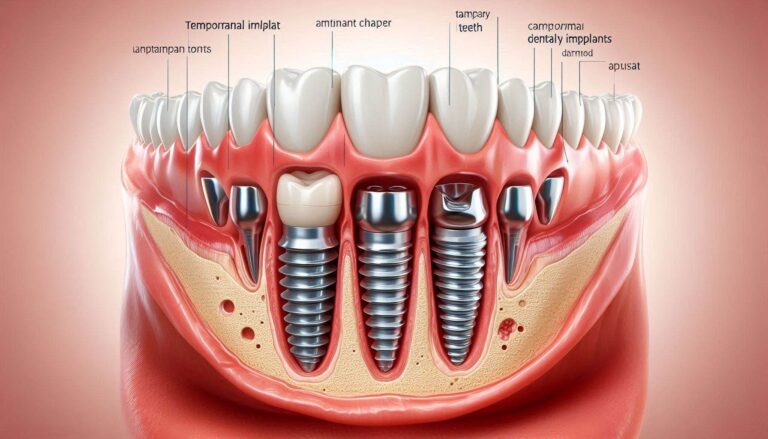
In the classic, two-stage surgical protocol, the implant is placed into the bone and completely covered by the gum tissue. It is left to heal in a protected, bacteria-free environment for a period of three to four months in the lower jaw and five to six months in the upper jaw. The difference in timing is due to the bone density. The mandible is dense, cortical bone, which heals faster. The maxilla is softer, more cancellous bone, which requires a longer integration period. During this submerged healing phase, you must not use the implant. You cannot chew on it. The forces of chewing, even light forces, would create micro-motion at the bone-implant interface, disrupting the delicate cellular process and leading to a fibrous encapsulation, a failure of integration. At the end of the healing period, the surgeon performs a small, second-stage procedure to uncover the implant and attach a healing abutment, which shapes the gum tissue.
The Accelerated and Immediate Loading Protocols
Scientific and clinical advances have compressed the timeline for many patients. The development of implants with moderately rough, micro-textured surfaces has dramatically accelerated the rate and quality of osseointegration. These surfaces, created by sandblasting and acid etching, increase the surface area and provide an ideal scaffold for bone cell attachment and proliferation. A modern implant can achieve the same degree of integration in weeks that the original machined-surface Brånemark implants achieved in months. This has given rise to early loading protocols. In selected cases with good primary stability, the implant can be uncovered and a provisional crown placed in a non-functional position after four to eight weeks.
The most accelerated protocol is immediate loading, sometimes called “teeth in a day.” This involves placing the implant and attaching a provisional crown on the same day. There are strict, non-negotiable criteria for this protocol. The implant must achieve high primary stability at the time of placement, meaning it is tightly wedged into the bone. The provisional crown must be carefully adjusted out of occlusion so it experiences no chewing forces. The patient must commit to a strict soft-food diet. And the implant must be splinted to other implants or teeth to prevent any micro-motion. Immediate loading is a highly advanced technique with a narrower margin for error. It is not appropriate for every case. A single implant in soft bone with moderate primary stability should follow the traditional, delayed loading protocol. Your surgeon will determine the safest timeline based on the quality of your bone and the stability achieved during surgery.
Conclusion
The use of dental implants traces a remarkable arc from the crude bamboo pegs and iron substitutes of ancient civilizations, through centuries of failed experimentation with incompatible materials and septic techniques, to the accidental scientific discovery of titanium osseointegration by Per-Ingvar Brånemark in 1952, which revolutionized dentistry. For you as a patient today, the timeline for starting to use your implant is governed by the biological imperative of bone healing, ranging from a traditional submerged protocol of several months to, in carefully selected cases, an immediate restoration on the day of surgery, all contingent on achieving rigid primary stability and respecting the delicate process of bone fusion.
Frequently Asked Questions
When did dentists first start using modern titanium implants?
Modern titanium dental implants, based on the principle of osseointegration, were first successfully placed in a human patient in 1965 by Dr. Per-Ingvar Brånemark. The procedure gained widespread professional acceptance after the landmark 1982 Toronto conference.
Why did ancient implants like the Egyptian shell tooth fail?
Ancient attempts failed because the concept of biocompatibility was unknown. The materials used, like shells, iron, or ivory, were not biologically inert and did not allow bone to bond to their surface. Additionally, the complete lack of sterile technique led to rampant, inevitable infection.
What is the standard healing time before an implant can be used for chewing?
The standard protocol for a submerged implant is three to four months of healing in the lower jaw and five to six months in the upper jaw before the implant is uncovered and a functional crown is placed. This allows for complete, undisturbed osseointegration.
Can my implant tooth be placed on the same day as the surgery?
Yes, under a protocol called immediate loading. This requires the implant to be extremely stable at the time of placement, and the provisional crown is placed out of occlusion. The patient must strictly avoid chewing on the tooth during the healing phase.
What was the key discovery that made modern implants possible?
The key was Dr. Brånemark’s discovery of osseointegration: the phenomenon where living bone cells fuse directly to the surface of commercially pure titanium, creating a permanent, structural bond without any intervening soft tissue layer.
Additional Resource
The Osseointegration Foundation, the philanthropic arm of the Academy of Osseointegration, provides educational grants and resources dedicated to advancing the science and clinical practice of osseointegration. You can explore the history and future of implant research at: https://www.osseo.org/