Do Implant Supported Dentures Hurt?
You are considering implant supported dentures, and you want to know the truth about pain. Will the surgery hurt? Will the implants hurt during the healing period? Will the denture cause sore spots once it is in place? These questions are natural and important. Pain, or the fear of it, keeps many people from pursuing the dental care that would improve their quality of life.
This guide provides an honest, detailed account of what implant supported dentures feel like at every stage of the process. We will cover the surgical experience, the recovery period, the adaptation to the denture, and the long-term comfort of living with implant supported dentures. The goal is not to minimize the discomfort that does occur, but to describe it accurately so you can prepare for it and make an informed decision.
Understanding Implant Supported Dentures
Before discussing pain, it is important to clarify what implant supported dentures are. The term can refer to two different types of restorations, and the experience differs between them.
Removable Implant Overdentures
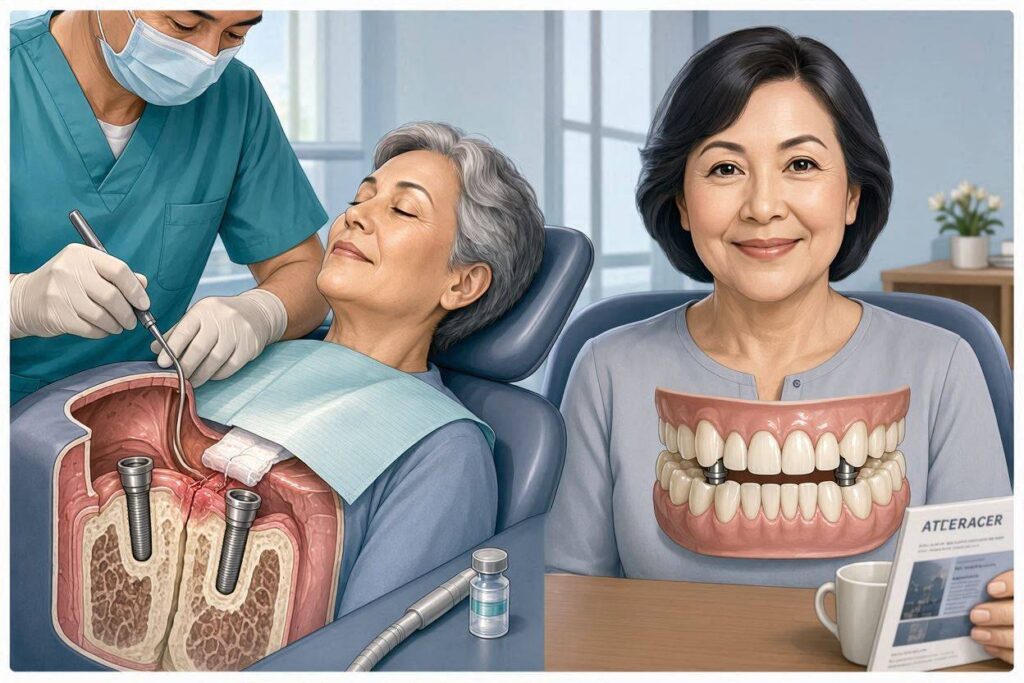
A removable overdenture snaps onto two to four implants and is taken out daily for cleaning. The denture rests partially on the gums, and the implants provide retention and stability. This is sometimes called a snap-on denture.
Fixed Implant Prostheses
A fixed prosthesis, such as an All-on-Four restoration, is screwed or cemented onto four to eight implants and cannot be removed by the patient. The prosthesis does not rest on the gums. It is supported entirely by the implants.
The surgical placement of the implants is similar for both types. The difference in sensation comes primarily from the prosthesis and how it interacts with the gums.
The Surgical Experience
The day of implant surgery is the part of the process that causes the most anxiety. Understanding what actually happens and what you will feel can reduce that anxiety.
During the Surgery
Implant surgery is performed under local anesthesia, the same type of numbing injection used for a filling or an extraction. The injection itself causes a brief pinching or burning sensation as the anesthetic is delivered. Within minutes, the surgical area is completely numb. You feel pressure and vibration, but you should not feel sharp pain.
If you are anxious about the procedure, sedation options are available. Nitrous oxide, also known as laughing gas, helps you relax while remaining awake. Oral conscious sedation, a pill taken before the appointment, produces a deeper state of relaxation. Intravenous sedation, administered by an anesthesiologist or a trained dentist, allows you to sleep through the procedure. Patients who choose IV sedation have no memory of the surgery.
The surgery itself involves preparing the bone, placing the implants, and suturing the gum tissue closed. For a patient under local anesthesia, the sensations are pressure, the sound of the drill, and the awareness of activity, but not pain. The dentist or assistant will check in with you throughout the procedure to ensure you are comfortable.
The placement of two implants for a lower overdenture typically takes 60 to 90 minutes. The placement of four to six implants for a fixed prosthesis takes two to three hours. The time passes more quickly than most patients expect.
Immediately After Surgery
When the anesthesia wears off, typically two to four hours after surgery, the discomfort begins. This is the most uncomfortable phase of the entire process, and it is manageable with appropriate care.
The sensation is a dull ache or throbbing in the surgical area, similar to the feeling after having multiple teeth extracted. There may be swelling of the gum tissue and, in some cases, bruising of the cheek or chin. The swelling peaks around 48 to 72 hours after surgery and then gradually subsides.
Pain medication manages this discomfort effectively. Over-the-counter medications like ibuprofen or acetaminophen are sufficient for many patients. Your dentist may prescribe a stronger pain reliever for the first few days. Take the medication as directed, ideally before the anesthesia fully wears off so that you stay ahead of the pain.
The First Week of Healing
The first week after surgery is a period of gradual improvement. Each day is typically better than the one before.
Days One to Three
You will experience the most discomfort during the first three days. Eating soft foods, applying ice packs to the outside of your face, taking pain medication as prescribed, and resting with your head elevated will all help. Most patients describe the pain as moderate, not severe, and well-controlled with medication.
You may notice some bleeding from the surgical sites during the first 24 hours. This is normal and should be minimal. Biting gently on gauze pads controls it. Persistent heavy bleeding is not normal and should prompt a call to your dentist.
Days Four to Seven
By the fourth day, the acute discomfort begins to recede. Swelling starts to decrease. You may transition from prescription pain medication to over-the-counter relief, or you may stop pain medication entirely. The surgical sites feel tender, and you remain conscious of them, but the throbbing ache of the first few days subsides.
You can begin to eat a wider range of soft foods. You still avoid chewing on the implant sites. You gently rinse with salt water or a prescribed mouth rinse as directed by your dentist. You may begin to feel more like yourself, though the presence of the healing denture or the healing abutments is a constant reminder that surgery has occurred.
The Healing Period: Weeks Two Through Twelve
After the first week, the surgical sites continue to heal, and the implants begin the process of osseointegration. This period is generally not painful, but it can involve discomfort related to the denture.
The Healing Denture
Most patients receive a denture to wear during the healing period. This denture has been relined with a soft material to cushion the surgical sites. It provides aesthetics and some function while the implants integrate.
The healing denture can cause sore spots, particularly in the first few weeks. The gum tissue is healing and changing shape, and the denture may rub or press on tender areas. These sore spots are similar to the discomfort of a new conventional denture. They are managed by returning to the dentist for adjustments, where the denture is relieved in the areas that are causing irritation.
The implants themselves should not be painful during the healing period. The bone is healing around them, but this process occurs without sensation. If you experience pain directly at an implant site, particularly pain that worsens over time, contact your dentist. This could indicate an infection or a failure of osseointegration.
The Transition to the Final Prosthesis
When the implants have integrated, typically after three to six months, you transition from the healing denture to the final prosthesis. For a removable overdenture, this involves fitting the final denture with the attachments that snap onto the implants. For a fixed prosthesis, this involves placing the final bridge.
The final prosthesis is custom-fabricated to fit your mouth precisely. It should be comfortable from the start, though minor adjustments are often needed. A removable overdenture may require a few adjustment appointments to eliminate any pressure points on the gums. A fixed prosthesis should not cause sore spots because it does not rest on the gums.
Long-Term Comfort with Implant Supported Dentures
Once you have healed and adapted to the final prosthesis, what can you expect in terms of daily comfort?
Removable Overdentures
A well-made implant-retained overdenture is significantly more comfortable than a conventional denture. The implants hold it securely, so it does not slide, rock, or lift during eating and speaking. This stability eliminates the friction and rubbing that cause sore spots with conventional dentures.
The denture still rests on the gums, and some patients experience occasional pressure points, particularly as the gum ridge changes shape over time. These are addressed with periodic relines and adjustments. The attachment inserts that snap onto the implants wear out and must be replaced, but this is a quick and painless office procedure.
Most patients with implant overdentures report high levels of comfort and satisfaction. The improvement over a conventional denture is dramatic. The denture feels secure, and the fear of it coming loose in social situations disappears.
Fixed Implant Prostheses
A fixed implant prosthesis is the most comfortable tooth replacement option available. Because the prosthesis is supported entirely by the implants and does not rest on the gums, there are no pressure points, no rubbing, and no sore spots. The prosthesis feels like natural teeth.
There is an adaptation period during which the tongue and cheeks adjust to the presence of the prosthesis. This is not painful but can feel strange for a few weeks. Speech may be slightly affected initially, but this resolves with practice.
The fixed prosthesis does require diligent hygiene. If plaque accumulates and the gum tissue becomes inflamed, the gums can become tender. This tenderness is a sign that cleaning needs to improve, not an inherent problem with the prosthesis. With proper hygiene, the gums remain healthy and comfortable.
Comparing Pain and Discomfort Across Tooth Replacement Options
Understanding how implant supported dentures compare to other options provides context.
Conventional Dentures
Conventional dentures, particularly lower dentures, are notorious for causing discomfort. They move during function, rubbing against the gums and creating sore spots. They require adhesive for retention, and even with adhesive, they can be unstable. The discomfort of a conventional denture is ongoing and often limits what the wearer can eat.
Compared to this, an implant supported denture is far more comfortable. The surgery to place the implants involves short-term discomfort, but the long-term comfort is dramatically better.
Individual Dental Implants
Single implants involve a similar surgical experience to the implants used for dentures. The recovery from a single implant is generally easier because there is only one surgical site. The long-term sensation of a single implant crown is very similar to a natural tooth.
Doing Nothing
Living with missing teeth has its own discomforts. Difficulty chewing leads to dietary limitations and sometimes digestive problems. The shifting of remaining teeth can cause bite problems and jaw pain. The bone loss that follows tooth extraction alters facial appearance over time. Implant supported dentures address all of these issues, and the temporary discomfort of surgery is a tradeoff for long-term oral health and function.
Factors That Affect Pain Levels
Individual pain experiences vary. Several factors influence how much discomfort you will experience.
The Number of Implants Placed
Placing two implants is less extensive than placing six. The more implants, the more surgical sites, and the more post-operative discomfort. A two-implant overdenture is a more minor surgical procedure than a full-arch fixed prosthesis on six implants.
Whether Extractions Are Performed at the Same Time
If you have remaining teeth that need to be extracted at the time of implant placement, the surgery is more extensive and the post-operative discomfort is greater. The combination of extractions and implant placement results in more swelling and a longer recovery than implant placement alone.
Bone Grafting Requirements
If bone grafting is performed at the time of implant placement, the surgical time is longer and the post-operative swelling is greater. Grafting adds another dimension to the surgery and to the recovery.
Individual Pain Tolerance and Healing Capacity
Some people simply experience more pain than others from the same procedure. Age, overall health, smoking status, and individual pain thresholds all play a role. Your experience may differ from that of another patient who had the same procedure.
Managing Anxiety About Pain
Fear of pain is a significant barrier to seeking implant treatment. Several strategies can help.
Open Communication with Your Dentist
Tell your dentist that you are anxious about pain. A good dentist will not dismiss your concerns. They will explain what to expect, offer sedation options, and work with you to create a comfortable experience. Knowing that your dentist understands and respects your anxiety can itself be calming.
Sedation Options
Sedation dentistry has made implant surgery accessible to anxious patients. From mild nitrous oxide to deep IV sedation, options exist for every level of anxiety. Discuss these options during your consultation.
Focusing on the Outcome
The discomfort of implant surgery is temporary. The benefits of a stable, functional, comfortable smile last for decades. Keeping this perspective can help you tolerate the short-term discomfort.
Conclusion
Implant supported dentures involve short-term surgical discomfort that is manageable with local anesthesia during the procedure and pain medication during recovery, similar to having multiple teeth extracted. The first three days are the most uncomfortable, with gradual improvement over the following weeks. The healing denture worn during the integration period may cause temporary sore spots that are relieved with adjustments. Once the final prosthesis is placed, a removable overdenture is dramatically more comfortable than a conventional denture, with stable retention and minimal gum irritation, while a fixed prosthesis eliminates gum contact entirely and feels most like natural teeth. The temporary discomfort of surgery is widely regarded by patients as a worthwhile tradeoff for the long-term comfort, function, and confidence that implant supported dentures provide.
Frequently Asked Questions
How painful is the implant surgery for dentures?
The surgery itself is not painful because of local anesthesia. Post-operative pain is typically moderate, similar to having multiple teeth extracted, and is managed with medication. Most patients rate the pain as less than they anticipated.
How long does the pain last after implant surgery?
The most significant discomfort lasts for two to three days. Swelling peaks around day three and then subsides. By the end of the first week, most patients are comfortable with over-the-counter pain relief or no medication at all.
Will the implants hurt during the healing period?
The implants themselves should not hurt during healing. The bone integrating with the implant is a painless process. Pain at an implant site after the initial healing period could indicate a problem and should be evaluated by your dentist.
Do snap-on dentures hurt more than fixed dentures?
A snap-on overdenture rests partially on the gums and can cause occasional pressure points, similar to a conventional denture, though much less severe. A fixed prosthesis does not contact the gums and generally causes no gum discomfort once the surgical healing is complete.
Can I be sedated for the implant surgery?
Yes, most dentists who place implants offer sedation options ranging from nitrous oxide to oral conscious sedation to IV sedation. Discuss your anxiety level and sedation preferences during your consultation.
Additional Resource:
For patient testimonials and information on implant denture comfort, visit the American College of Prosthodontists at https://www.gotoapro.org.