Are Dental Implants Covered By Benefits?
You have lost a tooth. The clinical recommendation is clear: a dental implant is the best long-term solution for your oral health, function, and aesthetics. You are ready to move forward, but the financial question looms large. You have a dental benefits card in your wallet, perhaps an employer-sponsored medical plan, maybe a Health Savings Account, or even veterans’ benefits. The central question you need answered is not just “how much does an implant cost?” but “are dental implants covered by my benefits?”
The answer is a nuanced, layered, and often frustrating “partially, and it depends entirely on the specific language of your policy.” This article is a clear-eyed guide to navigating the complex intersection of dental implants and insurance benefits. We will dissect how dental plans classify implants, when medical insurance might pay, the power of your HSA, and the specific benefits available to veterans. The goal is to replace confusion with a strategic understanding of how to maximize your coverage.

The Dental Insurance Landscape: A Limited Benefit
The first and most critical concept to internalize is that dental insurance is not comprehensive health insurance. It is a limited benefit plan with a hard annual maximum. Think of it as a prepaid coupon book with a cap, not a safety net for catastrophic loss.
A typical PPO dental plan is structured around a 100-80-50 coverage model, as we detailed in Article 10. Preventive care (cleanings, exams) is covered at 100%. Basic restorative care (fillings, simple extractions) is covered at 80%. Major restorative care, which is the category under which dental implants fall, is covered at 50%.
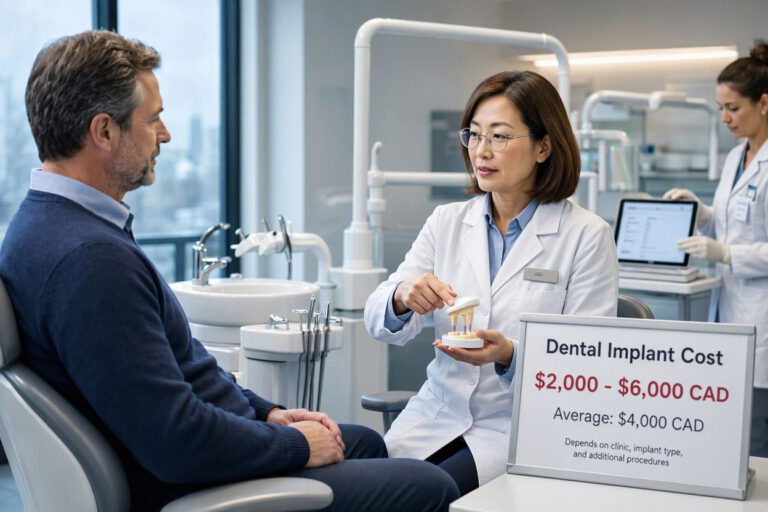
However, the coverage percentage is only half the story. The annual maximum benefit is the critical number. Most PPO plans have an annual maximum that ranges from $1,000 to $2,500. This is the total amount the insurance company will pay out for all covered services in a single calendar year. A single dental implant, with its associated surgery, abutment, and crown, costs between $3,500 and $6,000. Even if your plan covers implants at 50%, the insurance company will pay its 50% share until the $1,500 or $2,000 annual maximum is reached. After that, the plan pays nothing. You are responsible for the remaining balance.
This means that dental insurance provides a valuable, but limited, contribution toward an implant. It will not pay for the entire implant. It will subsidize a portion of the cost up to its contractual cap. The patient must approach the treatment with the understanding that a significant out-of-pocket expense is almost certain.
The Missing Tooth Clause
A particularly frustrating exclusion in many dental plans is the “missing tooth clause.” This clause states that if a tooth was missing before the patient’s coverage began, the plan will not cover the cost of replacing that tooth. The insurance company’s logic is that they insure against future disease, not pre-existing conditions. If you lost the tooth before you had the current policy, a bridge, partial denture, or implant to replace it may be entirely excluded from coverage. This is a critical point to clarify with your insurer before you commit to treatment.
The Alternative Benefit Clause
Even if your plan covers implants, a cost-containment mechanism called the “alternative benefit clause” may limit your reimbursement. The plan may state that if there are multiple accepted ways to treat a condition, they will pay based on the least expensive alternative. For a missing tooth, the least expensive alternative is typically a removable partial denture, costing perhaps $500. The plan may apply the 50% coverage for a major service to the cost of the partial denture, not to the cost of the implant. This would leave them paying $250, and you paying the full remaining cost of the implant. This is a bitter pill, but it is a common insurance practice. A pre-treatment estimate is your only defense against this surprise.
Medical Insurance: The Primary Payer for Underlying Disease
There are specific clinical scenarios where your medical health insurance, not your dental plan, should be the primary payer for implant-related surgery. This is a distinction many patients and even some dentists miss. Medical insurance covers the diagnosis and treatment of disease, injury, or congenital defects. If the implant is required to reconstruct your jaw after a cancer resection, a traumatic accident, or a congenital malformation, the medical plan may cover a significant portion of the surgical phase.
The key is medical necessity. A patient who loses a tooth due to a traumatic avulsion in a car accident does not simply have a missing tooth. They have a traumatic injury to the jaw. The reconstruction of that injury, including bone grafting and implant placement, may be a covered medical benefit. A patient with a biopsy-proven ameloblastoma requiring a partial mandibulectomy followed by implant-supported reconstruction is undergoing cancer treatment, not elective dentistry.
The billing route shifts from dental codes to medical CPT codes. The narrative is clinical and disease-focused. Pre-authorization with a detailed letter of medical necessity from the oral surgeon is mandatory. This is not a loophole. It is a legitimate medical claim for the treatment of a covered disease process. Your implant surgeon’s billing coordinator can be your greatest ally in navigating this process, provided they have experience with medical billing.
The HSA and FSA: Your Tax-Advantaged Solution
As we established in Article 14, a Health Savings Account (HSA) or a Flexible Spending Account (FSA) is a powerful tool for paying for dental implants. The IRS defines dental implants as a qualified medical expense. You can use your pre-tax HSA or FSA dollars to pay for every component of the implant, from the diagnostic scan to the final crown.
The financial advantage is the tax savings. By paying with pre-tax dollars, you effectively receive a discount equal to your marginal tax rate. For a $5,000 implant, a patient in the 24% tax bracket saves $1,200 in federal income tax. This is a clean, legal, and direct way to reduce the net cost of your implant. The only requirement is meticulous documentation of the expense.
Veterans Benefits: The VA and CHAMPVA
As detailed in Article 15, the Department of Veterans Affairs (VA) provides comprehensive dental care, including implants, to eligible veterans. A veteran with a 100% service-connected disability rating, a former prisoner of war, or a veteran with a service-connected dental condition can receive dental implants at a VA dental clinic at a significantly reduced or zero cost. This is an earned benefit of their service.
However, this benefit does not extend to the veteran’s spouse or dependents. For qualifying spouses of veterans rated permanently and totally disabled, CHAMPVA offers a path to reduced-cost dental care through the CHAMPVA Dental Insurance Program, a subsidized, premium-based plan. The distinction is clear: the veteran’s VA benefit is for the veteran. The family’s path is CHAMPVA or TRICARE for military retirees.
Conclusion
Dental implants are covered by benefits, but the coverage is partial, capped, and often hedged with exclusions. Dental insurance will contribute 50% up to a low annual maximum, typically leaving a significant patient balance. Medical insurance becomes the primary payer when the implant is part of reconstructing a disease or traumatic injury. An HSA or FSA provides a direct, tax-advantaged discount. Veterans with specific disability ratings receive comprehensive coverage through the VA. The key to maximizing your benefits is a pre-treatment conversation with your insurer, not a post-treatment discovery of what they will not pay.
Frequently Asked Questions
Will my dental insurance cover the implant crown if they paid for the extraction?
Not necessarily. Extraction and implant placement are separate procedures, often subject to different waiting periods and coverage rules. The fact that your plan paid for the extraction of a painful tooth does not guarantee they will pay for the implant to replace it. Verify the major restorative benefit and any missing tooth clause before assuming coverage.
Can I use both my HSA and my dental insurance for an implant?
Yes. This is the standard and most advantageous approach. Your dental insurance pays its limited benefit directly to the provider, reducing the total bill. You then pay the remaining balance using your HSA debit card or by reimbursing yourself from your HSA. You cannot double-dip and be reimbursed twice for the same expense.
What is a pre-treatment estimate, and why do I need one?
A pre-treatment estimate, or pre-determination, is a formal, written estimate of benefits that your dentist’s office submits to the insurance company before treatment begins. The insurer reviews the proposed treatment plan, applies your specific plan’s deductibles, co-pays, annual maximums, and exclusions, and issues a written breakdown of exactly what they will pay. This document is your financial map and your protection against unexpected denial of coverage.
Additional Resource:
For a detailed explanation of how dental insurance works and how to navigate coverage for major procedures like implants, visit the American Dental Association’s guide for patients: https://www.mouthhealthy.org/en/dental-care-concerns/questions-about-going-to-the-dentist/is-dental-insurance-worth-it