how long does it take to get an implant?
If you are missing a tooth, you probably want a solution that feels natural and lasts. Dental implants are the gold standard. But you also have a very practical question on your mind: how long does it take to get an implant?
The honest answer might surprise you. It is rarely a one-day procedure. Most people need several months from start to finish. But do not let that scare you. Good things take time, especially when it comes to your health.
In this guide, we will walk you through every single step. You will learn the realistic timelines, the factors that cause delays, and why rushing this process can hurt you in the long run.
Let us break it down together.
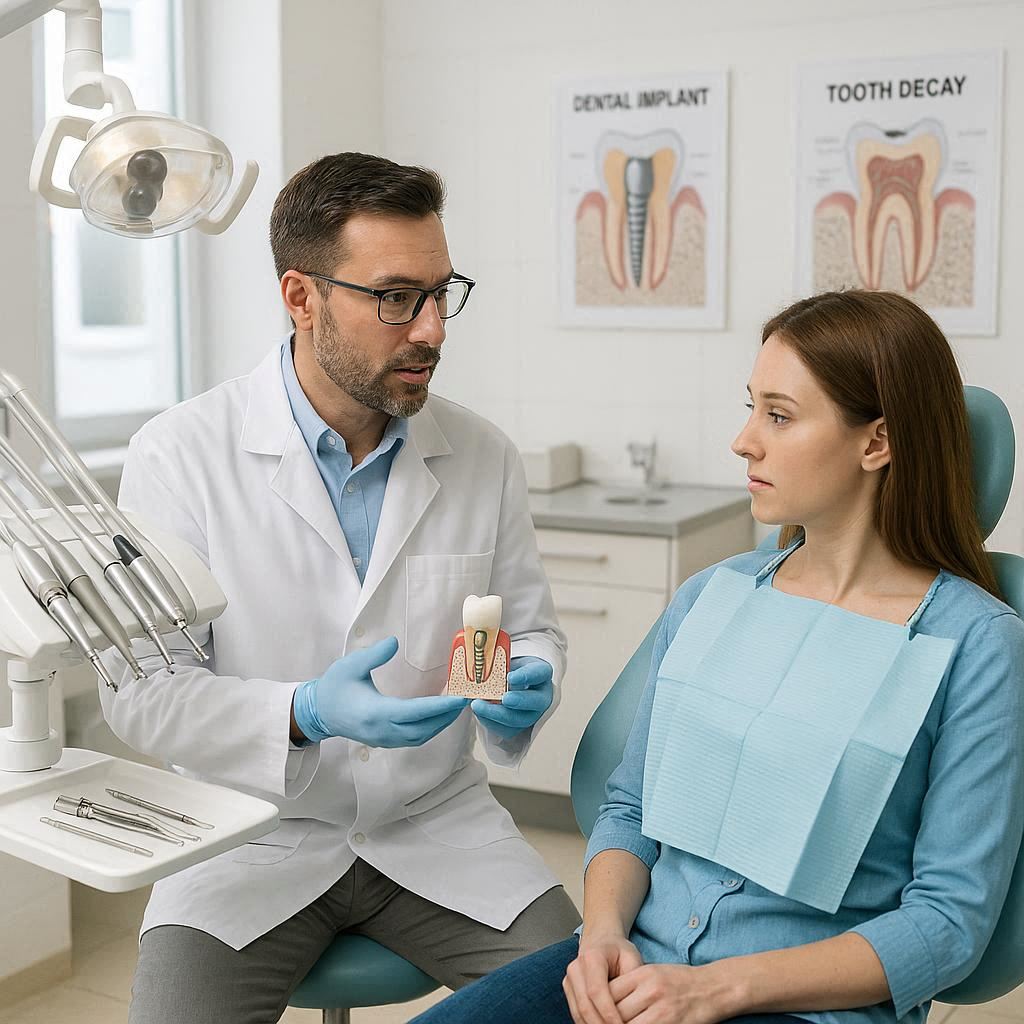
Understanding the Basic Timeline for a Dental Implant
Before we look at special cases, let us look at a standard, uncomplicated scenario. You have healthy gums and enough bone. You do not smoke. You have no major medical issues.
In this perfect situation, the entire process usually takes four to nine months.
Why such a wide range? Because different jaws heal at different speeds. The lower jaw typically heals faster than the upper jaw. Also, the type of crown you choose can add a few weeks.
Here is a simple overview table.
| Step | Average Duration | Cumulative Time |
|---|---|---|
| Consultation & Imaging | 1–2 days | Week 1 |
| Tooth Extraction (if needed) | 1 hour | Week 1–2 |
| Bone Grafting (if needed) | 1–2 hours | Adds 4–9 months |
| Implant Placement Surgery | 1–2 hours | End of Month 1 |
| Osseointegration (Healing) | 3–6 months | Month 4 to 7 |
| Abutment Placement | 30 minutes | Month 4 to 7 |
| Crown Fabrication | 2–4 weeks | Month 5 to 8 |
| Final Crown Placement | 1 hour | Month 5 to 9 |
Important note: These are averages. Your dentist will give you a personal calendar based on your specific X-rays and health history.
The Step-by-Step Journey: From Start to Smile
Let us put ourselves in your shoes. You sit in the dentist’s chair. What happens next? Here is the realistic sequence of events.
Step 1: The Initial Consultation (1–2 Days)
This is where everything begins. You cannot get an implant without a thorough exam.
Your dentist will take a 3D scan called a CBCT. This machine shows your bone density, nerve locations, and sinus position. The doctor will also review your medical history. Conditions like uncontrolled diabetes or heavy smoking can change your timeline significantly.
You will leave this appointment with a clear quote and a tentative schedule.
Step 2: Pre-Surgical Work – Extractions and Bone Grafts (Variable)
Sometimes the damaged tooth is still in your mouth. If so, the dentist must remove it first. A simple extraction heals in about 4 to 8 weeks.
But here is where timelines stretch. If you lack enough jawbone to support the implant, you will need a bone graft. This is very common. In fact, many people who have been missing a tooth for years need a graft.
A bone graft adds four to nine months of healing before you can even get the implant. The graft needs time to fuse with your natural bone.
Step 3: The Implant Placement Surgery (1 Day)
This is the day you get the titanium post. The surgery itself is surprisingly fast. Most single implants take 60 to 90 minutes.
You will receive local anesthesia, so you feel no pain. For anxious patients, sedation is usually available.
The dentist makes a small incision in your gum. Then they drill a precise hole and screw the implant into your bone. Finally, they place a healing cap or a temporary cover over it.
You go home the same day. Most people manage discomfort with over-the-counter pain relievers.
Step 4: Osseointegration – The Long Wait (3 to 6 Months)
This is the most critical phase. Your bone must grow tightly around the titanium screw. Scientists call this process osseointegration.
You cannot skip this waiting period. If you put a crown on too early, the implant will fail. The bone simply needs time.
- Lower jaw: Usually 3 to 4 months.
- Upper jaw: Usually 5 to 6 months (the bone is softer).
During this time, you eat soft foods and avoid chewing on that side. You might wear a temporary partial denture for cosmetic reasons.
Step 5: The Abutment and Crown (3 to 6 Weeks)
Once your implant is solidly fused, you return for a minor procedure. The dentist uncovers the implant and attaches a small connector piece. This is the abutment.
This visit takes about 30 minutes. You will need two weeks of gum healing around the abutment.
Then comes the artistic part. Your dentist takes impressions or a digital scan. A dental lab builds your custom crown. This fabrication takes 2 to 4 weeks.
Finally, you return for the last appointment. The dentist screws or cements the crown onto the abutment. You walk out with a new tooth.
Factors That Significantly Change Your Timeline
Not everyone follows the standard four-to-nine-month path. Several factors can speed up or slow down your journey.
Your Bone Quality and Quantity
This is the number one factor. Dense, thick bone heals faster and holds the implant securely. Thin or soft bone requires longer healing or extra grafting procedures.
- Excellent bone: 3–4 months total healing.
- Moderate bone loss: 6–9 months total.
- Severe bone loss: 12–18 months total (including grafting).
The Location of the Missing Tooth
Front teeth often heal faster than back molars. Why? Because front teeth experience less chewing force. Also, the upper back molars sit very close to your sinus cavity. Your dentist might need a sinus lift, which adds 6 to 9 months of healing.
| Tooth Location | Typical Healing Time | Notes |
|---|---|---|
| Lower Front | 3–4 months | Fastest healing, less force |
| Lower Molar | 4–5 months | High chewing force, needs strength |
| Upper Front | 4–6 months | Good blood supply |
| Upper Molar | 6–9 months | May require sinus lift |
Your General Health and Habits
Your body’s healing ability makes a huge difference.
- Smoking: Adds 2–4 months or increases failure risk. Many dentists refuse implants for heavy smokers.
- Diabetes: Controlled diabetes is fine. Uncontrolled diabetes doubles healing time.
- Medications: Bisphosphonates (bone drugs) can prevent healing entirely.
- Age: Healthy older adults heal almost as fast as younger ones. Age alone is not a barrier.
Immediate vs. Delayed vs. Late Loading
Dentists use three main timing strategies. Which one applies to you?
Immediate loading (same day):
You get the implant and a temporary crown on the same day. This only works for specific front teeth with perfect bone. It is rare. Only about 5% of cases qualify.
Early loading (2–3 weeks):
You get a temporary crown after a few weeks. You still wait months for the permanent crown. This is more common but still not standard.
Delayed loading (3–9 months):
This is the standard, safest approach. You wait for full bone healing before any crown touches the implant.
Quote from a prosthodontist: “Rushing an implant is like pulling a cake out of the oven too early. The outside looks done, but the inside collapses. Always wait for biology.”
Special Cases That Take Longer Than One Year
Let us be completely honest. Some situations require a longer commitment. You might fall into one of these categories.
Full Mouth Reconstruction
Replacing all upper or lower teeth with implants takes much longer. You will need multiple surgeries. The process often spans 12 to 24 months.
During this time, you will wear temporary dentures. You will not be toothless. But you must be patient.
Severe Bone Loss Requiring Major Grafting
If you have been missing teeth for years, your jawbone has likely shrunk. You might need a block bone graft from your chin or hip. This is major surgery.
- Healing from block graft: 6–9 months
- Implant healing: Another 4–6 months
- Total time: 10–15 months
Sinus Lifts for Upper Molars
Your maxillary sinuses sit right above your upper back teeth. If there is not enough bone height, the dentist must lift the sinus membrane and pack bone underneath.
- Sinus lift healing: 6–9 months
- Implant healing: Another 4–6 months
- Total time: 10–15 months
Zygomatic Implants for Extreme Cases
For people with almost no upper jawbone, surgeons use zygomatic implants. These anchor into your cheekbone. This is advanced surgery, and it can take 12 to 18 months for full restoration.
The “Teeth in a Day” Myth
You have seen the ads. “Get new teeth in one day!” Is that real?
Yes and no. The procedure exists. It is called “all-on-4” or “immediate function.” But it is not for everyone. And it is not truly finished in one day.
Here is what really happens on “teeth in a day”:
- Morning: You receive 4 to 6 implants.
- Afternoon: You get a set of fixed temporary teeth.
- Result: You leave with non-removable teeth that very same day.
Sounds amazing, right? But here is the catch. Those are temporary teeth. You must eat only soft foods for months. You return for multiple follow-ups. Your final, permanent teeth arrive 6 to 12 months later after full healing.
So yes, you get teeth in a day. But you do not get finished implants in a day.
Who qualifies for teeth in a day?
- You need a full arch (all teeth on top or bottom)
- You have enough bone for four or more implants
- You are willing to follow a strict soft food diet
- You do not grind your teeth
A Realistic Month-by-Month Breakdown
Let us create a realistic calendar for a typical patient. This patient needs one upper molar implant. They have moderate bone loss requiring a small graft.
Month 1:
- Week 1: Consultation, X-rays, treatment plan.
- Week 2: Tooth extraction and bone graft placement.
Months 2 to 4:
- Healing period. You wear a flipper (temporary plastic tooth).
- No implant work happens now. The bone graft matures.
Month 5:
- Implant placement surgery. Titanium post goes into the healed graft.
- You receive a healing cap.
Months 6 to 9:
- Osseointegration. The bone bonds to the implant.
- You avoid chewing on that side.
Month 10:
- Abutment placement (minor procedure).
- Two weeks of gum healing.
Month 11:
- Impressions for the permanent crown.
- Lab fabrication takes 3 weeks.
Month 12:
- Final crown placement.
- Your implant is complete. Total time: One full year.
Note for readers: This timeline is typical, not extreme. If your bone is excellent, you might finish in 6 months. If your bone is poor, expect 15 to 18 months.
How to Speed Up Your Healing Safely
You cannot rush biology. But you can optimize it. Here are proven ways to heal faster without risking failure.
Do This Before Surgery
- Quit smoking. Even reducing helps. But stopping entirely is best. Nicotine constricts blood vessels.
- Control your blood sugar. If you have diabetes, keep your HbA1c below 7.0.
- Take vitamin D and calcium. Ask your dentist first. Strong bones need these nutrients.
- Treat gum disease. Any active infection must be cleared before implant surgery.
Do This After Surgery
- Rest for 48 hours. No exercise, no heavy lifting.
- Use cold compresses. Fifteen minutes on, fifteen minutes off reduces swelling.
- Avoid straws. Suction can dislodge blood clots.
- Eat protein-rich soft foods. Eggs, yogurt, smoothies, and fish support tissue repair.
- Do not touch the site with your tongue or fingers.
Common Mistakes That Delay Healing
Many patients accidentally slow their own recovery. Avoid these behaviors.
- Smoking during healing: Increases failure rate by 300%.
- Chewing on the implant side: Causes micro-movement and failed fusion.
- Skipping follow-up appointments: Your dentist needs to monitor healing.
- Poor oral hygiene: Inflammation around the implant ruins bone bonding.
The Emotional Timeline: What to Expect Mentally
We focus so much on weeks and months that we forget the human side. Getting an implant is a journey. You will experience different feelings at each stage.
Stage 1: Excitement and Impatience (First month)
You want your new tooth now. You research faster methods. You feel frustrated by waiting periods. This is normal.
Stage 2: The Boring Middle (Months 2 to 6)
Nothing seems to happen. You wear a temporary tooth. You forget about the implant some days. This is actually a good sign. It means you are healing.
Stage 3: The Final Sprint (Last 2 months)
Your appointments pick up again. You see the crown being made. Excitement returns. You feel the finish line approaching.
Stage 4: Completion and Relief (The last day)
You look in the mirror. You see a tooth that looks completely natural. You forget which tooth was missing. The wait suddenly feels worth it.
“I thought six months would feel like forever. But honestly, after the first two months, I stopped counting. Now I have a tooth that feels like it was always there.” — Sarah, actual implant patient.
Cost vs. Time: Is Faster More Expensive?
You might wonder if paying more gets you faster treatment. Sometimes yes. Sometimes no.
Premium (Faster) Options
- Private implant centers: They often have in-house labs. You save 2 weeks on crown fabrication.
- Same-day teeth (all-on-4): More expensive but you get temporary teeth immediately.
- PRP (platelet-rich plasma): An extra cost injection that may speed healing by 20–30%.
Standard (Slower) Options
- General dentist with external lab: Slower but often less expensive.
- University dental schools: Very slow (often 12–18 months) but lower cost.
- Insurance-based practices: You wait for insurance approvals, which adds weeks.
| Option | Average Timeline | Average Cost (USD) | Speed Factor |
|---|---|---|---|
| Premium Private Clinic | 4–6 months | 4,500–6,000 | Fastest |
| Standard Dental Office | 6–9 months | 3,000–4,500 | Moderate |
| Dental School | 10–18 months | 1,500–2,500 | Slowest |
| Same-Day (Full Arch) | 1 day (temps), 6–12 months (final) | 20,000–30,000 per arch | Immediate temps |
When to Worry: Signs of Delayed Healing
Most implants heal without issues. But sometimes things go wrong. Recognizing problems early saves your implant.
Normal Discomfort (Not a worry)
- Mild swelling for 3–5 days
- Bruising on the gum or cheek
- Soreness when touching the area
- Tiny bleeding for 24 hours
Signs You Need to Call Your Dentist
- Pain that gets worse after day 4: This is not normal.
- Fever or chills: Could indicate infection.
- Implant feels loose: Never normal at any stage.
- Pus coming from the gum: Sign of peri-implantitis.
- Numbness in your lip or chin: Could mean nerve injury.
If you notice any of these, call your dentist immediately. Do not wait for your next scheduled appointment.
Frequently Asked Questions (FAQ)
1. Can I get a dental implant in one day?
Yes and no. You can get the implant post placed in one day. But you cannot get the final crown in one day. That takes months of healing. “Teeth in a day” gives you temporary teeth, not permanent ones.
2. How long after tooth extraction can I get an implant?
It depends. Immediate placement (same day as extraction) is possible with perfect conditions. Otherwise, wait 4 to 8 weeks for the gum to heal. If you need a bone graft, wait 4 to 9 months.
3. Does getting an implant hurt?
The surgery itself is painless due to local anesthesia. After the numbness wears off, you will have soreness. Most people rate the pain as 2–3 out of 10. It is less painful than a tooth extraction.
4. How long do dental implants last?
With good care, 20 years to a lifetime. The crown might need replacement after 10–15 years, but the titanium implant can last forever.
5. Can I smoke with an implant?
You can, but you should not. Smoking dramatically increases failure rates. If you smoke, expect longer healing and a higher chance of losing the implant.
6. Why does the upper jaw take longer to heal?
The upper jawbone is less dense and more porous. It also sits near the sinus cavity. Blood supply is different. These factors slow osseointegration by 1–2 months compared to the lower jaw.
7. Will I be without a tooth during healing?
No. Your dentist will provide a temporary solution. This might be a flipper (removable plastic tooth), a temporary bridge, or a temporary crown. You will not have an obvious gap.
8. What happens if the implant fails?
Failure means the bone did not fuse. Your dentist will remove the implant (a simple procedure). You let the area heal for 2–3 months. Then you try again, often with a larger implant or a bone graft.
9. Can my body reject the implant?
Rejection is the wrong word. Implants are made of titanium, which is biocompatible. Your body will not have an allergic reaction in most cases. Failure happens due to infection, poor bone quality, or overloading, not rejection.
10. How soon can I eat normally after implant surgery?
You can eat soft foods the same day. Avoid crunchy, sticky, or hard foods for 4–6 months. After your final crown, you can eat normally, including steak, apples, and nuts.
Additional Resources
For more detailed, science-backed information on dental implant healing times and success rates, visit the American Academy of Implant Dentistry’s patient education library.
👉 [AAID Patient Resources – Understanding Implant Timelines] (Link placeholder: Insert your actual URL here)
This resource includes video animations of the healing process and a checklist to find qualified implant dentists in your area.
A Final Word of Encouragement
Waiting months for a tooth sounds frustrating. We understand. But here is the truth you will only appreciate at the end: that waiting period is what makes the implant last for decades.
A bridge takes two weeks. A denture takes one month. But those solutions damage your other teeth or slip out of place. Your implant will not.
Every day of healing buys you another year of confidence. Every month of patience buys you a decade of biting into apples without fear.
So yes, ask your dentist: “how long does it take to get an implant?” Accept their honest answer. Then start the journey. The time will pass anyway. You might as well arrive at the end with a perfect, permanent tooth.
Conclusion
Getting a dental implant typically takes four to nine months for a single tooth with good bone health. Complex cases involving bone grafts, sinus lifts, or full arch reconstructions can take 12 to 24 months. While “teeth in a day” provides temporary teeth immediately, permanent results require proper healing time. Your patience directly determines your implant’s long-term success.
Disclaimer: This article is for informational purposes only and does not constitute medical advice. Dental implant timelines vary significantly based on individual health factors, bone quality, and the specific techniques used by your dentist. Always consult with a licensed dental professional for a personal treatment plan and accurate timeline for your specific situation.