How Good Are Mexican Dental Implants?
The question hangs in the air of every dental forum, every concerned family conversation, and every hesitant patient’s mind. You have seen the prices. A single implant for $900, a full-mouth restoration for $12,000. The savings are undeniable, a gravitational pull toward the border towns and beach resorts that have become synonymous with dental tourism. But the fear is equally powerful. Is this a case of “you get what you pay for”? Are Mexican dental implants a dangerous gamble, an inferior product destined to fail? Or can world-class care truly be delivered at a fraction of the North American price?
The honest answer is not a sweeping judgment. It is a careful, nuanced differentiation. There is no single “Mexican dental implant.” There is a vast spectrum of quality, ranging from clinics that rival the finest in Beverly Hills to high-volume, minimally supervised operations using generic implant copies. The quality of your outcome will not be determined by the country. It will be determined by the specific clinic, the specific surgeon, and the specific materials you choose. This article is your guide to distinguishing the world-class from the worrisome.
The Material Truth: The Implant Is Not the Variable
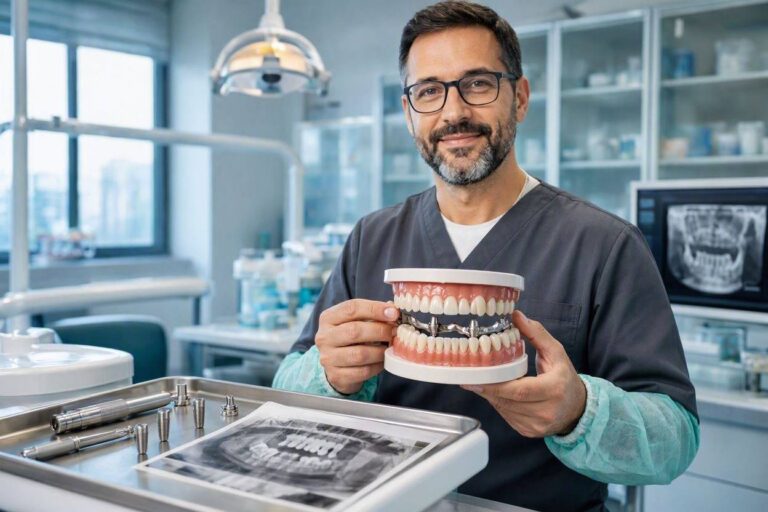
The single most important fact to absorb is that the titanium implant post itself is almost never the source of a quality problem. The global dental implant market is dominated by a handful of multinational manufacturers with rigorous, standardized quality control. A Straumann implant made in Switzerland is identical to a Straumann implant sold in Mexico. A Nobel Biocare implant from Sweden is the same product, regardless of which country’s customs it clears. These premium brands have decades of peer-reviewed research, documented surface technology, and precision-engineered internal connections.
A top-tier Mexican implant clinic will use these exact same premium implant systems. They are not sourcing a “Mexican version” of the implant. They are purchasing the genuine, branded product from the authorized distributor. The implant fixture itself, when it is a known, traceable brand, is of identical quality to the one placed in your hometown. The material variable is not the implant post. It is everything that surrounds it: the surgical skill, the diagnostic technology, and the restoration on top.
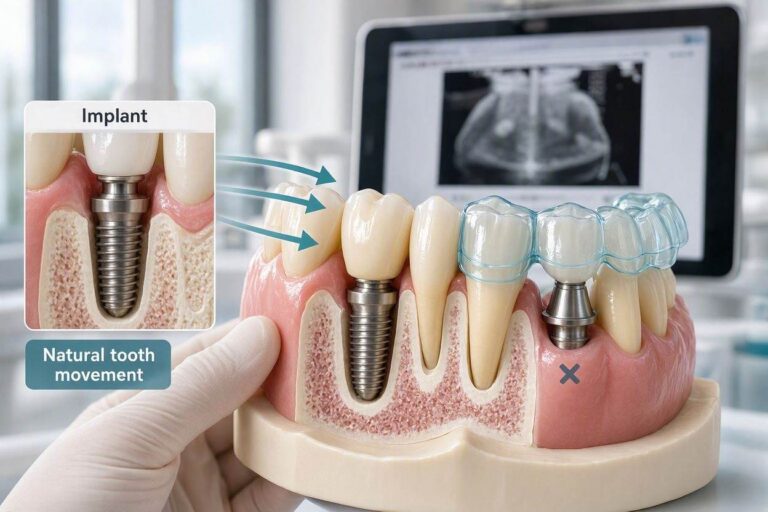
The risk lies in clinics that use generic, cloned, or unbranded implant systems to cut costs. These copies may look similar to a premium implant but lack the proven surface treatment, the exacting manufacturing tolerances, and the long-term clinical data. The internal connection between the implant and the abutment, a microscopic interface measured in microns, is a point of critical engineering. A poorly manufactured clone can have a loose, wobbling connection that leads to micro-movement, bacterial leakage, screw fracture, and eventual bone loss. Asking a single question—”What brand of implant will you be placing, and can you show me the sealed, sterile packaging?”—is your primary defense against the silent substitution of a generic clone.
The Surgeon: The True Measure of Quality
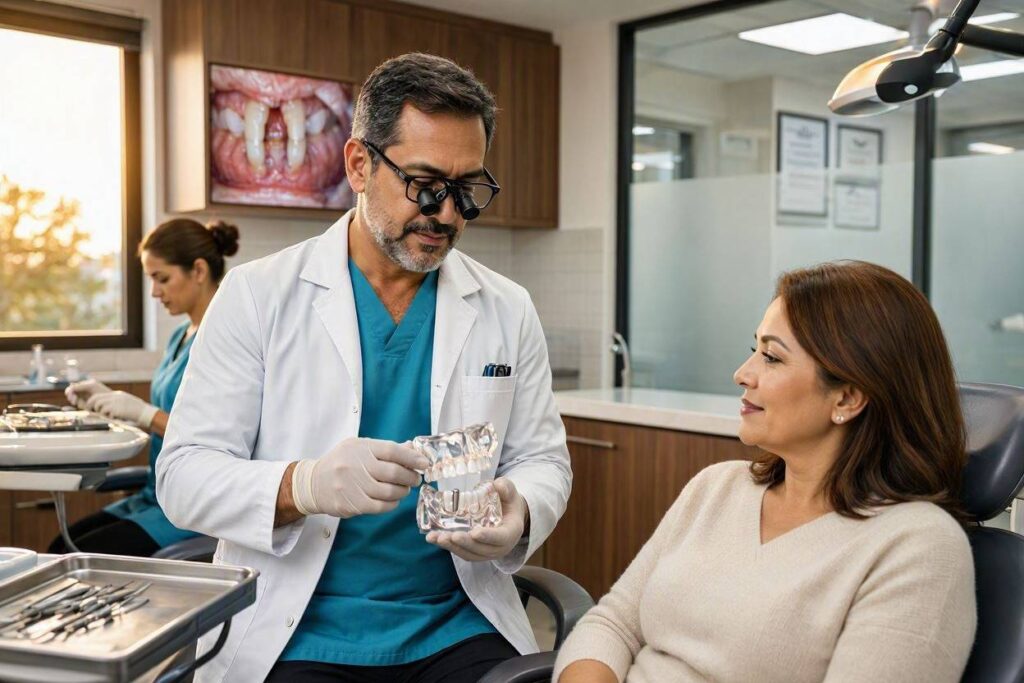
An implant is not a self-installing piece of hardware. It is a surgical device placed into living bone by a human being. The skill, training, and ethical judgment of that surgeon are the overwhelming determinants of success. Mexico has both ends of the spectrum in abundance.
At the highest level, Mexico has oral and maxillofacial surgeons and periodontists with board certifications, international fellowships, and decades of focused implant experience. These specialists attend international conferences, publish in peer-reviewed journals, and use the same advanced surgical planning software (coDiagnostiX, SimPlant) as their U.S. counterparts. They place implants using 3D-printed surgical guides based on CBCT scans, following a prosthetically driven protocol. Their implant success rates, in their published data, are comparable to the global standard of 95-98%. This is not luck. It is training, technology, and discipline.
At the other end of the spectrum are general dentists with minimal implant training who place a high volume of implants without CBCT guidance, without surgical guides, and without a prosthetically planned outcome. They are placing implants “freehand,” relying on their eye and a two-dimensional panoramic X-ray. This is not inherently malpractice, but it dramatically increases the risk of poor angulation, nerve injury, sinus perforation, and an implant placed in a position that is difficult or impossible to restore with a proper crown. The saving on the implant fee is quickly consumed by the cost of correcting a poorly positioned implant.
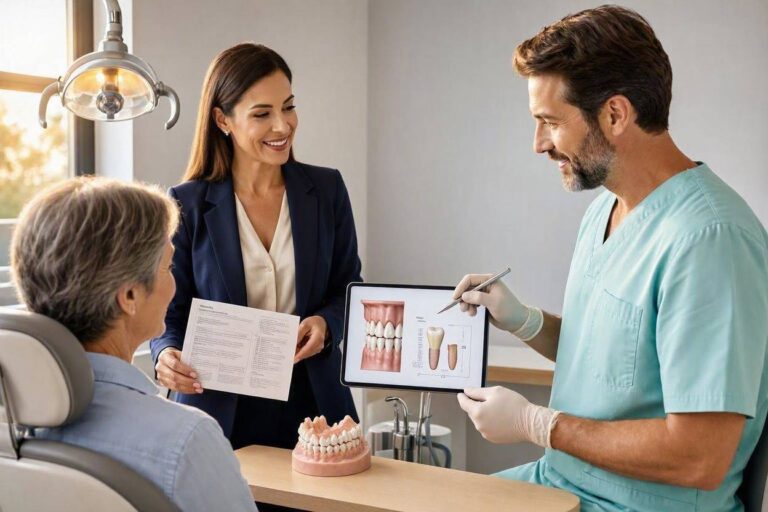
Verifying your surgeon’s credentials is not an act of mistrust. It is an essential step of patient self-protection. Request the surgeon’s full name and professional ID number (Cédula Profesional). Verify their specialty certification through the Mexican National Registry of Professionals website. Ask about their training, their years of implant experience, and whether they hold a board certification in oral implantology or a related surgical specialty. A world-class surgeon will answer these questions openly and with pride.
The Laboratory: The Hidden Art of the Crown
The dental laboratory that fabricates your implant crown or bridge is the invisible partner in your outcome. The implant post can be perfectly placed, and the final tooth can still look and feel terrible if the laboratory work is substandard.
A premium Mexican clinic uses a high-quality, often in-house or closely affiliated, dental laboratory. These labs use the same CAD/CAM milling machines, the same brand-name ceramic blocks, and the same layered porcelain techniques as a high-end U.S. lab. Many Mexican dental technicians have trained in the United States or Germany. Their ceramic work can be indistinguishable from the finest global laboratories. The cost of living in Mexico allows these highly skilled technicians to charge a fraction of what their U.S. equivalents must charge, but the quality of their artistry is not diminished by their geography.
A budget clinic uses a discount laboratory, often one that churns out high-volume, monolithic crowns with minimal aesthetic customization. The crown may be functional but blocky, monochromatic, and poorly contoured to the gum tissue. The marginal fit, the microscopic gap where the crown meets the implant abutment, may be loose. A crown with a poor marginal fit is a bacterial trap, a time bomb for peri-implantitis and bone loss. The laboratory bill is a direct cost to the clinic. A clinic quoting a startlingly low price is almost certainly cutting costs on the laboratory. You must ask: “Where is your dental laboratory located, and what materials and brands do they use for the final restoration?”
The Technology Gap: 3D Scanning and Guided Surgery
The standard of care for safe, predictable implant placement has evolved. Freehand placement based on a panoramic X-ray is a dated, less safe approach. The modern standard is 3D CBCT-based, prosthetically driven, guided implant surgery. The surgeon takes a CBCT scan and a digital intraoral scan, merges the two datasets, and plans the implant’s exact 3D position on a computer screen before touching the patient. A surgical guide is 3D-printed, and the implant is placed through the guide with sub-millimeter precision.
A top Mexican clinic invests in this technology. The CBCT machine, the intraoral scanner, the planning software, and the 3D printer are significant capital expenditures. A clinic that has made this investment is signaling a commitment to a high standard of care. A clinic that does not have a CBCT scanner, or does not use surgical guides for complex cases, is practicing a level below the modern standard. This is a verifiable, objective quality indicator. Ask: “Will my implant surgery be guided by a 3D CBCT scan and a custom-printed surgical guide?”
The Red Flags and Green Flags
Your ability to distinguish a quality clinic from a risky one depends on recognizing the signals.
Green Flags
- The clinic employs a board-certified specialist in oral implantology or periodontics.
- The surgeon reviews your medical history in detail and discusses contraindications.
- The clinic requires a pre-operative CBCT scan, not just a panoramic X-ray.
- The treatment plan is prosthetically driven, showing the final tooth position first.
- The clinic uses branded, traceable implant systems and shows you the sterile packaging.
- The final restoration is fabricated in a high-quality, named dental laboratory.
- The clinic offers a written warranty on the implant fixture and the restorative work.
- The clinic provides a clear, itemized treatment plan with all fees in writing.
Red Flags
- The clinic quotes a price without seeing any diagnostic records or X-rays.
- The surgeon is a general dentist with no verifiable implant-specific training.
- The clinic does not have an in-office CBCT scanner or uses only 2D panoramic X-rays.
- The clinic refuses to tell you the brand of implant or the name of their dental laboratory.
- The “all-inclusive” package is vague about the materials used for the final restoration.
- The price seems impossibly low compared to other reputable clinics.
Conclusion
Mexican dental implants can be exceptional, matching the highest global standards of material quality, surgical skill, and aesthetic craftsmanship. They can also be a clinical and financial disaster. The country is not the determinant of quality. The specific clinic, the specific surgeon, and the transparent use of premium materials are the only meaningful quality indicators. Your task is not to judge a nation’s dentistry. It is to diligently vet a single clinic, asking the specific, probing questions that separate the world-class provider from the high-volume tourist trap. A high-quality Mexican dental implant is not a bargain; it is a fair price for excellent care delivered in a lower-cost economy.
Frequently Asked Questions
Are Mexican dental implants made of the same titanium as in the US?
Yes, when a clinic uses a premium, branded implant system (like Straumann, Nobel Biocare, or Zimmer Biomet), the implant is the identical product sold globally. The titanium alloy (Ti-6Al-4V ELI) and the surface treatment are the same. The risk is in clinics that use unbranded, generic implant clones with unverified materials and manufacturing tolerances.
Can my US dentist tell if my Mexican implant was done well?
Yes. A post-operative CBCT or panoramic X-ray will reveal the implant’s position, angulation, proximity to vital structures, and the quality of the bone-implant interface. A well-placed, properly restored Mexican implant will be indistinguishable on a radiograph from a locally placed one. A poorly placed implant will be immediately obvious.
What warranty should I expect from a quality Mexican clinic?
A reputable clinic using premium implant brands should offer a warranty on the implant fixture itself, typically covered by the manufacturer for a period (often 10 years to lifetime) against material defect. The clinic should also offer a written warranty on the restorative crown or bridge, typically 3 to 5 years, against fracture or failure under normal use. The warranty terms, and the process for honoring them across international borders, must be in writing.
Additional Resource:
For guidance on medical tourism, including how to research providers and understand the risks, visit the U.S. Centers for Disease Control and Prevention’s page on medical tourism: https://wwwnc.cdc.gov/travel/page/medical-tourism