Can Dental Implants Cause Bad Breath?
Bad breath, also known as halitosis, is a common concern for many people. If you have dental implants or are considering them, you may wonder whether implants contribute to bad breath. The answer is nuanced—dental implants themselves do not cause bad breath, but complications or improper care can lead to odor-causing conditions.
This guide explores the relationship between dental implants and bad breath, the common causes of implant-related odor, and how to prevent and treat the problem.
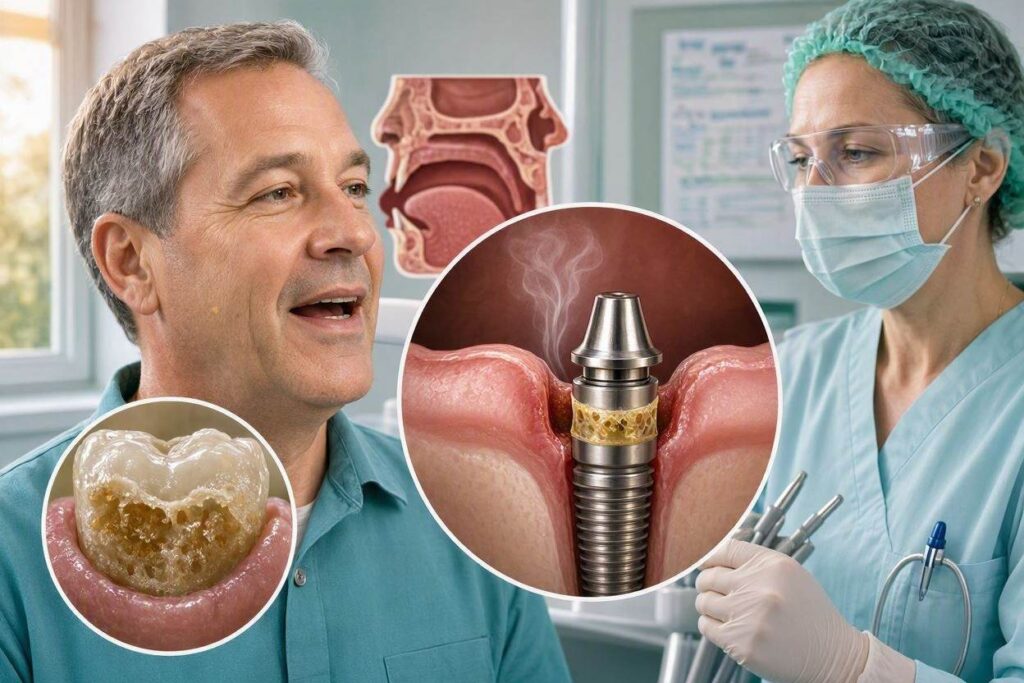
Understanding Bad Breath
Before discussing implants specifically, it helps to understand what causes bad breath.
The Science of Bad Breath
Bad breath is primarily caused by bacteria in the mouth.
How Bacteria Cause Odor:
- Bacteria break down food particles and debris
- This process releases volatile sulfur compounds
- These compounds produce the characteristic unpleasant odor
Common Causes of Bad Breath
- Poor oral hygiene
- Gum disease
- Food particles trapped between teeth
- Dry mouth
- Certain foods (garlic, onions)
- Smoking
- Medical conditions
Do Dental Implants Cause Bad Breath?
The short answer is no, dental implants themselves do not cause bad breath.
Why Implants Do Not Cause Odor
Dental implants are made of inert materials—titanium and ceramic—that do not produce odors. Unlike natural teeth, implants cannot decay. The materials do not harbor bacteria more than natural teeth.
When Implants Are Associated with Bad Breath
While implants do not directly cause bad breath, certain situations related to implants can lead to odor:
- Infection around the implant (peri-implantitis)
- Food trapping around the implant
- Poor oral hygiene
- Ill-fitting restorations
- Cement residue from crown placement
Causes of Bad Breath Around Dental Implants
Several implant-related issues can contribute to bad breath.
1. Peri-Implantitis
Peri-implantitis is an infection that affects the tissues around a dental implant.
How It Causes Bad Breath:
- Bacterial infection produces foul-smelling compounds
- Pus may form around the implant
- The odor is similar to that of advanced gum disease
Other Signs of Peri-Implantitis:
- Redness and swelling of the gums
- Bleeding when brushing
- Pus or discharge
- Gum recession
- Implant mobility
2. Food Trapping
Improperly placed or restored implants can trap food.
How Food Trapping Causes Bad Breath:
- Food debris accumulates around the implant
- Bacteria break down the debris
- Odor-causing compounds are released
Why Food Traps Around Implants:
- Gaps between the crown and gum
- Improper crown contours
- Spaces between adjacent teeth
3. Poor Oral Hygiene
Neglecting oral hygiene leads to bacterial buildup.
How Poor Hygiene Causes Bad Breath:
- Plaque accumulates on and around the implant
- Bacteria multiply and produce odor
- The situation worsens over time
4. Excess Cement
For cement-retained crowns, excess cement can remain below the gum line.
How Cement Causes Bad Breath:
- Cement traps bacteria
- The cement itself can irritate tissues
- Inflammation and odor result
5. Loose Components
Loose crowns or abutments create spaces where bacteria thrive.
How Loose Components Cause Bad Breath:
- Micro-gaps allow bacteria to enter
- Food debris accumulates
- Odor develops
How to Prevent Bad Breath with Dental Implants
Prevention is the best strategy for maintaining fresh breath.
1. Maintain Excellent Oral Hygiene
Proper cleaning is essential.
Daily Care:
- Brush twice daily with a soft-bristled brush
- Floss around the implant using implant-specific floss
- Use an interdental brush for hard-to-reach areas
- Rinse with an antimicrobial mouthwash
2. Use a Water Flosser
Water flossers are particularly effective for cleaning around implants.
Benefits:
- Removes debris from around the implant
- Massages gum tissue
- Reduces bacterial buildup
3. Attend Regular Dental Checkups
Professional cleanings and examinations are essential.
Frequency:
- Every 6 months for most patients
- Every 3 to 4 months for patients with a history of gum disease
4. Address Dry Mouth
Dry mouth contributes to bad breath.
Solutions:
- Stay hydrated
- Use saliva substitutes
- Chew sugar-free gum
- Avoid alcohol and caffeine
5. Quit Smoking
Smoking contributes to bad breath and implant complications.
Treating Bad Breath Related to Implants
If you experience bad breath around your implant, treatment depends on the cause.
1. Professional Cleaning
Regular professional cleaning removes plaque and tartar.
Cost: $100 to $300
2. Treatment of Peri-Implantitis
If infection is present, treatment is necessary.
Options:
- Non-surgical debridement
- Antibiotic therapy
- Surgical treatment
- Bone grafting
Cost: $200 to $3,000+
3. Crown Replacement
If the crown is ill-fitting or trapping food, replacement may be needed.
Cost: $1,000 to $3,000
4. Cement Removal
If excess cement is the culprit, it can be removed.
Cost: $100 to $500
5. Component Tightening or Replacement
Loose components are tightened or replaced.
Cost: $50 to $800
Signs That Bad Breath Indicates a Problem
Not all bad breath is related to implants, but certain signs warrant attention.
When to See Your Dentist
Contact your dentist if you experience:
- Persistent bad breath despite good hygiene
- Bad taste in your mouth
- Bleeding gums around the implant
- Swelling or redness
- Pus or discharge
- Implant mobility
When Bad Breath Is Unrelated to Implants
Bad breath may originate from:
- The tongue
- The throat
- The stomach
- Other teeth
- Sinus issues
The Importance of Regular Maintenance
Regular maintenance is essential for implant health and fresh breath.
Professional Maintenance Schedule
| Visit Type | Frequency | What Happens |
|---|---|---|
| Dental Examination | Every 6 months | Visual inspection, assessment |
| Professional Cleaning | Every 6 months | Plaque and tartar removal |
| X-Rays | Annually | Bone level assessment |
| Implant-Specific Check | Annually | Component evaluation |
Home Care Routine
| Activity | Frequency |
|---|---|
| Brushing | Twice daily |
| Flossing | Daily |
| Water Flossing | Daily |
| Mouthwash | Daily |
Common Myths About Implants and Bad Breath
Let us address common misconceptions.
Myth: Implants Smell Bad
Implants themselves are odorless. Bad breath comes from bacteria, not the implant.
Myth: Implants Cause Chronic Bad Breath
Implants do not cause chronic bad breath. Persistent odor indicates a problem requiring treatment.
Myth: You Cannot Clean Implants Effectively
Implants can be cleaned effectively with proper tools and techniques.
Conclusion
Dental implants do not cause bad breath. However, complications like peri-implantitis, food trapping, poor hygiene, and excess cement can lead to odor. Maintaining excellent oral hygiene, attending regular checkups, and addressing problems promptly prevent and treat implant-related bad breath. If you experience persistent bad breath, consult your dentist to identify and address the underlying cause.
Frequently Asked Questions (FAQ)
Q: Can dental implants cause bad breath?
A: No, implants themselves do not cause bad breath. However, complications like infection or food trapping can lead to odor.
Q: How do I clean my dental implant to prevent bad breath?
A: Brush twice daily, floss around the implant, use a water flosser, and rinse with antimicrobial mouthwash.
Q: What does peri-implantitis smell like?
A: Peri-implantitis produces a foul odor similar to advanced gum disease, often accompanied by a bad taste.
Q: Can food get stuck under a dental implant?
A: Food can become trapped around the implant if the crown does not fit properly or if gaps exist.
Q: How often should I have my implant professionally cleaned?
A: Most patients benefit from professional cleaning every 6 months.
Q: What should I do if I have bad breath around my implant?
A: Contact your dentist for evaluation. The cause may be infection, food trapping, or another issue requiring treatment.
Additional Resource
For more information on dental implant care and maintenance, visit the American Academy of Implant Dentistry (AAID) at www.aaid.com. They provide educational resources for patients.