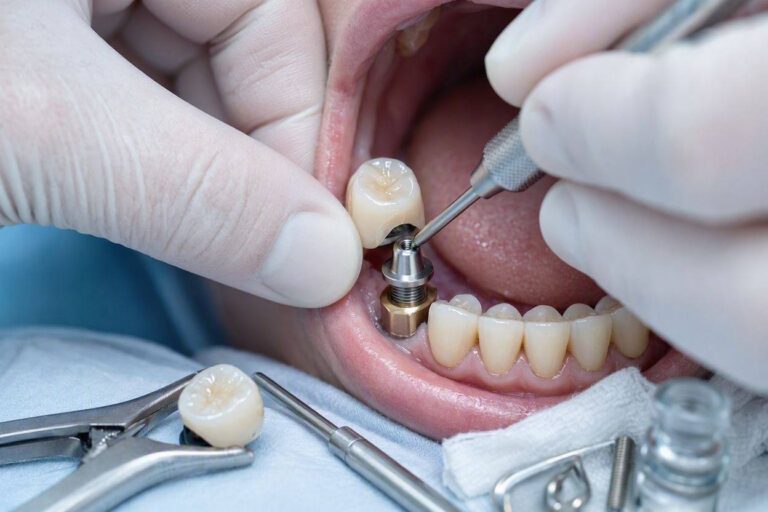
Can You Get Invisalign After An Implant?
Invisalign has revolutionized orthodontic treatment, offering a discreet alternative to traditional braces. If you have a dental implant and are considering Invisalign, you may wonder whether the two are compatible. The answer is yes, you can get Invisalign after an implant, but there are important considerations to understand.
This guide explores how Invisalign works with dental implants, the challenges involved, and what you need to know before starting treatment.

Understanding Invisalign and Dental Implants
Before discussing compatibility, it helps to understand how both treatments work.
How Invisalign Works
Invisalign uses a series of clear, removable aligners to gradually move teeth into proper position.
Key Features:
- Aligners are custom-made for your teeth
- Each set is worn for 1 to 2 weeks
- Aligners apply gentle pressure to move teeth
- Treatment takes 6 to 18 months on average
How Dental Implants Work
Dental implants are titanium posts surgically placed in the jawbone. They fuse with the bone and serve as artificial tooth roots.
Key Features:
- Implants are permanent
- They do not move once integrated
- They serve as stable anchors for crowns
The Key Difference
The critical difference is that natural teeth can move, while implants cannot.
Why This Matters:
- Invisalign moves natural teeth through bone
- Implants are fixed in place and cannot be moved
- Treatment planning must account for this difference
Can You Get Invisalign with an Implant?
Yes, but the approach depends on your specific situation.
When the Implant Is Already Placed
If you already have an implant and want Invisalign, treatment is possible.
How It Works:
- The implant remains stationary
- Invisalign moves the surrounding natural teeth
- The treatment plan accounts for the implant’s fixed position
When You Need Both Treatments
If you need both an implant and orthodontic treatment, sequencing matters.
Optimal Sequence:
- Invisalign first to move teeth into position
- Implant placement after orthodontic treatment
- Crown placement after implant healing
Why This Order:
- Invisalign creates space for the implant
- The implant is placed in the ideal position
- The result is optimized
Challenges of Invisalign with Implants
Several challenges arise when combining these treatments.
1. The Implant Cannot Move
The implant is fixed in the bone and cannot be repositioned.
What This Means:
- Invisalign cannot correct the implant’s position
- If the implant is in the wrong place, other solutions are needed
- The implant serves as an anchor point
2. Aligner Fit Around Implants
Aligners must fit properly around the implant crown.
Potential Issues:
- The crown may interfere with aligner seating
- Aligners may need modifications
- Attachments may be difficult to place on implant crowns
3. Force Distribution
Invisalign applies forces to move teeth. These forces must not overload the implant.
How This Is Managed:
- Careful treatment planning
- Limited force application near the implant
- Monitoring during treatment
4. Aesthetic Considerations
The implant crown may not match the final position of surrounding teeth.
Possible Solutions:
- Crown replacement after Invisalign
- Crown reshaping
- Acceptance of minor discrepancies
When Invisalign May Not Be Recommended
In some situations, Invisalign may not be the best choice.
Alternative Approaches
Traditional Braces:
In some cases, traditional braces offer better control when implants are present.
No Orthodontic Treatment:
If the implant position is acceptable and tooth movement is not needed, orthodontics may be unnecessary.
Implant Replacement:
In rare cases, removing and replacing the implant may be considered.
The Treatment Planning Process
Proper planning is essential for successful outcomes.
Step 1: Comprehensive Evaluation
Your dentist or orthodontist evaluates your mouth.
What Happens:
- Examination of your teeth and implant
- X-rays and imaging
- Assessment of your bite
- Discussion of your goals
Step 2: Digital Planning
Invisalign treatment is planned digitally.
How It Works:
- Digital scans of your teeth
- Virtual treatment simulation
- Prediction of tooth movements
- Identification of challenges
Step 3: Custom Aligner Fabrication
Aligners are custom-made based on the digital plan.
Step 4: Treatment
You wear the aligners as directed, typically 20 to 22 hours per day.
Step 5: Monitoring
Regular checkups ensure treatment progresses as planned.
Costs of Invisalign with Implants
Understanding costs helps you budget.
Average Costs
| Treatment | Average Cost |
|---|---|
| Invisalign (Full Treatment) | $3,000 – $8,000 |
| Invisalign (Minor Correction) | $2,000 – $4,000 |
| Crown Replacement (if needed) | $1,000 – $3,000 |
| Implant Placement (if needed) | $2,300 – $6,700 |
Insurance Coverage
- Orthodontic coverage varies by plan
- Many plans have lifetime orthodontic maximums
- Implant coverage may be separate
Benefits of Invisalign with Implants
Despite challenges, benefits exist.
1. Improved Alignment
Invisalign corrects misalignment of natural teeth around the implant.
2. Better Bite Function
Proper alignment improves chewing and bite function.
3. Enhanced Aesthetics
Straighter teeth improve your smile.
4. Easier Cleaning
Aligned teeth are easier to clean, benefiting both natural teeth and implants.
Questions to Ask Your Provider
Before starting treatment, ask these questions.
- Am I a good candidate for Invisalign with my implant?
- How will the implant affect my treatment?
- Will I need a new crown after treatment?
- What is the total cost including all components?
- How long will treatment take?
- What are the risks and limitations?
- Are there alternatives I should consider?
What to Expect During Treatment
Understanding the process helps you prepare.
Wearing Aligners
- Wear aligners 20 to 22 hours daily
- Remove for eating and cleaning
- Change aligners every 1 to 2 weeks
Managing Discomfort
- Mild discomfort is normal
- Pain relievers can help
- Discomfort subsides as teeth adjust
Monitoring Progress
- Regular checkups every 6 to 8 weeks
- Digital scans to track progress
- Adjustments as needed
After Invisalign Treatment
After treatment, maintenance is important.
Retainers
- Wear retainers as directed
- Prevents teeth from shifting back
- Maintains your new smile
Crown Evaluation
- Assess whether the implant crown needs adjustment
- Consider crown replacement if aesthetics are affected
Conclusion
You can get Invisalign after a dental implant, but the treatment requires careful planning. The implant remains stationary while Invisalign moves the surrounding natural teeth. Challenges include aligner fit, force distribution, and aesthetic considerations. The optimal sequence is usually Invisalign first, followed by implant placement. Costs range from $3,000 to $8,000 for Invisalign, with additional costs for crown replacement if needed. Consult with an experienced provider to determine the best approach for your situation.
Frequently Asked Questions (FAQ)
Q: Can Invisalign move a dental implant?
A: No, dental implants are fixed in the bone and cannot be moved by Invisalign or any orthodontic treatment.
Q: Should I get Invisalign before or after an implant?
A: Ideally, Invisalign should come first to position teeth properly, followed by implant placement.
Q: Will Invisalign damage my implant?
A: No, Invisalign does not damage implants. However, careful planning ensures forces are not excessive near the implant.
Q: Can attachments be placed on implant crowns?
A: Attachments are typically not placed on implant crowns. They are placed on natural teeth instead.
Q: How long does Invisalign take with an implant?
A: Treatment time is similar to standard Invisalign, typically 6 to 18 months.
Q: Will I need a new crown after Invisalign?
A: In some cases, yes. If the implant crown does not match the final position of surrounding teeth, replacement may be recommended.
Additional Resource
For more information on Invisalign and orthodontic treatment, visit the American Association of Orthodontists (AAO) at www.aaoinfo.org. They provide educational resources for patients.