Can Crowns Made From Dental Implants Be Removed?
Dental implant crowns are designed to be durable and long-lasting, but situations arise where removal becomes necessary. Whether the crown is damaged, aesthetically unsatisfactory, or the underlying components need attention, understanding the removal process is important.
The answer is yes, implant crowns can be removed. However, the process depends on how the crown was originally attached. This guide explains the different attachment methods, how removal works, when it is necessary, and what to expect.
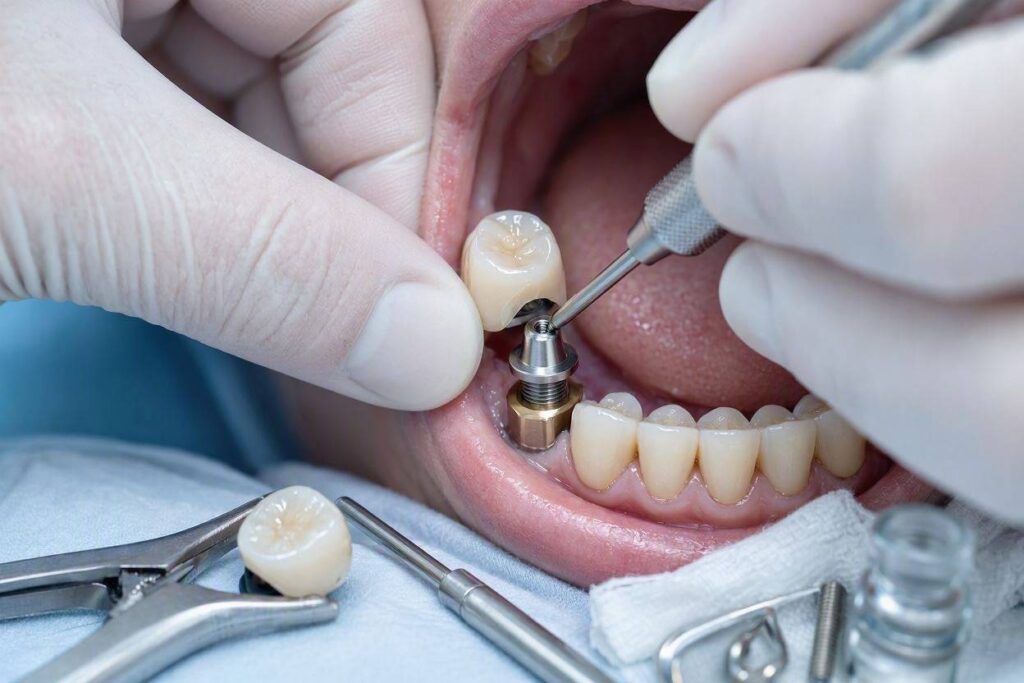
Understanding Implant Crown Attachment
Before discussing removal, it helps to understand how crowns attach to implants.
The Two Main Attachment Methods
Implant crowns are attached using one of two methods.
Screw-Retained Crowns:
The crown is secured to the abutment with a small screw. The screw is accessible through a small opening on the biting surface of the crown.
Cement-Retained Crowns:
The crown is cemented onto the abutment, similar to traditional crowns on natural teeth.
Why the Method Matters
The attachment method determines how easily the crown can be removed.
Screw-Retained Crowns:
- Designed to be retrievable
- Can be removed without damage
- Easier removal process
Cement-Retained Crowns:
- More difficult to remove
- May be damaged during removal
- Require more effort
Can Screw-Retained Crowns Be Removed?
Yes, screw-retained crowns are designed for easy removal.
The Removal Process
Step 1: Locating the Access Hole
The dentist identifies the small opening on the biting surface of the crown.
Step 2: Removing the Filling
The filling material covering the screw is removed, exposing the screw head.
Step 3: Unscrewing
Using a specialized screwdriver, the dentist loosens and removes the screw.
Step 4: Lifting the Crown
Once the screw is removed, the crown lifts off the abutment easily.
Advantages of Screw-Retained Removal
- Crown is not damaged
- Abutment is not damaged
- Quick and straightforward
- Can be reattached easily
Can Cement-Retained Crowns Be Removed?
Yes, but the process is more involved.
The Removal Process
Step 1: Assessment
The dentist evaluates the crown and determines the best removal approach.
Step 2: Crown Removal
Several techniques may be used:
- Crown Pullers: Instruments that grip and pull the crown
- Ultrasonic Devices: Vibrations that break the cement seal
- Drilling: In some cases, the crown must be cut off
Step 3: Cleaning
The abutment is cleaned of residual cement after crown removal.
Risks of Cement-Retained Removal
- Crown may be damaged
- Abutment may be damaged
- More time-consuming
- May require crown replacement
When Is Crown Removal Necessary?
Several situations call for crown removal.
1. Crown Damage
If the crown chips, cracks, or fractures, removal and replacement may be necessary.
2. Aesthetic Concerns
If you are unhappy with the crown’s appearance, removal allows for replacement.
3. Abutment Issues
If the abutment is damaged or loose, the crown must be removed to access it.
4. Implant Problems
If the implant requires treatment for infection or other issues, crown removal may be needed.
5. Screw Loosening
For screw-retained crowns, screw loosening requires removal for re-tightening.
6. Gum Recession
If gums recede, exposing the abutment, crown replacement may improve aesthetics.
The Cost of Crown Removal
Understanding costs helps you plan.
Average Costs
| Service | Average Cost |
|---|---|
| Screw-Retained Crown Removal | $50 – $200 |
| Cement-Retained Crown Removal | $100 – $400 |
| Crown Replacement (if needed) | $1,000 – $3,000 |
| Abutment Replacement (if needed) | $300 – $800 |
| Total (with replacement) | $1,400 – $4,200 |
Insurance Coverage
- Crown removal may be covered under basic services
- Crown replacement falls under major services
- Check your specific policy
What Happens After Crown Removal?
The next steps depend on the reason for removal.
If the Crown Is Reusable
In some cases, the removed crown can be cleaned and reattached.
When Reuse Is Possible:
- Screw-retained crowns with no damage
- Crowns removed for abutment access
- Crowns in good condition
If a New Crown Is Needed
If the crown is damaged or aesthetically unsatisfactory, a new one is fabricated.
The Process:
- Impressions are taken
- A temporary crown is placed
- The new crown is fabricated
- The new crown is attached
Risks of Crown Removal
While generally safe, removal carries some risks.
Potential Risks
- Damage to the crown
- Damage to the abutment
- Damage to the implant
- Gum irritation
- Temporary discomfort
How to Minimize Risks
- Choose an experienced dentist
- Use proper removal techniques
- Plan for potential crown replacement
Screw-Retained vs. Cement-Retained: Which Is Better?
Both methods have advantages and disadvantages.
Comparison Table
| Feature | Screw-Retained | Cement-Retained |
|---|---|---|
| Retrievability | Excellent | Difficult |
| Aesthetics | Good (access hole filled) | Excellent (no access hole) |
| Risk of Cement Debris | None | Possible |
| Crown Damage Risk | Low | Higher |
| Ease of Removal | Easy | Challenging |
| Cost | Similar | Similar |
The Current Trend
Many dentists prefer screw-retained crowns for their retrievability and reduced risk of peri-implantitis.
Can You Change from Cement-Retained to Screw-Retained?
In some cases, yes.
The Process
- The cement-retained crown is removed
- The abutment is evaluated
- A new screw-retained crown and abutment may be fabricated
- The new restoration is attached
Considerations
- May require new impressions
- Additional costs involved
- Not always possible depending on implant position
Maintaining Your Implant Crown
Proper care extends the life of your crown.
1. Good Oral Hygiene
Brush twice daily and floss around the implant crown.
2. Regular Checkups
Professional examinations every 6 months detect problems early.
3. Avoid Hard Foods
Chewing ice or hard candy can damage the crown.
4. Address Grinding
If you grind your teeth, use a night guard.
Conclusion
Crowns made from dental implants can be removed, regardless of whether they are screw-retained or cement-retained. Screw-retained crowns are designed for easy retrieval and can typically be removed without damage. Cement-retained crowns require more effort and may be damaged during removal. Removal may be necessary due to crown damage, aesthetic concerns, abutment issues, or implant problems. Costs range from $50 to $400 for removal alone, with replacement crowns costing $1,000 to $3,000.
Frequently Asked Questions (FAQ)
Q: Can all dental implant crowns be removed?
A: Yes, both screw-retained and cement-retained crowns can be removed, though the process differs.
Q: Will removing an implant crown damage it?
A: Screw-retained crowns are usually removed without damage. Cement-retained crowns may be damaged during removal.
Q: How long does crown removal take?
A: Simple screw-retained crown removal takes 15 to 30 minutes. Cement-retained removal may take longer.
Q: Can I have my cement-retained crown changed to a screw-retained crown?
A: In some cases, yes. This may require a new abutment and crown.
Q: Is crown removal painful?
A: The procedure is performed under local anesthesia if needed. Most patients experience minimal discomfort.
Q: How much does crown removal cost?
A: Removal costs $50 to $400 depending on the attachment method and complexity.
Additional Resource
For more information on dental implant restorations, visit the American College of Prosthodontists at www.prosthodontics.org. They provide educational resources for patients.