When Can I Chew On My Dental Implant?
After dental implant surgery, one of the most common questions patients ask is when they can chew on their new implant. The answer depends on the stage of treatment and the healing process. Understanding the timeline helps you protect your investment and ensure successful osseointegration.
This guide explains the stages of implant healing, when you can begin chewing, what foods to eat during each phase, and how to transition back to a normal diet.
Understanding the Healing Process
Before discussing chewing, it helps to understand how implants heal.
What Is Osseointegration?
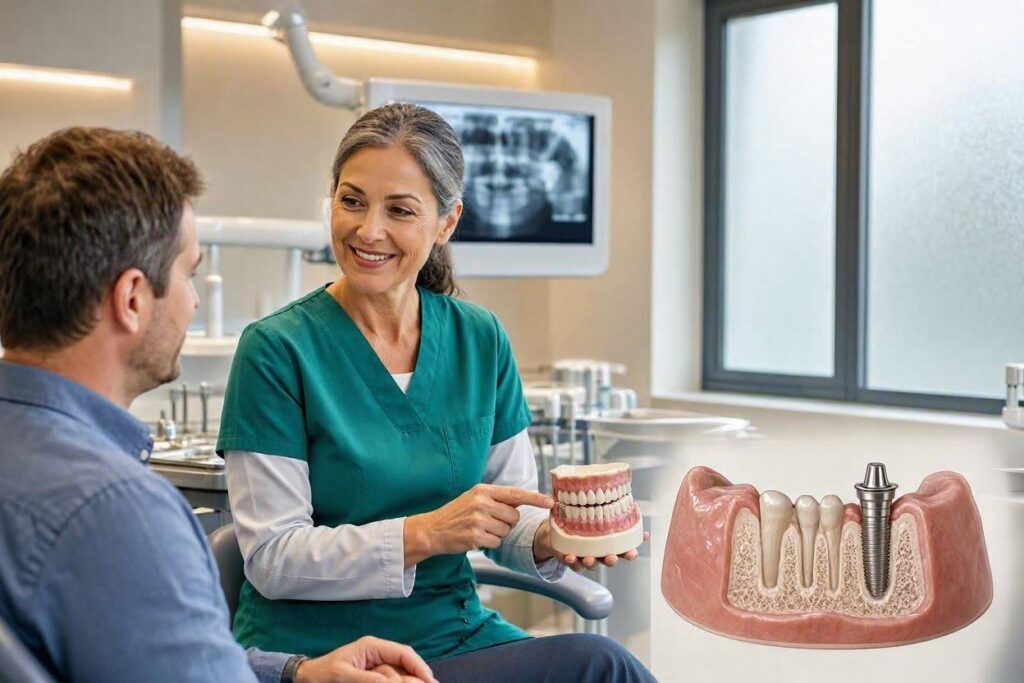
Osseointegration is the biological process where the titanium implant fuses directly with the jawbone.
How It Works:
- The implant is placed into the bone
- Bone cells grow onto the implant surface
- The implant becomes firmly anchored
- This process takes 3 to 6 months
Why Timing Matters
Chewing too soon can disrupt osseointegration.
Risks of Premature Chewing:
- Implant movement during healing
- Failed osseointegration
- Implant failure
- Need for removal and replacement
The Stages of Implant Treatment
Understanding the stages helps you know when chewing is appropriate.
Stage 1: Immediately After Surgery (Days 1-7)
The surgical site is healing.
What to Expect:
- Swelling and discomfort
- Soft tissue healing
- No chewing on the implant site
Diet:
- Liquids only for the first 24 hours
- Soft foods for the first week
- Avoid chewing near the surgical site
Stage 2: Early Healing (Weeks 2-8)
The implant is integrating with the bone.
What to Expect:
- Reduced swelling
- Continued osseointegration
- Still no chewing on the implant
Diet:
- Soft foods continue
- Chew on the opposite side
- Avoid hard or crunchy foods
Stage 3: Continued Osseointegration (Months 2-4)
The implant continues to integrate.
What to Expect:
- Implant is becoming stable
- Still not ready for full chewing
- Temporary restoration may be placed
Diet:
- Gradually introduce more textures
- Still avoid chewing directly on the implant
Stage 4: Restoration Placement (Months 3-6)
The final crown is placed.
What to Expect:
- The implant is fully integrated
- The crown is attached
- You can begin chewing carefully
Diet:
- Start with soft foods
- Gradually introduce normal foods
- Avoid extremely hard items
Stage 5: Full Function (After 6 Months)
The implant is fully functional.
What to Expect:
- Normal chewing ability
- The implant feels like a natural tooth
- Full diet resumed
The Chewing Timeline
Here is a general timeline for returning to normal chewing.
Week 1: No Chewing on Implant
- Liquids and very soft foods
- No chewing on the surgical site
- Avoid hot foods and beverages
Weeks 2-4: Soft Foods Only
- Soft foods like yogurt, mashed potatoes, scrambled eggs
- Chew on the opposite side
- Avoid hard, crunchy, or sticky foods
Months 2-3: Gradual Introduction
- Softer solid foods
- Still avoid chewing directly on the implant
- Continue chewing on the opposite side
Months 4-6: Careful Chewing
- After crown placement, begin careful chewing
- Start with soft foods
- Gradually introduce normal textures
After 6 Months: Normal Chewing
- Full chewing function
- Resume normal diet
- Avoid extremely hard items like ice
Foods to Eat During Each Stage
Knowing what to eat helps you navigate recovery.
Stage 1: Liquids and Purees (Days 1-7)
- Water
- Broth
- Smoothies
- Protein shakes
- Applesauce
- Yogurt
- Pudding
- Mashed potatoes
Stage 2: Soft Foods (Weeks 2-4)
- Scrambled eggs
- Oatmeal
- Soft pasta
- Cooked vegetables
- Soft fruits
- Cottage cheese
- Soft bread
Stage 3: Gradual Introduction (Months 2-4)
- Tender meats
- Cooked grains
- Soft sandwiches
- Steamed vegetables
- Soft cheeses
Stage 4: Careful Chewing (Months 4-6)
- Most normal foods
- Cut food into small pieces
- Chew slowly and carefully
- Avoid very hard items
Stage 5: Full Diet (After 6 Months)
- Normal diet
- Still avoid ice and very hard candy
- Use common sense with hard foods
Foods to Avoid During Healing
Certain foods should be avoided during recovery.
Hard Foods
- Ice
- Hard candy
- Nuts
- Popcorn kernels
- Hard crusts
Sticky Foods
- Caramel
- Taffy
- Gum
- Sticky candy
Crunchy Foods
- Chips
- Pretzels
- Raw vegetables
- Hard crackers
Chewy Foods
- Tough meats
- Bagels
- Dried fruit
Signs You Are Ready to Chew
Several indicators suggest readiness for chewing.
1. No Pain or Discomfort
The surgical site should be pain-free.
2. No Swelling
Swelling should have completely resolved.
3. Implant Feels Stable
The implant should feel solid and secure.
4. Your Dentist Approves
Always follow your dentist’s specific instructions.
What Happens If You Chew Too Soon?
Premature chewing can have serious consequences.
Potential Complications
- Implant movement
- Disruption of osseointegration
- Implant failure
- Bone loss
- Need for implant removal
Signs of Problems
- Pain when chewing
- Implant mobility
- Swelling or inflammation
- Discomfort that persists
Important Note: If you experience these signs, contact your dentist immediately.
Tips for Returning to Normal Chewing
Here are strategies for a smooth transition.
1. Start Slowly
Begin with soft foods and gradually introduce harder textures.
2. Chew on the Opposite Side
Until your dentist approves, chew on the side opposite the implant.
3. Cut Food into Small Pieces
Smaller pieces require less force.
4. Chew Slowly
Take your time and be mindful of the implant.
5. Listen to Your Body
If something causes discomfort, avoid it.
The Role of Temporary Restorations
If you receive a temporary crown, special considerations apply.
Temporary Crowns
- Not as strong as permanent crowns
- Avoid chewing on the temporary
- Follow your dentist’s instructions
Transition to Permanent Crown
- The permanent crown is stronger
- You can chew more confidently
- Still exercise caution initially
Long-Term Care for Chewing Function
Once healed, proper care maintains chewing function.
1. Maintain Good Oral Hygiene
Brush and floss daily to prevent peri-implantitis.
2. Attend Regular Checkups
Professional examinations detect problems early.
3. Avoid Excessive Forces
Do not chew ice or use teeth as tools.
4. Address Grinding
If you grind your teeth, use a night guard.
Conclusion
You can typically begin chewing on your dental implant after the final crown is placed, which occurs 3 to 6 months after implant surgery. During the healing period, avoid chewing on the implant site and follow a soft food diet. After crown placement, start with soft foods and gradually transition to normal chewing over several weeks. Always follow your dentist’s specific instructions and listen to your body.
Frequently Asked Questions (FAQ)
Q: How soon after implant surgery can I eat?
A: You can eat immediately, but stick to liquids and soft foods for the first week.
Q: When can I chew on my dental implant?
A: You can begin careful chewing after the final crown is placed, typically 3 to 6 months after surgery.
Q: Can I chew on a temporary crown?
A: Avoid chewing on temporary crowns. They are not as strong as permanent crowns.
Q: What happens if I chew too soon?
A: Premature chewing can disrupt osseointegration and lead to implant failure.
Q: How long until I can eat normally?
A: Most patients resume a normal diet within 6 months of implant placement.
Q: Will my implant feel like a natural tooth when chewing?
A: Yes, a successful implant should feel very similar to a natural tooth.
Additional Resource
For more information on dental implant recovery and aftercare, visit the American Association of Oral and Maxillofacial Surgeons (AAOMS) at www.aaoms.org. They provide patient education resources.