Can A Periodontist Do Dental Implants?
When you are facing tooth loss, you quickly enter the world of dental specialists. You hear terms like “oral surgeon,” “periodontist,” and “prosthodontist,” and it can get confusing fast. If you need a dental implant, who exactly should you go to?
If you have been referred to a periodontist, or if you have found one in your area, you might be wondering: “Is this the right person to do my implant surgery?”
The short answer is yes, absolutely. In fact, periodontists are some of the most qualified professionals on the planet to place dental implants. This guide will explain what a periodontist is, why their training makes them uniquely suited for implant surgery, and how to decide between a periodontist and an oral surgeon.
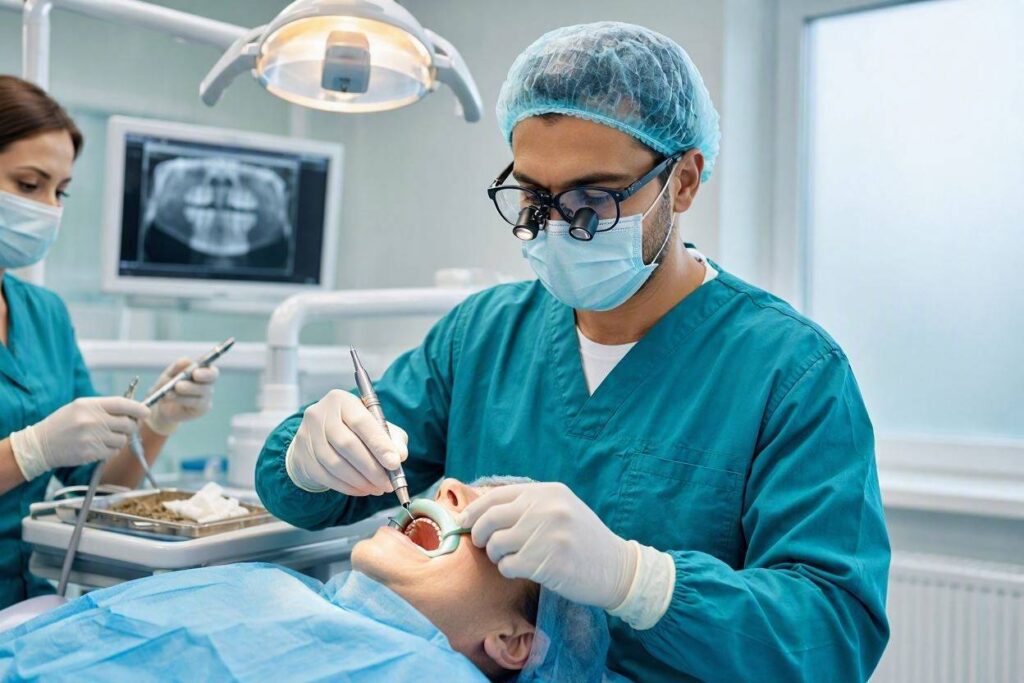
What is a Periodontist?
To understand why a periodontist is great at implants, you need to understand their specialty. The word “periodontist” comes from Greek roots: “perio” (around) and “odont” (tooth). A periodontist is a dentist who specializes in the structures around the teeth: the gums, the jawbone, and the connective tissues.
They are the experts in the “foundation” of your smile. They treat gum disease (periodontitis), perform gum grafts, and place bone grafts. If your teeth are a picket fence, the periodontist is the expert who manages the soil and the fence posts.
The Training Path:
Becoming a periodontist requires extensive education:
- 4 years of undergraduate study.
- 4 years of dental school (earning a DDS or DMD).
- 3 years of residency specializing in periodontics and implant surgery.
During their residency, periodontists perform hundreds of implant surgeries, often on complex cases involving severe bone loss or gum disease. They are not just “general dentists who took a weekend course”; they are board-eligible specialists.
Why Periodontists Are Ideal for Implants
Dental implants are not just about drilling a hole in the bone. They are about managing the soft tissue (gums) and the hard tissue (bone) to create a stable, aesthetic, and long-lasting result.
Here is why periodontists excel in this area:
1. The “Gum” Mastery
The success of an implant is not just about the bone; it is about the pink tissue surrounding it. A periodontist understands how to shape the gums to look natural. They know how to handle thin gums, receded gums, and how to prevent the “black triangles” (gaps) that can appear between the implant and the natural teeth. They are the plastic surgeons of the mouth.
2. The “Bone” Mastery
Many patients who need implants also have bone loss. Whether from gum disease or from the tooth being missing for a long time, the bone is often deficient. Periodontists are the leading experts in bone grafting. They routinely perform sinus lifts, socket preservations, and ridge augmentations to rebuild the bone before placing an implant.
3. The “Disease” Management
If you have a history of gum disease (periodontitis), you are at higher risk for implant failure. A periodontist is the doctor who treats gum disease. They will ensure the infection is completely controlled before placing the implant, and they will monitor you closely afterward to prevent recurrence.
Periodontist vs. Oral Surgeon: What is the Difference?
This is the most common question patients ask. Both periodontists and oral surgeons are highly qualified to place implants. So, how do you choose?
| Factor | Periodontist | Oral Surgeon |
|---|---|---|
| Specialty Focus | Gums, bone, and the supporting structures of the teeth. | Surgery of the mouth, jaws, and face. |
| Implant Focus | Focuses heavily on aesthetics and the health of the gum tissue around the implant. | Focuses heavily on the surgical mechanics, complex anatomy, and medical management. |
| Best For | Patients with gum disease, thin gums, receding gums, or those needing aesthetic front-tooth implants. | Patients needing complex extractions, jaw surgery, facial trauma, or those who need deep sedation (general anesthesia). |
| Anesthesia | Usually local anesthetic and/or mild sedation. | Usually offers a wider range of sedation, including deep IV sedation and general anesthesia. |
| The “Team” Approach | Often restores the implant (places the crown) as well as placing the post. | Usually places the post only, then sends you back to your general dentist for the crown. |
The Verdict:
If your main concern is aesthetics (like replacing a front tooth) or if you have gum disease, a periodontist is often the best choice.
If you have a complex medical history, need a major bone graft from your hip, or need full sedation, an oral surgeon might be the better choice.
Often, general dentists will refer to one or the other based on their personal relationship and the specific needs of the case.
The “Team” Approach: Periodontist + General Dentist
In many dental practices, the periodontist works as part of a team.
Phase 1: The Periodontist (The Surgeon)
You visit the periodontist for the surgical phase. They place the implant post into the bone. They may also perform any necessary bone grafts or gum grafts. They monitor the healing process for 3-6 months to ensure osseointegration occurs.
Phase 2: The General Dentist (The Restorative Doctor)
Once the periodontist gives the “green light” that the implant is fused to the bone, you go back to your general dentist. The general dentist takes impressions and creates the crown (the visible tooth). They attach the crown to the implant.
This division of labor ensures you have an expert in surgery doing the surgery, and an expert in restorative dentistry doing the tooth.
What About a “Prosthodontist”?
You might also hear the term “prosthodontist.” This is a specialist in restoring and replacing teeth. They are the architects of the smile. While some prosthodontists do place implants, their primary focus is the restoration (the crown, bridge, or denture). For complex full-mouth cases, a prosthodontist often leads the team, coordinating with a periodontist or oral surgeon for the surgical phase.
How to Know if You Should See a Periodontist for Your Implant
Ask yourself these questions:
- Do I have red, swollen, or bleeding gums? (If yes, you need a periodontist to manage the disease first).
- Have I been told I have “receding gums”? (If yes, a periodontist can graft tissue to thicken the area).
- Is the missing tooth in the front of my mouth? (If yes, a periodontist’s aesthetic expertise is crucial).
- Have I been told I have “thin gums”? (A periodontist knows how to handle this).
If you answered “yes” to any of these, seeking a periodontist is a smart move.
The Training Matters: Board Certification
When choosing a periodontist, look for one who is a Diplomate of the American Board of Periodontology. This means they have passed rigorous written and oral examinations and have demonstrated excellence in the field. It is a mark of the highest standard of care.
Conclusion
Yes, a periodontist can absolutely perform dental implants. In fact, their specialized training in the gums and jawbone makes them one of the best choices, especially for patients with gum disease, bone loss, or aesthetic concerns in the front of the mouth. They are the “foundation experts” of dentistry, and they play a critical role in ensuring the long-term success and beauty of your dental implant.
Frequently Asked Questions (FAQ)
1. Is a periodontist more expensive for implants than a general dentist?
Generally, yes. A specialist has more training and handles more complex cases, so their fees are higher. However, the investment is often worth it for the expertise they bring, especially if you have a challenging case.
2. Can a periodontist treat the gum disease and place the implant?
Yes. This is the ideal scenario. The periodontist will first treat the gum disease (with deep cleanings or surgery). Once the mouth is healthy, they will place the implant. This ensures the implant is placed in a clean, stable environment.
3. Will I need a referral to see a periodontist?
Some insurance plans (like HMOs) require a referral from a general dentist. PPO plans often allow you to self-refer. It is best to check with your insurance provider.
4. Does a periodontist do “All-on-4” full mouth implants?
Yes. Many periodontists specialize in full-arch rehabilitation. They are experts in managing the bone and gum tissue required for complex cases like All-on-4. They often work with a prosthodontist to create the final teeth.
5. What is the difference between a periodontist and a periodontics resident?
A periodontist is a fully trained specialist. A periodontics resident is a dentist who is currently undergoing their specialty training. Residents often work in dental schools or university clinics at a reduced cost, supervised by experienced periodontists.