How Often Should Dental Implants Be Cleaned?
Cleanliness is next to godliness—especially when it comes to dental implants. Professional cleaning is a cornerstone of implant maintenance, but how often should you schedule these appointments?
This article provides a thorough answer, covering standard recommendations, factors that influence frequency, and what actually happens during a professional implant cleaning.
The Standard Recommendation: Every Six Months
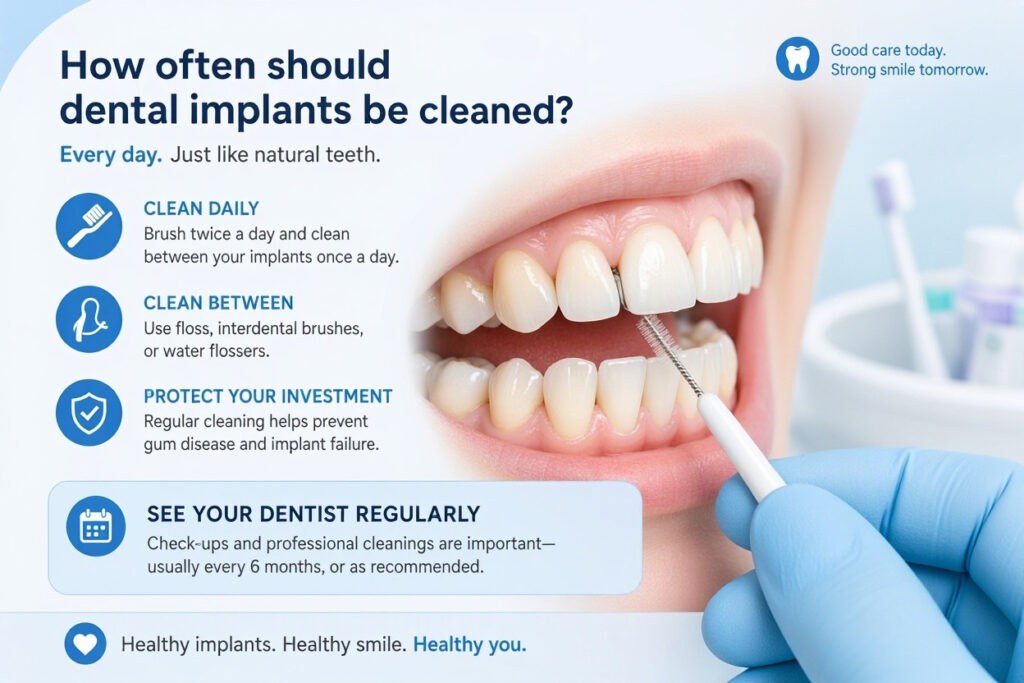
For most patients, professional cleaning every six months is appropriate. This aligns with routine dental visits and allows your hygienist to thoroughly remove plaque and calculus that accumulate despite good home care.
Why Professional Cleaning Matters
Even with excellent brushing and flossing, some areas are difficult to reach. Calculus (tartar) forms when plaque mineralizes, and it cannot be removed with a toothbrush. Professional instruments are needed to safely eliminate calculus from around implants.
What Makes Implant Cleaning Different?
Implant cleaning differs from natural tooth cleaning in important ways:
- Instrument selection: Metal scalers can scratch titanium implant surfaces, creating rough areas where bacteria thrive. Your hygienist should use plastic, titanium, or carbon fiber instruments designed for implants.
- Air-powder polishing: Some offices use air-powder systems with special powders safe for implants.
- Careful technique: The implant-gum seal is delicate. Hygienists must avoid disrupting this attachment.
Factors That May Require More Frequent Cleaning
Your optimal cleaning schedule may differ from the standard. Consider these factors.
History of Gum Disease
Patients with a history of periodontitis are at higher risk for peri-implantitis. More frequent cleanings—every three to four months—help maintain tissue health.
Smoking
Smoking compromises gum health and healing. Smokers often benefit from more frequent professional cleanings.
Diabetes
Uncontrolled diabetes increases infection risk. Your dentist may recommend closer cleaning intervals.
Poor Home Care
If you struggle to maintain good oral hygiene at home, more frequent professional cleanings help compensate.
Complex Restorations
Full-arch prostheses and implant-supported bridges require specialized cleaning techniques and may warrant more frequent visits.
Previous Implant Issues
If you have experienced peri-implant mucositis or other problems, closer monitoring and cleaning help prevent recurrence.
What Happens During a Professional Implant Cleaning?
Knowing what to expect helps you feel comfortable and ensures you receive appropriate care.
Assessment
Your hygienist begins by examining the implant site for signs of inflammation, bleeding, or other concerns.
Plaque and Calculus Removal
Using implant-safe instruments, your hygienist removes plaque and calculus from around the implant and restoration.
Polishing
The implant crown and surrounding areas may be polished to create a smooth surface that resists plaque accumulation.
Flossing and Interdental Cleaning
Your hygienist flosses around the implant and demonstrates proper techniques for home care.
Rinsing
The area may be rinsed to remove debris.
Education
Your hygienist reviews your home care routine and offers tips for improvement.
Home Care: What You Should Do Between Cleanings
Professional cleanings complement—not replace—your daily efforts. Here is what you should do at home.
Brush Twice Daily
Use a soft-bristled or electric toothbrush. Brush for two minutes, focusing on the gumline around implants.
Clean Between Teeth Daily
Floss, use interdental brushes, or use a water flosser to clean between implants and natural teeth. This step is crucial for preventing plaque buildup in hard-to-reach areas.
Rinse With Antimicrobial Mouthwash
An alcohol-free antimicrobial rinse can help reduce bacteria. Use as directed by your dentist.
Avoid Abrasive Products
Do not use harsh toothpastes or abrasive powders that could scratch implant surfaces.
Monitor for Changes
Check your implant sites regularly and report any concerns to your dentist.
Comparison Table: Cleaning Frequency by Patient Profile
| Patient Profile | Recommended Cleaning Frequency |
|---|---|
| Healthy, no risk factors | Every 6 months |
| History of periodontitis | Every 3-4 months |
| Smoker | Every 3-4 months |
| Diabetic (controlled) | Every 4-6 months |
| Diabetic (uncontrolled) | Every 3-4 months |
| Full-arch restoration | Every 3-6 months (individualized) |
| Previous peri-implantitis | Every 3 months or as directed |
Signs You May Need a Cleaning Sooner
Contact your dentist if you notice:
- Bleeding when brushing or flossing
- Redness or swelling around implants
- Persistent bad breath
- Visible plaque or calculus buildup
- Changes in gum appearance
Conclusion
Most patients should have dental implants professionally cleaned every six months, but your individual needs may require more frequent visits. Combine professional cleanings with excellent home care, and report any concerns promptly. This dual approach keeps your implants healthy and functioning for years.
FAQ: Dental Implant Cleaning Frequency
Can I use regular dental cleaning methods on implants?
Yes, but with modifications. Use soft-bristled brushes, implant-safe floss, and avoid abrasive products. Your hygienist can demonstrate appropriate techniques.
Is implant cleaning painful?
Professional implant cleaning is generally comfortable. If your gums are inflamed, you may experience mild sensitivity, but the process is quick.
Can I skip professional cleanings if I brush well at home?
No. Professional cleanings remove calculus that home brushing cannot. They also allow your dentist to assess implant health.
How long does an implant cleaning take?
Typically 30-60 minutes, depending on the complexity of your restoration and the amount of plaque/calculus present.
Does insurance cover implant cleanings?
Most dental insurance covers routine cleanings, including for implant patients. Verify coverage with your provider.
Additional Resource: Learn more about peri-implant diseases at the American Academy of Periodontology: https://www.perio.org.