Dental Implant After Tooth Fracture
A tooth fracture can happen in an instant. One wrong bite, a sports injury, a fall, or even biting down on a hidden popcorn kernel—and suddenly your tooth is cracked, chipped, or split. The pain can be sharp and immediate. The worry about what comes next can last much longer.
You might be wondering: can a fractured tooth be saved? And if not, what are your options for replacing it? Dental implants offer a reliable, long-lasting solution for missing teeth after a fracture. But the path from fracture to implant involves important decisions and careful planning.
This guide will walk you through everything you need to know about dental implants after a tooth fracture. We’ll explain when a fractured tooth can be saved and when extraction becomes necessary. We’ll cover the implant process, timing considerations, costs, and long-term care. By the end, you’ll have a clear understanding of your choices and how to move forward with confidence.
Understanding Tooth Fractures
Types of Tooth Fractures
Not all tooth fractures are the same. The type and severity of the fracture determine whether your tooth can be saved or whether extraction and replacement become necessary.
Craze lines
These are tiny cracks in the outer enamel. They’re common in adults and usually cause no pain. Craze lines don’t require treatment beyond regular monitoring.
Fractured cusp
A piece of the tooth’s biting surface breaks off. This often happens around a filling. If the fracture doesn’t reach the pulp (the nerve center), your dentist can usually repair it with a new filling or crown.
Cracked tooth
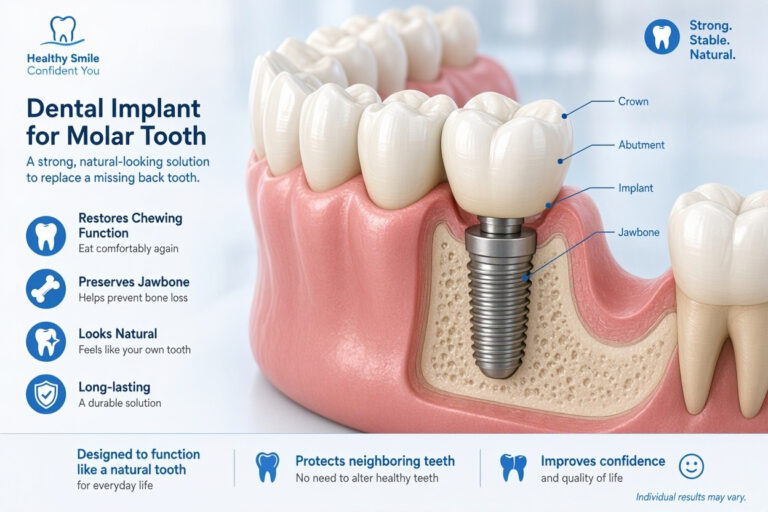
A crack extends from the biting surface down toward the root. This is more serious. The tooth may still be saved if the crack doesn’t extend below the gumline. However, a cracked tooth often requires a crown to hold it together, and sometimes a root canal if the pulp is involved.
Split tooth
The tooth splits vertically into two separate segments. This usually means the tooth cannot be saved and must be extracted.
Vertical root fracture
A crack starts at the root and extends upward. This type of fracture is often difficult to detect and usually leads to extraction.
Common Causes of Tooth Fractures
Tooth fractures can result from:
- Trauma – Falls, sports injuries, car accidents, or physical altercations
- Biting hard objects – Ice, hard candy, nuts, or unpopped popcorn kernels
- Wear and tear – Years of grinding or clenching (bruxism)
- Large fillings – Teeth with large restorations are weaker and more prone to fracture
- Root canal treatment – Teeth that have had root canals are more brittle without a crown
- Age – Enamel becomes more brittle over time
“I see tooth fractures every week. The most common scenario is someone biting down on something hard and feeling a sharp pain. Sometimes the tooth can be saved, sometimes it can’t. The key is seeking help quickly.” – Dr. Amanda Reeves, General Dentist
When a Fractured Tooth Can Be Saved
Your dentist will evaluate several factors to determine whether your fractured tooth can be saved:
The location and extent of the fracture
Fractures that stay above the gumline are more treatable than those that extend below it.
Pulp involvement
If the fracture exposes the pulp (nerve), a root canal may be needed. If the pulp is severely damaged, the tooth may not be salvageable.
Root integrity
A tooth with a vertical root fracture usually cannot be saved.
Bone support
If the tooth has lost significant bone support due to fracture or periodontal disease, extraction may be the better option.
Restorability
Can the tooth be rebuilt with a crown or other restoration? If too much tooth structure is missing, it may not be possible.
When Extraction Becomes Necessary
Your dentist may recommend extraction when:
- The fracture extends below the gumline
- The tooth is split vertically
- A vertical root fracture is present
- There’s not enough healthy tooth structure to support a restoration
- The tooth is loose due to bone loss
- Infection has destroyed significant bone around the root
If extraction is needed, dental implants offer an excellent replacement option.
Why Consider a Dental Implant After a Tooth Fracture?
The Benefits of Dental Implants
Dental implants have become the gold standard for replacing missing teeth. Here’s why they’re often the best choice after a tooth fracture:
Natural appearance and function
Implants look, feel, and function like natural teeth. You can eat, speak, and smile with confidence.
Bone preservation
When you lose a tooth, the jawbone in that area begins to shrink. Implants prevent this bone loss by stimulating the bone, just like natural tooth roots do.
No damage to adjacent teeth
Unlike a dental bridge, which requires cutting down healthy neighboring teeth, an implant stands alone. Your other teeth remain untouched.
Long-term durability
With proper care, implants can last decades—often a lifetime.
Improved quality of life
Implants restore your ability to chew properly, speak clearly, and smile without embarrassment.
“For a single missing tooth after a fracture, an implant is almost always my first recommendation. It’s the most conservative option because it doesn’t affect the healthy teeth next to it.” – Dr. James Liu, Prosthodontist
Implants vs. Other Replacement Options
| Feature | Dental Implant | Dental Bridge | Removable Partial Denture |
|---|---|---|---|
| Appearance | Excellent | Good | Fair |
| Function | Excellent | Good | Fair |
| Bone preservation | Yes | No | No |
| Adjacent tooth impact | None | Damages enamel | Minimal |
| Surgery required | Yes | No | No |
| Treatment time | 4-9 months | 2-4 weeks | 2-4 weeks |
| Initial cost | High | Medium | Low |
| Long-term value | Excellent | Fair | Poor |
| Success rate (10 years) | 95%+ | 70-80% | Variable |
The Timing Question: When Can You Get an Implant After a Fracture?
Immediate vs. Delayed Implant Placement
After a tooth fracture and extraction, you have two main timing options for implant placement:
Immediate implant placement
The implant is placed on the same day as the extraction. This approach works best when:
- The extraction site is free of infection
- There’s enough bone to stabilize the implant
- The socket walls are intact
- You’re in good general health
Delayed implant placement
The implant is placed weeks or months after extraction. This is more common and allows:
- Soft tissue healing
- Bone healing and remodeling
- Confirmation that no infection is present
- Time for any necessary grafting
Typical Waiting Periods
| Scenario | Recommended Waiting Period |
|---|---|
| Immediate implant (no infection) | Same day as extraction |
| Early implant (soft tissue healing) | 4-8 weeks after extraction |
| Conventional implant (bone healing) | 3-6 months after extraction |
| After bone grafting | 4-6 months after grafting |
| After infection treatment | 3-6 months after resolution |
Your dentist will recommend the best timing based on your specific situation. Rushing the process can increase the risk of failure. Waiting too long can lead to bone loss and make the procedure more complex.
Factors That Influence Timing
Presence of infection
If the fractured tooth had an infection (abscess), your dentist will want to clear it completely before placing an implant. Bacteria in the socket can lead to implant failure.
Bone quality and quantity
If the fracture caused bone loss, grafting may be needed before or during implant placement. This adds time to the process.
Soft tissue health
Your gums need to be healthy before implant surgery. If the fracture caused gum damage, allow time for healing.
Your overall health
Conditions like diabetes or smoking can affect healing time and may require longer waiting periods.
“I tell my patients that patience is their best friend when it comes to implants. Waiting a few extra weeks or months can mean the difference between a lifelong implant and one that fails.” – Dr. Patricia Gomez, Oral Surgeon
Preparing for Your Implant After a Tooth Fracture
Initial Evaluation and Planning
Your implant journey begins with a thorough evaluation:
Medical and dental history
Your dentist will review your health history, medications, and any previous dental treatments.
Clinical examination
Your dentist will examine the fracture site, assess your gums, and check your bite.
Imaging
X-rays and possibly a CT scan will show your bone structure and help plan the implant position.
Discussion of options
You’ll discuss the pros and cons of implants versus other options, as well as the timeline and cost.
Addressing Any Infection
If your fractured tooth has an infection, it must be treated before implant placement. Treatment may include:
- Antibiotics
- Drainage of the abscess
- Extraction of the fractured tooth with thorough cleaning of the socket
- Bone grafting if infection has caused bone loss
Your dentist will confirm that the infection is fully resolved before proceeding with implants.
Bone Grafting: When It’s Needed
Bone grafting may be necessary if:
- The fracture caused bone loss
- The tooth had been infected for some time
- You have naturally thin bone
- The extraction socket is large
Grafting materials can be synthetic, donor bone, or your own bone. The graft helps rebuild a solid foundation for the implant.
Soft Tissue Considerations
If the fracture damaged your gums, a soft tissue graft may be recommended. This restores gum thickness and coverage, which is important for both aesthetics and implant health.
The Dental Implant Procedure: Step by Step
Step 1: Consultation and Treatment Planning
You’ll meet with your implant dentist to finalize the plan. This includes:
- Reviewing imaging
- Selecting the implant type and size
- Discussing anesthesia options
- Setting a surgery date
- Reviewing pre-surgical instructions
Step 2: Tooth Extraction (If Not Already Done)
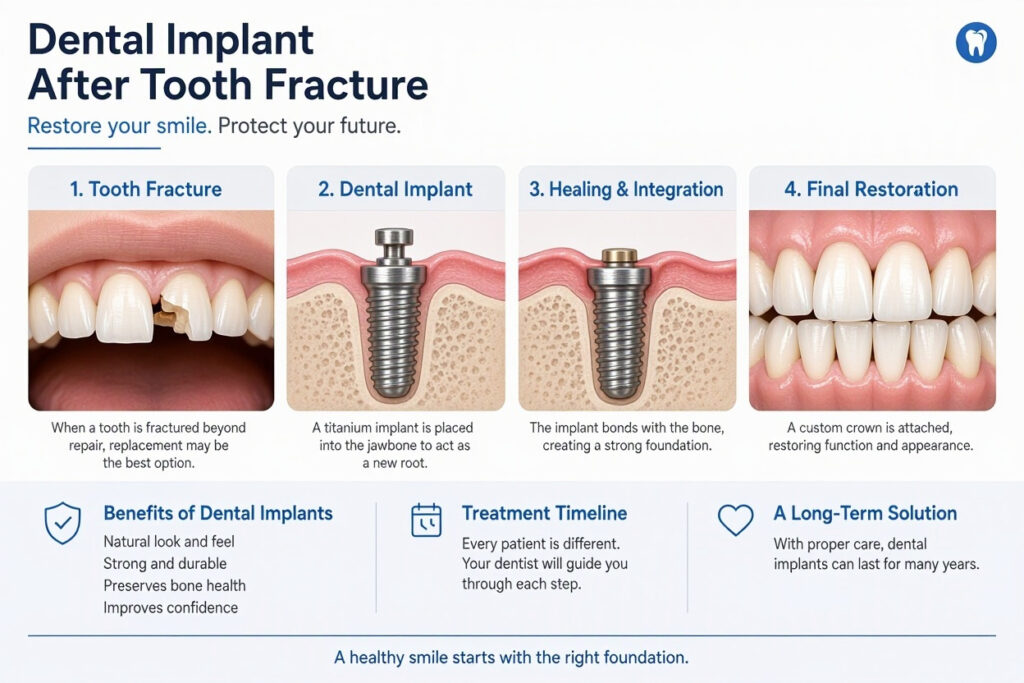
If your fractured tooth hasn’t been extracted yet, this is done first. Your dentist removes the tooth carefully, preserving as much bone as possible. The socket is cleaned thoroughly.
Step 3: Implant Placement Surgery
The implant placement procedure typically takes 30-60 minutes for a single implant. Here’s what to expect:
Anesthesia
Local anesthesia numbs the area. Sedation is available for anxious patients.
Incision
A small incision exposes the bone if the gum has healed over.
Drilling
A series of drills creates a precise hole in the bone.
Implant insertion
The titanium implant is threaded into place.
Closure
The gum is sutured, or a healing abutment is attached.
Step 4: Osseointegration (Healing)
Over the next 3-6 months, the implant fuses with your bone through osseointegration. During this time:
- Follow a soft diet initially
- Avoid pressure on the implant site
- Maintain excellent oral hygiene
- Attend follow-up appointments
Step 5: Abutment Placement
Once healing is complete, your dentist attaches the abutment—the connector that holds the final crown.
Step 6: Final Restoration
Impressions are taken for your custom crown. When ready, the crown is attached to the abutment. Your new tooth is complete.
Risks and Complications
What Can Go Wrong?
While implant success rates are high, complications can occur:
Infection
Bacteria around the implant can cause peri-implantitis, leading to bone loss and implant failure.
Implant failure (osseointegration failure)
The implant may not fuse with the bone. This is more common in smokers and patients with uncontrolled health conditions.
Nerve damage
Rare, but possible if the implant is placed near a nerve. This can cause numbness or tingling.
Sinus problems
In the upper jaw, implants can intrude into the sinus cavity. Sinus lift procedures can prevent this.
Bone loss
Without proper maintenance, bone can recede around the implant.
Restoration complications
The crown may chip, loosen, or need replacement over time.
How to Minimize Risks
- Choose an experienced implant dentist
- Follow all pre- and post-surgical instructions
- Quit smoking
- Control systemic conditions like diabetes
- Maintain excellent oral hygiene
- Attend regular check-ups
“Most implant complications are preventable. The patients who do best are those who treat their implants like an investment they want to protect.” – Dr. Robert Kim, Implant Dentist
Cost of Dental Implants After a Tooth Fracture
What Factors Affect the Cost?
The cost of your implant treatment depends on several factors:
- Number of implants needed
- Need for bone grafting or soft tissue grafting
- Complexity of the case
- Geographic location
- Dentist’s experience and credentials
- Type of final restoration
Typical Cost Breakdown
| Procedure | Cost Range |
|---|---|
| Tooth extraction | $150 – $500 |
| Bone grafting | $600 – $3,000 |
| Implant placement (single) | $1,500 – $3,000 |
| Abutment and crown | $1,500 – $3,000 |
| Total for single implant | $3,000 – $6,000 |
| Immediate implant (same day) | $4,000 – $8,000 |
| Implant-supported bridge (3 teeth) | $6,000 – $15,000 |
Insurance Coverage
- Dental insurance may cover a portion of the implant and crown
- Medical insurance may cover implants if the fracture resulted from an accident
- Check with your provider to understand your benefits
- Some plans have waiting periods for major services
Financial Options
- Payment plans through your dentist
- Dental financing companies (CareCredit, etc.)
- Health savings accounts (HSAs)
- Flexible spending accounts (FSAs)
- Third-party lenders
Recovering from Implant Surgery
What to Expect After Surgery
Day 1-3:
- Mild swelling and discomfort
- Some bleeding (manageable with gauze)
- Soft diet recommended
- Avoid strenuous activity
Week 1:
- Swelling subsides
- Sutures may be removed
- Return to normal activities (with precautions)
Week 2-4:
- Soft tissue healing
- Gradual return to normal diet
- Follow-up appointment
Month 3-6:
- Osseointegration continues
- Bone fuses with implant
Tips for a Smooth Recovery
- Take prescribed medications as directed
- Use ice packs for swelling
- Eat soft, nutritious foods
- Avoid smoking and alcohol
- Keep the surgical site clean
- Attend all follow-up appointments
- Report any unusual symptoms immediately
Long-Term Care for Your Implant
Daily Maintenance
Brushing
Brush twice daily with a soft-bristled toothbrush. Pay special attention to the gumline around your implant.
Flossing
Use floss or interdental brushes daily to clean between the implant and adjacent teeth.
Mouthwash
An antimicrobial mouthwash can help control bacteria.
Professional Maintenance
- Dental cleanings every 6 months (or more frequently if recommended)
- Regular probing around the implant to check for pocket formation
- X-rays to monitor bone levels
- Professional assessment of gum health
Warning Signs to Watch For
Contact your dentist if you notice:
- Bleeding when brushing
- Swelling or redness
- Pain or discomfort
- Implant mobility
- Pus or discharge
- Bad breath that doesn’t improve
Lifestyle Factors
Quit smoking
Smoking is the biggest preventable risk factor for implant failure.
Control systemic conditions
Keep diabetes well-managed. Work with your doctor to control any conditions that affect healing.
Maintain a healthy diet
Good nutrition supports tissue health and immune function.
Manage stress
Chronic stress impairs healing and immune function.
Real Patient Stories
Mark’s Story: A Sports Injury
Mark, a 38-year-old recreational soccer player, fractured his front tooth during a game. The tooth couldn’t be saved and had to be extracted.
“I was devastated. It was my front tooth. But my dentist explained that an implant would look and feel just like a natural tooth. The process took about five months from extraction to final crown. Now, three years later, I can’t even tell which tooth is the implant.”
Linda’s Story: A Cracked Molar
Linda, 55, cracked a molar while eating nuts. The tooth had a large filling and was already weakened.
“My dentist said the tooth was split and couldn’t be saved. I was nervous about implant surgery, but it was much easier than I expected. The worst part was waiting for the bone to heal. But now I can chew on that side again without worry.”
David’s Story: Delayed Treatment
David, 62, fractured a tooth but put off treatment for over a year. By the time he saw a dentist, he had lost significant bone.
“I regret waiting. The bone loss made everything more complicated and expensive. I needed a bone graft, which added months to my treatment. If I could do it over, I’d have gotten help right away.”
Frequently Asked Questions
Can I get a dental implant immediately after a tooth fracture?
Sometimes. Immediate implant placement is possible if the fracture hasn’t caused infection, the socket is intact, and you have adequate bone. Your dentist will evaluate your specific situation. In many cases, a short waiting period of a few weeks to a few months allows for better healing and higher success rates.
What happens if I don’t replace a fractured tooth?
Leaving a gap after a tooth fracture can cause several problems. Adjacent teeth may shift, your bite may change, and the bone in the missing tooth area will begin to shrink. Over time, this can lead to further tooth loss and more complex treatment. Replacing the tooth with an implant prevents these issues.
Is implant surgery painful after a tooth fracture?
Most patients report minimal discomfort during the procedure thanks to local anesthesia. Post-operative discomfort is typically manageable with over-the-counter pain relievers and usually subsides within a few days. Your dentist will provide instructions for managing any discomfort.
How long does the entire implant process take after a fracture?
The complete process typically takes 4-9 months. This includes extraction (if needed), healing time, implant placement, osseointegration (3-6 months), and final restoration. Immediate implant cases may be faster, while cases requiring bone grafting may take longer.
Can a fractured tooth with a root canal be saved?
Sometimes. If the fracture is above the gumline and the root is intact, the tooth may be saved with a new crown. However, if the fracture extends into the root or below the gumline, extraction is usually necessary. Your dentist will evaluate the tooth with X-rays and clinical examination.
What if the fractured tooth is a front tooth?
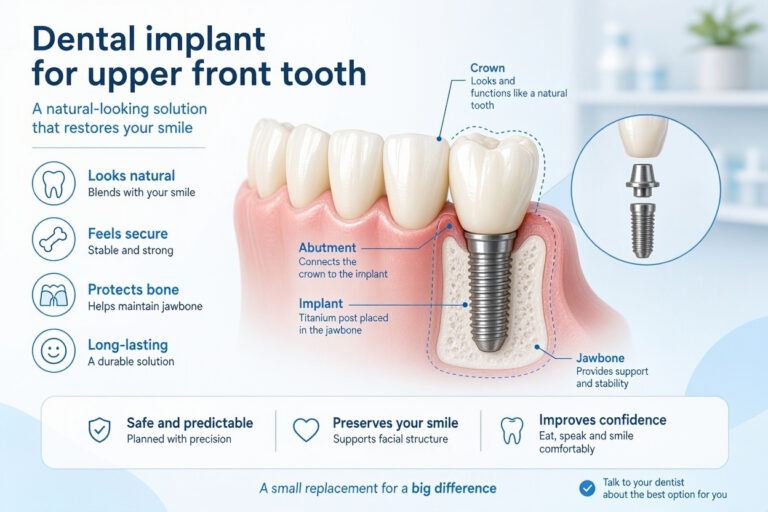
Front tooth implants are very common and highly successful. Your dentist will plan the implant carefully to match the appearance of your natural teeth. A temporary crown can often be worn during healing to maintain your smile.
Will my implant look natural after a front tooth fracture?
Yes. Modern implant crowns are custom-made to match the color, shape, and size of your natural teeth. With proper planning and high-quality laboratory work, most people won’t be able to tell which tooth is the implant.
Can I smoke after getting an implant for a fractured tooth?
Smoking significantly increases the risk of implant failure. If you smoke, you should quit before surgery and remain smoke-free throughout the healing process. Ideally, you should quit permanently for the best long-term outcome.
How much does a dental implant after a tooth fracture cost?
Costs vary widely depending on your location, the complexity of your case, and whether additional procedures like bone grafting are needed. A single implant with a crown typically ranges from $3,000 to $6,000. Talk to your dentist about payment plans and financing options.
Is age a factor in getting a dental implant after a fracture?
Age itself is not a barrier to implants. What matters more is your overall health, bone quality, and healing capacity. Older adults can successfully receive implants, provided they are in good general health and committed to proper maintenance.
What if I have gum disease and a fractured tooth?
Gum disease must be treated before implant placement. Active gum disease increases the risk of implant failure. Your dentist will recommend a treatment plan that addresses both the gum disease and the missing tooth.
Can I get multiple implants if I fractured several teeth?
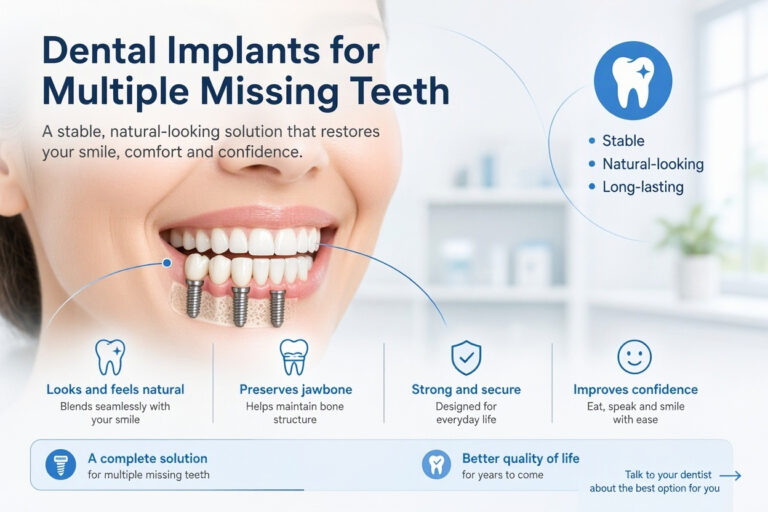
Yes, many patients receive multiple implants. Your dentist will evaluate each site individually and create a comprehensive treatment plan. If you have multiple missing teeth, an implant-supported bridge or denture may be more cost-effective than individual implants.
Additional Resource
For more information about dental implants and tooth replacement options, visit the American Academy of Implant Dentistry website: www.aaid.com
This professional organization provides resources for patients, including finding an implant dentist and learning about the latest advances in implant dentistry.