Are Metal Dental Implants Used?
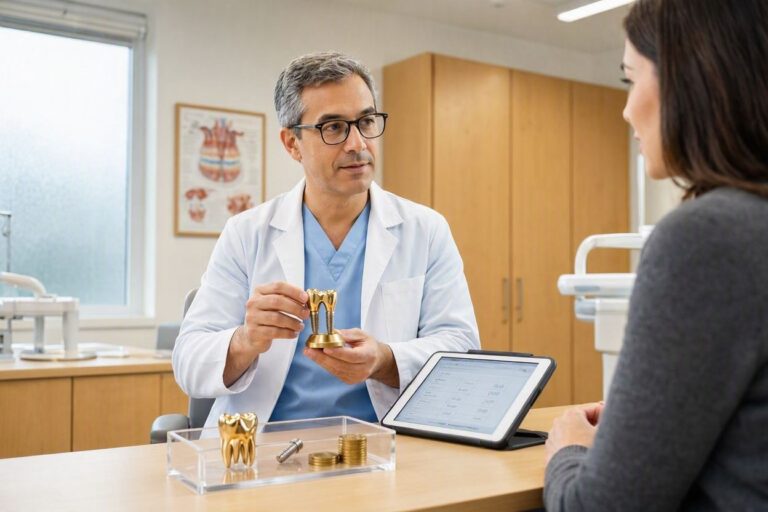
The phrase “metal dental implant” can provoke very different reactions. Some people picture industrial hardware, something cold and foreign. Others feel reassured by the thought of a strong, durable material holding their new tooth in place. The reality is more sophisticated than either image. Metal has been the foundation of dental implantology for over half a century, and for good biological and mechanical reasons. But the word “metal” covers a lot of ground, and not all metals are equal. This article explores exactly what metals are used, why they are used, what happens inside the body, and what options exist for those who want to avoid metal entirely.
The Short Answer: Yes, and It Is the Standard
Metal dental implants are not only used; they are the dominant technology in implant dentistry worldwide. The overwhelming majority of dental implants placed every year are made from metal. Specifically, they are made from titanium or titanium alloys. This is not a compromise. It is a deliberate choice based on decades of research, clinical data, and a unique biological property that no other class of materials has matched.
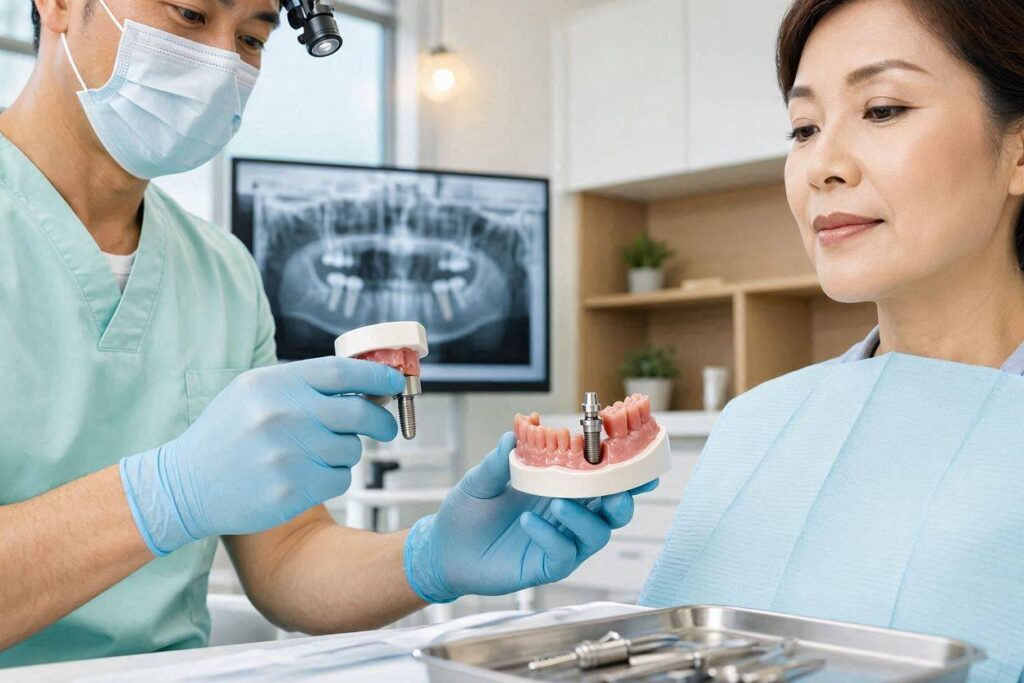
When a patient receives a “dental implant,” the portion surgically placed into the bone—the fixture—is almost always metal. The visible tooth-like crown on top is almost never metal; it is ceramic. The connector between them, called an abutment, may be metal or ceramic. Understanding this layered structure is the first step to understanding the role of metal in implant dentistry.
The Metal of Choice: Titanium and Its Alloys
Titanium is not a rare metal, but it is an extraordinary one. Its properties align almost perfectly with the demands of implant dentistry.
Biocompatibility and Osseointegration
The single most important characteristic of titanium is its biocompatibility. The human body does not recognize titanium as a foreign invader in the way it does many other materials. There is no significant immune rejection response. More remarkably, bone cells actively grow toward and directly onto the titanium surface. They deposit new bone in intimate contact with the metal oxide layer that forms spontaneously on titanium exposed to air or water.
This direct structural and functional connection between living bone and the surface of a load-bearing implant is called osseointegration. It was discovered by a Swedish orthopedic surgeon named Per-Ingvar Brånemark in the 1950s and 1960s. He found that titanium chambers placed in rabbit bone could not be removed because the bone had fused to them. This accidental discovery revolutionized dentistry and orthopedics. Modern dental implants are the direct descendants of that observation.
Osseointegration is not merely bone touching metal. It is a biological process in which osteoblasts migrate to the implant surface, lay down an organic matrix, and mineralize it into mature bone. The titanium oxide surface layer plays a critical role. It is highly stable, resists corrosion in the salty, warm environment of the body, and presents a surface chemistry that bone proteins readily adsorb onto. This protein layer signals cells to attach and differentiate.
Commercially Pure Titanium
Commercially pure titanium is not 100% titanium. It contains trace amounts of oxygen, iron, carbon, and nitrogen. These trace elements are not contaminants; they are deliberately present because they influence the mechanical properties of the metal. Commercially pure titanium is classified into four grades based on oxygen and iron content.
Grade 4 commercially pure titanium is the most commonly used for dental implants. It offers an excellent balance of strength and ductility. It is strong enough to withstand chewing forces but not so brittle that it fractures under load. Many of the most clinically documented implant systems in the world use Grade 4 commercially pure titanium.
Titanium Alloy: Ti-6Al-4V
Titanium alloy adds aluminum and vanadium to the mix. The most common formulation is Ti-6Al-4V, meaning the alloy is approximately 90% titanium, 6% aluminum, and 4% vanadium. This alloy is significantly stronger than commercially pure titanium. It has a higher tensile strength and better fatigue resistance.
The additional strength allows for thinner implant components without sacrificing structural integrity. This is particularly useful for narrow-diameter implants in tight spaces, for implant components like screws and abutments that experience high torque, and for full-arch frameworks where a lighter but strong structure is desirable.
Ti-6Al-4V has been used in orthopedic and dental implants for decades. The alloy is well-studied and has an excellent safety record. The aluminum and vanadium are bound within the metal’s crystal structure and do not leach out in significant quantities under normal conditions.
The Titanium Oxide Layer
A thin layer of titanium dioxide forms spontaneously on the surface of titanium metal when it is exposed to air. This layer is only a few nanometers thick, but it is the reason titanium works. It is chemically inert, highly resistant to corrosion, and provides the surface that bone cells interact with.
Implant manufacturers have invested enormous research effort into modifying this oxide layer to enhance osseointegration. Surface treatments include sandblasting with titanium oxide or alumina particles, acid etching to create micro-roughness, and anodization to thicken the oxide layer and incorporate bioactive elements like calcium and phosphorus. These modified surfaces dramatically increase the surface area available for bone contact and accelerate the osseointegration process. What was once a smooth machined surface is now a complex three-dimensional topography at the microscopic level, engineered to optimize bone healing.
Other Metals in Implant Dentistry
Titanium dominates, but other metals appear in specific roles.
Zirconia: The Metal-Free Alternative
Zirconia deserves mention here, even though it is technically a ceramic, because it is often discussed in the same conversation as metal implants. Zirconium dioxide, or zirconia, is a white crystalline ceramic material that can be used to manufacture dental implant fixtures. Zirconia implants have been available for about two decades and have a growing body of clinical evidence supporting their use.
Zirconia implants are an option for patients with confirmed titanium allergy or those who have a strong preference for a completely metal-free restoration. They are white, which can be an aesthetic advantage in patients with thin gum tissue where a gray titanium hue might show through. However, zirconia is a different material with different properties. It is very hard and strong in compression, but it is also more brittle than titanium. It is available primarily as a one-piece implant, meaning the fixture and abutment are a single unit. This limits restorative flexibility compared to two-piece titanium systems. The long-term data for zirconia implants is less extensive than for titanium, though what exists is encouraging.
Precious Metal Alloys
In the restorative phase of implant treatment, the crown that sits on top of the implant may contain metal. A porcelain-fused-to-metal implant crown has a metal substructure, often made of a high-noble or noble alloy containing gold, platinum, palladium, or silver. This metal framework provides strength and precise fit. The visible porcelain is layered on top.
These precious metal alloys are biocompatible and have a long track record in dentistry. They are used less frequently now due to the rise of all-ceramic restorations made from lithium disilicate or zirconia, which provide excellent aesthetics without any metal. However, for specific clinical situations, a metal-ceramic implant crown may still be the restoration of choice.
Cobalt-Chromium
Cobalt-chromium alloys appear in some implant frameworks, particularly for full-arch restorations. They are strong, relatively inexpensive compared to precious metals, and can be milled or cast. They are more commonly used in removable partial denture frameworks but have applications in implant dentistry as well.
Trace Metals and Impurities
All implant-grade metals are manufactured to exacting standards for purity and consistency. The American Society for Testing and Materials sets specifications for surgical implant materials. Trace elements are present but at levels that have been demonstrated to be biologically safe.
The Metal Allergy Question
The most common concern patients raise about metal implants is allergy. This is a legitimate concern that deserves a thorough, evidence-based answer.
Titanium Allergy
True allergy to titanium is extremely rare. The medical literature documents a very small number of cases where patients developed symptoms consistent with a hypersensitivity reaction following titanium implant placement. Symptoms can include localized inflammation, rash or eczema, implant failure without an obvious infectious cause, and, in some reported cases, systemic symptoms like fatigue or pain.
The difficulty is that these symptoms are nonspecific. Many things can cause implant failure or local inflammation. Attributing them to titanium allergy requires a careful diagnostic process that excludes other causes. Patch testing for titanium hypersensitivity exists but is not perfectly reliable. The lymphocyte transformation test and the memory lymphocyte immunostimulation assay are more specialized blood tests that may help identify metal hypersensitivity, but they are not widely available and their predictive value for implant outcomes is debated.
The estimated prevalence of titanium allergy in the general population is unknown, but it appears to be exceedingly low, likely well under 1%. For the vast majority of patients, titanium allergy is not a practical concern. However, a patient who has a known history of metal allergies, particularly to nickel or other metals, or who has experienced unexplained implant failure, may benefit from evaluation by an allergist or immunologist familiar with metal hypersensitivity. In such cases, a zirconia implant may be considered.
Other Metal Allergies
Patients with known nickel allergy sometimes worry about titanium implants. Titanium and its alloys do not contain nickel. There is no cross-reactivity. A nickel-allergic patient can safely receive a titanium implant.
Allergy to aluminum or vanadium, the alloying elements in Ti-6Al-4V, is extremely rare. A patient with a documented, severe allergy to one of these elements could opt for a commercially pure titanium implant, which does not contain them.
The Oral Environment and Corrosion
Metals in the mouth are exposed to a warm, salty, and sometimes acidic environment. Saliva contains chloride ions. Bacterial plaque produces acids. This is a potentially corrosive environment. Titanium’s resistance to corrosion in this environment is one of its most valuable properties. The stable oxide layer prevents significant metal ion release.
Under certain conditions—if the implant is placed in a patient with a very acidic oral environment, if there is galvanic contact between dissimilar metals in the mouth, or if the implant surface is damaged—some minimal ion release may occur. The clinical significance of this trace ion release is unclear. For most patients, it is not a meaningful concern.
The Components: Where Metal Appears in an Implant System
A single tooth replacement with an implant involves multiple components, and metal may appear in different places.
The Implant Fixture
This is the root-form component placed in the bone. It is almost always titanium or titanium alloy. It is completely buried under the gum or has a healing abutment projecting through the gum during the healing phase. Once the final crown is placed, the fixture is entirely hidden.
The Abutment
The abutment connects the fixture to the crown. It is screwed into the fixture. Abutments can be made from titanium, titanium alloy, zirconia, or precious metal. Titanium abutments are the most common. They are strong, biologically compatible, and relatively inexpensive. Zirconia abutments are used in aesthetic zones where the abutment might be visible through thin gum tissue. They are white and do not create a gray shadow.
The Abutment Screw
The small screw that secures the abutment to the fixture is made from titanium alloy or a specialized gold alloy. Gold alloy screws can be tightened to a precise torque and are sometimes preferred for their handling characteristics.
The Crown
The visible part of the restoration is almost always metal-free. It is made from porcelain fused to a metal substructure, pressed lithium disilicate, or milled zirconia. In a full-ceramic crown, there is no metal at all in the visible portion.
Full-Arch Frameworks
For patients missing all teeth in an arch who receive a fixed implant-supported prosthesis, a metal framework often supports the prosthetic teeth. This framework is milled or cast from titanium, titanium alloy, or cobalt-chromium and provides rigid support for the acrylic or ceramic teeth and gum-colored acrylic. The metal framework is hidden inside the prosthesis.
The Science of Osseointegration: Why Metal Works
The success of metal dental implants rests on a remarkable biological process. Understanding it dispels the notion that metal is a foreign invader.
When a titanium implant is placed into prepared bone, blood fills the gap between the implant surface and the bone. Platelets adhere to the titanium oxide surface and release growth factors. These signaling molecules attract osteoprogenitor cells, which differentiate into osteoblasts. The osteoblasts lay down a collagen matrix and mineralize it. New bone grows toward the implant surface. At the microscopic level, the bone does not just touch the implant; it interdigitates with the surface roughness.
Over several months, this woven bone matures into lamellar bone. The implant becomes mechanically locked in place. It is not glued. It is not screwed in place in the sense that the threads provide permanent mechanical retention. The threads provide initial stability at surgery, but long-term stability comes from the biological bond.
This process works so predictably that implant survival rates exceed 95% in healthy patients. No synthetic polymer, no ceramic, and no other metal has demonstrated the same degree of reliable, predictable osseointegration as titanium and its alloys. Zirconia also osseointegrates, but the body of evidence is smaller.
The Manufacturing Precision
The metal used in dental implants is not poured from a ladle. It is precision-machined to tolerances measured in microns. The connection between the implant fixture and the abutment—called the implant-abutment interface or connection—is a feat of engineering. A tight, stable connection prevents micromovement between components. Micromovement can lead to screw loosening, bacterial leakage, and inflammatory tissue response.
The most advanced implant systems use a conical connection, sometimes called a Morse taper. This is a friction-fit connection where the abutment wedges into the fixture with such precision that the two components essentially cold-weld together. This eliminates micromovement at the interface and provides a bacterial seal.
Achieving this level of precision requires sophisticated computer-controlled milling machines and rigorous quality control. Every implant is inspected. The cost of this manufacturing precision is part of what the patient pays for when they invest in a premium implant system.
The Aesthetic Question: Can Metal Be Seen?
Patients worried about metal visibility can be reassured. In a properly restored implant, no metal is visible. The implant fixture is entirely under the gum and within the bone. The abutment, if made of metal, is below the gum line. The crown is ceramic.
In patients with thin gingival tissue, a metal abutment can sometimes create a grayish discoloration visible through the gum. This is primarily an aesthetic concern for front teeth. The solution is a zirconia abutment, which is white and blends with the natural tooth and gum colors. For patients with a high smile line who show a lot of gum tissue when they smile, the choice of abutment material matters more.
The MRI and Security Screening Question
Patients often wonder whether a metal dental implant will cause problems with magnetic resonance imaging or airport security.
Dental implants made of titanium and titanium alloys are non-ferromagnetic. They are not magnetic. They will not be pulled, heated, or displaced by an MRI machine. They may cause some image distortion, called an artifact, in the immediate vicinity of the implant. This can affect the diagnostic quality of an MRI of the brain or jaw. The radiologist should be informed of the presence of dental implants so that the imaging protocol can be adjusted if necessary.
Airport metal detectors are not triggered by dental implants. The amount of metal is small, and titanium is not highly conductive. Security screening is not a practical concern for implant patients.
Conclusion
Metal dental implants, specifically those made of titanium and its alloys, are the foundation of modern implant dentistry. They are used because they are biocompatible, remarkably strong, resistant to corrosion, and capable of achieving a direct biological bond with living bone. For the vast majority of patients, metal implants are safe, predictable, and durable. Allergy to titanium is exceedingly rare. The visible portions of the restoration—the crown—are metal-free ceramic. For those with a confirmed allergy or a strong philosophical preference for metal-free treatment, zirconia ceramic implants offer an alternative. Understanding the materials inside your body is a reasonable and important part of the informed consent process.
Frequently Asked Questions
Are dental implants made entirely of metal?
No. The implant fixture placed in the bone is metal, usually titanium. The abutment may be metal or ceramic. The visible crown is ceramic. No metal is visible in the final restoration.
Can I have an MRI if I have dental implants?
Yes. Titanium implants are non-magnetic and safe for MRI. Inform the radiologist, as the implant may cause some image distortion in the surrounding area.
What if I am allergic to metal?
True titanium allergy is extremely rare. Patients with known metal allergies should inform their dentist. Testing by an allergist may be considered. Zirconia ceramic implants are an alternative.
Do dental implants set off airport metal detectors?
No. The small amount of non-ferromagnetic titanium in dental implants does not trigger airport security metal detectors.
Are zirconia implants better than titanium?
“Better” depends on the criterion. Titanium has a longer track record and is available in two-piece systems that offer restorative flexibility. Zirconia is white, potentially more aesthetic, and is metal-free. Both have good evidence of success.
How long do metal dental implants last?
With proper care, titanium dental implants can last decades. The implant fixture itself has no predetermined lifespan. The crown may need replacement after 15 to 20 years due to normal wear, but the implant can remain healthy indefinitely.
Additional Resource:
American Academy of Implant Dentistry – Patient Education
https://www.aaid.com/patient_education/