Are One Day Dental Implants For Real?
The promise of walking into a dental office with missing or failing teeth and walking out the same day with fixed, functional replacements sounds almost too good to be true. Marketing for “teeth in a day,” “same-day implants,” and “one day dental implants” appears everywhere, from billboards to social media advertisements. Patients naturally wonder whether these claims represent genuine advances in implant dentistry or clever marketing hype designed to attract desperate patients.
One day dental implants are absolutely real and backed by decades of clinical research. The concept, officially called “immediate load” or “same-day” implant treatment, allows qualified patients to receive dental implants and a temporary fixed restoration in a single appointment. However, this accelerated protocol is not appropriate for every patient, does not mean treatment is truly finished in one day, and carries specific risks that patients must understand before committing to treatment.
Understanding Same-Day Implant Protocols
The term “one day dental implants” describes several related but distinct treatment approaches. Understanding the differences helps you evaluate marketing claims and determine which protocol might apply to your situation.
What “Teeth in a Day” Actually Means
Same-day implant treatment involves placing dental implants and attaching a temporary prosthesis on the same day. The key word is “temporary.” The restoration you receive on surgery day provides immediate function and aesthetics but is not designed to be permanent.
What Happens on Surgery Day:
Any remaining failing teeth are extracted. Dental implants are surgically placed into the jawbone. A pre-fabricated or same-day-fabricated temporary bridge or denture is attached to the implants. You leave the office with fixed teeth that look and function reasonably well.
What Happens After Surgery Day:
The implants must heal and integrate with the bone for 3-6 months. You follow a soft food diet during the healing period. The temporary restoration may need adjustments as healing progresses. After integration is confirmed, a permanent prosthesis is fabricated and delivered.
The “one day” claim accurately describes the transformation from toothless to toothed in a single appointment. It does not mean the entire implant process, including the final permanent teeth, is completed in one day. Responsible providers make this distinction clear during consultations.
Types of Same-Day Implant Protocols
Several clinical protocols deliver same-day teeth. Your specific situation determines which approach is appropriate.
Immediate Implant Placement and Loading:
A failing tooth is extracted, an implant is immediately placed into the socket, and a temporary crown is attached on the same day. This protocol works for single teeth when the extraction socket is intact and primary implant stability is excellent.
All-on-4 Same-Day Protocol:
Four implants are strategically placed in a completely toothless arch, with the two posterior implants angled to maximize bone contact. A temporary fixed bridge is attached the same day. This is the most commonly marketed “teeth in a day” approach for full-arch restoration.
All-on-6 or All-on-8 Same-Day Protocol:
Similar to All-on-4 but uses more implants for additional support. The increased implant number may improve load distribution and long-term predictability, but it requires sufficient bone volume at all implant sites.
Same-Day Implant Overdentures:
Two to four implants are placed, and an existing or new denture is adapted to snap onto the implants the same day. This provides improved stability compared to conventional dentures while maintaining removability for cleaning.
| Protocol | Number of Implants | Restoration Type | Best For |
|---|---|---|---|
| Single Tooth Immediate Load | 1 | Temporary crown | Individual failing teeth with intact sockets |
| All-on-4 Same-Day | 4 per arch | Fixed temporary bridge | Completely toothless or near-toothless arches |
| All-on-6/8 Same-Day | 6-8 per arch | Fixed temporary bridge | Patients with adequate bone wanting maximum support |
| Same-Day Overdenture | 2-4 per arch | Removable snap-on denture | Budget-conscious patients wanting improved denture stability |
The History and Science Behind Immediate Loading
Same-day implant protocols are not a recent marketing invention. The science supporting immediate loading has accumulated over several decades.
Evolution of Immediate Load Research
Traditional implant protocols required 3-6 months of submerged healing before loading implants with any restoration. This cautious approach was based on early implant research suggesting that micromovement during healing caused fibrous encapsulation rather than bone integration.
Research beginning in the 1990s demonstrated that implants could be loaded immediately if certain conditions were met. Multiple implants splinted together (connected by a rigid framework) appeared to resist micromovement adequately. Primary implant stability at the time of placement emerged as the critical factor determining whether immediate loading could succeed.
Modern studies consistently report success rates for immediately loaded implants comparable to conventionally loaded implants when proper patient selection and surgical protocols are followed. The evidence supporting same-day treatment is robust and peer-reviewed.
Primary Stability: The Critical Requirement
Primary stability refers to how firmly an implant is anchored in bone at the time of surgical placement. Without adequate primary stability, immediate loading will likely fail.
Implant surgeons measure primary stability using insertion torque values or resonance frequency analysis. Higher values indicate firmer anchorage and greater likelihood of successful immediate loading. Implants that do not achieve adequate primary stability cannot be loaded immediately, regardless of the patient’s desire for same-day teeth.
Factors affecting primary stability include:
Bone density (denser bone provides better anchorage). Implant design (specific thread patterns enhance primary stability). Surgical technique (precise osteotomy preparation without overheating bone). Bone quality at the implant site. Implant dimensions (longer, wider implants achieve better stability).
Who Is a Candidate for One Day Dental Implants?
Not every patient qualifies for same-day implant treatment. Careful patient selection explains much of the difference between successful outcomes and failures.
Ideal Candidates
Patients most likely to succeed with same-day implant protocols share several characteristics.
For Single Tooth Immediate Load:
Intact extraction socket with all four bony walls present. No active infection at the extraction site. Thick gum tissue type (thick biotype). Excellent primary implant stability achieved. No heavy biting forces or grinding habits. Good overall health without conditions impairing healing.
For Full-Arch Same-Day Treatment:
Adequate bone volume for at least four implants per arch. Good bone density at planned implant sites. Ability to achieve excellent primary stability on all implants. Understanding and acceptance of soft food diet during healing. No uncontrolled medical conditions (diabetes, immune disorders). Non-smoker or willingness to cease smoking during healing.
Patients Who Should Avoid Same-Day Loading
Certain conditions significantly increase the risk of immediate load failure.
Active infection at implant sites. Inadequate bone volume requiring extensive grafting at implant positions. Poor bone density preventing adequate primary stability. Uncontrolled diabetes or other metabolic conditions. Heavy smoking (particularly more than 10 cigarettes daily). Severe bruxism (teeth grinding) generating excessive forces. Patients unwilling or unable to follow post-operative dietary restrictions. Patients with unrealistic aesthetic expectations for temporary restorations.
“The most important decision in same-day implant treatment is knowing when not to do it. Pressuring implants that lack primary stability into immediate loading because the patient wants teeth today produces failures that damage bone, destroy patient trust, and cost far more to correct than the initial treatment.” — Implant Surgeon, American Academy of Implant Dentistry
The True Cost of One Day Dental Implants
Same-day implant treatment carries specific costs that patients should understand before comparing quotes.
Cost Comparison: Same-Day vs. Traditional Protocols
| Treatment Type | Same-Day Protocol | Traditional Protocol |
|---|---|---|
| Single Tooth Implant | $3,800 – $6,500 | $3,000 – $6,000 |
| All-on-4 Per Arch | $15,000 – $28,000 | $18,000 – $30,000* |
| All-on-6 Per Arch | $18,000 – $32,000 | $20,000 – $35,000* |
*Traditional protocols may include separate temporary denture costs that same-day protocols bundle into the total fee.
Same-day protocols do not necessarily cost more than traditional approaches when comparing comprehensive treatment costs. The value proposition lies in avoiding a separate toothless period and reducing overall treatment time, not in dramatic cost savings.
What the Advertised Price Includes (and Excludes)
Aggressive marketing of “teeth in a day” often features deceptively low advertised prices. Understanding what those prices actually include prevents financial surprises.
Typically Included in Advertised All-on-4 Pricing:
Implant placement surgery. The four implant posts. The temporary fixed bridge delivered on surgery day. Basic diagnostic imaging. Local anesthesia.
Often Excluded (Added Costs):
Consultation and comprehensive examination fees. Cone beam CT scan for surgical planning. Extractions of remaining teeth. Bone grafting if needed. IV sedation or general anesthesia. The permanent final prosthesis (major expense). Post-operative visits and adjustments. Prosthesis conversion from temporary to final. Maintenance and warranty coverage.
A $12,999 per arch advertisement may ultimately require $20,000-$25,000 per arch when all necessary components are included. The advertised price serves as a starting point, not a comprehensive quote.
The Permanent Prosthesis Cost
The single largest additional expense after the surgical phase is the permanent final prosthesis. Temporary bridges are fabricated from acrylic and designed to last months, not years. The permanent prosthesis uses superior materials and precise fabrication techniques.
Permanent Prosthesis Options and Costs Per Arch:
Acrylic hybrid with titanium framework: $3,500 – $6,000. Composite hybrid with titanium framework: $4,500 – $8,000. Milled zirconia full arch: $6,000 – $12,000. Individual implant crowns (if applicable): $1,500 – $2,800 each.
This expense occurs 3-6 months after the initial surgery and may not be included in same-day package pricing. Clarify whether the permanent prosthesis is included in your treatment quote.
The Surgical Day Experience
Understanding what happens on surgery day helps patients prepare mentally and practically.
Before Surgery
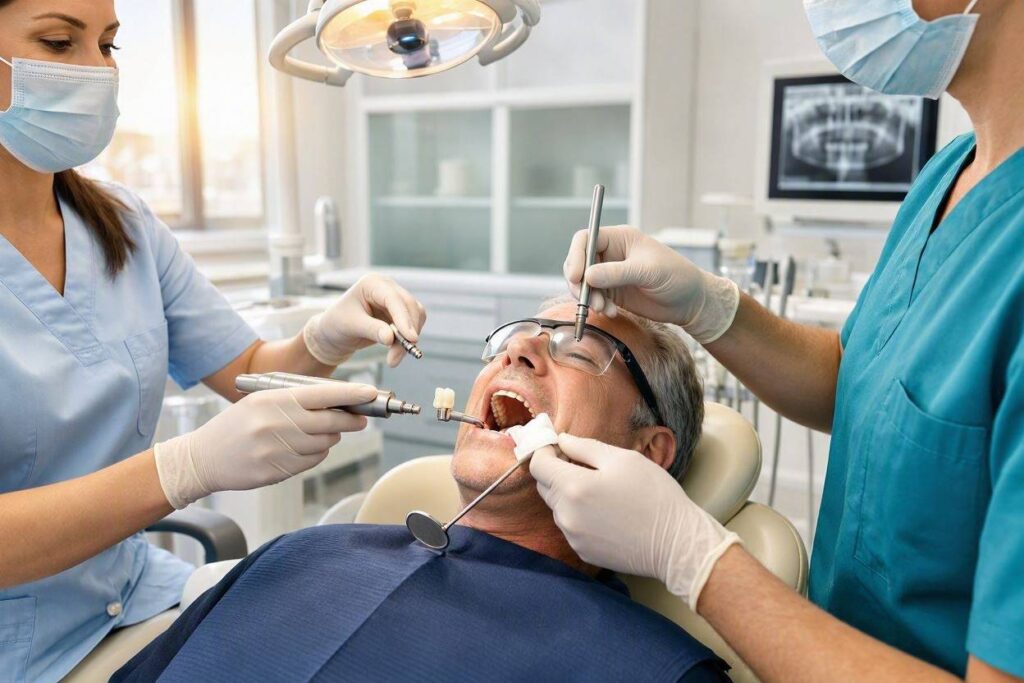
The surgical day begins with final preparation. You change into surgical attire if IV sedation is planned. The surgical team reviews the treatment plan and confirms implant positions based on the surgical guide. Vital signs are recorded, and sedation is initiated if applicable.
Patients receiving local anesthesia only remain fully alert. Those choosing IV sedation or general anesthesia will have little memory of the procedure.
During Surgery
The surgical sequence varies by treatment type but typically follows this pattern:
Full-Arch Same-Day Protocol (All-on-4 Example):
- Administration of anesthesia or sedation.
- Extraction of remaining failing teeth in the arch.
- Alveoloplasty (bone smoothing) to create a level foundation.
- Implant site preparation using sequential drilling protocols.
- Implant placement with verification of primary stability.
- Attachment of multi-unit abutments to the implants.
- Impressions or digital scanning of implant positions.
- Attachment of the pre-fabricated or same-day fabricated temporary bridge.
- Verification of fit, occlusion, and aesthetics.
- Final tightening of prosthetic screws and placement of temporary filling material over screw access holes.
Total Surgical Time: 2-5 hours per arch depending on complexity, number of extractions, and whether one or both arches are treated.
After Surgery
The immediate post-operative period requires careful management.
You wake from sedation in the recovery area. The surgical team reviews post-operative instructions with you and your companion. You receive prescriptions for pain medication and antibiotics. You leave the office with fixed teeth in place. You must have a responsible adult drive you home.
Swelling, bruising, and discomfort peak 48-72 hours after surgery. The temporary restoration must be treated gently. Patients follow a strict soft food diet for the entire healing period.
The Temporary Phase: Living With Temporary Teeth
The months between surgery and delivery of the permanent prosthesis require patience and compliance.
Dietary Restrictions
The temporary bridge is not designed for normal chewing forces. Patients must follow a soft food diet for 3-6 months during implant integration.
Acceptable Foods:
Scrambled eggs, yogurt, smoothies, mashed potatoes, soup, pasta, soft fish, well-cooked vegetables, protein shakes, oatmeal, cottage cheese.
Prohibited Foods:
Steak or tough meats, raw vegetables, nuts and seeds, crunchy fruits (apples, pears), chips and crackers, chewy bread, sticky candy, chewing gum, ice.
Violating dietary restrictions risks implant failure. The temporary bridge also risks fracture if overloaded. Repairs add cost and appointments.
Hygiene During Healing
Implant hygiene during the healing phase requires meticulous care without disrupting the healing process.
Gentle brushing of the temporary bridge with a soft toothbrush. Salt water rinses rather than vigorous mouthwash. Water flossers on lowest settings directed at accessible areas. Avoidance of flossing that could disturb healing gum tissues. Professional cleanings as recommended by the surgical team.
Adjustments and Complications
Temporary bridges occasionally require adjustment during the healing period. Pressure spots develop as swelling resolves. Prosthetic screws may loosen and require tightening. Teeth may chip or separate from the acrylic base.
Most surgical practices include routine adjustments in the treatment fee. Extensive repairs or remakes of the temporary may incur additional charges. Clarify the adjustment policy before surgery.
The Permanent Restoration Phase
After 3-6 months of healing, implant integration is confirmed, and the permanent prosthesis is fabricated.
Integration Confirmation
The surgeon verifies implant integration through clinical examination and imaging. Implants are tested for stability. X-rays or CBCT scans confirm bone contact with implant surfaces. Any implants that failed to integrate are identified and may require replacement.
Final Impressions and Fabrication
The permanent prosthesis fabrication involves detailed impressions or digital scanning of implant positions. The dental laboratory fabricates the final bridge with precise fit and customized aesthetics.
Patients participate in a try-in appointment to evaluate tooth arrangement, shade, and overall appearance before final processing. Adjustments made at this stage prevent costly remakes.
Delivery of Permanent Teeth
The final prosthesis is delivered, screw-retained or cemented onto the implants. The dentist verifies fit, bite, and aesthetics. Oral hygiene instructions for long-term maintenance are reviewed. A nightguard may be recommended to protect the restoration.
Advantages and Disadvantages of Same-Day Implants
Honest evaluation helps patients decide whether same-day protocols align with their needs and priorities.
Genuine Advantages
Immediate Aesthetics and Function:
Patients avoid the psychological distress of being toothless during healing. Social and professional activities continue without interruption.
Reduced Surgical Interventions:
Traditional protocols may require separate surgeries for extractions, implant placement, and uncovering. Same-day protocols combine procedures.
Tissue Preservation:
Immediate implant placement into extraction sockets may preserve gum tissue architecture better than delayed placement after socket healing.
Faster Overall Treatment:
The permanent restoration is delivered 3-6 months after surgery rather than 8-12 months with traditional staged protocols.
Honest Disadvantages
Higher Surgical Risk:
Combining extractions, bone preparation, and implant placement in one session increases surgical time and complexity.
No Guarantee of Success:
If any implant fails to integrate, the entire prosthesis may require modification or replacement. Failure rates, while low, are slightly higher than delayed loading protocols.
Temporary Restoration Limitations:
The temporary bridge is bulkier, less aesthetic, and less durable than the permanent prosthesis. Patients must tolerate these limitations throughout the healing period.
Higher Technical Demands:
Same-day protocols require exceptional surgical and restorative skill. Not all providers achieve equal results. Choosing an inexperienced provider risks poor outcomes.
Cannot Always Be Completed:
If implants lack primary stability at surgery, the same-day plan must be abandoned. Patients may leave with a conventional temporary denture rather than fixed teeth.
Marketing Claims vs. Clinical Reality
The gap between advertising promises and clinical reality can be substantial. Informed patients recognize marketing language and ask clarifying questions.
Common Marketing Claims Deconstructed
“Get your teeth in one day!”
Clinical Reality: You receive temporary teeth. Permanent teeth require a separate process months later. Marketing materials often display permanent-looking results that actually represent the final prosthesis delivered months after surgery.
“Eat anything you want!”
Clinical Reality: The temporary restoration requires a strict soft food diet for 3-6 months. Even the permanent prosthesis has limitations. Patients should not expect to eat corn on the cob, chew ice, or bite into whole apples with implant-supported restorations.
“Guaranteed for life!”
Clinical Reality: “Lifetime guarantees” typically cover only specific components under specific conditions and require annual maintenance visits at the treating practice. Implants themselves carry no true lifetime guarantee. Read the fine print carefully.
“Painless procedure!”
Clinical Reality: Surgery involves post-operative discomfort managed with medication. The procedure itself is comfortable under anesthesia, but recovery involves swelling and soreness that medications reduce but do not eliminate.
“Ethical providers describe same-day implant treatment as a trade-off. You gain immediate teeth and avoid a toothless period. You accept a more complex surgery, stricter healing requirements, and a temporary restoration that functions adequately but not ideally. The final result is identical to what a traditional protocol would achieve, but the journey differs significantly.” — Prosthodontic Specialist
Frequently Asked Questions
Are one day dental implants truly completed in one day?
No. You receive temporary teeth on surgery day. The permanent final restoration is delivered 3-6 months later after implant healing is complete.
Is the same-day temporary restoration comfortable?
Patients report varying experiences. The temporary is bulkier than the final prosthesis and may affect speech initially. Most patients adapt within days to weeks. Discomfort from surgery overshadows restoration-related discomfort initially.
Can same-day implants fail?
Yes. Failure rates for immediately loaded implants are slightly higher than delayed loading, though still low in well-selected patients (2-5% implant-level failure rate). Full-arch splinted restorations rarely fail catastrophically because multiple implants share the load.
How much do one day dental implants cost?
All-on-4 same-day treatment ranges from $15,000-$28,000 per arch including temporary teeth. The permanent prosthesis costs $3,500-$12,000 additional. Verify whether quotes include the permanent restoration.
Can any dentist provide same-day implants?
No. Same-day protocols require advanced surgical and restorative training. Seek providers with documented experience, before-and-after cases, and implant-specific credentials.
What happens if an implant fails during healing?
The remaining implants usually support the temporary adequately while the failed site heals. A replacement implant can be placed later. In rare cases of multiple failures, the treatment plan may require significant revision.
Is the permanent restoration the same quality as traditional implant restorations?
Yes. The permanent prosthesis delivered after healing is identical in quality to what a traditional protocol would produce. The final result does not suffer because of the accelerated surgical protocol.
Can I finance same-day implant treatment?
Most practices offering same-day implants partner with healthcare financing companies. Payment plans, credit lines, and promotional financing options are widely available for qualified patients.
Additional Resources
For more information about same-day dental implants:
- American Academy of Implant Dentistry: www.aaid.com
- American College of Prosthodontists: www.gotoapro.org
- International Congress of Oral Implantologists: www.icoi.org
- American Association of Oral and Maxillofacial Surgeons: www.aaoms.org