Will Dental Implants Benefit From Niacin?
Niacin, also known as vitamin B3, is an essential water-soluble nutrient involved in hundreds of enzymatic reactions in the body. It plays a role in energy metabolism, DNA repair, and cellular signaling. Some patients, particularly those interested in nutritional approaches to health, ask whether niacin supplementation can benefit the success of dental implants. The question sits at the intersection of oral surgery, bone biology, and nutritional science. This guide provides a comprehensive, evidence-based analysis of niacin’s relationship to dental implant health, separating established biological mechanisms from unsubstantiated claims, and offering clear, clinically grounded recommendations.
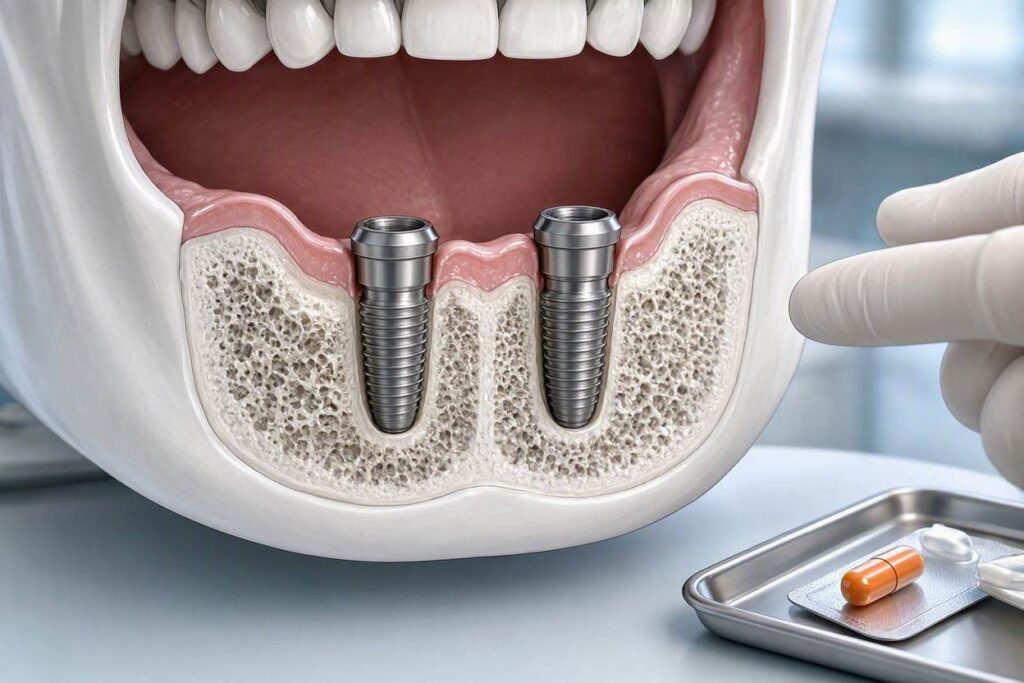
The Biological Role of Niacin in Bone and Soft Tissue
To understand whether niacin can influence implant outcomes, one must first understand its physiological roles relevant to bone healing, soft tissue integrity, and inflammation.
Niacin and Bone Metabolism
Niacin is a precursor to nicotinamide adenine dinucleotide (NAD), a coenzyme essential for cellular energy production and numerous metabolic pathways. Osteoblasts, the bone-forming cells, and osteoclasts, the bone-resorbing cells, both require NAD-dependent enzymes for their function. Adequate niacin status is therefore necessary for normal bone turnover and remodeling.
Animal studies and some human observational research suggest that niacin deficiency can impair bone growth and mineralization. Conversely, adequate niacin intake supports the cellular machinery of bone formation. However, there is no evidence that supraphysiologic doses of niacin—amounts exceeding the Recommended Dietary Allowance (RDA)—enhance bone healing or osseointegration beyond what is achieved with a nutritionally adequate diet.
Niacin and Wound Healing
Implant placement is a surgical procedure that creates a wound in the bone and soft tissue. Wound healing requires the proliferation and migration of fibroblasts, endothelial cells, and epithelial cells, all of which depend on NAD for energy metabolism and cellular replication. Niacin is a necessary cofactor in these processes. A deficiency in niacin can impair wound healing.
Again, the key clinical point is that deficiency impairs healing. Supplementation above the RDA in an individual who is not deficient has not been demonstrated to accelerate or enhance surgical wound healing.
Niacin and the Inflammatory Response
Niacin has known anti-inflammatory effects. It can modulate the production of pro-inflammatory cytokines and has been used pharmacologically to treat dyslipidemia. In the context of an implant, controlled inflammation is a necessary part of the initial healing response, but chronic inflammation, such as in peri-implantitis, is destructive. The theoretical question is whether niacin’s anti-inflammatory properties could reduce the risk of peri-implant inflammation.
There is currently no clinical evidence that niacin supplementation reduces the incidence or progression of peri-implantitis in humans. The anti-inflammatory effects of niacin are well-described in the context of cardiovascular disease, not peri-implant disease.
The Nutritional Status of the Implant Patient
The most important nutritional consideration for implant success is not whether a specific supplement provides a benefit, but whether the patient has any nutritional deficiencies that could impair healing.
The RDA for Niacin and Deficiency
The Recommended Dietary Allowance for niacin is 16 milligrams per day for adult men and 14 milligrams per day for adult women. Niacin is found in a wide variety of foods, including meat, poultry, fish, nuts, legumes, and enriched grains. Severe niacin deficiency, which causes the disease pellagra (characterized by dermatitis, diarrhea, and dementia), is extremely rare in developed countries. Marginal or subclinical deficiencies can occur in individuals with severely restricted diets, chronic alcoholism, or malabsorption syndromes.
The Role of the Implant Surgeon
A thorough preoperative medical and dietary history will identify patients at risk for nutritional deficiencies. If a deficiency is suspected, the surgeon may recommend a blood test and appropriate dietary counseling or supplementation to restore normal levels before elective surgery. This is standard medical practice and applies to all nutrients, not specifically to niacin.
Niacin and the “Flushing” Phenomenon
Patients who have taken niacin supplements, particularly the immediate-release nicotinic acid form, are familiar with the “niacin flush”—a transient, uncomfortable reddening, warming, and itching of the skin caused by vasodilation. This is mediated by the release of prostaglandins.
There is no evidence that this vasodilatory flush provides any benefit to the peri-implant tissues. The flush is a cutaneous phenomenon. Some individuals have speculated that increased blood flow to the face and skin could translate to improved healing in the jaw, but this is unsubstantiated speculation. The jawbone’s blood supply is not significantly affected by the niacin flush.
Evidence-Based Recommendations
Based on the current state of scientific evidence, the following recommendations are clinically sound.
Do Not Supplement Niacin Specifically for Implant Success
There is no randomized controlled trial, systematic review, or consensus guideline that supports the use of niacin supplementation to improve dental implant osseointegration, reduce implant failure, or prevent peri-implantitis. The routine recommendation of niacin for implant patients is not supported by evidence.
Ensure Nutritional Adequacy
The patient should consume a balanced diet that provides the RDA for niacin and all other essential vitamins and minerals. This supports overall health and normal wound healing. A daily multivitamin that contains the RDA of niacin is reasonable for patients who may have dietary gaps, but high-dose niacin supplements are not indicated.
Focus on Proven Risk Reduction Strategies
The factors that have been definitively shown to improve implant success and reduce complications are:
- Smoking cessation
- Excellent glycemic control in diabetic patients
- Meticulous oral hygiene (the dedicated daily cleaning protocol for implants)
- Regular professional maintenance
- Management of parafunctional habits (night guard for bruxism)
- Antibiotic prophylaxis when indicated
These evidence-based strategies, not niacin supplements, are the pillars of implant longevity.
Discuss All Supplements With Your Surgeon
The patient should inform the implant surgeon of all supplements, herbs, and over-the-counter medications they are taking. Some supplements, such as high-dose vitamin E, fish oil, or certain herbs, can interfere with blood clotting and should be temporarily discontinued before surgery. Niacin, in standard dietary doses, does not pose a bleeding risk, but full disclosure is always the rule.
Conclusion
Dental implants do not receive a specific, proven benefit from niacin supplementation beyond the foundational requirement that the patient is not nutritionally deficient. Niacin is an essential nutrient for cellular metabolism, bone turnover, and wound healing, and a deficiency would impair these processes, but supraphysiologic supplementation has no demonstrated effect on implant osseointegration or peri-implant health. The implant patient should focus on a balanced, nutrient-adequate diet and the well-established, evidence-based strategies for implant success, including smoking cessation, glycemic control, meticulous oral hygiene, and professional maintenance.
Frequently Asked Questions
Can taking niacin make my implant heal faster?
There is no scientific evidence that niacin supplementation accelerates the osseointegration or soft tissue healing around a dental implant. Normal wound healing depends on adequate overall nutrition, not on high doses of a single vitamin. A balanced diet supports healing. Niacin supplements will not “speed up” the process.
I read that niacin helps with bone growth. Should I take it for my bone graft?
Niacin is a required cofactor for the cellular processes involved in bone formation, but this means that a deficiency impairs bone growth. It does not mean that taking more niacin than the body needs stimulates extra bone growth. For a bone graft to heal successfully, you need a healthy surgical technique, adequate blood supply, mechanical stability, and a nutritionally adequate diet. A niacin supplement is not a substitute for these factors.
Are there any vitamins or supplements that are proven to help dental implants?
Vitamin D and calcium are essential for bone health, and a deficiency in vitamin D has been associated with impaired osseointegration in some studies. Ensuring adequate vitamin D and calcium intake is reasonable. However, no supplement has been proven in high-quality clinical trials to independently and significantly improve implant success in patients who are not deficient. The most impactful actions you can take are the behavioral and clinical strategies: don’t smoke, keep your implants meticulously clean, and see your dentist regularly.
Could niacin be harmful to my implant?
In standard dietary or RDA-level doses, niacin is not harmful to an implant. The pharmacologic doses used to treat cholesterol (1,000 to 2,000 milligrams daily) can cause hepatotoxicity and other side effects and should only be taken under a physician’s supervision. There is no known direct adverse effect of niacin on dental implants specifically.
Additional Resource
The National Institutes of Health Office of Dietary Supplements provides evidence-based, peer-reviewed fact sheets on vitamins and minerals at ods.od.nih.gov. The niacin fact sheet details the RDA, food sources, deficiency and toxicity information, and a comprehensive review of the scientific literature on niacin’s health effects, making it an authoritative source for patients researching nutritional supplements.