At What Age Is It Possible To Get Dental Implants?
You are missing a tooth, or someone you care about is, and the question of dental implants has come up. Perhaps you are in your late teens, still growing, and wondering whether you must wait. Perhaps you are in your seventies or eighties, and you have been told you are too old for implants. Perhaps you are a parent of a teenager with a congenitally missing tooth, trying to make the right decision at the right time.
The question of age and dental implants does not have a single numerical answer. There is no universal minimum age and no maximum age. Instead, the decision depends on growth completion for younger patients and overall health status for older patients. This guide provides a thorough, evidence-based explanation of how age affects implant candidacy. You will learn the biological factors that determine timing, how different life stages present different considerations, and how to make the decision that optimizes the long-term success of implant treatment.
The Fundamental Principle: Growth Determines the Lower Age Limit
For young people, the critical factor governing implant timing is not a specific age but the completion of jaw growth. Placing an implant in a jaw that is still growing can lead to serious aesthetic and functional problems.
Why Jaw Growth Matters
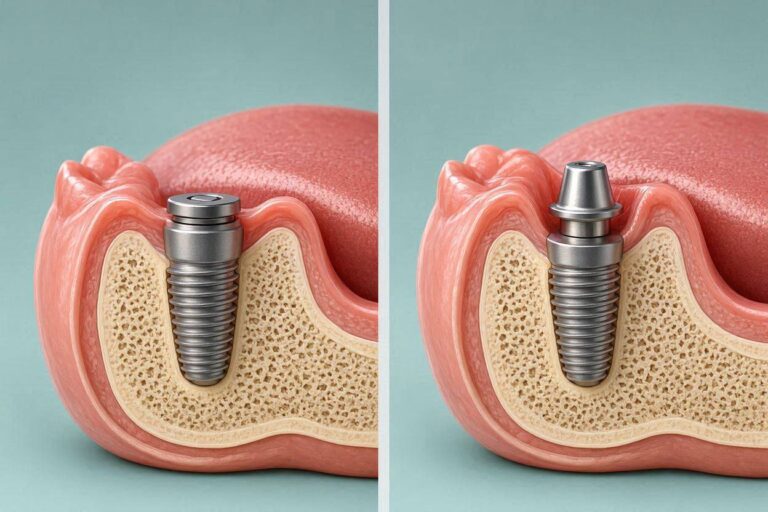
A dental implant fuses with the bone through osseointegration, becoming rigidly fixed in position. Unlike a natural tooth, which has a periodontal ligament that allows it to move and adapt as the jaw grows and the teeth erupt, an implant is immobile. It behaves like an ankylosed tooth, one that is fused to the bone and cannot move.
If an implant is placed in a growing jaw, the surrounding bone and the adjacent natural teeth continue to grow and erupt while the implant remains fixed in its original position. Over time, the implant crown appears to sink relative to the adjacent teeth. The gum line around the implant becomes uneven with the gum lines of the natural teeth. The result is a visible aesthetic deformity that is difficult or impossible to correct without removing the implant and starting over.
How Growth Is Assessed
Dental professionals do not guess about growth completion. They use objective clinical and radiographic assessments. The most common method is to take a lateral cephalometric radiograph, a side-view X-ray of the skull, and evaluate the skeletal maturity of the cervical vertebrae in the neck. The shape of these vertebrae changes predictably as a person matures, and the stages of cervical vertebral maturation correlate with the completion of jaw growth.
Another method is to take serial measurements. If the patient’s height has not changed in a year or more, and if serial dental casts or X-rays show no change in the position of the teeth, growth is likely complete. The hand-wrist radiograph, which assesses the growth plates in the hand, is another tool that orthodontists use to determine skeletal maturity.
The key point is that the decision should be based on evidence of growth cessation, not on reaching a particular birthday.
The Typical Age Range for Growth Completion
Growth completion varies by sex and by individual, but general ranges guide clinical decision-making.
Females
Females generally complete growth earlier than males. Most females reach skeletal maturity in the jaw by age 16 to 18. Some females are fully mature by 15. Others continue to grow until 19 or 20. The range reflects the variability of human development. An individual assessment is always required, but for most females, implant placement before 16 is inadvisable, and 18 to 20 is a safe window for most.
Males
Males generally continue to grow longer than females. Most males reach skeletal maturity in the jaw by age 18 to 21. Some are mature by 17. Others continue to grow into their early twenties. Implant placement before 18 in males carries significant risk of growth-related complications, and many clinicians prefer to wait until 21 or older unless compelling evidence of growth completion exists.
The Conservative Approach
Because the consequences of placing an implant too early are severe and difficult to correct, the standard of care in implant dentistry is to err on the side of caution. If there is any doubt about growth completion, it is safer to wait. A temporary replacement, such as a removable partial denture or a bonded bridge, can maintain the space and provide aesthetics during the waiting period.
Congenitally Missing Teeth: A Special Challenge
One of the most common reasons young people need implants is congenitally missing teeth, particularly the maxillary lateral incisors, the teeth next to the two front teeth, and the second premolars. These teeth simply never develop. The patient reaches adolescence with a gap or with a baby tooth that is being resorbed and will soon be lost.
The Coordination of Orthodontics and Implants
The standard approach for congenitally missing teeth involves close coordination between the orthodontist and the implant dentist. The orthodontist first aligns the remaining teeth and creates the proper amount of space for the eventual implant. The patient then wears retainers or a temporary replacement to hold the space while waiting for growth to complete.
This waiting period can be frustrating for the patient and the parents. The patient is conscious of the gap during the socially sensitive teenage years. A removable retainer with a fake tooth, called an Essex retainer or a clear aligner with a pontic, or a temporary bonded bridge can provide an aesthetic replacement that allows the patient to smile and socialize normally while waiting.
Rushing into an implant before growth is complete to solve a short-term social problem creates a permanent aesthetic problem. The temporary inconvenience of a removable or bonded replacement is far preferable to a malpositioned implant that will be visible for the rest of the patient’s life.
The Canine Substitution Alternative
In some cases of congenitally missing lateral incisors, the orthodontist can close the space by moving the canine tooth into the lateral incisor position and reshaping it to look like a lateral incisor. This approach, called canine substitution, avoids the need for an implant entirely and eliminates the waiting period concern. It is not appropriate for all cases, and the aesthetic results depend on the size, shape, and color of the canine tooth, but it is an option worth discussing with the orthodontist.
Dental Implants in Young Adults
Once growth is confirmed to be complete, young adults in their early to mid-twenties are excellent candidates for dental implants. They typically have good bone quality, robust healing capacity, and few medical conditions that complicate surgery.
Trauma-Related Tooth Loss
Young adults are disproportionately affected by traumatic tooth loss from sports injuries, motor vehicle accidents, falls, and altercations. A tooth knocked out in a basketball game or a bicycle accident leaves a young person facing a lifetime of tooth replacement. An implant is the gold standard for replacement in this age group.
If the tooth is knocked out and can be found, immediate reimplantation of the natural tooth is the best option if the tooth and socket are in good condition. If reimplantation is not possible or the reimplanted tooth eventually fails, an implant can be placed after the socket has healed and any necessary bone grafting has been performed.
The Advantage of Early Replacement
Placing an implant soon after tooth loss in a young adult preserves the bone and the gum architecture. The longer a tooth is missing, the more the bone resorbs and the more challenging the eventual implant placement becomes. Young adults who replace missing teeth promptly with implants tend to have excellent aesthetic and functional outcomes that last for decades.
Dental Implants in Middle Age
Middle age, roughly 35 to 60, is the demographic in which most dental implants are placed. The biological capacity for healing remains strong, and tooth loss from decay, gum disease, and previous dental work failure accumulates during these years.
Periodontal Disease Considerations
Many middle-aged patients have a history of periodontal disease. Active periodontal disease must be treated and stabilized before implants are placed. Placing an implant in a mouth with untreated gum disease is like building on a contaminated foundation. The bacteria that caused the natural tooth loss will attack the implant.
A patient with a history of treated and stabilized periodontal disease can receive implants successfully, but the maintenance requirements are higher. More frequent professional cleanings, meticulous home care, and vigilant monitoring for signs of peri-implantitis are essential.
Long-Term Planning
Middle-aged patients receiving implants should think decades ahead. An implant placed at 50 must last 30 or 40 years. Choosing a high-quality implant system, an experienced clinician, and committing to excellent long-term maintenance is an investment in quality of life for the later decades.
Dental Implants in Older Adults
There is no upper age limit for dental implants. Healthy older adults in their seventies, eighties, and even nineties can receive implants successfully. The decision is based on medical fitness, not chronological age.
Medical Considerations
Older adults are more likely to have medical conditions that can affect implant healing and success. These conditions do not necessarily preclude implants, but they must be managed appropriately.
Controlled diabetes is not a contraindication to implants, though poorly controlled diabetes impairs healing and increases infection risk. The dentist should communicate with the patient’s physician to ensure that blood sugar is well-managed before surgery.
Osteoporosis does not prevent implant placement, and patients taking oral bisphosphonate medications for osteoporosis can generally receive implants safely. Patients taking intravenous bisphosphonates or other antiresorptive medications for cancer treatment are at risk for medication-related osteonecrosis of the jaw, a serious complication in which the jawbone fails to heal after surgery. These patients require careful evaluation and may not be candidates for implants.
Cardiovascular conditions, including hypertension, coronary artery disease, and a history of stroke, require medical clearance and possibly modification of anticoagulant medications before surgery. The dentist should coordinate with the patient’s cardiologist or primary care physician.
The Bone Quality Factor
Older adults are more likely to have been missing teeth for many years, leading to significant bone resorption. The jawbone may be atrophic, meaning shrunken and deficient in height and width. This does not prevent implant placement but may require bone grafting, sinus lifts, or the use of shorter or narrower implants.
Advances in implant design, including short implants and zygomatic implants for the severely resorbed upper jaw, have expanded the possibilities for older patients who would have been considered untreatable a generation ago.
The Benefits for Older Patients
The benefits of dental implants for older patients are substantial. Implant-supported dentures improve nutrition by restoring the ability to chew a full range of foods. They eliminate the social embarrassment of loose dentures. They preserve facial bone and prevent the sunken appearance that develops with long-term denture wear. The improvement in quality of life can be dramatic.
Dental Implants in the Very Old and Medically Frail
For patients in their late eighties and beyond, or those with significant medical frailty, the risk-benefit calculus shifts. The question is not whether implants are possible but whether they are wise.
Surgical Risk Tolerance
Implant surgery is elective. The patient must be able to tolerate the surgical procedure safely. A patient with unstable angina, recent heart attack, or severe pulmonary disease may face more risk from the surgery than benefit from the implant. The treating dentist and the patient’s physician must make this assessment together.
For patients who cannot safely undergo conventional implant surgery, a removable denture remains a viable option. The denture may not be ideal, but it is safe. The first principle of medicine, to do no harm, applies.
Life Expectancy and Treatment Planning
For a patient with a limited life expectancy, a simpler, faster treatment may be more appropriate than a complex implant reconstruction that requires months of healing. An implant-retained overdenture on two implants may provide adequate function at lower surgical risk and cost than a full-arch fixed prosthesis on four or six implants.
This is not ageism. It is realistic, compassionate treatment planning that considers the patient’s overall health, functional needs, and personal preferences.
The Role of Bone Age versus Chronological Age
A recurring theme in implant age considerations is that biological age matters more than chronological age. Two 75-year-olds can have vastly different health statuses and bone qualities.
Biological Variability
One 20-year-old may still be growing. Another may have completed growth at 17. One 80-year-old may have dense, well-vascularized bone and heal like a 40-year-old. Another may have osteoporotic bone, multiple medical conditions, and poor healing capacity. Each patient must be evaluated individually.
The clinician’s judgment, informed by a thorough medical history, clinical examination, and appropriate imaging, determines candidacy. A blanket rule based on age is lazy dentistry. An individualized assessment based on biology is the standard of care.
Conclusion
Dental implants can be placed successfully at any age once jaw growth is complete for younger patients, typically around 16 to 18 for females and 18 to 21 for males, assessed by objective measures of skeletal maturity rather than by birthday. There is no maximum age for implants. Healthy older adults in their eighties and beyond can receive implants when medical conditions are managed and surgical risk is acceptable. The key principle is that biological age, growth status, bone quality, and overall health matter more than chronological age, and each patient requires individualized evaluation.
Frequently Asked Questions
Can a 15-year-old get a dental implant?
Almost never. Jaw growth is not complete at 15 in the vast majority of patients. Placing an implant at this age risks the implant sinking relative to the adjacent teeth as growth continues. A temporary replacement should be used until growth is confirmed complete.
Is 80 too old for dental implants?
No, 80 is not too old if the patient is in reasonably good health. Many 80-year-olds receive implants successfully. The decision depends on medical fitness, bone quality, and the patient’s ability to maintain oral hygiene, not on chronological age.
How do I know if my teenager’s growth is complete?
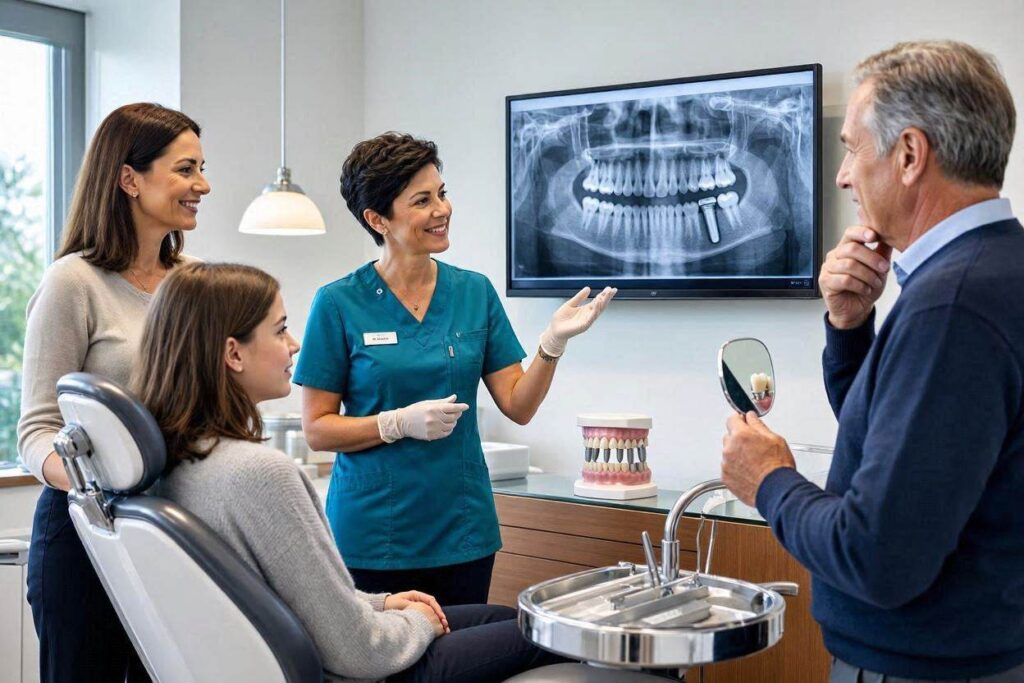
Your dentist or orthodontist can assess skeletal maturity using a lateral cephalometric X-ray that evaluates the cervical vertebrae, serial height measurements, or a hand-wrist radiograph. These objective measures determine whether growth has ceased.
Does menopause affect dental implant success?
Menopause itself does not affect implant success. Post-menopausal bone density loss may require special consideration in treatment planning, but implants can be placed successfully in post-menopausal women.
Can I get implants if I have osteoporosis?
Yes, most patients with osteoporosis can receive implants. Those taking oral bisphosphonates are generally safe. Patients on intravenous bisphosphonates or other potent antiresorptive drugs require careful evaluation due to the risk of medication-related osteonecrosis of the jaw.
Additional Resource:
For guidelines on dental implant candidacy and age considerations, visit the International Congress of Oral Implantologists at https://www.icoi.org.