
Bruising After Dental Implant Surgery
So, you’ve just had dental implant surgery. First of all, well done for taking this step toward a healthier smile. You might feel a bit sore, and perhaps you have noticed some purple, blue, or even yellow marks on your face or neck. That is completely normal.
Let’s talk about bruising after dental implant surgery. For many people, this comes as an unexpected surprise. You prepared for swelling, but the bruise? That can feel a little alarming. Do not worry. I am here to walk you through everything you need to know.
This guide is honest, realistic, and based on what actually happens after implant placement. You will learn why bruising happens, how long it sticks around, simple ways to help it heal faster, and when you should call your dentist. No complicated medical terms. No fluff. Just clear, friendly advice.
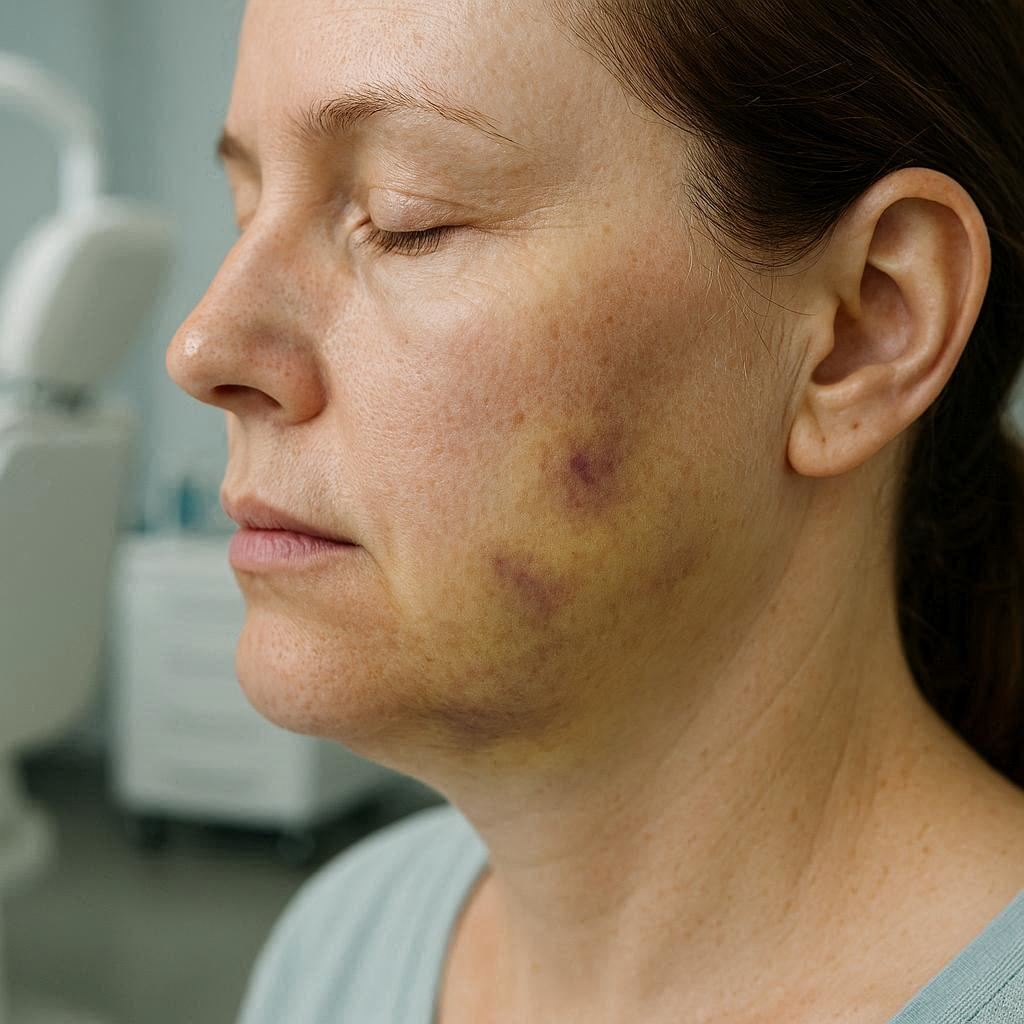
Why Does Bruising Happen After Dental Implant Surgery?
Bruising is your body’s natural response to trauma. And yes, even though dental implant surgery is precise and careful, it is still a surgical procedure. Your dentist makes an incision in your gum tissue and drills a small hole into your jawbone to place the implant. That is incredible work, but it also means your tissues go through a lot.
When tissues are disturbed, tiny blood vessels called capillaries can break. Blood leaks out into the surrounding soft tissue. Because there is no open wound for the blood to escape, it pools just under your skin. That pool of blood is what you see as a bruise.
Here is something many people do not realize. The bruise may not show up right away. You might leave the dental office feeling fine. Then, on day two or three, you notice a yellowish or purple mark near your jaw or chin. That is perfectly normal. It just means the blood has traveled a little bit under the skin.
The Role of Surgery Location
Dental implants are usually placed in the lower jaw or upper jaw. The location matters for bruising.
- Lower jaw implants often cause bruising under the chin, along the jawline, or even on the front of the neck.
- Upper jaw implants are less likely to cause visible facial bruising, but you might notice bruising near the nose or under the eyes.
Why the difference? The lower jaw has a rich blood supply and is surrounded by loose tissues. Blood can move more easily. The upper jaw is closer to your sinuses and cheekbones, so bruising tends to stay more localized.
Important note: If you have bruising that spreads rapidly or feels hot to the touch, that is not typical. We will cover warning signs later. For now, just know that a moderate, slowly developing bruise is almost always harmless.
What Does Normal Bruising Look Like?
Bruising after dental implant surgery goes through stages. Each stage has its own color. This is actually a good sign. It means your body is breaking down the trapped blood and healing itself.
| Day After Surgery | Typical Bruise Color | What Is Happening |
|---|---|---|
| 1 to 2 days | Red or dark purple | Fresh blood under the skin. Oxygen is still present. |
| 3 to 5 days | Blue or deep purple | Blood is starting to pool. Less oxygen in the area. |
| 5 to 7 days | Green or yellowish-green | Your body is breaking down hemoglobin (a protein in red blood cells). |
| 7 to 10 days | Yellow or light brown | The bruise is fading. Healing is nearly complete. |
| 10 to 14 days | Normal skin color | The bruise has been reabsorbed. |
Do not panic if your bruise skips a color or stays dark for a few extra days. Everyone heals at a different pace. Some people never see green or yellow. Others stay purple for over a week. Your age, overall health, and even your skin tone influence how bruises look.
A Realistic Example
Let me paint you a picture. Sarah, a 52-year-old teacher, had two implants placed in her lower right jaw. On day one, she felt fine. By day three, she noticed a small blue mark under her chin. She worried something was wrong. On day five, that mark turned greenish-yellow and spread slightly toward her neck. By day eight, it was a faint yellow smudge. On day twelve, it was gone.
Sarah’s experience is extremely common. If this sounds like you, take a deep breath. You are healing exactly as you should be.
How Long Does Bruising Last After Dental Implant Surgery?
This is the question everyone wants answered. The short answer is: most bruising fades within 10 to 14 days. But let’s be more specific.
- Mild bruising (small, localized spots) often clears up in 5 to 7 days.
- Moderate bruising (spreading along the jaw or neck) usually takes 7 to 12 days.
- More extensive bruising (covering a larger area, like the side of the face) can last 14 days or slightly longer.
I want to be honest with you. In rare cases, some people notice a faint yellowish mark for up to three weeks. This is not dangerous. It simply means your body is taking its time cleaning up the old blood. As long as the bruise is not getting larger, more painful, or changing in a concerning way, you can let it heal naturally.
Factors That Influence Healing Time
Everyone heals differently. Here is why.
- Age: Younger skin bounces back faster. Older skin has thinner blood vessels and slower cell turnover.
- Medications: Blood thinners (like aspirin, warfarin, or even ibuprofen) can make bruising worse and longer-lasting.
- Vitamin levels: Low vitamin C or vitamin K can slow healing.
- Smoking: Nicotine constricts blood vessels, which actually reduces bruising initially, but it slows down overall healing.
- Genetics: Some people just bruise easily. That is a normal variation, not a problem.
If you know you tend to bruise easily, expect a slightly longer healing time. That does not mean your implant is failing. It just means your body has a more dramatic response to surgery.
How to Reduce and Heal Bruising Faster
Now for the practical part. You want this bruise gone. I completely understand. While you cannot make it vanish overnight, you can absolutely speed things along. These are simple, safe, and effective methods.
The First 48 Hours: Cold Therapy
During the first two days after surgery, your goal is to stop the bleeding under the skin. Cold constricts blood vessels. Less blood leaking out means a smaller bruise.
- Apply an ice pack wrapped in a thin cloth to the outside of your face near the surgery site.
- Do not apply ice directly to your skin. That can cause frostbite or tissue damage.
- Ice for 15 to 20 minutes at a time.
- Take a break for at least 20 minutes before reapplying.
- Repeat this cycle as often as you like during waking hours.
Many dentists give you a special ice pack that wraps around your head. Use it. It is designed to stay in place and target the right area.
After 48 Hours: Warm Compresses
Once you pass the 48-hour mark, switch to heat. Warmth increases blood flow to the area. This helps your body carry away the old, trapped blood and bring in fresh healing nutrients.
- Use a warm, damp cloth or a heating pad on the lowest setting.
- Apply for 10 to 15 minutes, three or four times per day.
- Make sure the heat is comfortable, not hot. You should never feel burning.
I have seen patients who only use ice for a week. That actually slows healing. Remember: ice first, then heat. That simple rule makes a big difference.
Elevate Your Head While Sleeping
Gravity matters. When you lie flat, blood pools more easily in your face. That can make bruising look worse and last longer.
- Sleep with an extra pillow under your head for the first three to five nights.
- Try to sleep on your back. Sleeping on the side of your surgery can increase pressure and swelling.
- If you are a stomach sleeper, do your best to adjust. Even propping yourself up at a 30-degree angle helps.
Gentle Movement, Not Rest
This might surprise you. Light movement actually helps bruising heal faster. Why? Movement gets your blood circulating. But there is a catch. You must be gentle.
- Go for short, slow walks around your home or neighborhood.
- Avoid bending over, lifting heavy objects, or any exercise that makes you strain.
- No running, weightlifting, or high-intensity workouts for at least one week.
Walking is your best friend. Ten minutes, three times a day. That is plenty.
Arnica and Other Natural Options
Arnica is a plant-based remedy that some people swear by for bruising. It comes as a gel, cream, or homeopathic tablet. The evidence is mixed, but many dentists and oral surgeons recommend it.
- Arnica gel: Apply a thin layer to the bruised skin, avoiding the actual incision site. Do not get it inside your mouth.
- Arnica tablets: Follow the package directions. These are usually dissolved under the tongue.
A 2019 review of studies found that arnica may reduce bruising after facial surgeries, but the effects are modest. It is safe for most people, but always check with your dentist first.
Other natural helpers include:
- Pineapple or bromelain supplements: Bromelain is an enzyme that breaks down proteins. Some research suggests it reduces swelling and bruising.
- Vitamin K cream: This can help speed up the breakdown of trapped blood. It is available over the counter.
Important note: Do not take any new supplement without asking your dentist or surgeon. Some supplements interact with medications or increase bleeding risk.
What Not to Do: Common Mistakes That Worsen Bruising
I see people make the same mistakes over and over. Let me save you the trouble.
Do Not Massage the Bruise
You might think rubbing the bruise will break up the blood. It will not. It will actually cause more tiny blood vessels to break. That makes the bruise larger and darker.
Keep your hands off the area. Gentle application of arnica gel is fine. Vigorous rubbing is not.
Do Not Take Blood-Thinning Pain Relievers
This is extremely important. Many people reach for ibuprofen (Advil, Motrin) or naproxen (Aleve) after surgery. These are great for pain, but they thin your blood. That means more bleeding under the skin and worse bruising.
Your dentist will likely recommend acetaminophen (Tylenol) for pain instead. Acetaminophen does not affect bleeding. Follow your dentist’s instructions carefully.
If you are already on prescription blood thinners for a medical condition, do not stop taking them. Talk to your dentist before surgery. They need to know.
Do Not Drink Alcohol
Alcohol thins your blood just like ibuprofen does. It also dehydrates you, which slows healing. Avoid alcohol for at least 48 to 72 hours after surgery. Longer is better.
Do Not Smoke
I know this is hard to hear if you are a smoker. But smoking dramatically impairs healing after any surgery. It reduces blood flow, increases infection risk, and can even cause implant failure.
If you smoke, use your implant surgery as a reason to quit. At the very least, do not smoke for the first 72 hours. Every cigarette you avoid helps your bruise fade faster and your implant heal stronger.
When Should You Worry About Bruising?
Let me be clear. Most bruising is harmless. But there are a few situations where you should call your dentist.
Signs That Need Medical Attention
| Symptom | What It Could Mean | Action |
|---|---|---|
| Bruise grows rapidly (over hours, not days) | Active bleeding under the skin | Call your dentist immediately |
| Bruise becomes hot, red, and swollen | Possible infection | Call your dentist within 24 hours |
| You have difficulty swallowing or breathing | Hematoma pressing on airway (very rare) | Go to the emergency room |
| Bruising appears on both sides of your face | Possible bleeding disorder | Call your dentist and your primary doctor |
| You feel severe, worsening pain not controlled by medication | Could be a complication | Call your dentist |
A Note on Hematomas
A hematoma is a large, firm collection of blood under the skin. It feels like a hard lump, not a flat bruise. Small hematomas are common and resolve on their own. Large hematomas may need drainage.
How can you tell the difference? Gently touch the bruised area. If it feels like a water balloon or a firm knot, mention it to your dentist. Most of the time, they will say to just watch it. But it is always better to ask.
Bruising vs. Swelling: What Is the Difference?
People often confuse bruising and swelling. They are related, but they are not the same thing. Understanding the difference helps you know what is normal.
| Feature | Swelling (Edema) | Bruising (Ecchymosis) |
|---|---|---|
| What it is | Fluid buildup in tissues | Blood trapped under skin |
| Appearance | Puffy, tight, shiny skin | Discolored (purple, blue, yellow) |
| Onset | Within hours of surgery | 1 to 3 days after surgery |
| Peak | Day 2 or 3 | Day 3 to 5 |
| Treatment | Ice, elevation, anti-inflammatories | Ice then heat, arnica, time |
Swelling usually goes down faster than bruising. You might see your swelling improve by day five, but your bruise is still dark. That is fine. Do not panic. They heal on different timelines.
How Dental Implant Surgery Compares to Other Procedures
If this is your first oral surgery, you might wonder if this much bruising is normal. Let me give you some context.
| Procedure | Typical Bruising Severity | How It Compares |
|---|---|---|
| Simple tooth extraction | Mild (rarely visible) | Less than implants |
| Wisdom tooth removal | Moderate to severe | Similar or slightly more than implants |
| Dental implant (single) | Mild to moderate | Baseline for this guide |
| Multiple implants | Moderate | More than a single implant |
| Bone graft with implant | Moderate to severe | More than implant alone |
| Sinus lift | Moderate (under eyes) | Different location, similar severity |
| Gum graft | Mild (in mouth only) | Less than implants |
As you can see, bruising after dental implant surgery falls in the middle of the range. It is not the least bruising procedure, but it is also not the worst. Knowing this can help you feel more normal.
What Your Dentist Wants You to Know (But Might Forget to Say)
Dentists are busy people. They do their best to explain everything, but sometimes small details slip through the cracks. Here is what many dentists wish every patient knew about bruising.
“Bruising does not mean I made a mistake.”
Your dentist placed your implant with skill and care. Bruising is not a sign of error. It is a sign that your body had a normal response to a surgical procedure.
“The size of the bruise is not related to the success of the implant.”
You could have a huge, dramatic bruise and a perfectly healed implant. Or you could have no bruise at all and still have complications. The two are not connected.
“Do not Google your symptoms at 2 AM.”
I say this with love. The internet is full of scary stories. If you search “dental implant bruise,” you will find someone who had a rare complication. That person is not you. If you are worried, call your dentist’s office. That is what they are there for.
“We have seen much worse.”
Dental professionals have seen bruises that cover the entire neck, bruises that turn black, and bruises that last a month. Yours is likely very normal in their eyes.
Real Patient Stories (Shared with Permission)
Sometimes hearing about real people helps more than any medical explanation. These are composite stories based on common experiences.
Maria, 34 – Single Lower Implant
“I woke up on day three with a purple mark on my chin. I actually laughed because it looked like I had been in a fight. My husband kept asking if I was okay. By day seven, it was greenish-yellow. I used warm compresses and arnica gel. It was completely gone by day ten. My implant healed beautifully.”
David, 67 – Two Implants with Bone Graft
“I bruise easily because I take a low-dose aspirin for my heart. My dentist knew this and told me to expect significant bruising. He was right. My entire lower jaw and upper neck turned purple and yellow. It looked terrible. But it never hurt much. The bruise lasted almost three weeks. My implant is now five years old and still perfect.”
Leila, 28 – Upper Implant
“I was so confused when I got a black eye from an upper tooth implant. I thought something went wrong. My dentist explained that the bruise traveled up through my cheek. It looked exactly like I had been punched. It faded to yellow after a week and was gone by day twelve. I wish someone had warned me.”
These stories are realistic. If yours sounds similar, you are in good company.
The Emotional Side of Bruising
Let us talk about something most articles ignore. Bruising can be embarrassing. You might feel self-conscious going to work, seeing friends, or even just picking up your kids from school.
That is completely valid. Your face is how you present yourself to the world. Having a visible bruise can feel awkward.
Here is my honest advice. Do not hide. Most people will not notice as much as you think. And if they do notice, you can just say, “I had dental surgery.” That is a perfectly normal explanation. No one will judge you.
If you really want to cover the bruise, use a green-tinted concealer. Green neutralizes purple and blue. Apply it gently, avoiding your incision site. Or simply wear a soft scarf if the bruise is on your neck.
Remember, this is temporary. In less than two weeks, your face will look normal again. Your new implant will be there for decades. A short period of bruising is a small price to pay.
Preparing for Your Surgery to Minimize Bruising
An ounce of prevention is worth a pound of cure. If you have not had your surgery yet, or if you plan to have another implant in the future, use these tips beforehand.
One Week Before Surgery
- Stop taking unnecessary blood thinners. This includes ibuprofen, naproxen, aspirin (unless prescribed), vitamin E, fish oil, and ginkgo biloba. Always check with your dentist first.
- Start taking vitamin C. This nutrient strengthens blood vessels. Eat oranges, bell peppers, broccoli, or take a supplement.
- Hydrate well. Well-hydrated tissues are more resilient and bleed less.
- Ask about arnica. Some dentists recommend starting arnica tablets a few days before surgery.
The Day of Surgery
- Eat a good meal beforehand (unless told to fast). Stable blood sugar helps healing.
- Arrange for a ride home. Stress and movement after surgery can worsen bruising.
- Prepare your home. Have ice packs, extra pillows, and soft foods ready.
Immediately After Surgery
- Follow the ice protocol strictly. Do not skip it.
- Rest with your head elevated. Even while watching TV, sit in a recliner if you have one.
- Do not use a straw. The suction can disturb the surgical site and increase bleeding under the skin.
These small steps add up. Patients who prepare well often have noticeably less bruising.
Nutrition and Supplements for Faster Bruise Healing
What you put in your body directly affects how fast bruises fade. Here is a simple guide.
Foods That Help
| Nutrient | How It Helps | Food Sources |
|---|---|---|
| Vitamin C | Strengthens blood vessel walls | Oranges, kiwi, bell peppers, strawberries |
| Vitamin K | Essential for blood clotting | Kale, spinach, broccoli, Brussels sprouts |
| Zinc | Supports tissue repair | Beef, pumpkin seeds, chickpeas, cashews |
| Bromelain | Breaks down bruise proteins | Pineapple (fresh, not canned) |
| Quercetin | Reduces inflammation | Apples, onions, green tea, berries |
Foods to Avoid
- Alcohol: Thins blood and dehydrates
- Processed foods: High in sodium, which can worsen swelling
- Sugar: Slows immune function and healing
- Fried foods: Increase inflammation throughout the body
Sample One-Day Healing Menu
- Breakfast: Greek yogurt with fresh pineapple and a sprinkle of pumpkin seeds
- Lunch: Spinach salad with grilled chicken, bell peppers, and an orange on the side
- Snack: A handful of strawberries and a cup of green tea
- Dinner: Baked salmon with steamed broccoli and quinoa
- Dessert: A small bowl of fresh kiwi slices
You do not have to eat perfectly. But adding even a few of these foods can help.
Special Considerations for Different People
Bruising does not affect everyone the same way. Let me address specific groups.
People with Darker Skin Tones
Bruising looks different on darker skin. You may not see purple or blue. Instead, the bruise might appear as a dark brown, deep purple, or even black patch. As it heals, it may turn greenish or yellowish-brown.
Do not assume you are not bruising just because you do not see bright colors. Pay attention to tenderness, swelling, and any color change. The healing timeline is the same.
Older Adults
Skin becomes thinner and more fragile with age. Blood vessels break more easily. If you are over 65, expect bruising to be more noticeable and last a few days longer. That is normal. Just be extra gentle with ice and heat applications.
People on Blood Thinners
If you take prescription blood thinners (like warfarin, clopidogrel, apixaban, or rivaroxaban), you already know you bruise easily. Your dentist should have discussed this with you before surgery. In most cases, you will continue taking your medication. Your bruising will be more significant, and it may last three to four weeks. As long as the bruise is not growing rapidly or causing severe pain, it is safe.
People with Bleeding Disorders
Conditions like hemophilia or von Willebrand disease require special planning. You should already be under the care of a hematologist. Your dental implant surgery should be coordinated between your dentist and your specialist. Bruising will be more extensive, and you may need additional medication to control bleeding.
The Connection Between Bruising and Implant Success
I want to address a fear that many people have. Does more bruising mean my implant is less likely to succeed?
The answer is no. No scientific study has ever shown a link between the amount of surface bruising and the long-term success of a dental implant.
Your implant fuses with your jawbone through a process called osseointegration. That happens deep inside the bone. Surface bruising is a cosmetic issue. It does not affect the bone or the implant interface.
You could have the darkest, ugliest bruise in the world and still have a perfect implant. Or you could have no bruise at all and still have a failure. The two are completely independent.
So please, do not stare at your bruise and worry about your implant. Stare at it and think, “This is temporary. My implant is doing its job.”
Frequently Asked Questions (FAQ)
Q: Is it normal for bruising to appear on my neck after lower jaw implants?
Yes. This is very common. The neck has loose tissue and gravity can pull the blood downward. A bruise on the front or side of your neck is not dangerous and will fade just like a bruise on your face.
Q: Can I wear makeup to cover the bruise?
You can, but wait at least 48 hours after surgery. Apply makeup gently with a clean brush or sponge. Do not rub. Avoid getting any product near your incision or stitches.
Q: My bruise is getting bigger on day three. Should I worry?
Not automatically. Bruises often spread before they shrink. The blood has to go somewhere. As long as the spread is slow (over a day or more) and the area is not hot or severely painful, it is likely normal.
Q: How do I know if I have an infection vs. a normal bruise?
Infections are usually red, hot, swollen, and painful. Bruises are discolored but not necessarily warm. If you have a fever over 100.4°F (38°C), pus draining from the site, or worsening pain after day three, call your dentist.
Q: Does laser treatment help bruising heal faster?
Some dental offices offer low-level laser therapy to reduce swelling and bruising. The evidence is promising but not conclusive. It is safe and may help, but it is not necessary for normal healing.
Q: I have no bruising at all. Is that bad?
Not at all. Many people never bruise after dental implant surgery. It just means your blood vessels stayed intact or your body reabsorbed the blood very quickly. No bruising is not a sign of a problem.
Q: Can I exercise if I have a bruise?
Light walking is fine. Avoid anything that raises your blood pressure significantly, like running, weightlifting, or high-intensity interval training. Increased blood pressure can make bruising worse or cause new bleeding.
Q: My bruise is still here after three weeks. What should I do?
If the bruise is fading slowly and not causing pain, it is probably fine. But it is reasonable to call your dentist for reassurance. They may want to see you to rule out a hematoma or other issue.
Additional Resource
For more detailed, dentist-reviewed information on dental implant recovery and long-term care, visit the American Academy of Implant Dentistry’s patient education page:
🔗 American Academy of Implant Dentistry – Patient Resources
(Copy and paste this link into your browser. The AAID is a trusted, professional organization that provides accurate, up-to-date information.)
Important Notes for Readers
Note 1: This article is for informational purposes only. It does not replace professional medical or dental advice. Always follow the specific instructions given by your own dentist or oral surgeon.
Note 2: If you experience difficulty breathing, difficulty swallowing, sudden severe pain, or a rapidly expanding bruise, seek emergency medical care immediately.
Note 3: Do not stop taking prescription medications, including blood thinners, without first talking to the doctor who prescribed them.
Note 4: Healing times and bruising patterns vary widely. Your experience may differ from what is described here. That does not mean something is wrong.
Note 5: Keep a copy of your dentist’s after-hours contact information. If you are worried, call. A two-minute phone call can save you hours of unnecessary stress.
Conclusion
Bruising after dental implant surgery is a normal, expected part of healing for many people. It happens because tiny blood vessels break during the procedure, allowing blood to pool under your skin. Most bruising appears two to three days after surgery, changes color over time, and fades completely within 10 to 14 days. You can speed healing with ice (first 48 hours), then heat, gentle movement, good nutrition, and arnica if your dentist approves. Call your dentist if the bruise grows rapidly, becomes hot and painful, or does not start fading after two weeks. Remember, bruising does not affect the success of your implant. Your new tooth is healing just fine under that temporary discoloration. Be patient with your body. You will look and feel like yourself again soon.


