Can a Tooth Be Extracted and an Implant Placed Immediately?
The prospect of losing a tooth is daunting enough. The thought of then waiting months with a gap in your smile before you can even begin the implant process can feel like adding insult to injury. Modern implant dentistry offers a remarkable alternative: immediate implant placement. This guide explores the possibility of having a tooth extracted and an implant placed in the very same surgical appointment. We will define the procedure, outline the strict criteria that make it possible, and explain the significant advantages and specific risks. Your understanding of this advanced technique will empower you to have an informed conversation with your surgeon about whether you are a candidate for this accelerated path to a restored smile.
The Concept of Immediate Implant Placement
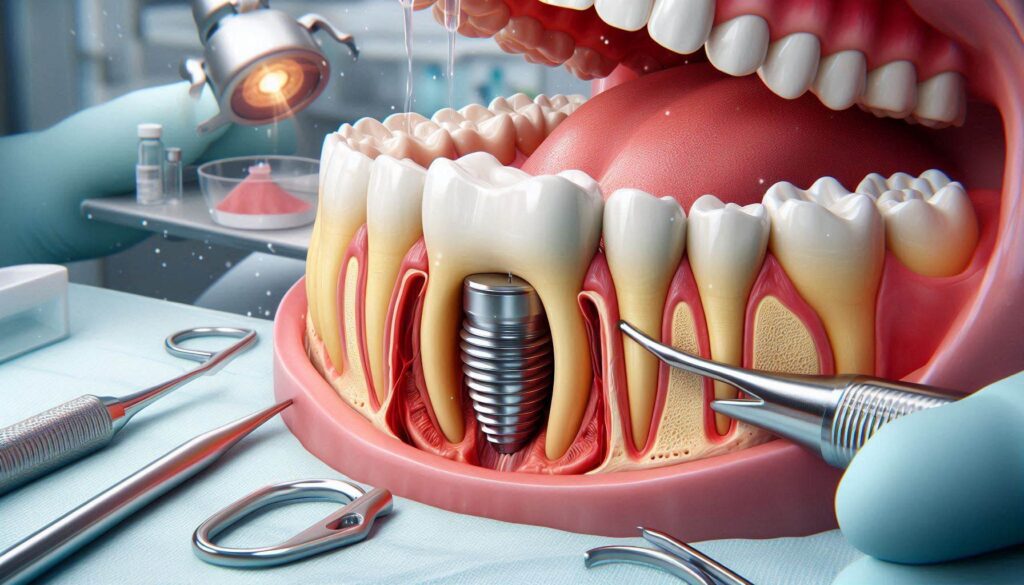
Immediate implant placement, often called extraction and immediate implant, is a surgical protocol where a failing or hopeless tooth is removed, and a dental implant is placed into the fresh extraction socket during the same visit. This is a departure from the traditional delayed protocol, where the tooth is extracted, the socket is allowed to heal for several months, and then a separate surgery is performed to place the implant. The immediate protocol compresses the treatment timeline and offers significant biological and psychological benefits, but it requires very specific anatomical conditions to succeed.
The defining feature of immediate placement is that the implant is placed into a socket that has just been created by the extraction. The bony walls of this socket are intact, or at least substantially intact, and are lined with the periodontal ligament and a fresh blood clot. The implant does not fill the entire socket. There is a gap, called the jumping distance, between the implant surface and the inner wall of the bony socket. This gap must heal. The surgeon’s goal is to achieve primary stability of the implant by anchoring it in the native bone apical and palatal to the extraction socket, while the buccal gap fills in with new bone and a blood clot. The procedure is technically demanding and requires meticulous, atraumatic extraction technique to preserve the delicate buccal plate of bone, which is the thin, outer shell of the socket and is critical for long-term aesthetics.
The Biological Rationale and Advantages
The biological rationale for immediate placement is compelling. When a tooth is extracted, the body initiates a cascade of bone resorption. The bundle bone, the thin layer of bone lining the socket that was supported by the periodontal ligament, is rapidly resorbed. The most dramatic dimensional changes in the alveolar ridge occur in the first three to six months after extraction. By placing an implant immediately, the surgeon interrupts this resorption cascade. The implant acts as a socket preservation device. The titanium post occupies the space, and the jumping distance fills with new bone. The physical presence of the implant reduces the collapse of the buccal plate and preserves the ridge width and height.
The advantages for the patient are significant. The most obvious is the reduction in the total treatment time. The delayed protocol requires tooth extraction, a healing period of three to four months, implant placement, a second healing period of three to four months, and then the final crown. The immediate protocol combines the extraction and placement into one surgery, reducing the total timeline by several months. There is one surgical procedure instead of two, which means one period of post-operative recovery. Psychologically, the patient never has to live with a gap in their smile if the implant is immediately provisionalized, meaning a temporary crown is placed on the implant at the same visit. This is a powerful benefit, especially in the aesthetic zone. The immediate protocol is not just about speed. It is about preserving the natural tissue architecture and minimizing the physical and emotional trauma of tooth loss.
The Strict Criteria for Immediate Implant Placement
Immediate implant placement is not a universal protocol. It is a technique reserved for specific, favorable clinical situations. The single most critical factor is the integrity of the extraction socket, specifically the buccal plate of bone. The buccal plate is the thin, outer wall of the socket. It is essential for supporting the gum tissue and achieving a natural aesthetic result. If the buccal plate is fractured, severely compromised by infection, or has a large dehiscence, an immediate implant is contraindicated. The implant requires a solid, four-walled bony envelope for predictable healing and integration.
The socket must be free of active, purulent infection. A tooth with a chronic abscess or a draining fistula is not an ideal candidate for immediate placement. The presence of active infection introduces bacteria into the surgical site at the moment of implant placement, which can severely compromise osseointegration. The tooth must be extracted atraumatically. The surgeon must use specialized instruments, such as periotomes, which are thin, flat blades inserted into the periodontal ligament space to sever the ligament fibers without applying lateral force to the bone. Forceps are used only as a final, gentle delivery tool. The goal is to remove the tooth while preserving every millimeter of the surrounding bone. A traumatic extraction that fractures the socket walls disqualifies the site for immediate placement. The implant must achieve primary stability, meaning it is firmly anchored in the native bone beyond the apex of the socket. If the socket anatomy does not allow for engagement of the apical bone, the implant will be loose, and the case must be converted to a delayed protocol.
When Immediate Placement Is Not Recommended
There are several specific scenarios where immediate placement is explicitly not recommended. An extraction socket in the posterior maxilla, where the bone is soft and the maxillary sinus is close, is a challenging site for immediate placement. The bone quality is poor, and achieving primary stability can be difficult. A molar extraction site presents a unique challenge. The socket is large and has multiple roots, leaving a significant jumping distance between the implant and the socket walls. The implant cannot fill the socket. A staged approach, with socket grafting and a delayed placement, is often the more predictable choice for molar sites. A site with a significant bony defect or a history of previous failed endodontic treatment with a large periapical lesion is not suitable for immediate placement.
A patient who smokes heavily, has uncontrolled diabetes, or has any other condition that severely compromises wound healing is a poor candidate for immediate placement, just as they are for any implant surgery. The immediate protocol places additional biological demands on the healing process. The gap between the implant and the socket wall must fill with new bone. This requires a robust, uncompromised healing response. A patient who cannot provide this physiological environment is better served by a delayed protocol, where the extraction site heals and fills with bone naturally before the implant is placed into mature, well-vascularized bone.
The Immediate Restoration Option: Same-Day Teeth
An additional layer of sophistication is the immediate restoration of an immediately placed implant. This means that not only is the implant placed at the time of extraction, but a temporary crown is attached to it on the same day. The patient walks out of the surgical appointment with a visible, functional, temporary tooth. This is the ultimate expression of accelerated implant treatment. However, the conditions for immediate restoration are even more stringent than for immediate placement alone. The implant must achieve exceptionally high primary stability, typically an insertion torque of 35 Newton-centimeters or greater. The temporary crown must be carefully adjusted to be completely out of occlusion, meaning it does not touch the opposing tooth in any jaw movement. The patient must commit to a strict soft-food diet and must not use the temporary tooth for any chewing.
The immediate restoration provides immense psychological benefit. The patient never experiences a moment of being toothless. The temporary crown also serves a biological function. It sculpts the gum tissue as it heals, supporting the soft tissue contours and the interdental papillae. The collagen fibers of the gum heal around the temporary crown, creating a natural emergence profile. When the final crown is delivered months later, the gum tissue is already perfectly contoured. The risk of immediate restoration is the same as with immediate placement: if the implant is overloaded by the patient biting on the temporary tooth, the micro-motion will disrupt osseointegration, and the implant will fail. The patient’s compliance with the soft-diet and no-chew instructions is non-negotiable. The surgeon must trust the patient’s discipline before offering this protocol.
Conclusion
Immediate dental implant placement, performed on the same day as a tooth extraction, is a specialized, accelerated protocol that preserves jawbone and gum architecture by placing the implant into a fresh, intact socket under the strict condition that the buccal bone plate is undamaged and there is no active infection. This advanced technique, particularly when combined with an immediate temporary crown on a stable implant, provides profound aesthetic and psychological benefits by eliminating the edentulous healing period entirely. However, its success depends on meticulous, atraumatic surgical technique, excellent primary implant stability, and a carefully selected, compliant patient who understands the critical importance of protecting the implant from any chewing forces during the osseointegration phase.
Frequently Asked Questions
Is immediate implant placement more painful than a standard delayed implant?
The post-operative discomfort is similar. You are undergoing an extraction and an implant placement in one visit, so there is slightly more surgical trauma than a simple extraction. However, most patients report the pain is manageable with prescribed or over-the-counter medication and resolves within a few days.
Can a molar be extracted and an implant placed immediately?
It is possible but less predictable than for a single-rooted front tooth. The molar socket is large and multi-rooted, leaving a significant gap around the implant. A delayed protocol with socket grafting is often the more predictable choice for molar sites, though an experienced surgeon can perform immediate molar placement in selected cases with favorable anatomy.
What happens if the implant is not stable enough at the time of extraction?
The surgeon will make an intraoperative decision. If primary stability cannot be achieved, the immediate placement is aborted. The socket will be grafted, and the site will be allowed to heal for several months. The implant will then be placed in a second, delayed surgery. This is not a failure. It is a prudent clinical judgment.
How soon can I eat normally after an immediate implant?
If you received an immediate temporary crown, you must not chew on that tooth at all during the entire osseointegration period, which is typically three to four months. Your diet will be restricted to soft foods. If the implant was placed without a temporary crown and was buried under the gum, you can resume a normal diet more quickly, but you should still avoid chewing directly on the surgical site.
Is the success rate of immediate implants the same as delayed implants?
In carefully selected cases with ideal conditions, the success rates are comparable to delayed protocols, exceeding 95 percent. However, immediate placement is a more technique-sensitive procedure. In cases with compromised sockets or less-than-ideal bone, the risk of failure is higher than with a delayed approach.
Additional Resource
The International Team for Implantology (ITI) provides comprehensive, evidence-based clinical guidelines on all aspects of implant dentistry, including detailed treatment protocols for immediate implant placement. Their consensus papers are the global standard for clinical decision-making. Visit: https://www.iti.org/