Can Dental Implants Affect Other Teeth?
A decision about tooth replacement is never made in isolation. Your mouth is a complex, interconnected system where a change to one component creates ripple effects throughout the entire stomatognathic apparatus. When you consider a dental implant, a fundamental question arises: will this foreign body, this titanium post, harm my remaining natural teeth? This comprehensive guide provides a clear, evidence-based, and honest answer. We will explore the direct and indirect effects of dental implants on adjacent and opposing teeth, comparing these outcomes to the well-documented consequences of leaving a space untreated or choosing a traditional fixed bridge. The goal is to provide you with the complete picture, empowering you to understand how an implant interacts with your natural dentition and why it is often the most protective choice you can make.
The Direct Mechanical Relationship: Implants Do Not Harm Healthy Teeth
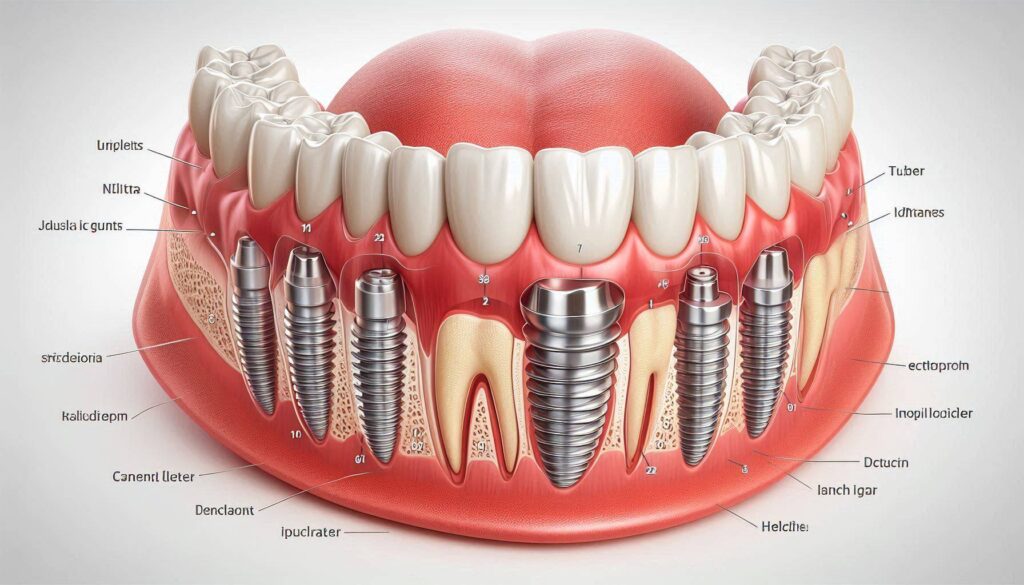
The first and most important fact to establish is that a properly planned and placed dental implant exerts no direct negative mechanical force on adjacent healthy teeth. Unlike a fixed bridge, which requires the teeth on either side of a gap to be filed down into small, load-bearing posts, the implant is a fully independent entity. It is anchored in the jawbone, and its prosthetic crown contacts the adjacent teeth only through normal, physiologic contact points. These are the same light, protective contacts that exist between all healthy teeth in a dental arch. They prevent food impaction and provide mutual support, but they do not transfer the heavy forces of chewing laterally. The chewing forces on an implant crown are transmitted vertically down the implant body, directly into the bone, just as with a natural tooth root.
This autonomy is the implant’s greatest protective feature. The adjacent natural teeth are left completely intact. They are not cut, drilled, or otherwise violated. They maintain their full biological integrity, their nerve supply, and their protective enamel shell. They are not asked to bear the additional load of a missing neighbor’s replacement. This is a stark contrast to the bridge scenario, where the two abutment teeth must support the chewing forces of three units—themselves and the pontic in between. Over time, this overload can lead to a cascade of problems. The abutment teeth may develop cracks, the pulp may become inflamed and require root canal treatment, and the margins of the bridge crowns can decay. The implant avoids all of this by functioning as a stand-alone unit. It fills the space and accepts its own load, allowing the natural neighbors to carry on with their normal, intended workload.
The Protective Effect of Maintaining the Dental Arch
A dental implant does more than just avoid harming adjacent teeth; it actively protects them. When a tooth is lost and the space is not restored, a predictable sequence of events unfolds. The tooth immediately behind the space begins to drift and tilt forward, mesially, into the empty area. The tooth immediately in front of the space may drift backward. The opposing tooth, with no biting contact, begins to super-erupt, slowly extruding out of its socket in a search for resistance. This process transforms a clean, maintainable dental arch into a chaotic landscape of tilted, extruded teeth with irregular, plaque-trapping contacts.
This malocclusion creates zones of destructive forces. The tilted tooth is now subjected to off-axis, non-axial loading during chewing, which its root and periodontal ligament were not designed to handle. This can lead to localized bone loss, tooth mobility, and fracture. The super-erupted tooth exposes root surface, which is softer than enamel and vulnerable to decay and sensitivity. The irregular contacts trap food and are impossible to clean effectively with floss, leading to interproximal decay and periodontal pocketing. By filling the empty space, the dental implant acts as a stabilizer, a place-holder that prevents this entire destructive cascade. It preserves the natural alignment, the occlusal plane, and the health of the teeth that neighbor the edentulous site. The implant is a guardian of the arch.
The Role of Dental Implants in Preserving Occlusal Stability
The occlusal plane is the imaginary curved surface on which your upper and lower teeth meet. It is a finely balanced system. Each tooth supports the tooth opposite it, and the entire arch distributes the forces of chewing. When a single posterior molar is lost, the equilibrium is broken. The patient instinctively shifts chewing to the other side, overloading that contralateral arch. The lack of posterior support on the affected side can lead to increased forces on the anterior teeth, which are designed for cutting, not heavy grinding. This can cause the front teeth to wear down, chip, and splay forward.
A dental implant placed in the missing molar site restores the occlusal stop. It provides a solid contact point for the opposing molar, re-establishing the posterior vertical dimension and distributing chewing forces back to the strong posterior teeth as intended. This protects the anterior teeth from destructive overload. In cases of multiple missing teeth, the role of implants becomes even more critical. Implant-supported bridges or implant-retained dentures can re-establish a full, stable occlusal scheme, restoring balanced, bilateral chewing function. The natural teeth that remain are integrated into a stable, implant-supported framework. They chew against a stable opposing surface, and their forces are directed along their long axes. The implant restoration, far from being a threat, becomes the cornerstone of a reconstructed, stable, and protective occlusion.
The Critical Importance of Implant-Protected Occlusion
While implants protect the arch, the restorative dentist must also protect the implant. This is achieved through a design philosophy called implant-protected occlusion. The dentist crafts the biting surface of the implant crown with specific, deliberate features. The implant crown is designed to have light occlusal contacts in maximum intercuspation, your most powerful biting position. During lateral, side-to-side movements, the implant crown is designed to disclude or have very light contact, allowing the natural teeth, with their periodontal ligament shock absorbers, to take the lateral forces. This protects the rigid, unforgiving bone-implant interface from damaging off-axis loads.
This design also protects the opposing natural tooth. The porcelain surface of an implant crown, if not properly polished and contoured, can be very abrasive to opposing natural enamel. A skilled dentist will ensure the porcelain is expertly glazed and polished to a surface that is kind to the opposing tooth. The occlusion is checked meticulously over multiple appointments to ensure no heavy, premature contact develops. The goal is harmony. The implant and the natural teeth should function as a coordinated team, with the natural teeth providing the proprioceptive feedback and the flexible shock absorption, and the implants providing the stable vertical support. A well-designed implant restoration creates a healthier, more stable, and more protective environment for all the remaining teeth than the untreated edentulous space ever could.
Biological Effects: The Peri-Implant Environment and Its Impact
The biological environment around a dental implant is distinct from that around a natural tooth. A natural tooth has a gingival sulcus, a shallow, healthy crevice where the gum attaches to the tooth via the junctional epithelium and connective tissue fibers that insert perpendicularly into the root cementum. This creates a robust, resilient seal. Around an implant, the connective tissue fibers run parallel to the smooth titanium surface, creating a less robust seal. The peri-implant sulcus is a unique microbiological niche. If a patient neglects their home care, a pathogenic biofilm can develop around the implant.
This biofilm does not respect boundaries. The bacteria that cause peri-implantitis, the destructive inflammatory disease around implants, are largely the same pathogens that cause periodontitis around natural teeth. An implant with untreated peri-implantitis becomes a bacterial reservoir. This pathogenic biofilm can migrate and colonize the adjacent natural teeth, particularly if the patient’s overall oral hygiene is poor. In this indirect way, a failing, neglected implant can negatively affect the health of adjacent teeth. However, it is critically important to frame this correctly. The cause is not the implant itself, but the bacterial disease. A natural tooth with untreated, deep periodontitis is equally, if not more, of a bacterial threat to its neighbors. The implant is a passive bystander that has been colonized.
The Contralateral and Systemic Consideration
The presence of a dental implant does not alter a patient’s systemic susceptibility to periodontal disease. If you are genetically predisposed to aggressive periodontitis, that susceptibility remains, whether you have implants or not. The key is that the implant, being a non-living, non-shedding surface, requires a level of daily cleaning that matches your biological risk. A patient with a history of periodontal disease who receives an implant must enter a strict, lifelong maintenance program. If they maintain the implant to a standard of perfect health, it poses no threat to their natural teeth. If they allow disease to develop, that disease, not the titanium post, is the threat.
The presence of an implant can actually elevate a patient’s overall oral hygiene game. The investment of time, emotion, and money in an implant often motivates patients to become more meticulous and diligent. They purchase the recommended water flossers and interdental brushes. They attend their recall appointments religiously. This elevated hygiene behavior benefits not just the implant but every single natural tooth in their mouth. In this positive feedback loop, the implant becomes a catalyst for better overall oral health. The teeth that surround the implant are healthier than they would have been if the patient had chosen a bridge or a removable partial, or if they had done nothing at all.
Psychological Protection: The Confidence to Smile
The indirect effects of a dental implant extend to the psychological and social domain, which in turn affects how you care for your entire mouth. Patients who feel self-conscious about a visible missing tooth often become passive about their dental health. They avoid the dentist. They hide their smile and withdraw from social situations that bring attention to their mouth. This withdrawal can lead to a depression of home care motivation. They begin to think, “What’s the point?” and their brushing and flossing habits deteriorate. The remaining natural teeth then suffer from this neglect.
An implant, by restoring a complete, aesthetically pleasing smile, often triggers a powerful psychological reset. The patient looks in the mirror and feels whole again. They feel proud of their smile. This newfound dental pride motivates them to protect their investment. They brush, they floss, they water floss, and they show up for their cleanings. This surge of positive oral health behavior protects every tooth in their mouth. The implant is the catalyst for a comprehensive upgrade in the patient’s relationship with their oral health. It can affect other teeth by inspiring the level of care that keeps all teeth healthy. This is a subtle but profoundly real positive impact.
Conclusion
A properly placed, well-maintained dental implant is an independent prosthetic unit that exerts no harmful mechanical force on adjacent healthy teeth, actively protecting them by preventing the drift, tilting, and super-eruption that destabilize the dental arch when a gap is left unfilled. The only potential negative effect arises from bacterial peri-implant disease, a consequence of patient neglect, not implant design, which highlights the implant’s role as a motivator for elevated hygiene standards that benefit the entire dentition. When compared to a fixed bridge, which damages abutment teeth, or a gap, which destroys arch integrity, the implant emerges as the most conservative and protective choice for the long-term health and stability of your remaining natural smile.
Frequently Asked Questions
Can an implant cause damage to the nerve of an adjacent tooth?
During the surgical placement, if the drilling is misdirected, it is possible to traumatize the root of an adjacent tooth, which could potentially lead to nerve damage. However, this is a surgical error, not an inherent property of the implant, and it is virtually eliminated by the use of 3D CBCT imaging and guided surgery.
Will the implant crown push against my other teeth?
No. The implant crown is fabricated to have a light, passive contact with the adjacent teeth, identical to the contacts between your natural teeth. It should feel completely normal. A persistent sensation of pressure is a sign that the contact is too tight and needs adjustment.
Can I get decay around a dental implant?
The implant and the porcelain crown cannot decay. However, the margin where the crown meets the abutment is a plaque trap. If not cleaned, this biofilm can cause inflammation of the gum and can also pose a decay risk to the adjacent natural tooth at the contact point.
Is the metal of an implant toxic to surrounding tissues?
Modern dental implants are made of commercially pure titanium or titanium alloy, which are highly biocompatible and osseoconductive. They are not toxic. In fact, the bone actively integrates with the titanium surface. The metals used are non-allergenic for the vast majority of the population.
Could an implant cause my natural teeth to become loose?
No. A stable, osseointegrated implant does not cause adjacent teeth to loosen. If you perceive loosening, it is a sign of a significant problem, such as a failing implant or advanced periodontal disease affecting the natural teeth, and requires immediate professional evaluation.
Additional Resource
The American College of Prosthodontists is the leading professional organization for the restoration and replacement of teeth. Their patient education resources offer a deep dive into the principles of preserving natural teeth and the biomechanics of implant vs. tooth-supported restorations. Visit their site at: https://www.gotoapro.org/