Why Is a Dental Implant Needed?
A missing tooth is never just a cosmetic issue. The visible gap in your smile is the least consequential part of the problem. Beneath the surface, a cascade of biological events begins the moment a tooth is lost, setting in motion changes that can alter your oral health, your facial structure, and your quality of life. This comprehensive guide explores the fundamental reasons why a dental implant is needed. We will move far beyond the simple desire to fill a gap. You will understand the bone preservation imperative, the functional necessity of a complete dental arch, and the protective role an implant plays for the health of your remaining natural teeth. This is the deep, realistic case for choosing a dental implant as your tooth replacement solution.
The Immediate and Progressive Consequence of Tooth Loss: Bone Resorption
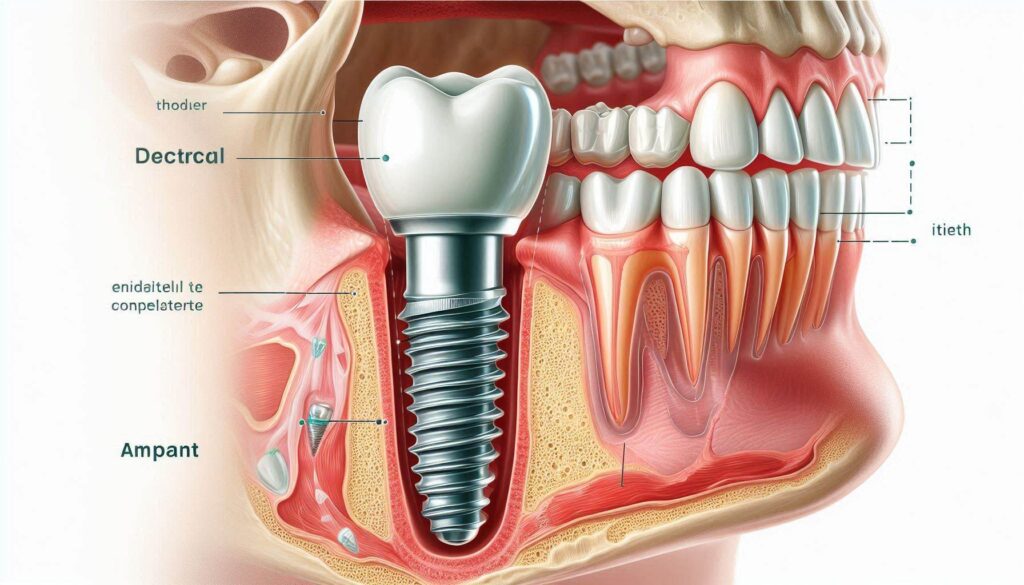
The most critical, irreversible, and least visible consequence of tooth loss is the atrophy of the jawbone. Your teeth and your alveolar bone, the ridge of bone that holds your tooth sockets, exist in a dynamic, codependent relationship. Every time you chew, the roots of your teeth transmit mechanical stress through the periodontal ligament to the surrounding bone. This stress is a vital biological signal. It tells your body that this bone is needed, that it is bearing a functional load. The body responds by continuously remodeling and maintaining the bone density and volume in that area. This is called the piezoelectric effect, and it is the fundamental mechanism of bone homeostasis in the jaws.
The moment a tooth is extracted, this vital signal ceases. The body interprets the absence of stimulation as a message that the bone is no longer needed. Osteoclasts, cells that resorb bone, are activated. The alveolar ridge begins a process of rapid, progressive resorption. The most dramatic bone loss occurs in the first year after extraction. The width of the ridge decreases first, followed by a loss of height. Over a decade, a patient can lose a significant percentage of their total jawbone volume in that area. This process is silent, painless, and relentless. A dental implant, uniquely among all tooth replacement options, is surgically placed into the bone and becomes the new functional root. It transmits chewing forces directly into the bone, reactivating the piezoelectric signal. The body responds by maintaining the bone around the implant. This is the single most compelling biological reason why an implant is needed: it is the only treatment that prevents the slow, silent dissolution of your jawbone.
The Inadequacy of Bridges and Dentures for Bone Preservation
A traditional fixed bridge replaces the visible crown of the missing tooth, but it does nothing to address the absent root. The bridge rests on the two adjacent teeth, which are filed down to serve as anchors. The space under the pontic, the false tooth, is empty. No force is transmitted to the bone of the missing tooth site. The alveolar ridge under the bridge continues to resorb, silently and progressively. Over years, a visible concavity develops under the pontic, and the gum can collapse, creating an unsightly gap between the bridge and the gum tissue. The patient now has a cosmetic and functional problem layered on top of the unresolved bone loss.
Removable partial or complete dentures are even worse offenders in the process of bone resorption. They rest on the soft gum tissue and transmit very little, if any, meaningful force to the underlying bone. In fact, the pressure of a denture on the gum can actually accelerate the resorption process in some cases. Complete denture wearers suffer the most dramatic, total bone loss of the maxillary and mandibular arches over decades. This is why long-term denture wearers develop a characteristic sunken facial appearance. The bone that supported their lips and cheeks has disappeared, and the denture cannot compensate. The face collapses inward and downward, aging the patient prematurely. Only implants, by replacing the root and restoring the internal functional stimulus, halt this process.
Restoring Full Masticatory Function
Eating is one of the fundamental pleasures and biological necessities of life. A complete, healthy dentition allows you to process a full, nutritious diet without pain, embarrassment, or limitation. When a tooth, particularly a posterior molar, is lost and not replaced, your chewing efficiency on that side plummets. You will instinctively shift your chewing to the other side, creating an imbalance and overloading the teeth on that side. This can lead to accelerated wear, fractures, and temporomandibular joint issues. A missing anterior tooth compromises your ability to incise and tear food, forcing you to cut everything into small pieces or avoid certain foods altogether.
A dental implant-supported crown restores the complete tooth structure, root and crown. It is anchored in bone, just like a natural tooth. It can withstand the full, unmitigated force of your bite. An implant patient can bite into an apple, chew a well-done steak, and enjoy crunchy, raw vegetables with the same confidence and efficiency as someone with a full set of healthy natural teeth. This functional restoration has profound nutritional implications. Patients who avoid fibrous fruits, vegetables, and proteins due to missing teeth or ill-fitting dentures often suffer from dietary deficiencies. They gravitate toward soft, processed, carbohydrate-rich foods that are easy to chew but poor for systemic health. The implant, by restoring full masticatory capability, restores the patient’s access to a complete, healthy, and varied diet.
The Nutritional Downward Spiral of Untreated Tooth Loss
The connection between tooth loss and systemic health is well-documented in the scientific literature. Patients with significant tooth loss who do not replace their teeth with functional, stable restorations consistently show lower intakes of dietary fiber, protein, and essential vitamins and minerals. They have higher rates of obesity and malnutrition. The mechanism is straightforward. A person with a painful, loose, or missing dentition will select foods that require minimal chewing. They reach for white bread instead of whole grain, mashed potatoes instead of a crunchy salad, and ground meat instead of a grilled chicken breast. This nutritional downshift, sustained over years, contributes to the chronic disease burden.
A dental implant breaks this cycle. It is a fixed, stable, powerful tool for eating. It does not move, it does not hurt, and it does not require special dexterity or adhesives. It simply functions. For an elderly patient who has been on a compromised diet for years due to failing dentures, the placement of implant-supported restorations can be a life-changing nutritional intervention. It restores the dignity and pleasure of eating a family meal without fear or embarrassment. This is a need that goes far beyond the aesthetic. It is a fundamental human need for nourishment, independence, and social participation.
Protecting the Health and Integrity of Adjacent Teeth
The replacement of a missing tooth with a dental implant is an act of preservation for the entire dental arch. It protects the health of the teeth that surround the empty space. When a tooth is lost, the adjacent teeth lose a critical supporting neighbor. They begin to drift and tilt into the empty space. The opposing tooth, with no counterforce to bite against, begins to super-erupt, extruding out of its socket as it searches for a contact. This cascade of migration disrupts the entire occlusal scheme. It creates new ledges and tight, angulated contacts that are difficult to clean, becoming plaque traps that breed decay and gum disease.
A conventional fixed bridge addresses the drifting by filling the space, but it does so at a significant biological cost. The two teeth on either side of the gap must be aggressively prepared, which means a significant amount of healthy enamel and dentin is permanently removed. These teeth become anchor abutments for the bridge. They are now subjected to the full chewing force of three teeth, increasing their risk of mechanical failure, decay under the crowns, and eventual need for root canal treatment. Studies show that a significant percentage of bridge abutment teeth die and require root canal therapy within ten to fifteen years. The bridge, intended to solve one problem, often creates two new ones. The dental implant, in contrast, is a stand-alone solution. It does not touch, damage, or burden the adjacent teeth. It fills the space, stabilizes the arch, and allows the neighboring teeth to live out their natural lives in peace.
The Concept of the Independent Prosthetic Unit
The beauty of a dental implant from a biomechanical and biological perspective is its autonomy. It is an independent, self-supporting unit. It does not borrow support from or compromise any other tooth. This concept of independent support is transformative in restorative treatment planning. For a patient with a single missing tooth, it means the two perfect, virgin teeth on either side of the space remain untouched. For a patient missing multiple teeth, strategically placed implants can support a bridge without involving the natural teeth at all. The natural teeth can be restored with simple, conservative fillings or crowns if they need it, and the implants carry the prosthetic burden.
This compartmentalization of treatment is a hallmark of modern, conservative dentistry. It allows each tooth and each implant to be treated as an individual entity. If a problem develops on one natural tooth, it does not threaten the entire bridge. If the porcelain on one implant crown chips, the implant fixture itself is not compromised. The independent nature of implant support is the ultimate expression of conservative tooth replacement. It preserves the maximum amount of natural tooth structure and isolates risk. This is a fundamental reason why an implant is the treatment of choice from a purely health-centered, tooth-preservation perspective.
Maintaining Facial Aesthetics and Soft Tissue Support
The visual impact of tooth loss is about more than the gap in your smile. The roots of your teeth, and the bone that encases them, provide the structural foundation for your facial soft tissues. Your lips, cheeks, and the skin around your mouth are supported by this underlying bony architecture. When teeth are lost and the bone resorbs, this foundation crumbles. The lips lose their support and begin to roll inward. Deep vertical lines form around the mouth. The distance from the nose to the chin decreases, a phenomenon known as bite collapse. The lower third of the face shrinks, creating an aged, sunken appearance. This is the classic denture face, and it is not caused by the denture itself, but by the bone loss that the denture cannot prevent.
A dental implant, by preserving the bone volume, preserves this critical soft tissue support. It maintains the architecture of the face. The implant crown, emerging from the gum at the correct angle and with a properly contoured emergence profile, supports the lip and the cheek in a way that mimics the natural tooth. For a single missing tooth in the aesthetic zone, this is critical. A missing central incisor leads to a collapse of the lip profile on that side. An implant, with a well-designed provisional crown that sculpts the gum tissue during healing, can create an emergence profile that is visually indistinguishable from the adjacent natural tooth. The preservation of the papilla, the small triangle of gum between the teeth, is one of the most technically demanding aspects of anterior implant aesthetics. A skilled implant dentist understands that they are not just replacing a tooth, they are preserving and sculpting the architecture of the smile and the face.
The Psychological Need for Wholeness
Beyond the bone, the function, and the visible aesthetics, there is a deep psychological need to feel whole. A missing tooth, especially one that is visible, is a constant source of self-consciousness. It can erode a person’s confidence, change the way they interact with others, and even limit their professional opportunities. Patients report covering their mouth when they laugh, smiling with their lips clenched shut, and avoiding social situations and photographs. This is a heavy burden to carry, and it is entirely unnecessary.
A dental implant restores the sense of wholeness. The patient looks in the mirror and sees a complete smile. They forget they ever lost a tooth. The implant becomes a part of them, integrated into their body. This psychological restoration is often the benefit that patients report as being the most meaningful. They are not thinking about bone resorption or occlusal forces. They are experiencing the joy of a spontaneous, unguarded smile. They are laughing freely. They are engaging in life without the background hum of dental insecurity. This profound emotional need, the need to feel complete and confident in one’s own skin, is a powerful and valid reason for choosing a dental implant.
Conclusion
The essential need for a dental implant extends far beyond filling a visible gap, beginning with its unique biological role in halting the relentless and irreversible jawbone resorption that follows tooth loss. It restores full, unhesitant chewing function, unlocking a complete and nutritious diet while preventing the damaging cascade of adjacent tooth drift, super-eruption, and the collateral destruction caused by a traditional bridge. Ultimately, the implant preserves the foundational bone architecture that supports the lips and cheeks, meeting the profound psychological need for a complete, confident smile and maintaining a youthful facial aesthetic for a lifetime.
Frequently Asked Questions
Is a dental implant always the best option after a tooth extraction?
From a biological and tooth-preservation standpoint, it is the gold standard because it is the only option that replaces the root and prevents bone loss. However, the final decision must consider the patient’s overall health, bone quality, and financial situation.
How soon after a tooth is lost should I get an implant?
The ideal scenario is often immediate placement at the time of extraction, or placement within the first few months, before significant bone resorption has occurred. Delaying treatment allows bone to atrophy, which may necessitate bone grafting later.
What happens if I do nothing about a missing back tooth?
The adjacent molar will tilt into the space, the opposing molar will super-erupt, and the chewing function on that side will be lost. This creates a malocclusion, food traps, and can lead to decay, gum disease, and TMJ issues over time.
Why can’t a bridge prevent the bone loss?
A bridge only replaces the visible crown above the gum. The critical root component is missing. Without the root transmitting force to the bone, the piezoelectric signal is absent, and the body resorbs the unstimulated bone.
Is the need for an implant purely functional or also aesthetic?
It is an inseparable combination of both. The functional need to chew properly and protect the remaining teeth is intertwined with the aesthetic need to preserve the jawbone, facial contours, and the natural appearance of your smile and lip support.
Additional Resource
The American Association of Oral and Maxillofacial Surgeons (AAOMS) provides comprehensive patient education materials on the consequences of tooth loss and the full spectrum of tooth replacement options, with a particular emphasis on the surgical and restorative phases of implant dentistry. Explore their resources at: https://www.aaoms.org/