Can Dental Implants Cause Hair Loss?
Hair loss is a distressing condition that affects millions of people. When it occurs after a medical or dental procedure, patients often wonder if there is a connection. Dental implants are a common surgical procedure, and some patients report hair loss after their treatment. This leads to an important question: can dental implants cause hair loss?
This guide examines the relationship between dental implants and hair loss. You will learn about the potential mechanisms, what the scientific evidence shows, and other factors that might explain hair loss after implant surgery.
Understanding Dental Implants and Hair Loss
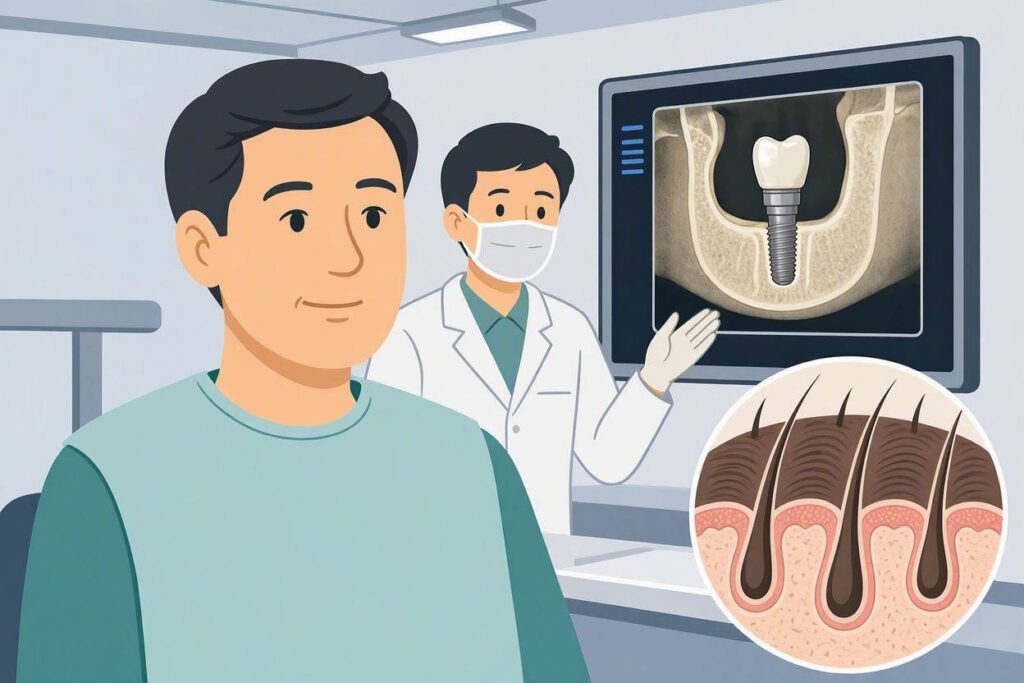
Dental implants are titanium posts surgically placed into the jawbone to replace missing teeth. The procedure is generally safe and well-tolerated. Hair loss, on the other hand, has many causes including genetics, hormonal changes, stress, medications, and nutritional deficiencies.
The question is whether the implant procedure itself can trigger hair loss. To answer this, we need to examine the potential mechanisms and the available evidence.
Potential Mechanisms Linking Implants to Hair Loss
Several theories have been proposed to explain how dental implants might contribute to hair loss. It is important to note that none of these theories have been conclusively proven.
Surgical Stress
Any surgical procedure, including dental implant placement, places stress on the body. This stress can trigger a type of hair loss called telogen effluvium. In this condition, a significant number of hair follicles enter the resting phase prematurely. About two to three months after the stressful event, the affected hairs fall out.
Telogen effluvium is usually temporary. Hair typically regrows within six to twelve months once the body recovers from the stress.
Anesthesia Effects
Some patients wonder if the anesthesia used during implant surgery causes hair loss. General anesthesia has been associated with hair loss in rare cases, particularly after prolonged surgeries. However, most dental implant procedures use local anesthesia, which is unlikely to cause hair loss.
Titanium Sensitivity
Titanium is generally biocompatible, but some people may have a sensitivity or allergy to the metal. In rare cases, this sensitivity could trigger an inflammatory response. Some researchers have suggested that chronic inflammation could contribute to hair loss, but this connection is speculative.
Immune System Response
The placement of a foreign object in the body triggers an immune system response. In most people, this response is mild and does not cause problems. In rare cases, an exaggerated immune response could potentially affect other systems, including hair follicles. However, there is no scientific evidence supporting this theory.
What the Scientific Evidence Shows
The scientific literature on dental implants and hair loss is limited. There are no large-scale studies demonstrating a direct causal relationship between dental implants and hair loss.
Case Reports
A few case reports describe patients who experienced hair loss after dental procedures. However, case reports are anecdotal and do not prove causation. Many factors could explain the hair loss in these individual cases.
Lack of Large-Scale Studies
No large-scale clinical trials have examined hair loss as a side effect of dental implants. Given the millions of dental implants placed worldwide each year, if hair loss were a common side effect, it would likely be well-documented.
Consensus of Experts
The consensus among dental and medical experts is that dental implants do not directly cause hair loss. Hair loss after implant surgery is more likely related to stress, medications, or coincidental timing.
Other Explanations for Hair Loss After Implants
If you experience hair loss after dental implant surgery, several other factors are more likely to be responsible.
Stress
Surgery is stressful, both physically and emotionally. Anxiety about the procedure, pain during recovery, and disruption to your routine can all contribute to stress-related hair loss. Telogen effluvium triggered by stress is the most likely explanation for hair loss after any surgery.
Medications
Patients often receive medications during and after implant surgery. These may include antibiotics, pain relievers, and anti-inflammatory drugs. Some medications can cause hair loss as a side effect. Antibiotics, in particular, have been associated with temporary hair shedding.
Nutritional Deficiencies
After implant surgery, you may need to eat a soft diet for several days or weeks. This restricted diet could lead to temporary nutritional deficiencies. Protein, iron, zinc, and biotin are important for hair health. A deficiency in any of these nutrients can contribute to hair loss.
Hormonal Changes
Hormonal fluctuations can cause hair loss. The stress of surgery can temporarily affect hormone levels. Additionally, if you are taking hormonal medications or have an underlying hormonal condition, this could contribute.
Coincidental Timing
Hair loss is common, affecting millions of people. It is possible that hair loss after dental implant surgery is simply coincidental. The timing may appear related, but the two events may be unrelated.
Types of Hair Loss
Understanding the different types of hair loss can help you identify what you are experiencing.
Telogen Effluvium
This is the most common type of hair loss associated with stress or surgery. It occurs when a large number of hair follicles enter the resting phase simultaneously. Hair loss typically begins two to three months after the triggering event. The hair loss is diffuse, affecting the entire scalp rather than specific patches. Telogen effluvium is usually temporary and resolves on its own.
Androgenetic Alopecia
This is the most common type of hair loss overall, affecting both men and women. It is genetic and related to hormones. Androgenetic alopecia causes gradual thinning at the crown and hairline. It is not related to surgery or stress.
Alopecia Areata
This is an autoimmune condition where the immune system attacks hair follicles. It causes patchy hair loss. Alopecia areata can be triggered by stress but is not specifically related to dental implants.
When to See a Doctor
If you experience significant hair loss after dental implant surgery, consult your healthcare provider. They can help determine the cause and recommend appropriate treatment.
Signs You Should Seek Help
- Hair loss that persists for more than six months
- Large patches of hair falling out
- Scalp redness, itching, or pain
- Hair loss accompanied by other symptoms like fatigue or weight changes
Diagnostic Tests
Your doctor may perform tests to determine the cause of your hair loss. These may include blood tests to check for nutritional deficiencies, thyroid problems, or hormonal imbalances. A scalp examination can help identify the type of hair loss.
Treatment Options for Hair Loss
The treatment for hair loss depends on the cause. If your hair loss is related to stress or surgery, it will likely resolve on its own.
Observation
For telogen effluvium, the best treatment is often patience. Hair typically regrows within six to twelve months. No specific treatment is needed.
Nutritional Support
If you have nutritional deficiencies, addressing them can help. Eat a balanced diet rich in protein, iron, zinc, and B vitamins. Your doctor may recommend supplements.
Stress Management
Managing stress can help prevent further hair loss. Practice relaxation techniques like meditation, yoga, or deep breathing. Getting adequate sleep is also important.
Medications
For androgenetic alopecia, medications like minoxidil and finasteride can help slow hair loss and promote regrowth. These medications require a prescription and should be used under medical supervision.
Important Notes for Patients
- Dental implants do not directly cause hair loss according to current scientific evidence.
- Stress-related telogen effluvium is the most likely explanation for hair loss after surgery.
- Hair loss after surgery is usually temporary and resolves within six to twelve months.
- If you are concerned about hair loss, consult your healthcare provider for evaluation.
- Nutritional deficiencies from a restricted post-surgery diet can contribute to hair loss.
- Some medications prescribed after surgery can cause temporary hair shedding.
Frequently Asked Questions
Can dental implants cause hair loss?
There is no scientific evidence that dental implants directly cause hair loss. Hair loss after implant surgery is more likely related to stress, medications, or coincidental timing.
How long after surgery does hair loss occur?
Stress-related hair loss, or telogen effluvium, typically occurs two to three months after the stressful event. This matches the natural hair growth cycle.
Is hair loss after dental surgery permanent?
No, hair loss after dental surgery is usually temporary. Hair typically regrows within six to twelve months once the body recovers from the stress.
Can anesthesia cause hair loss?
General anesthesia has been associated with hair loss in rare cases, particularly after prolonged surgeries. Local anesthesia used in most dental implant procedures is unlikely to cause hair loss.
What should I do if I notice hair loss after dental implants?
If you notice significant hair loss, consult your healthcare provider. They can evaluate your condition and determine the cause. Most cases resolve on their own.
Can titanium implants cause hair loss?
There is no evidence that titanium implants directly cause hair loss. Titanium is biocompatible and widely used in medical devices without hair loss side effects.
Does stress from dental surgery cause hair loss?
Yes, stress from any surgery, including dental implant surgery, can trigger telogen effluvium. This type of hair loss is temporary and resolves as the body recovers.
Will my hair grow back after stress-related hair loss?
Yes, hair typically regrows after stress-related hair loss. The regrowth process takes several months. Patience and good nutrition support healthy regrowth.
Conclusion
Dental implants do not directly cause hair loss according to current scientific evidence. Hair loss after implant surgery is most likely related to stress, medications, nutritional deficiencies, or coincidental timing. Telogen effluvium, a temporary form of stress-related hair loss, is the most common explanation. This type of hair loss resolves on its own within six to twelve months. If you are concerned about hair loss, consult your healthcare provider for proper evaluation and guidance.
Additional Resource
For more information on hair loss causes and treatments, visit the American Academy of Dermatology at www.aad.org. This professional organization offers patient education resources and a directory of dermatologists.