Can I Get a Fake Tooth After Extraction?
Losing a tooth can feel like a small crisis. You might worry about your smile, your ability to chew, or even how it might affect your speech. The moment the dentist says “extraction,” one question usually pops into your mind immediately: Can I get a fake tooth right away?
The short answer is yes. But the full answer is a bit more detailed.
You have several paths to choose from. Some let you walk out of the clinic with a temporary tooth on the same day. Others require patience and healing time before placing a permanent replacement.
This guide walks you through everything you need to know. We will look at immediate solutions, long-term options, costs, healing timelines, and what you should realistically expect. No confusing dental jargon. Just clear, helpful information to make the best choice for your mouth and your wallet.
Let us start with the most common question people ask right after scheduling an extraction.
Understanding Tooth Extraction and Immediate Replacements
When a tooth comes out, the surrounding bone and gum tissue need time to recover. Think of it like a small construction site. You cannot build a permanent house on unstable ground.
Dentists follow a simple rule: healthy tissue leads to successful restorations. Placing a fake tooth too early can lead to infection, poor fit, or damage to nearby teeth.
But modern dentistry offers clever solutions for those who do not want to leave the office with a gap.
The Difference Between Immediate and Delayed Placement
You will hear two main terms from your dentist: immediate placement and delayed placement.
Immediate placement means the dentist puts a temporary fake tooth right after pulling the old one. This usually happens during the same appointment. The fake tooth sits on a temporary post or fits into a special partial denture.
Delayed placement means you wait. The gum heals first. The bone fills in. Then, after several weeks or months, you receive your permanent fake tooth.
Each approach has its benefits and risks. Your dentist will recommend one based on the reason for the extraction, the location of the tooth, and your overall health.
When Can a Fake Tooth Be Placed Immediately?
Not every extraction qualifies for an immediate fake tooth. Your dentist will look for specific conditions.
You are a good candidate if:
- The tooth comes out cleanly without breaking into small pieces
- There is no active infection in the gum or bone
- You have enough healthy bone to support a temporary post
- You do not smoke heavily (smoking slows healing)
- You have no uncontrolled medical conditions like diabetes
If you meet these criteria, your dentist might offer an immediate temporary solution.
The Healing Period You Cannot Skip
Even with immediate solutions, your mouth still needs time. A temporary fake tooth placed right after extraction is just that—temporary. It serves as a placeholder while your body works hard underneath.
Complete bone healing takes three to six months. During this time, your gum shrinks slightly. The bone reshapes. If you place a permanent fake tooth too soon, it will not fit correctly when the healing finishes.
This is why dentists separate the process into two stages. First, you get something to fill the gap. Later, you get something designed to last for years.
Types of Fake Teeth You Can Get After Extraction
The term “fake tooth” covers many different dental appliances. Some are removable. Others stay fixed in your mouth. Some look exactly like natural teeth. Others focus on function rather than beauty.
Let us break down each option so you can see what fits your situation best.
Dental Implants: The Gold Standard
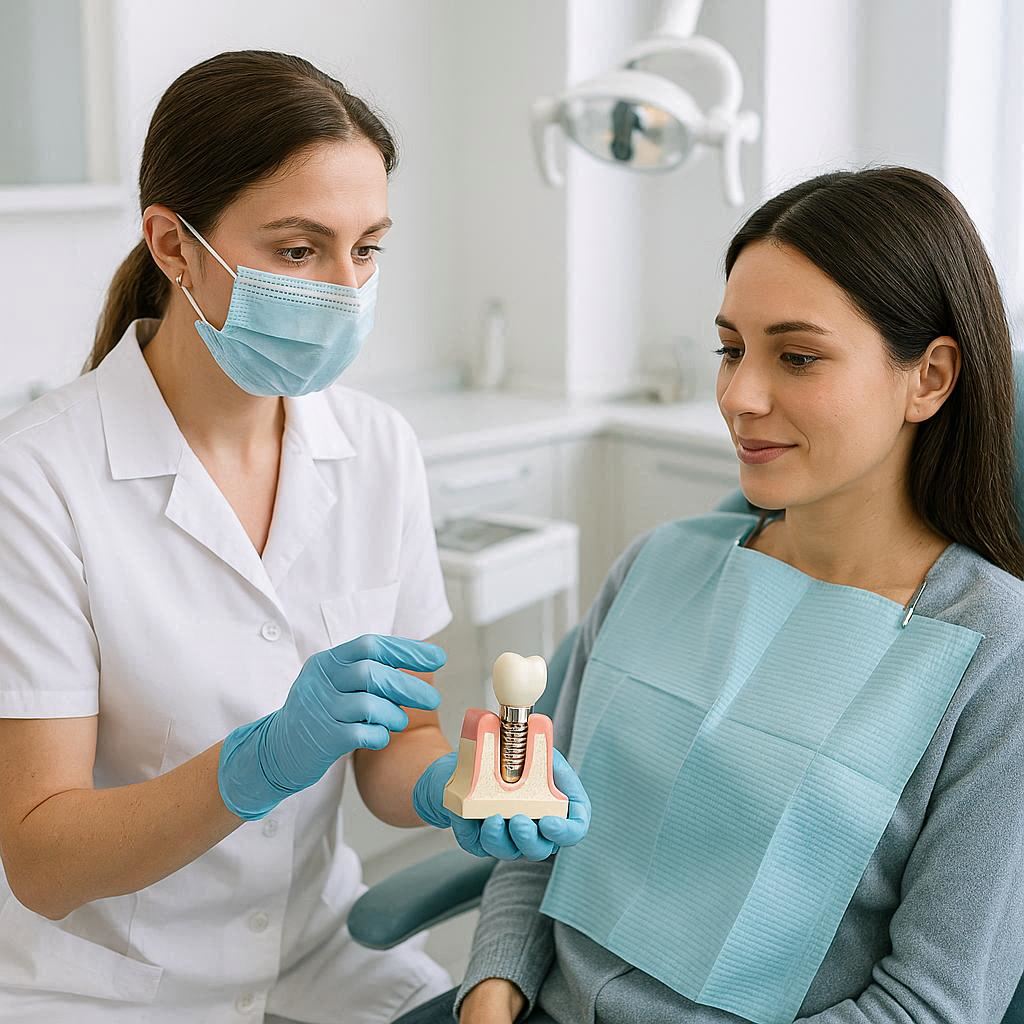
A dental implant is the closest thing to a real tooth you can get. It consists of a titanium screw placed into your jawbone, an abutment (connector), and a ceramic crown that looks like a natural tooth.
Timeline after extraction: You usually wait three to six months before placing the implant. This waiting period allows your bone to heal and integrate with the implant later.
Pros:
- Looks and feels like a real tooth
- Prevents bone loss in the jaw
- Does not affect nearby teeth
- Can last 20 years or more with good care
Cons:
- Most expensive option
- Requires surgery
- Takes several months to complete
- Not everyone has enough bone for an implant
Dental Bridges: The Traditional Solution
A bridge fills the gap by attaching a fake tooth to crowns placed on the neighboring teeth. The dentist reshapes the two teeth next to the missing one and covers them with caps. The fake tooth sits in between.
Timeline after extraction: You generally wait four to six weeks after extraction. This gives your gum time to heal and shrink to its final shape.
Pros:
- Non-surgical option
- Completed in two or three visits
- Feels stable and secure
- Costs less than an implant
Cons:
- Requires grinding down healthy teeth
- Does not prevent bone loss
- Needs replacement every 10 to 15 years
- Harder to clean than natural teeth
Removable Partial Dentures: The Flexible Choice
A partial denture is a plastic or metal framework that holds one or more fake teeth. You take it out at night and for cleaning. It clips onto your remaining natural teeth.
Timeline after extraction: You can sometimes get an immediate partial denture placed right after extraction. The dentist takes impressions before pulling the tooth. Otherwise, wait two to four weeks.
Pros:
- Most affordable option
- No surgery required
- Easy to repair or adjust
- Good for multiple missing teeth
Cons:
- Can feel bulky or uncomfortable
- Moves slightly when eating or speaking
- Does not stop bone loss
- Needs replacement every five to eight years
Flippers: The Temporary Solution
A flipper is a very simple, inexpensive partial denture. It uses a small acrylic plate and one fake tooth. Dentists often use flippers as temporary placeholders while you wait for a bridge or implant.
Timeline after extraction: You can receive a flipper immediately after extraction if the dentist takes impressions beforehand.
Pros:
- Very affordable
- Quick to make (one to two weeks)
- Preserves space for future permanent work
- Easy to modify as your gums heal
Cons:
- Looks less natural than other options
- Less comfortable for long-term wear
- Can break easily
- Not designed for permanent use
Comparative Table: Fake Tooth Options After Extraction
| Feature | Dental Implant | Dental Bridge | Partial Denture | Flipper |
|---|---|---|---|---|
| Time after extraction | 3-6 months | 4-6 weeks | 2-4 weeks (or immediate) | Immediate |
| Surgery required | Yes | No | No | No |
| Affects healthy teeth | No | Yes (shaving down) | Yes (clips on) | Minimally |
| Prevents bone loss | Yes | No | No | No |
| Average lifespan | 20+ years | 10-15 years | 5-8 years | 1-2 years |
| Relative cost | $$$$ | $$$ | $$ | $ |
| Removable | No | No | Yes | Yes |
| Best for | Long-term solution | Single missing tooth | Multiple missing teeth | Temporary gap filling |
The Step-by-Step Process of Getting a Fake Tooth After Extraction
Understanding the timeline helps you plan your treatment and your budget. Each phase has a purpose, even when it feels slow.
Step 1: The Extraction Appointment
Your dentist numbs the area thoroughly. You should not feel pain, only pressure. The dentist loosens the tooth and lifts it out. For complex cases, they might cut the tooth into smaller pieces.
After removing the tooth, the dentist cleans the socket. They may place bone graft material if you plan to get an implant later. Then they close the area with stitches.
What you can ask for on this day: If you want a temporary fake tooth immediately, discuss this before the extraction. The dentist needs to prepare the temporary appliance in advance.
Step 2: The Healing Phase
For the first two weeks, focus on protecting the extraction site. Do not rinse vigorously. Avoid drinking through straws. Stick to soft foods.
Your gum will close over the socket within two to three weeks. But the bone underneath takes much longer. For a bridge or partial denture, you need at least four to six weeks of healing. For an implant, plan on three to six months.
During this time, temporary solutions like flippers work well. They protect the gap from shifting teeth and let you smile with confidence.
Step 3: Impressions and Planning
Once your dentist confirms sufficient healing, they take impressions of your mouth. These molds capture the exact shape of your gum and neighboring teeth. For implants, this step involves 3D scans to measure bone density and position.
Your dentist sends these impressions to a dental laboratory. Skilled technicians craft your fake tooth to match the color, shape, and size of your natural teeth.
Step 4: Placement of the Permanent Fake Tooth
For bridges and partial dentures, the dentist tries in the appliance and makes adjustments. You wear it for a few days to test comfort and fit. Then the dentist permanently cements or secures it.
For implants, you need a minor surgery to place the titanium post. Then you wait another three to six months for the bone to fuse with the post. Finally, the dentist attaches the crown.
Step 5: Follow-Up Care
No fake tooth lasts forever without maintenance. Your dentist schedules follow-up visits to check the fit, clean hard-to-reach areas, and monitor your gum health. Plan on yearly checks specifically for your restoration.
What About Immediate Implants? Can You Get an Implant the Same Day?
Yes, but with important limitations. Same-day implants, also called immediate-load implants, exist. However, they are not for everyone.
In a same-day implant procedure, the dentist extracts the tooth, places the titanium post, and attaches a temporary crown all in one visit. You leave with a tooth-like structure in place.
Who qualifies for same-day implants?
- Patients with thick, healthy bone
- No signs of active infection
- Front teeth where chewing forces are lighter
- Non-smokers with excellent oral hygiene
Why most dentists avoid same-day implants for back teeth
Molars handle heavy chewing forces. Placing an immediate implant on a molar risks failure. The temporary crown cannot withstand the pressure of grinding and chewing. Most dentists prefer to let the bone heal first for back teeth.
The honest truth about same-day implants
You might see advertisements promising “teeth in a day.” While possible in select cases, the permanent crown always comes later. The temporary crown you receive on day one is just for looks. You cannot chew on it normally. And the success rate is slightly lower than traditional implants placed after healing.
For most people, the standard approach—extract, heal, then implant—gives the best long-term results.
Cost Breakdown: What Will You Really Pay?
Prices vary significantly based on where you live, your dentist’s experience, and your insurance coverage. The numbers below represent national averages in the United States. Use them as rough estimates.
| Procedure | Average Cost (No Insurance) | With Insurance (Estimate) |
|---|---|---|
| Simple extraction | $75 – $300 | $50 – $200 |
| Surgical extraction | $150 – $650 | $100 – $400 |
| Bone graft (for implant) | $300 – $800 | $200 – $600 |
| Flipper (temporary) | $300 – $500 | $150 – $350 |
| Partial denture (one tooth) | $700 – $1,800 | $400 – $1,200 |
| Dental bridge (three units) | $2,000 – $5,000 | $1,000 – $3,500 |
| Dental implant (complete) | $3,000 – $6,000 | $1,500 – $4,000 |
| Implant crown (if implant already placed) | $1,000 – $3,000 | $500 – $2,000 |
Important Note: Dental insurance often considers implants “cosmetic” or “upgraded” treatment. Many plans cover only a portion of a bridge or partial denture. Always verify your coverage before starting treatment.
Hidden Costs to Watch For
- Consultation and X-rays: $50 to $300
- CT scan for implants: $200 to $500
- Temporary restorations: $100 to $500
- Adjustments after placement: $50 to $150 per visit
- Long-term maintenance: Professional cleaning around bridges or implants costs more than standard cleanings
Healing Timeline: What Happens Week by Week
Knowing what to expect reduces anxiety and helps you follow your dentist’s instructions.
Days 1 to 3
- Bleeding stops within 24 hours
- Swelling peaks around day two
- Stick to cold, soft foods
- No spitting, straws, or smoking
- Take prescribed pain medication as needed
Days 4 to 7
- Swelling goes down noticeably
- You can introduce warm, soft foods
- Gentle salt water rinses begin (no swishing)
- Stitches may dissolve or get removed
- Most discomfort disappears
Weeks 2 to 4
- Gum tissue closes over the socket
- You can eat most soft to medium foods
- Temporary fake teeth feel more comfortable
- Schedule follow-up appointment with your dentist
Weeks 4 to 6
- Enough healing for bridge or partial denture placement
- Impressions taken for permanent restoration
- Bone continues remodeling underneath
Months 2 to 6
- Full bone healing occurs
- Implant placement happens now (if planned)
- Final restorations get fabricated
Month 6 and Beyond
- Permanent fake tooth placed
- Normal eating resumes
- Regular checkups begin
Risks of Placing a Fake Tooth Too Soon
Patience protects your investment. Placing any fake tooth before proper healing creates real problems.
Infection: A fresh extraction socket is an open wound. Placing a denture or bridge over it traps bacteria. This leads to painful infections that can spread to nearby teeth.
Poor fit: Your gum changes shape dramatically in the first four weeks. A fake tooth made immediately after extraction will not fit correctly after one month. It rocks, rubs, and creates sore spots.
Bone loss acceleration: A poorly fitting restoration allows food and plaque to accumulate. This triggers gum disease, which eats away at your jawbone. You end up with less bone for future implants.
Damage to neighboring teeth: Bridges placed too early put pressure on healing gums. The supporting teeth can shift or become loose. Partial dentures with unstable clips wear down natural enamel.
Higher long-term costs: A failed restoration needs replacement. Sometimes it damages adjacent teeth, turning a one-tooth problem into a three-tooth problem. What seemed like saving time ends up costing thousands more.
A dentist’s perspective: “I’ve had patients beg me to place a bridge two weeks after extraction. When I refuse, they go elsewhere. Six months later, they return with gum infections and loose bridges. Now they need more extractions. Healing time is not a suggestion. It is biology.” — Dr. Sarah M., general dentist.
Front Tooth vs. Back Tooth: Does Location Matter?
Yes, location changes everything. Your smile line and chewing forces determine which fake tooth works best.
Losing a Front Tooth
A missing front tooth affects your appearance and speech. You cannot pronounce certain sounds without your front teeth. The social and emotional impact is real.
Best options for front teeth:
- Immediate flipper or temporary partial denture
- Dental implant (after healing)
- Resin-bonded bridge (minimal tooth alteration)
Special considerations:
- Aesthetics matter most
- You can get a temporary fake tooth the same day
- Implants have very high success rates in the front
- Avoid removable options long-term if possible
Losing a Back Tooth (Premolar or Molar)
A missing back tooth affects chewing but not your smile. You might not notice it at first. But over time, nearby teeth tilt into the gap. The opposing tooth drifts upward.
Best options for back teeth:
- Dental implant (gold standard)
- Traditional bridge
- No replacement (if you have enough chewing surface elsewhere)
Special considerations:
- You do not need an immediate fake tooth for appearance
- Wait for full healing before making decisions
- Chewing forces are higher, so avoid flippers or temporary solutions
- Many people skip replacing a single missing molar without problems
The Middle Ground: Premolars
Premolars sit between your canines and molars. They help tear food and support your bite.
Best options:
- Implant
- Bridge
- Partial denture (if multiple premolars missing)
Special considerations:
- Visible when you smile wide
- Moderate chewing forces
- Temporary solutions acceptable for short periods
Living Without a Fake Tooth: What Happens If You Do Nothing?
You might wonder if you need a fake tooth at all. After all, your ancestors lost teeth and survived. But modern mouths react differently to gaps.
Short-Term Consequences (First Year)
Nothing dramatic happens immediately. You adapt your chewing to the other side. Your speech might sound slightly different, but you stop noticing after a few weeks. The gap collects more food, so you need to clean carefully.
Medium-Term Consequences (1 to 5 Years)
The neighboring teeth begin shifting. They tilt toward the empty space. The tooth above or below the gap starts moving too. It drifts out of its socket, looking for something to bite against.
Your bite changes. You might develop jaw pain or headaches. Chewing becomes less efficient. The gap widens as teeth continue moving.
Long-Term Consequences (5+ Years)
Significant problems emerge:
- Teeth become crooked and hard to clean
- Increased risk of cavities between shifted teeth
- Gum disease develops in hard-to-reach areas
- Bone loss accelerates in the empty space
- You may lose additional teeth due to these issues
- Future replacement becomes more complex and expensive
Key takeaway: Replacing a missing tooth is not just about looks. It is about keeping the rest of your mouth healthy. Even if you do not mind the gap, your other teeth will mind it.
Questions to Ask Your Dentist Before Deciding
Walking into a dental office prepared saves you money and regret. Write down these questions and bring them to your consultation.
- “Am I a good candidate for an immediate fake tooth?”
- Listen carefully to their reasons for yes or no.
- “What is the minimum healing time you recommend for my situation?”
- Different dentists have different comfort levels.
- “Do you offer in-house payment plans or financing?”
- Many clinics partner with third-party medical financing.
- “Can you show me before-and-after photos of similar cases?”
- Visual evidence builds trust.
- “What happens if my temporary fake tooth breaks?”
- Know the repair policy and costs.
- “How long will my final restoration realistically last?”
- Get a range, not an exact number.
- “What maintenance does each option require?”
- Bridges need special floss. Implants need regular checks.
- “If I choose the cheapest option now, can I upgrade later?”
- Yes, but understand the transition costs.
Frequently Asked Questions (FAQ)
Can I get a fake tooth the same day as my extraction?
Yes, but only a temporary one like a flipper or immediate partial denture. Permanent restorations require healing time. Same-day implants exist but only for specific cases with healthy bone and front teeth.
How long after extraction can I get a dental implant?
Most dentists recommend waiting three to six months for complete bone healing. Some place implants earlier (six to eight weeks) using special techniques, but the standard approach gives the highest success rate.
Is a bridge or implant better after extraction?
Implants are better for bone health and longevity. Bridges are better for patients who cannot have surgery or want a faster, cheaper solution. Neither is objectively better. The right choice depends on your health, budget, and goals.
Can I wear a partial denture immediately after extraction?
Yes, if your dentist takes impressions before the extraction. These are called immediate dentures. They require adjustments as your gums heal. Most patients need a reline or new denture after six months.
Will my insurance cover a fake tooth after extraction?
Most dental insurance covers bridges and partial dentures partially (50 to 80 percent after deductible). Implant coverage varies widely. Some plans cover the crown but not the implant post. Call your insurance company before scheduling.
How painful is getting a fake tooth after extraction?
The extraction itself causes the most discomfort. Placing a bridge or partial denture is painless because it involves no surgery. Implants involve minor surgery with local anesthesia. Most patients report less pain than the extraction.
What if I cannot afford a permanent fake tooth right now?
Get a flipper or temporary partial denture. These cost $300 to $500 and preserve space for future work. Save money over the next year or two. Then upgrade to a bridge or implant when finances allow.
Can a fake tooth fall out?
Temporary ones can. Flippers and partial dentures can dislodge if not fitted correctly. Permanent bridges and implants should not fall out with proper placement. If a permanent restoration falls out, see your dentist immediately.
How do I clean around a fake tooth?
- Bridges: Use super floss or floss threaders to clean underneath.
- Implants: Use soft picks and special implant brushes.
- Partial dentures: Remove and brush with a soft toothbrush daily.
- Flippers: Same as partial dentures, but be extra gentle.
Will people notice I have a fake tooth?
High-quality crowns and implants look identical to natural teeth. Your dentist matches the color, translucency, and shape. Most people cannot tell. Partial dentures and flippers are more noticeable if you smile widely.
Additional Resources
For more detailed information about tooth replacement options, healing protocols, and finding a qualified dentist, visit the American College of Prosthodontists patient education page:
👉 Go to: gotoapro.org (Patient Resources section)
This non-profit organization provides unbiased, dentist-reviewed guides on crowns, bridges, implants, and partial dentures. You can also search for prosthodontists—specialists in tooth replacement—in your area.
Conclusion
You absolutely can get a fake tooth after extraction. The key is matching your timeline to the right solution. Temporary fake teeth like flippers work immediately but serve only short-term needs. Permanent options like bridges and implants require healing—usually four to six weeks for bridges, three to six months for implants. Your best move: consult a dentist, discuss your budget and goals, and never rush the healing process for the sake of convenience.
Disclaimer: This article provides general educational information and does not replace professional dental advice. Every mouth is different. Always consult a licensed dentist before making treatment decisions.