Can You Drink Beer After Dental Implant?
The surgery is over. The implant is in your jaw. You are home, following the post-operative instructions, icing your face, and eating soft foods. The weekend is approaching, and with it, the familiar ritual of a cold beer on a warm evening, a glass of wine with dinner, or a cocktail with friends. A simple, human question crosses your mind: can I have a drink? Just one beer to take the edge off? After all, it is not a heavy painkiller, just a light, refreshing alcoholic beverage.
The answer, delivered with clinical firmness and genuine care for your outcome, is that you must wait. Alcohol, including beer, is contraindicated for a specific period after dental implant surgery. This is not a moral judgment or a puritanical restriction. It is a direct, pharmacological, and biological imperative to protect the intricate healing cascade that your body has just launched. This article explains, clearly and physiologically, exactly why alcohol and healing implants are a dangerous mix, and for how long you must abstain.
The Bleeding Risk: Alcohol as a Vasodilator and Platelet Inhibitor
The immediate post-operative period, the first 24 to 72 hours, is all about achieving hemostasis and protecting the fragile blood clot. The surgical wound is a delicate fibrin mesh, sealing the bone and the implant surface from the bacteria-filled oral environment. This is the clot protection phase we discussed in Article 39.
Alcohol is a peripheral vasodilator. It causes the small blood vessels in the skin, and to a lesser extent in the oral mucosa, to widen and relax. This can increase blood flow and oozing from a surgical site that is trying to seal itself. More critically, alcohol has a dose-dependent inhibitory effect on platelet aggregation. Platelets are the tiny blood cells that clump together to form the initial plug in a wounded blood vessel. Alcohol makes platelets less sticky, less effective at clumping. By impairing your blood’s clotting mechanism, a beer directly increases the risk of post-operative bleeding and the dislodgement of the critical blood clot. A dry socket of an implant site, while less common than with a tooth extraction, is a painful and healing-compromising event.
The Dehydration Effect: Starving the Healing Wound
Healing is a metabolic activity. The cells at the surgical site—the fibroblasts, the osteoblasts, the endothelial cells—are working at a frenetic pace, dividing, migrating, and synthesizing new tissue. This cellular work requires a rich, fluid environment. Water is the universal solvent and transport medium of the body.
Alcohol is a diuretic. It suppresses the release of antidiuretic hormone from the pituitary gland, causing the kidneys to excrete more water. It dehydrates the body. A dehydrated surgical site is a stagnant, nutrient-poor environment. Blood flow becomes sluggish. The transport of oxygen, amino acids, and vital immune cells to the wound is compromised. The removal of metabolic waste products is slowed. Drinking beer after surgery is like watering a newly planted seedling with a desiccant. You are actively starving your investment of the fluid it needs to survive.
The Immune Suppression: A Window for Infection
The mouth is a bacterial ecosystem. The surgical wound is an open gateway into the jawbone and the space around the implant. The body’s first and most critical defense against a post-operative infection is a robust, rapid immune response. Neutrophils and macrophages must migrate to the surgical site in vast numbers to clear bacteria and debris.
Alcohol, even in moderate, “social” amounts, is an immunomodulatory substance. It has been shown to transiently suppress the function of neutrophils, the first-responder white blood cells that engulf and kill bacteria. It disrupts the body’s ability to mount a vigorous inflammatory response, which, while we try to control it with ice and anti-inflammatories, is an essential part of the early healing cascade. Drinking alcohol in the first few days after surgery is akin to voluntarily disarming your own security system in a high-risk environment. The risk of a post-operative infection is measurably elevated.
The Drug Interaction: A Dangerous Cocktail
This is the most direct and immediate danger. You are likely taking medications after your implant surgery. A standard post-operative pain relief protocol often includes:
- Antibiotics: To prevent infection.
- Non-Steroidal Anti-Inflammatory Drugs (NSAIDs): Like ibuprofen, for pain and swelling.
- Opioid Analgesics: Like hydrocodone, for breakthrough pain.
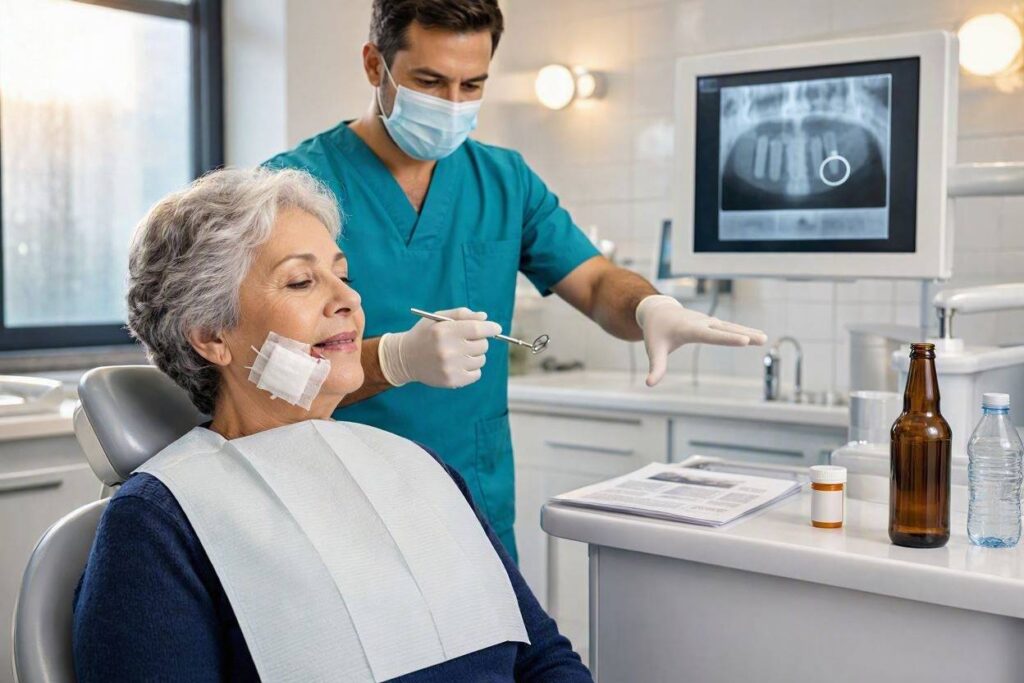
Mixing alcohol with any of these drugs is dangerous. Alcohol combined with NSAIDs significantly increases the risk of gastric irritation and bleeding. Alcohol combined with antibiotics can reduce their efficacy and cause a disulfiram-like reaction with certain antibiotics (like metronidazole), leading to severe nausea, vomiting, and rapid heart rate. The most life-threatening interaction is with opioid painkillers. Both alcohol and opioids are central nervous system depressants. Combining them has a synergistic effect, leading to profound sedation, respiratory depression, coma, and death. You cannot have a beer while you are taking these medications. The bottle of beer and the bottle of pills are enemies.
The Nutritional Sabotage: Empty Calories, Zero Healing
Your body needs high-quality protein, vitamins (particularly Vitamin C and D), and minerals (calcium and zinc) to build new bone and gum tissue. A post-implant diet should be a carefully planned, nutrient-dense, soft-food protocol.
Beer is fermented liquid carbohydrates. It provides empty calories, devoid of the micronutrients essential for healing. If a beer replaces a nutrient-dense smoothie or a protein-rich soup in your stomach, you are robbing your body of building blocks. Furthermore, the carbonation in beer is acidic and can be physically irritating to the sensitive, sutured gum tissue. The bubbles can fizz against the wound, causing stinging discomfort and potential disruption.
The Recommended Timeline: A Phased Return to Moderation
The abstinence from alcohol is not a life sentence. It follows the same healing curve as the exercise restriction.
- First 72 Hours: Absolutely no alcohol. This is the critical clot stabilization and initial inflammatory phase. You are likely on strong pain medication.
- First Week: Continue to abstain. Even if you have stopped the prescription painkillers, the wound is still open and vulnerable. The risk of bleeding and immune compromise remains high.
- Week 2: If the wound is closed, healing is progressing well, you are in no pain, and you are no longer taking any prescription medication, a single, light beer with a meal is a reasonable, cautious milestone. Do not binge drink.
- After Osseointegration is Complete (3-6 Months): There are no biological restrictions on moderate alcohol consumption related to the implant itself, provided you maintain excellent oral hygiene. The well-healed, osseointegrated implant is not affected by the occasional beer.
The Healing Environment Principle: Think of the surgical site as a delicate ecosystem. For a few critical weeks, it requires a strict, controlled environment to flourish. Alcohol is a chemical pollutant in that ecosystem. Abstaining is not a punishment. It is a temporary, protective measure to ensure the survival and long-term health of your investment.
Conclusion
You should not drink beer, or any alcoholic beverage, for at least the first critical week after dental implant surgery. Alcohol thins the blood and disrupts clotting, dehydrates the healing tissues, impairs the vital immune response, and can interact dangerously with post-operative pain and antibiotic medications. The complete abstinence period is short, typically one to two weeks. This temporary sacrifice is a small but profoundly important act of protection for the complex biological process that will secure your implant for decades.
Frequently Asked Questions
Can I have non-alcoholic beer after implant surgery?
Non-alcoholic beer avoids the pharmacological dangers of ethanol. However, it is still a carbonated, acidic beverage that can irritate the wound. It is not a recommended beverage choice in the first few days. Water, milk, and non-acidic, non-carbonated protein shakes are far better.
What about a glass of wine? Is it the same as beer?
Yes. The active, harmful agent is ethyl alcohol. The same rules apply to wine, beer, and spirits. The concentration of alcohol in a glass of wine is higher than in beer, so the negative effects may be more pronounced. Complete abstinence from all forms of alcohol is the rule.
How does smoking compare to drinking after an implant?
Smoking is significantly more damaging to implant healing than alcohol. The vasoconstrictive and carbon monoxide-induced hypoxia from smoking is a direct, prolonged assault on the healing bone. While moderate alcohol is a temporary chemical irritant, smoking is a profound biological threat that can cause the implant to fail to osseointegrate. Both should be strictly avoided.
Additional Resource:
For a guide to post-operative nutrition and healing after oral surgery, including foods and beverages to prioritize and avoid, consult the American Association of Oral and Maxillofacial Surgeons: https://myoms.org/procedures/dental-implant-surgery/diet-after-surgery