Will Dental Implants Be Covered By Humana?
You are a Humana member, or you are considering enrolling in a Humana dental plan. You hold the benefits booklet in your hands, or you are scrolling through the online summary. You need a dental implant. The question you need answered, with absolute clarity, is not a general one about dental insurance. It is specific, personal, and urgent: will my Humana plan cover dental implants?
The answer is a conditional yes, but the extent of that coverage depends entirely on the specific Humana plan you have chosen, its waiting periods, its annual maximum, and the fine print of its major restorative benefit. Humana offers a range of dental plans, from low-premium preventive-only options to comprehensive PPO plans that do include implant coverage. This article will guide you through the Humana dental plan landscape, show you how to read your specific benefits, and explain the financial mechanics of how an implant claim is paid.

The Plan Tier: Preventive vs. Comprehensive Coverage
Humana, like other major dental insurers, structures its dental plans into tiers. The tier you select determines whether implants are covered at all.
Preventive and Value Plans
Humana’s lower-cost plans, often branded as Preventive Plus or Loyalty Plus, are designed to cover routine care at 100%. They cover cleanings, exams, and X-rays. They may offer limited coverage for basic services like fillings. These plans do not cover major restorative services like crowns, bridges, or dental implants. If you hold a preventive-only Humana plan, your implant will not be covered. You will pay the full fee out of pocket.
Comprehensive PPO Plans
Humana’s higher-tier plans, often called Complete Dental or Bright Plus, are the plans that include major restorative coverage. Within these plans, dental implants are typically covered as a major service, at a co-insurance level of 50%. This means that after you have met your deductible, Humana will pay 50% of the contracted, in-network fee for the implant surgery and the restoration, and you will pay the other 50%.
This is the first critical distinction. You must look at your plan’s specific Summary of Benefits. Search for the section labeled “Major Services” or “Major Restorative.” Look for the term “Implant Services” or “Implantology.” If this category is present and listed at a coverage percentage (typically 50%), your plan covers implants. If it is absent, or listed as “Not Covered,” your plan does not.
The Waiting Period: The Price of New Coverage
Having a comprehensive plan that lists implant coverage does not mean you can use it immediately. Humana, like all insurers, imposes waiting periods on major services to prevent adverse selection—the practice of buying insurance only when you need an expensive procedure.
If you have just enrolled in a new Humana plan, or if you upgraded from a preventive plan to a comprehensive one, there is almost certainly a waiting period for major restorative services, including implants. This waiting period is typically 12 months from the effective date of your coverage.
You must review your plan documents for the section titled “Waiting Periods” or “Benefit Limitations.” Look for the specific waiting period for “Major Services” or “Implant Services.” If you have had your Humana plan for more than a year, you have likely satisfied this waiting period. If you just signed up last month, you will need to wait 11 more months before Humana will pay a cent toward your implant. Do not schedule implant surgery without verifying that your waiting period has been met. A pre-treatment estimate is the only way to be certain.
The Annual Maximum: The Cap on Your Benefit
The most significant financial limitation of any dental plan, including Humana’s, is the annual maximum benefit. This is the total dollar amount Humana will pay out for all covered services in a single calendar year.
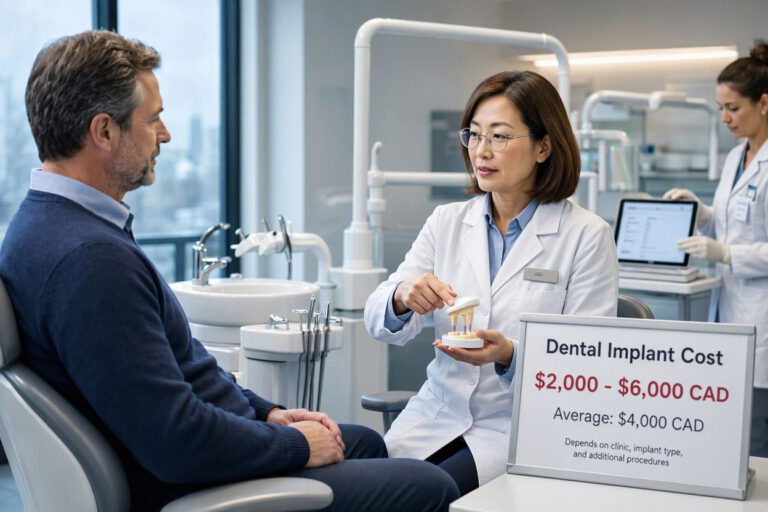
Humana’s comprehensive PPO plans typically have annual maximums that range from $1,000 to $2,500 per person. A single dental implant, with the surgery, abutment, and crown, costs between $3,500 and $6,000. Your Humana plan’s 50% coverage of a $5,000 implant would be $2,500. However, if your annual maximum is $1,500, that is all Humana will pay. The remaining $1,000 of their theoretical 50% obligation is erased by the annual cap. You are responsible for the entire balance.
This is the most important financial calculation you can make. A Humana plan with a $1,000 maximum will contribute, at most, $1,000 toward your implant in a calendar year. The plan is a helpful subsidy, a coupon, not a comprehensive payer. You must budget for the significant out-of-pocket balance.
The Alternative Benefit Clause and Missing Tooth Clause
Even with a comprehensive plan that has met its waiting period, two specific clauses can limit your implant coverage.
The Missing Tooth Clause
If the tooth you are replacing with an implant was missing before your Humana coverage began, the plan may not cover the implant. This exclusion is designed to prevent people from buying a comprehensive plan to fix a pre-existing, long-standing gap. Your plan document will state this explicitly. “Missing tooth exclusion” or “missing tooth clause” is the language to look for.
The Alternative Benefit Clause
Some Humana plans contain a clause that states they will pay for the least expensive professionally accepted alternative treatment for a condition. For a missing tooth, the least expensive alternative is often a removable partial denture. The plan may calculate its benefit for your implant based on the cost of a partial denture, not the cost of the implant. This can dramatically reduce the actual dollar amount they pay. This clause is a cost-containment mechanism. Its presence in your plan is a critical detail to uncover before treatment.
The Pre-Treatment Estimate: Your Financial Shield
Given the complexity of these variables, you must never proceed with dental implant treatment without first obtaining a pre-treatment estimate, also called a pre-determination of benefits. Your dentist’s office submits the proposed implant treatment plan, with all the CDT procedure codes and the associated fees, to Humana. Humana’s dental consultants review the plan against your specific policy’s benefits, waiting periods, maximums, and exclusions. They then issue a written document that explains exactly what they will pay, what you will pay, and how much of your annual maximum will be consumed.
This document is your financial map and your legal protection. It turns the vague hope of “coverage” into a specific dollar amount. If Humana later denies the claim, you have the pre-treatment estimate as proof of their prior commitment. Never schedule surgery without this document in your hand.
Humana Medicare Advantage Plans
If you are a Humana Medicare Advantage plan member, your dental coverage is separate from the main Medical Advantage plan and is administered as a standalone dental benefit or embedded within the plan. Many Humana Medicare Advantage plans offer comprehensive dental coverage that includes implants, often with higher annual maximums than standalone individual plans. You must review your specific plan’s Evidence of Coverage (EOC) for the dental section. The same rules apply: verify waiting periods, the annual maximum, and any exclusions. A pre-treatment estimate is just as critical for a Medicare Advantage member as for a PPO member.
Conclusion
Dental implants are covered by Humana on their comprehensive PPO plans, typically at 50% co-insurance for major restorative services. However, this coverage is subject to a 12-month waiting period for new enrollees, a low annual maximum that caps their total payout, and possible exclusions like the missing tooth clause. The benefit is a limited, partial contribution, not a full payment. The only way to know your exact financial responsibility is to obtain a written pre-treatment estimate from Humana, based on your dentist’s submitted treatment plan, before any surgery is performed.
Frequently Asked Questions
Does Humana cover the implant crown as well as the surgery?
Yes, if your plan covers implants, the coverage typically applies to the entire implant system, including the surgical placement of the implant post and the restorative crown and abutment. Both phases are considered part of the major restorative implant service. Verify the specific CDT codes on your pre-treatment estimate.
Can I use my Humana dental plan for implants at any dentist?
Humana’s PPO plans offer the best coverage when you see an in-network, contracted Humana dentist. The in-network dentist has agreed to a reduced, contracted fee schedule. If you go to an out-of-network dentist, Humana will still pay its percentage, but it will be based on their Usual, Customary, and Reasonable (UCR) fee calculation, which may be lower than the dentist’s actual fee, leaving you with a larger balance.
What if my Humana plan has a $1,000 annual max and my implant costs $4,000?
Humana will pay its contracted 50% co-insurance until the $1,000 annual maximum is reached. On a $4,000 implant, their 50% share would be $2,000, but the annual cap limits their total payment to $1,000. You would be responsible for the remaining $3,000. The insurance provides a $1,000 discount, not a 50% discount.
Additional Resource:
To review Humana’s current dental plan offerings and to find a detailed Summary of Benefits for your specific plan, visit the official Humana dental page: https://www.humana.com/dental-insurance