Do I Need To Get A Dental Implant?
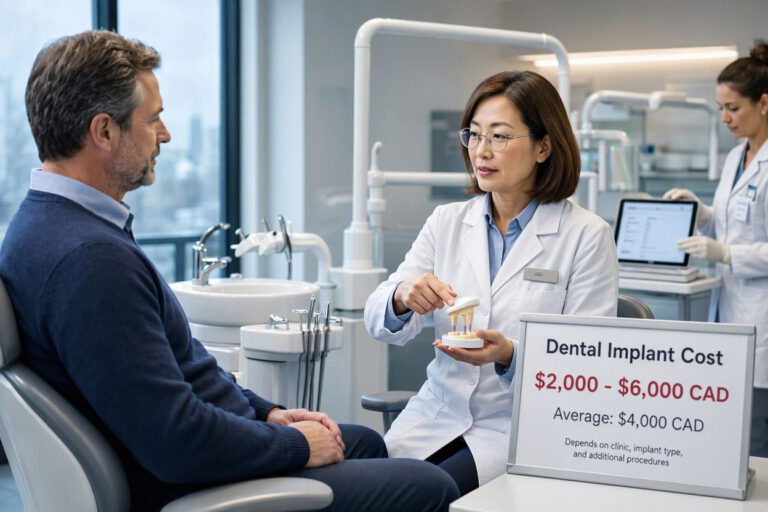
You are standing at a crossroads. A tooth has been extracted, or it is failing and cannot be saved. Your dentist has presented you with the treatment options. The list includes a dental implant, a fixed bridge, and a removable partial denture. The implant is the most advanced, the most talked about, and the most expensive. The question that echoes in your mind is not about cost or technique. It is more fundamental, more personal: do I really need a dental implant? Is it a luxury, an upgrade, or is it a genuine medical necessity for the long-term health of my mouth?
The answer is not a universal “yes.” It is a careful, individualized weighing of biological consequences, functional demands, and personal values. You do not “need” a dental implant in the same way you need a root canal to treat an abscessed tooth or a filling to stop a cavity. You can live without replacing a single back tooth. But the decision not to replace, or to choose a less optimal replacement, sets in motion a cascade of biological events that can lead to far more extensive and costly problems down the road. This article will guide you through the honest, clinical rationale for choosing an implant, helping you understand what is at stake.
The Biological Consequence of Doing Nothing: Bone Resorption
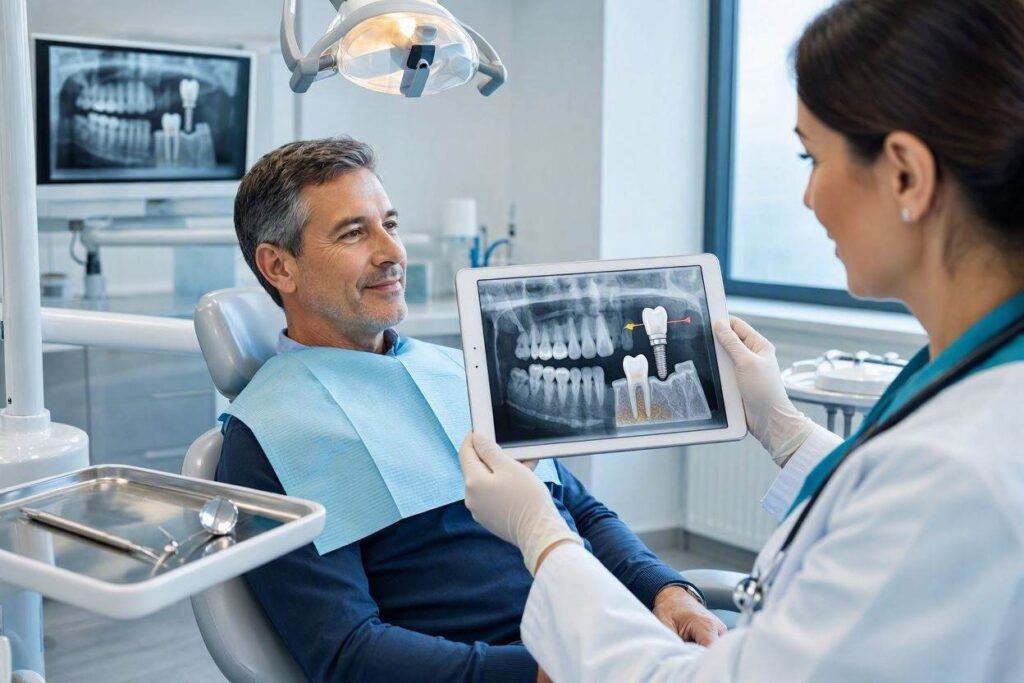
A tooth is not just a chewing tool. It is a biological stimulus for the jawbone. The root of the tooth transmits the forces of chewing to the surrounding bone, providing the mechanical stress that signals the body to maintain bone density and volume. When a tooth is lost, this signal stops.
The alveolar bone, the specialized ridge of bone that houses the teeth, begins a process of disuse atrophy, or resorption. The body, in its relentless efficiency, senses that the bone is no longer needed and begins to resorb it, reclaiming the calcium and minerals. The bone melts away, silently and progressively. The width and height of the ridge decrease. Over the first year after an extraction, a significant portion of the buccal plate, the bone on the cheek side, can be lost. This bone loss is permanent and irreversible without a bone graft.
A dental implant is the only tooth replacement option that stops this bone resorption. The titanium post, placed into the bone, transmits chewing forces to the bone, mimicking the natural tooth root. The bone receives the mechanical stimulus it needs to stay alive and maintain its density. The bone is preserved. A fixed bridge or a removable partial denture does nothing to stop the resorption of the bone in the edentulous space. The bone under the missing tooth continues to shrink over time. This is the single most compelling medical reason to choose an implant. You are not just replacing a tooth. You are preserving the very foundation of your jaw.
The Domino Effect on Adjacent Teeth
A missing tooth is not an isolated event. It is a disruption in the delicate, balanced ecosystem of the dental arch. The teeth adjacent to the gap begin to shift. The tooth behind the space tips forward, into the open gap. The tooth above the space, in the opposing arch, begins to super-erupt, drifting downward or upward because it no longer has a biting partner to stop it.
This drifting and tipping creates new, pathological spaces between the teeth that are difficult to clean. Food becomes trapped. The risk of decay and gum disease on the adjacent teeth skyrockets. The tipped tooth changes its angle of occlusal contact, subjecting it to traumatic, off-axis forces that can cause it to loosen, crack, or develop painful bite problems. A single missing tooth, left untreated, can initiate a chain reaction of dental disease that eventually claims the adjacent healthy teeth. Replacing the tooth with an implant fills the space, stabilizes the arch, and prevents this destructive domino effect.
The Cost to Adjacent Teeth: The Bridge Dilemma
The traditional fixed bridge is a time-tested, effective way to replace a missing tooth. But it comes with a specific, irreversible biological cost. To create a bridge, the dentist must prepare the two teeth adjacent to the gap. This means shaving down perfectly healthy, often virgin, tooth structure to create stumps to support the crowns that will hold the false tooth (pontic) in the middle.
This is the sacrifice of the bridge. You are involving two healthy teeth in the reconstruction of one missing tooth. The prepared teeth become more vulnerable to decay, particularly around the margin where the crown meets the tooth. A bridge has a finite lifespan, typically 10 to 15 years, after which decay or mechanical failure often necessitates a more complex and expensive reconstruction. A dental implant replaces the single missing tooth without touching the adjacent teeth. It is a single-tooth solution that preserves the biological integrity of its neighbors. This is not a subjective advantage. It is a fundamental principle of conservative, minimally invasive dentistry.
The Functional and Psychological Argument
Beyond the biological arguments, there is the quality-of-life dimension. A missing front tooth is a social and professional catastrophe for most people. The psychological imperative to replace it is profound, and the implant, with its unmatched aesthetics and fixed, permanent nature, is the clear choice.
A missing back molar is a different calculation. The space is not visible. Many people adapt to chewing on one side and live for decades without a first molar. However, the loss of a major chewing tooth places an increased functional burden on the remaining teeth. They must work harder, bearing more force, which accelerates their wear and increases the risk of fracture. The loss of chewing efficiency can lead to dietary changes, avoiding fibrous fruits, vegetables, and nuts, which has a knock-on effect on general nutrition. The implant restores full, bilateral chewing function, allowing you to eat a complete, healthy diet without favoring one side.
The Patient-Specific Decision: A Candid Self-Assessment
The decision to get an implant is not purely medical. It is a personal decision that involves an honest self-assessment.
You may be a strong candidate for an implant if:
- You value the preservation of your jawbone and facial structure.
- You want a fixed, permanent solution that does not involve cutting down adjacent healthy teeth.
- You are willing and able to commit to meticulous, lifelong oral hygiene and professional maintenance.
- You are in good general health and have sufficient bone volume, or you are willing to undergo bone grafting to create it.
- You view the higher initial cost as a long-term investment in your oral health and quality of life.
You may be a candidate for a bridge or a removable partial denture if:
- You have medical or anatomical contraindications that make implant surgery too risky.
- The adjacent teeth are already heavily filled, crowned, or in need of crowns, making the bridge a logical restorative extension.
- You are unwilling or unable to commit to the rigorous hygiene demands of an implant.
- Your budget absolutely prohibits an implant, and the alternative is better than doing nothing.
- The missing tooth is a second molar in an older patient with a stable, functional bite, and the functional deficit is minimal.
The Honest Conversation with Your Dentist: Ask your dentist a direct question: “If you were missing this tooth, and you were my age and in my state of health, what would you choose, and why?” Their answer, stripped of economic consideration, will reveal the clinical truth. A good dentist will present the options, explain the biological trade-offs of each, and let you make the informed decision.
Conclusion
You do not “need” a dental implant in the sense of a life-or-death emergency. But you need to replace the missing tooth to prevent the silent, progressive consequences of bone loss, adjacent tooth drift, and functional imbalance. A dental implant is the only replacement that directly addresses the root of the problem: the absent root. It preserves bone, spares the adjacent teeth, and provides the most natural, stable, and long-lasting restoration. The decision is a personal one, weighted by biology, finances, and values, but the clinical case for the implant is powerful and enduring.
Frequently Asked Questions
Is it okay to just leave a missing back tooth alone?
It is possible, and many people do. However, leaving the space will result in the gradual resorption of the bone in that area. The adjacent and opposing teeth will drift, altering your bite and creating new food traps that increase the risk of future decay and gum disease. The long-term costs of these consequences can exceed the cost of replacing the tooth with an implant.
How soon after an extraction do I need to get an implant?
To minimize bone loss, the ideal window for implant placement is within the first three to six months after extraction. If the tooth was removed atraumatically, an immediate implant at the time of extraction is sometimes possible. The longer you wait, the more bone is lost, and the greater the likelihood you will need a bone graft before the implant can be placed.
Am I too old for dental implants?
Age alone is not a contraindication. A healthy 90-year-old with good bone density is a better candidate than a 40-year-old with uncontrolled diabetes and a heavy smoking habit. The decision is based on your biological age and medical status, not your chronological age. A dental implant can significantly improve nutrition and quality of life for elderly patients struggling with loose dentures.
Additional Resource:
For an objective, non-commercial comparison of tooth replacement options, including the advantages and disadvantages of each, visit the American Dental Association’s patient education platform, MouthHealthy: https://www.mouthhealthy.org/en/az-topics/i/implants